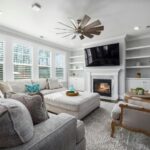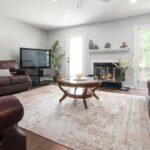
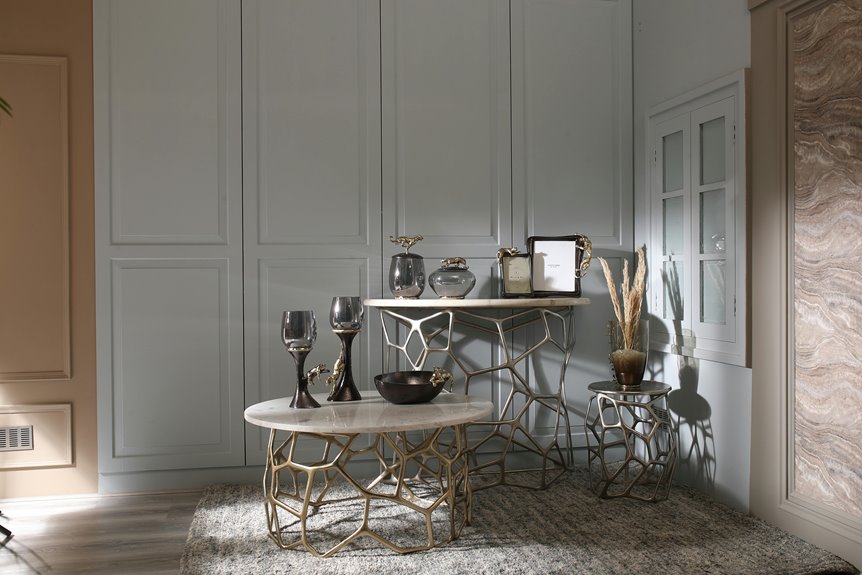
End tables are still essential in modern living rooms because they solve real problems. You get a spot for drinks, remotes, and lamps within arm’s reach—no more balancing acts. They define your seating zone and create visual balance without feeling heavy. Choose tables with drawers to hide clutter, then anchor them near your sofa or between chairs. The right placement makes your room feel intentional and organized. There’s actually a lot more to discover about positioning them strategically.
Why End Tables Solve Everyday Living Room Needs
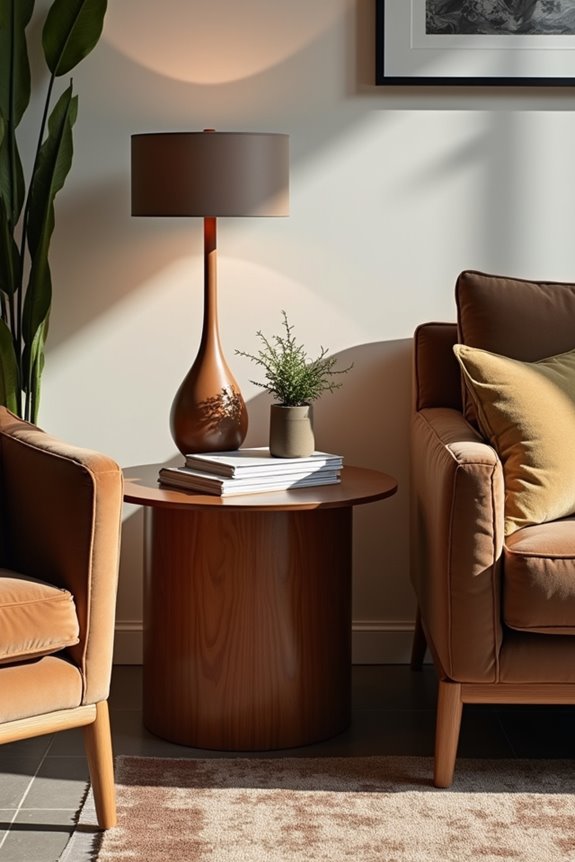
Ever notice how you’re constantly reaching for a place to set your drink while relaxing on the couch? End tables solve that problem perfectly. They give you a convenient surface within arm’s reach for drinks, snacks, books, and lamps. You’re not fumbling around or balancing things precariously anymore.
Beyond holding stuff, end tables address real clutter issues. Many include drawers or shelves where you can stash remote controls and magazines, keeping your space clean and organized. This aligns with what modern living rooms actually need—smart storage that doesn’t scream “storage.”
I’ve found that end tables also help define spaces in open-concept rooms. They create natural zones without crowding your layout, adding visual balance that makes everything feel intentional and comfortable for you and your guests.
Multi-Functional Design: Small Tables That Do More
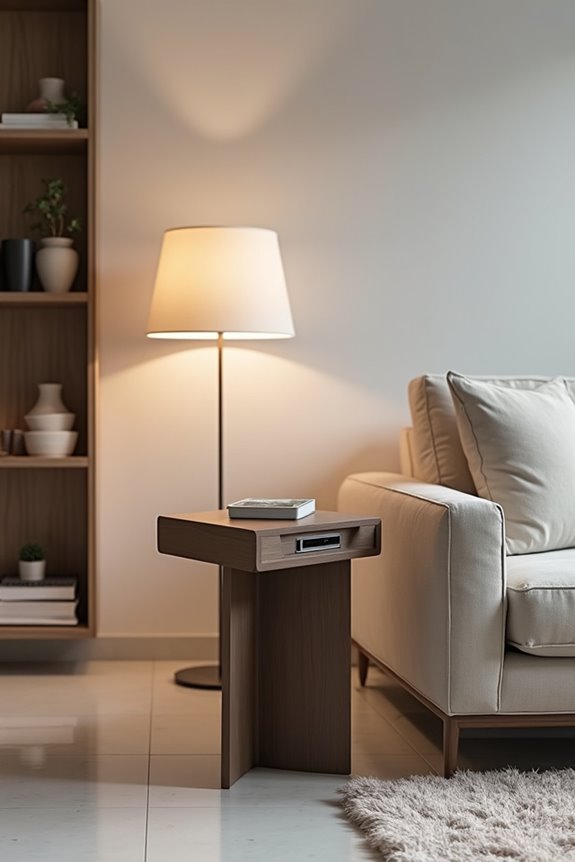
What if your end table could do triple duty? I’ve discovered that modern end tables aren’t just surface space anymore—they’re storage solutions hiding remotes, magazines, and coasters behind clean wood finishes. The Narrow Side Table with Drawers ($199.99) proves this perfectly. It gives you a lamp surface, drink spot, and hidden storage all in one compact piece.
Here’s why this matters: you get organization without the clutter. Small tables work best between seating and walkways, typically 18–24 inches wide. They fit snugly beside chairs, making items instantly reachable. Pair two matching storage-rich tables in your room, and you’ll define zones naturally while maintaining visual balance. You’re not just buying furniture—you’re designing smarter living spaces that actually work for your daily life.
How End Tables Create Visual Balance Without Crowding
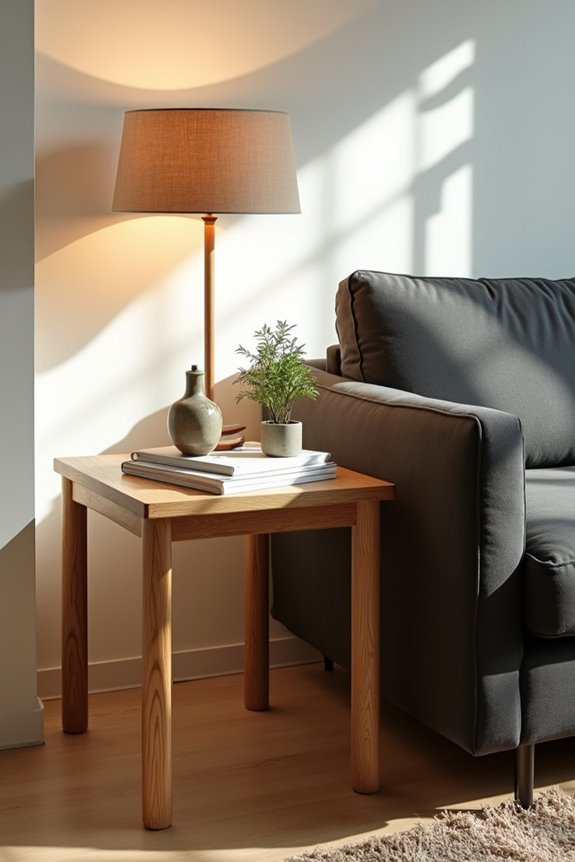
I’ll show you how I use end tables to create a room that feels balanced and open, not cramped. The secret isn’t picking the biggest tables—it’s placing them strategically to define your seating zones and anchor focal points like lamps or artwork. When I pair matching end tables on either side of a sofa or position a single table next to a chair with just 1–2 inches of breathing room, I create visual weight that grounds the space without blocking movement.
Strategic Placement Defines Zones
How do you carve out distinct spaces in a room without throwing up walls? Strategic end table placement does exactly that. Position end tables 1–2 inches from your armrest beside sofas or chairs. This anchors your seating area while keeping traffic flowing smoothly. I recommend using varied table sizes to break up your space essentially. Try nesting options or mix heights to separate lounging from dining zones. Corner or sectional-end placements extend your surface reach across multiple seating areas, improving usability throughout. Match your end tables with focal points like art or lamps. This integration makes surfaces feel purposeful rather than scattered. You’re boundaries creating invisible boundaries that organize your room without walls, helping everyone feel the space belongs together.
Balance Without Visual Clutter
Your end tables can actually make a room feel more open, not cramped—here’s the secret. I’ve found that spacing matters tremendously. Leave 2–4 inches between your sofa and end table to create breathing room. This small gap keeps your space feeling intentional, not overcrowded.
| Strategy | Example | Result |
|---|---|---|
| Storage drawers | Narrow tables with built-in storage | Reduces clutter visually |
| Matching pairs | Tribesigns C-Shaped tables | Creates symmetrical balance |
| Varied heights | Mix tall and shorter tables | Feels dynamic, not rigid |
| Corner placement | Nesting tables in tight spaces | Keeps surfaces accessible |
I’d recommend choosing tables with drawers to hide remotes and magazines. When you mix different heights intentionally, your room gains personality without feeling heavy. Think of end tables as quiet anchors—they should support your space, not dominate it.
Anchoring Larger Room Layouts
When you’ve got a spacious living room, end tables become your secret tool for making the layout feel intentional rather than scattered. Here’s why they matter: varying table sizes and placements naturally break up large spaces, helping you define different zones without walls or dividers.
Think of it this way. Place one end table at a sectional corner, another between seating areas, and you’ve instantly created visual anchors. These surfaces hold lamps, drinks, and decor—giving your room purpose and flow. Multiple end tables also preserve clear sightlines so people can move through your space easily.
The result? Your larger room feels organized and welcoming, not empty or overwhelming. End tables transform sprawling layouts into intentional gathering spaces where everyone belongs.
End Tables Beside Your Sofa: The Most Practical Spot
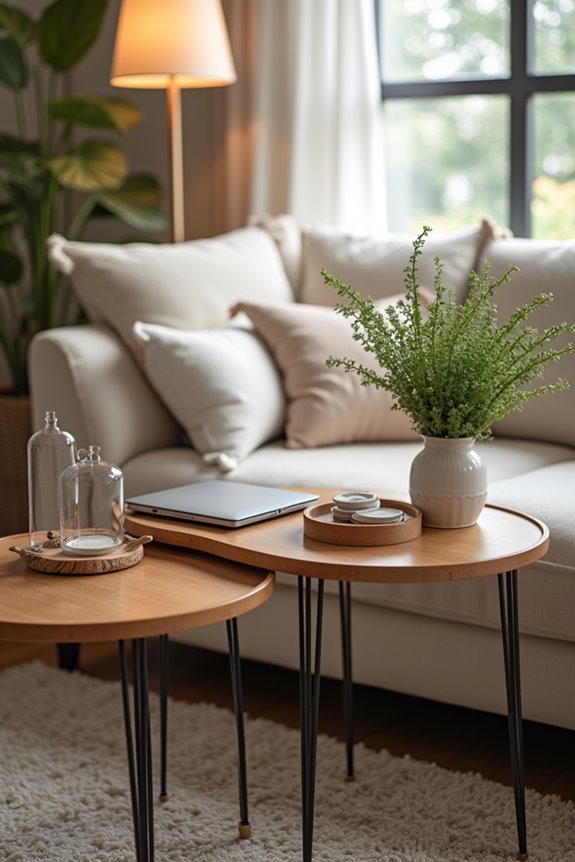
Why does placing an end table next to your sofa matter so much? I’ll tell you—it’s genuinely the smartest spot for one. When you position end tables beside your sofa, you’re creating a functional zone that transforms how you live in your space. Keep a 2–4 inch gap between them for comfortable access, and you’ll notice the difference immediately.
Your remote, coaster, lamp, and phone suddenly have a home within arm’s reach. No more hunting for essentials during movie night. This setup keeps your entertaining effortless while defining your seating area naturally. You’ll preserve clear pathways too, preventing that cramped feeling. Whether your style leans rustic or modern, end tables beside your sofa deliver both practicality and cohesion without overwhelming your room.
Creating Intimacy Between Armchairs With Shared Tables
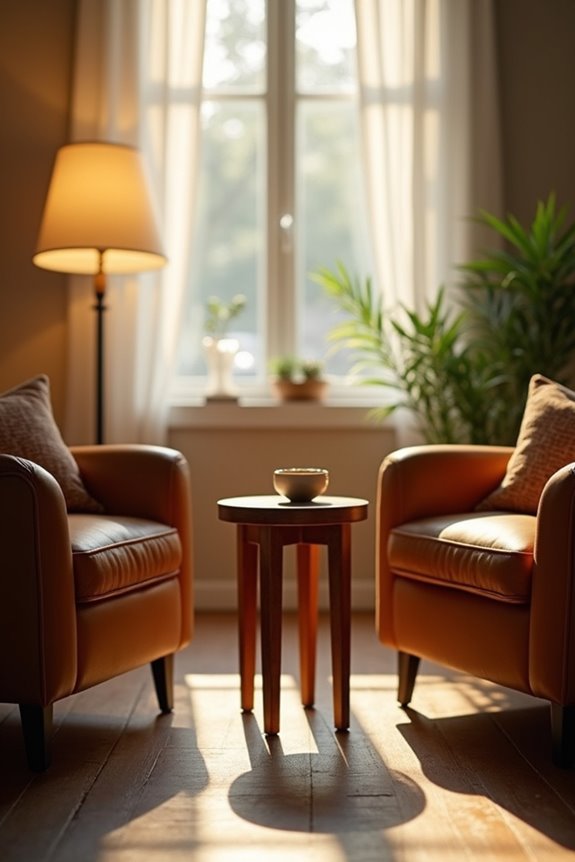
How does a single small table transform two separate chairs into an intimate conversation zone? I’ve found that positioning an end table between two armchairs creates the perfect setup for meaningful conversations. Here’s what makes this arrangement work:
- Creates symmetry – The table naturally balances the space and draws chairs together visually
- Adds functionality – Drinks, lamps, and coasters find their home without cluttering
- Enhances ambiance – Soft lighting from a shared lamp sets a welcoming mood
When chairs sit close together, I’d suggest choosing a slightly larger end table so it doesn’t disappear between them. This approach works beautifully in smaller living rooms too, fostering togetherness without overwhelming your space. It’s about building that sense of connection where conversation flourishes naturally.
Making Sectionals Work: End Table Placement for Large Seating
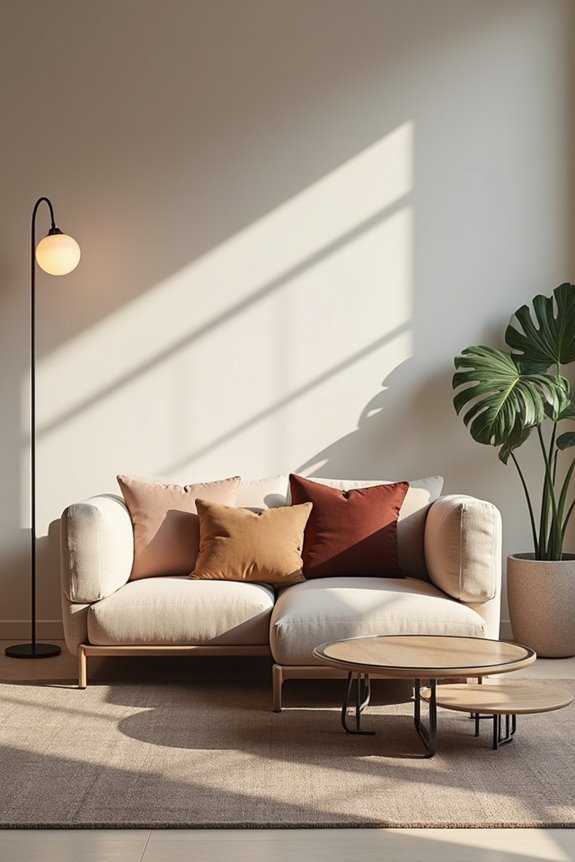
When you’re working with a sectional, I’ve found that strategic end table placement makes all the difference in keeping your space functional and balanced. You’ll want to consider three key approaches: placing tables at the corners where sections meet, spacing multiple smaller tables along the length for easy access to drinks and remotes, and varying your table sizes to break up the visual weight without cramming the room. Think of it like this—instead of one table doing all the work, you’re creating little service stations around your seating that let everyone reach what they need without leaning across someone else.
Corner Placement For Sectionals
Where should your end tables really go when you’ve got a sprawling sectional taking up most of your living room?
Corner placement is your covert asset. I’ve found that positioning end tables at sectional ends creates the perfect balance in large spaces. Here’s why this works:
- Both sides of your seating get equal access to surfaces for drinks, lamps, and decor
- Clear walkways stay open while you define different zones by nature
- Matching pairs foster visual harmony without adding clutter
When you place end tables strategically at corners, you’re solving multiple problems at once. Guests seated anywhere along the sectional can easily reach a surface. Lamps provide ambient lighting without crowding your central area. Your living room feels intentional and organized, not cramped. This arrangement lets your sectional breathe while staying functional.
Multiple Tables For Accessibility
One table simply isn’t enough when you’re furnishing a sectional—and I’d argue that’s actually good news for your layout. Multiple end tables strategically placed give you real flexibility. I’d position them within 1–2 feet of your seating, making drinks and remotes genuinely accessible from every seat. Try pairing smaller tables with one larger centerpiece; this breaks up visual heaviness while keeping everything functional.
Here’s what works: place end tables at sectional corners and between seating blocks. This creates natural zones without cramping your space. Each table serves a purpose—one holds your lamp, another your coffee, a third your current read. You’re not cluttering; you’re building a system that actually supports how you live, making your sectional feel intentional and welcoming.
Balancing Larger Seating Areas
How do you keep a sprawling sectional from feeling like a furniture maze? I’ve found that strategic end table placement transforms large seating areas into welcoming conversation zones.
Here’s what works:
- Place end tables at opposite ends of your sectional to balance functionality across the entire space
- Use varying sizes or pairs to create visual anchors that define distinct seating areas
- Choose 18–24 inch wide tables that fit comfortably without blocking movement
I recommend nesting or multi-tier end tables for flexible surface area when guests gather. They expand reach without cluttering your layout. Position them where multiple people can access drinks, coasters, and light without crowding the center. This approach ensures everyone feels included—no one’s left without a convenient spot nearby. Your sectional becomes functional and intentional, not overwhelming.
Reading Nooks: End Tables Next to Recliners and Chairs
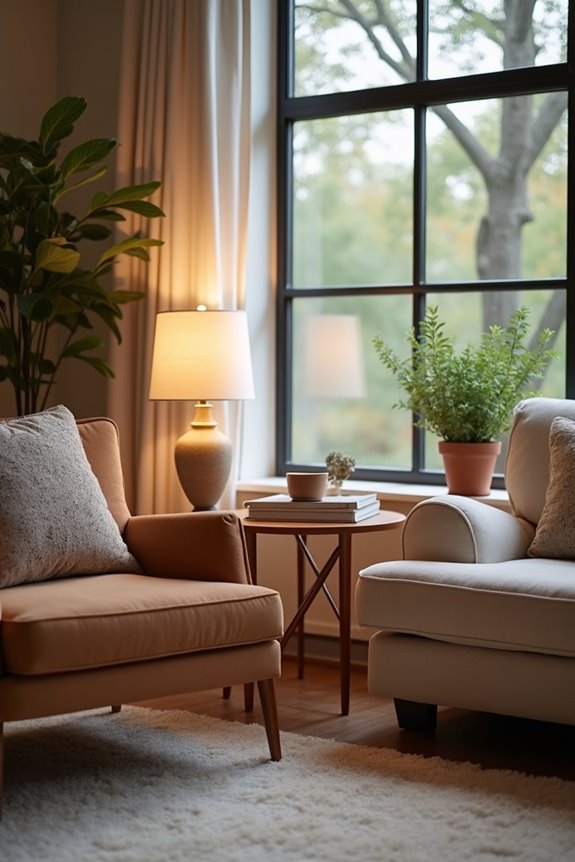
Ever notice how the best reading spots seem to have everything you need within arm’s reach? I’ve found that end tables beside recliners and chairs transform ordinary corners into personal reading sanctuaries. These compact surfaces hold your beverage, book, reading glasses, and lamp exactly where you want them—no stretching required.
| Feature | Benefit |
|---|---|
| Aligned Height | Easy reach during relaxation |
| Nearby Placement | Clutter-free zone maintained |
| Surface Space | Holds essentials within arm’s reach |
| Lamp Support | Enhanced nighttime reading comfort |
| Remote Storage | Quick access to controls |
When you position an end table thoughtfully beside your favorite seat, you’re creating a dedicated reading nook that feels intentional and calming. The setup works beautifully with both traditional and modern furniture. Your remote, coasters, and glasses stay organized and accessible, letting you focus entirely on your book without interruption.
Corner Placement Without Blocking Traffic
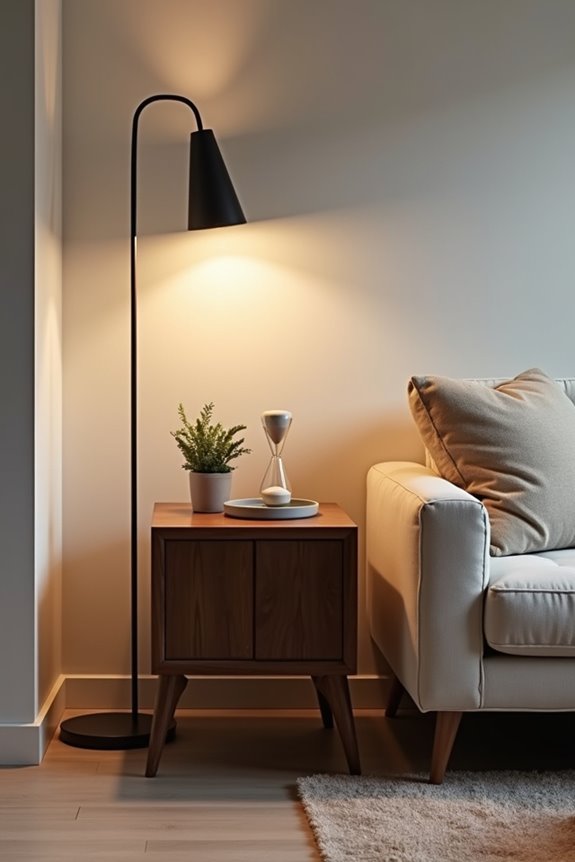
Since corners often sit neglected in living rooms, they’re actually perfect spots for end tables that serve double duty—adding function while keeping your pathways clear. I’ve found that strategic corner placement transforms wasted space into something genuinely useful for you and your guests.
Here’s how to make it work:
- Keep a 1–2 inch gap between your table and adjacent furniture to maintain traffic flow
- Position tables at right angles to balance the room and prevent crowding near aisles
- Choose nesting or small tables that won’t obstruct movement through your space
The beauty? Your corner table becomes reachable from multiple seating positions, making it convenient for holding drinks, lamps, or decor. You’ll connect focal points like wall art to your seating area while everyone moves freely. That’s smart, intentional design.
End Tables in Entryways: A Catch-All for Daily Essentials
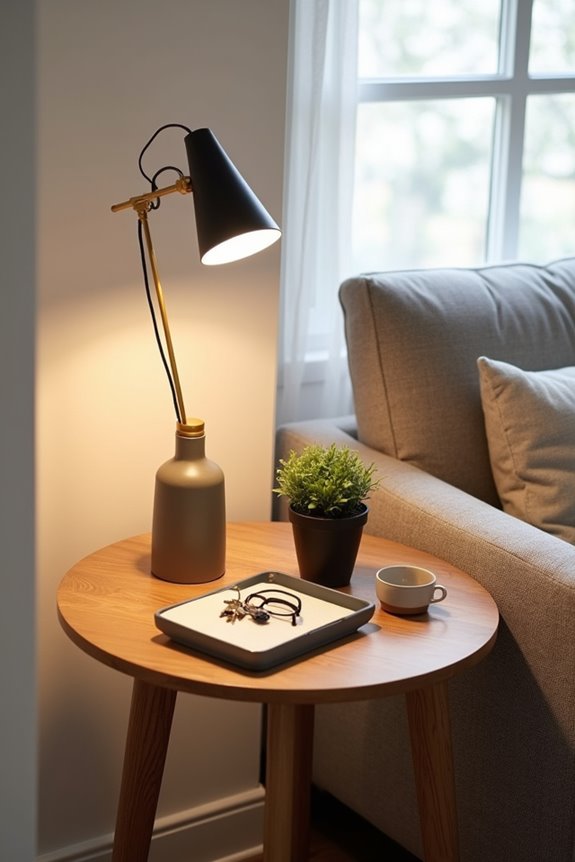
I’ve found that an entryway end table becomes invaluable the moment you step through your front door—it’s where your keys, wallet, and today’s mail naturally land instead of scattering across your home. You’ll appreciate how this single surface creates a quick handoff zone, letting you transition from outside to inside without dragging clutter through your living spaces. The trick is positioning it near your entry point so it’s genuinely convenient, making it easy to grab what you need as you’re heading out the next morning.
Keys, Wallets, and Mail
Where do your keys disappear the moment you walk through the door?
I’ve found that strategic end table placement near your entry solves this daily frustration. When you position a small table right by the door, you’re creating an immediate landing spot for life’s essentials.
Here’s what works best:
- A shallow bowl or tray catches keys instantly
- A mail sorter keeps important documents organized
- A small dish holds your wallet and phone
This simple setup prevents items from scattering throughout your home. You’ll know exactly where everything is, and you’re not hunting frantically before leaving. I’ve noticed that having this designated spot transforms my mornings. It’s that trusted friend approach—giving yourself permission to keep things simple and accessible, right where you need them most.
Transitional Storage Between Rooms
Think of your entryway end table as the gatekeeper between your outside world and your inner home. I’ve found that this transitional storage between rooms prevents clutter from spreading into your living areas. When you place a compact end table near your door, you’re creating a dedicated landing zone. Your keys go here. Your wallet goes here. Mail gets sorted here before moving deeper into your home.
This simple boundary transforms how you live. Instead of dropping items on your couch or kitchen counter, you have one intentional spot. I recommend pairing your entryway table with a nearby chair or bench. This creates a comfortable transition zone where you can sit, change shoes, and organize yourself before entering your main living space. You’re not just organizing items—you’re organizing your entire daily routine.
Quick Accessibility Upon Entry
How many times do you search for your keys before leaving home? I’ve been there too. That’s where end tables in your entryway become game-changer
When you place an end table near your door, you’re creating a dedicated landing zone for life’s essentials. Here’s what works best:
- Keys and wallets go in one spot—no more frantic searching
- Mail and papers get sorted immediately, preventing pile-ups elsewhere
- Small items like sunglasses and phone chargers stay accessible
I’ve noticed that this simple setup transforms my daily routine. My end table catches everything before it scatters throughout my home. The result? Less stress, more organization. You’ll appreciate having a reliable spot right where you need it most—that crucial moment between outside and inside.
Pairing End Tables With Floor Cushions and Low Seating
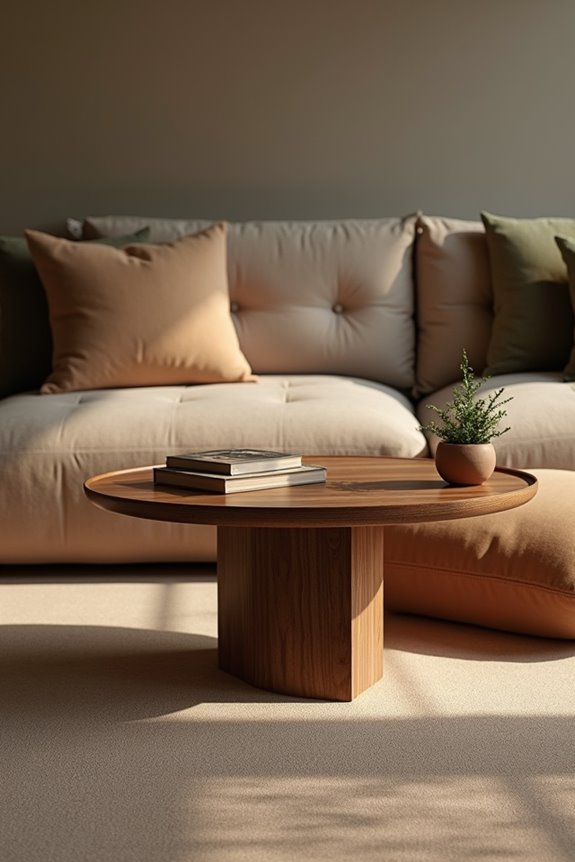
When you’re designing a casual seating area with floor cushions and poufs, the right end table can completely change how comfortable and functional the space feels. Low-profile end tables work best because they match the height of floor seating, so you can easily reach your drinks and snacks without stretching. I’d recommend choosing nesting or compact end tables to save space while keeping that relaxed vibe you want. Consider placing a shared end table between two floor cushions—it encourages conversation and makes the setup feel intentional. Match your end tables’ finishes with your floor cushions and poufs. Wood tones or natural textures create a cohesive look that ties everything together beautifully. This thoughtful pairing transforms your space into an inviting gathering spot where everyone feels comfortable.
Anchoring End Tables to Rugs for Visual Cohesion
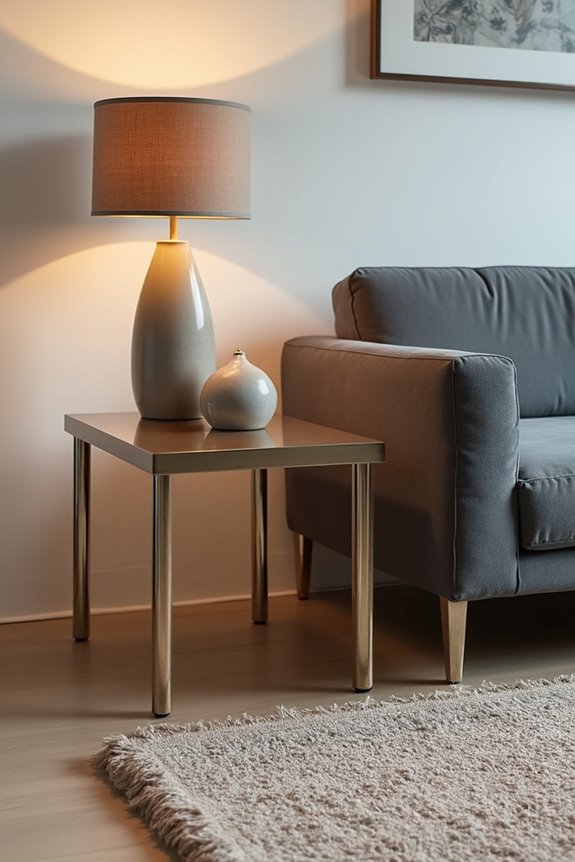
The magic happens when you connect your end tables to your room’s layout through a rug.
I’ve discovered that anchoring end tables creates intentional spaces instead of random scattered pieces. Here’s what transforms your room:
- Position your end table’s front legs on the rug to ground it naturally
- Keep consistent heights between your table and rug for visual unity
- Place smaller tables just off the rug edge for smooth transitions
When you tie end tables to rugs this way, you’re telling your guests, “This space belongs together.” The connection reduces that floating feeling that makes rooms feel incomplete. Your seating zone becomes cohesive and purposeful. You’ll find that stable, well-placed end tables enhance lighting and function while reinforcing where everyone naturally gathers. That’s how modern living rooms actually work.
End Tables as Design Bridges With Wall Features
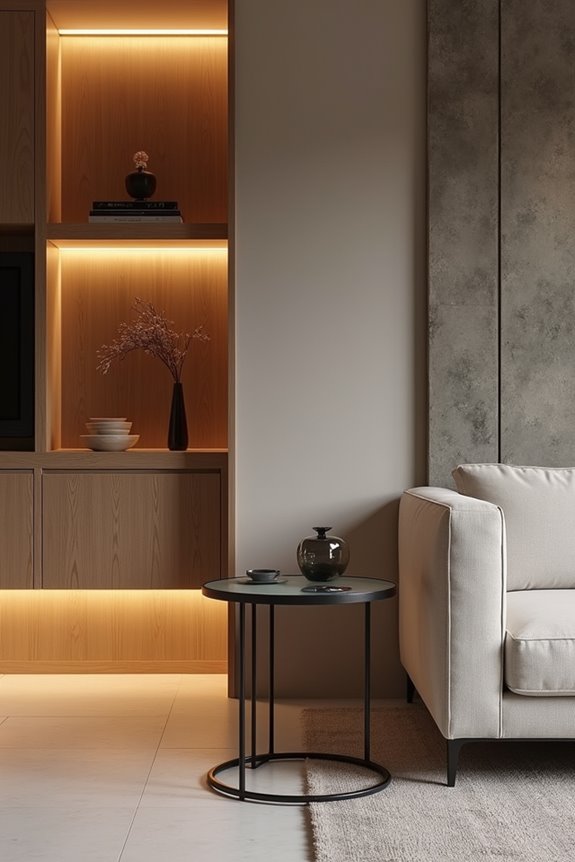
I’ve found that end tables work best when you position them to echo your wall features—think placing a narrow table beneath a floating shelf or beside a gallery wall so the surfaces mirror each other visually. You can layer in small decor pieces on the table that repeat colors or styles from the wall art above, creating that unified look that ties your seating zone directly to the wall. This strategy lets you build focal point displays that feel intentional rather than scattered, turning your end table into a natural extension of your wall design instead of just another piece of furniture.
Anchoring Focal Point Displays
How do you turn a blank wall into the heart of your living room? I’ll tell you—end tables are your covert tool. When you position them strategically, they become design bridges connecting your seating to wall features like art or shelves.
Here’s how I anchor focal point displays:
- Place matching end tables beside your sofa to frame wall art and guide eyes upward
- Add task lighting on top to highlight your wall’s best features and create ambiance
- Display decorative items that echo your wall’s colors or style, tying everything together
These paired tables create visual symmetry that feels intentional. They’re not just functional—they’re storytellers linking your seating zone to your walls. This simple arrangement transforms disconnected spaces into cohesive rooms where everything flows naturally.
Creating Visual Room Cohesion
Why does a room sometimes feel scattered even when it’s beautifully decorated? I’ve discovered the answer: your end tables are design bridges waiting to connect everything together.
When I place matching end tables beside my sofa and align them with wall art or bookshelves, something clicks. The room suddenly feels intentional. I’m not just positioning furniture—I’m creating visual threads that tie my seating to architectural features.
Here’s what works: Position end tables near art displays or floating shelves. This anchors your conversation area to the walls, eliminating that disconnected feeling. Choose materials and colors that echo your wall features. A wooden table mirrors wood shelving. A glass top reflects framed art.
The result? Your living room transforms from random pieces into one cohesive, welcoming space where everything belongs together.
Layering Storage With Art
Your end tables can do more than hold a lamp—they’re actually connectors between your furniture and your walls.
Think of them as design bridges that tie everything together. When you layer storage with wall art, you’re creating focal points that feel intentional and cohesive. Here’s how to make it work:
- Place storage-integrated tables near wall art to reflect lamp light and create visual harmony
- Choose narrow tables (18–24 inches wide) that fit snugly between seating and walls
- Display small decor on top while keeping items organized inside
This approach lets you showcase wall features without clutter. Your end tables become part of the story your walls tell. You’re not just filling space—you’re building a room where every piece talks to the others, creating that welcoming, pulled-together feeling you’re after.
End Tables as Decorative Anchors Near Windows
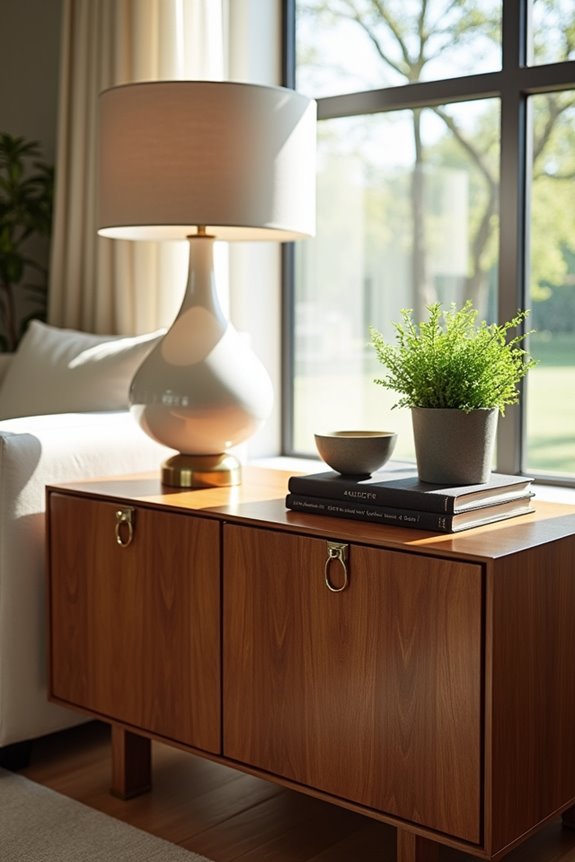
Positioning an end table near a window transforms it into a natural display stage for your room. I’ve found that end tables near windows become perfect spots for showcasing plants or artwork that benefit from natural light. You can layer in a small table lamp to create soft illumination without blocking your view outside. This setup gives you practical surface space for everyday items—coasters, remotes, or a current read—while keeping your room feeling open and uncluttered. A compact, low-profile table works best here, preserving sightlines and maintaining flow. When you match it with nearby seating, you’re creating a cohesive, inviting corner that feels intentionally designed. Your window-adjacent end table becomes both functional and beautifully anchored.
Compact Tables With Built-In Storage for Small Spaces
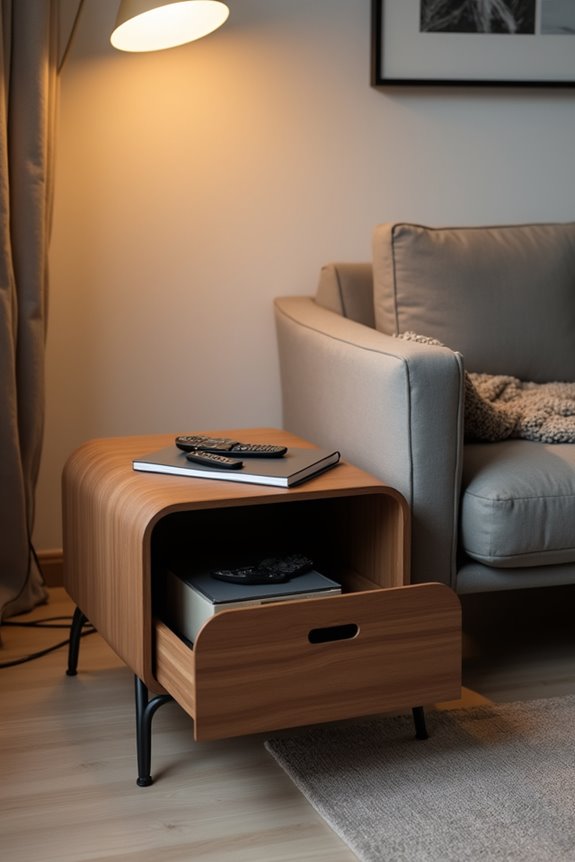
How do you squeeze both style and function into a tight living room? Compact end tables with built-in storage are your answer. I’ve found they’re game-changers for small spaces because they do double duty—providing a surface for lamps and drinks while hiding clutter away.
Compact end tables with built-in storage do double duty—providing surfaces while hiding clutter in tight living rooms.
Here’s what makes them work:
- Narrow designs (18–24 inches wide) slip between furniture without crowding your room
- Hidden drawers and shelves tuck away books, remotes, and coasters you need nearby
- Nesting or stackable options let you adjust configurations based on what you’re doing
The best part? These end tables maintain that clean, minimalist look with simple wood finishes and understated hardware. They’re positioned right where you sit, so everything’s within arm’s reach. You’re not sacrificing style or losing precious floor space—you’re being smart about it.