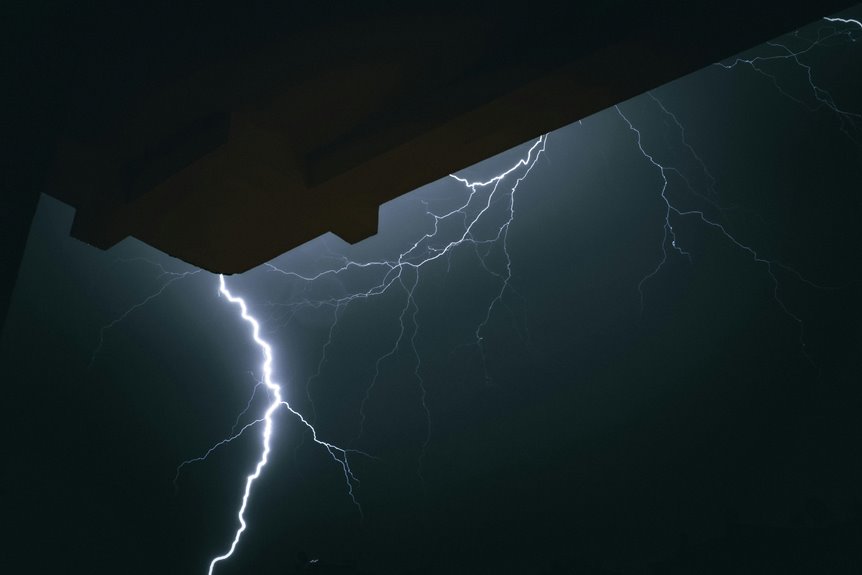
Your living room light flickers for several common reasons. Start by twisting your bulb clockwise—it might just be loose. If that doesn’t work, check whether you’re using an LED bulb in an older dimmer switch, which often causes flickering. Heavy appliances like microwaves or washing machines running simultaneously can also overload your circuit. If flickering happens throughout your home or you smell burning near fixtures, you’ve got a serious electrical issue requiring a licensed electrician immediately. Keep exploring to uncover exactly what’s happening in your space.
Start Here: Is Your Bulb Loose?
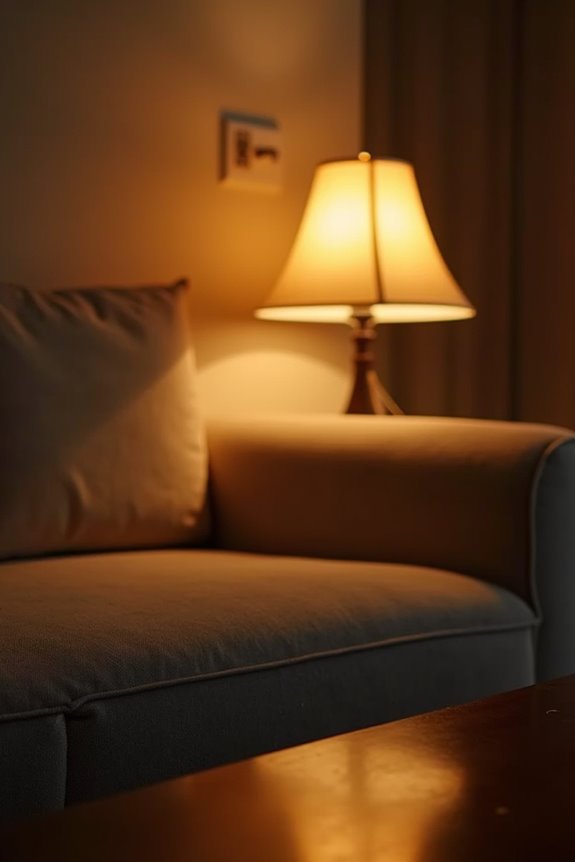
Why does a loose bulb cause flickering in the first place? When your bulb isn’t fully seated, it can’t maintain steady socket contact, which interrupts the electrical connection. This creates that annoying on-and-off pattern you’re experiencing.
Here’s what I’d recommend: First, turn off the light and let the bulb cool if it’s been on. Gently twist the bulb clockwise until it sits snugly in the socket. Don’t force it—just firm pressure works best.
Once you’ve tightened it, flip the switch back on and watch for changes. If your flickering lights stop, you’ve found your culprit. If they continue, at least you’ve ruled out a loose bulb. Either way, you’re one step closer to solving this problem.
Bulb and Socket Mismatches
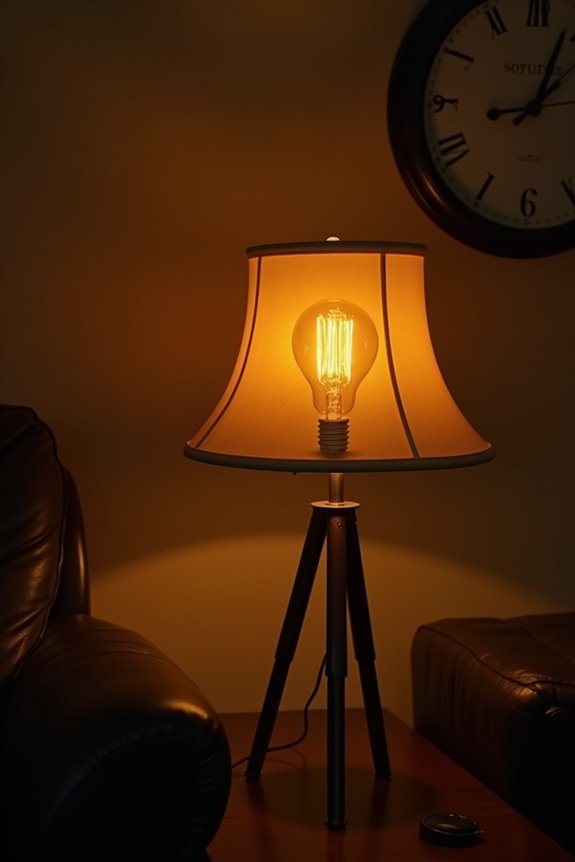
If you’ve checked that your bulb’s screwed in tight and it’s still flickering, the problem might be a mismatch between your bulb and socket. Over time, sockets wear out and become too loose or too tight for standard bulbs, creating unstable contact that causes that annoying flicker. Let’s look at what’s really going on with your bulb type and socket condition so we can fix it.
Incompatible Bulb Types
Have you ever screwed in a bulb that just didn’t seem to fit quite right? That’s incompatible bulb types, and it’s probably why your light flickers. When your bulb and socket aren’t designed for each other, you get poor contact between them. Think of it like trying to plug a European outlet into an American wall—it just doesn’t work smoothly.
Here’s what happens: loose contacts create intermittent flickering because the electrical connection keeps breaking. This is especially common with LED bulbs in older fixtures. The bulb compatibility matters tremendously. Even dimmer compatibility plays a role; older dimmers weren’t built for today’s low-wattage LEDs.
Check your bulb’s base and your socket carefully. Make sure they match. You’ll want the right fit to keep that steady, reliable light you deserve.
Socket Wear and Degradation
Just like anything you use repeatedly, light sockets wear out over time, and that’s often what’s behind your flickering light. The terminals and springs inside your socket can loosen, creating intermittent contact between the bulb and electrical connection. When this happens, your light flickers unpredictably.
Here’s what I’d suggest: inspect your socket for telltale signs. Look for scorch marks, visible looseness, or buzzing sounds when the bulb’s seated. These indicate socket wear that needs attention.
Damaged sockets won’t grip bulbs securely, regardless of bulb type. The solution? Replace the aged socket entirely. It’s straightforward and restores reliable contact immediately. You’ll notice your flickering stops once you’ve installed a new socket. This fix addresses the root problem when it’s genuinely socket-related, not just a bulb issue.
Unbalanced Ceiling Fans and Vibration

Have you realized that your ceiling fan might be the culprit behind those annoying light flickers? When your fan is unbalanced, it vibrates during operation. This vibration travels through the fixture and shakes your connected bulbs, causing them to flicker unpredictably.
Here’s what happens: the wobbling motor creates loose connections in your socket and wiring over time. Even slightly unattached blades can trigger this frustrating problem.
Try these fixes. First, turn off your fan completely. Check that all blades are securely attached and properly balanced. Tighten any loose mounting hardware you find. These simple steps reduce vibration significantly.
If flickering continues after balancing, inspect your fan’s wiring and socket connections closely. Vibration often reveals hidden loose connections that need attention.
Overloaded Circuits and Heavy Appliances
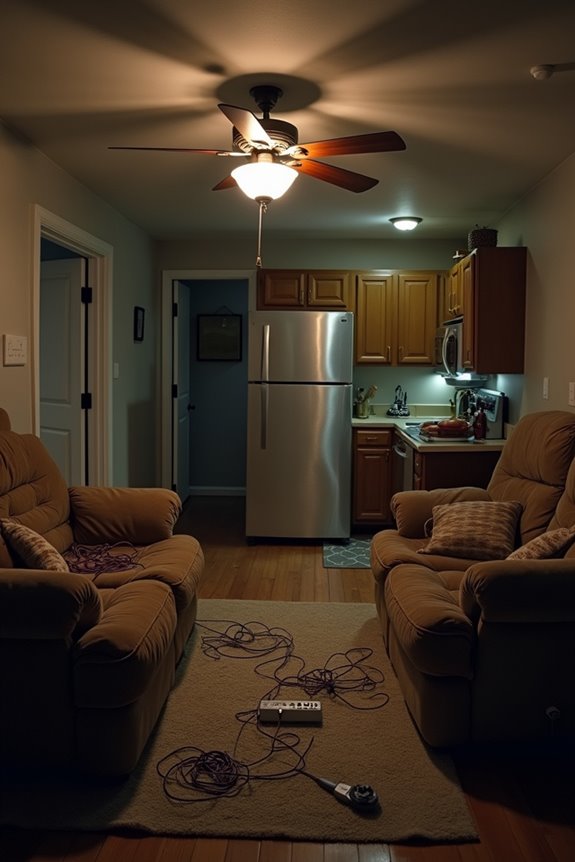
When does your living room light flicker the most? If it happens when you turn on your AC, vacuum, or space heater, you’ve likely found your culprit: overloaded circuits.
Here’s what’s happening. Heavy appliances draw massive power surges, creating voltage fluctuations that temporarily dim your lights. Your electrical system struggles to supply enough current for everything at once.
In older homes especially, this problem gets worse. Running several heavy appliances on one circuit is like asking too many people to drink from one water fountain.
The fix? Move power-hungry devices to different circuits. Plug your space heater into another room’s outlet. This simple change reduces momentary power drains and stabilizes your lighting.
Notice flickering coinciding with appliance start-ups? Consider calling an electrician to evaluate your circuit load.
Hidden Loose Wires Behind Walls
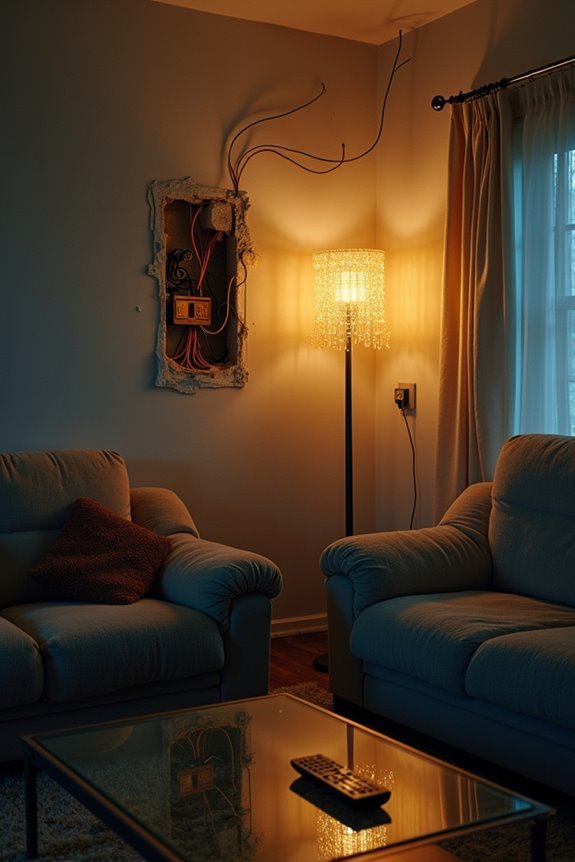
Why does your light flicker in one room, then another, without any clear pattern? Hidden wiring behind your walls might be the culprit. Loose wires create poor connections that resist steady current flow, causing that annoying intermittent flickering across multiple lights.
Vibration from nearby activity or home renovations can loosen concealed wiring, leading to sporadic brightness changes you can’t see from the outside. Moisture intrusion or water damage behind walls corrodes connections, resulting in unpredictable flicker and potential safety hazards.
Here’s what matters: damaged insulation around hidden conductors increases resistance and produces inconsistent voltages that show up as flicker. You shouldn’t tackle this yourself—only a licensed electrician should inspect hidden wall wires. Intrusive testing risks electric shock and further damage if done improperly.
Water Damage and Moisture in Wiring
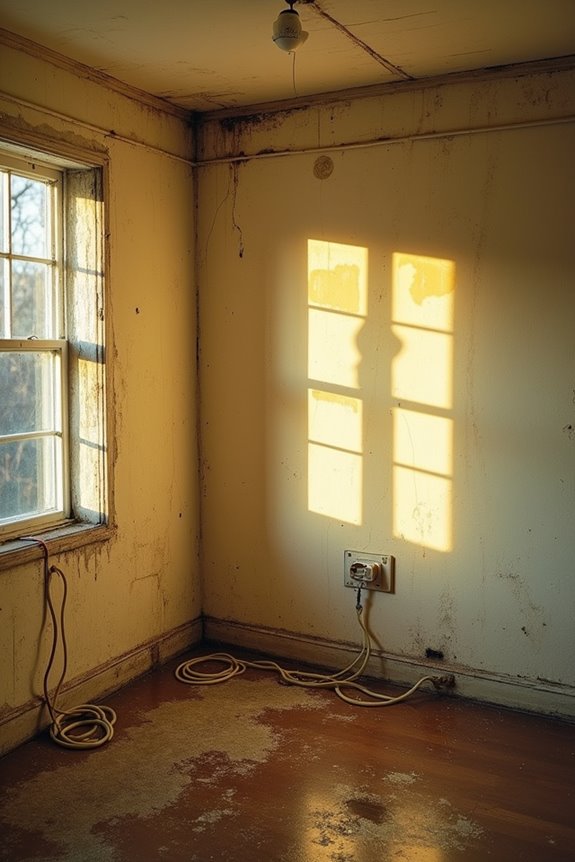
If you’re noticing that flickering happens more often in certain seasons or near water sources like bathrooms and kitchens, moisture might be sneaking into your electrical wiring and causing shorts. You can spot this problem by looking for telltale signs: dampness around outlets, water stains on walls or ceilings near your flickering light, or a musty smell in the room. Here’s the important part—don’t try to fix water damage yourself, because wet wiring creates serious fire and electrical shock risks that only a licensed electrician should handle.
Moisture and Electrical Shorts
Water damage and moisture in your wiring create a sneaky problem that causes flickering lights you can’t easily ignore. When moisture seeps into electrical connections behind your walls, it corrodes the metal components and increases resistance. This unstable voltage is what makes your lights flicker unpredictably.
Here’s what happens: water from leaks near fixtures or in basements reaches your wiring. The moisture triggers shorts—sudden electrical interruptions that cause that annoying on-and-off effect. Even small amounts of humidity can affect outlets, switches, and fixture sockets, especially when humidity levels change seasonally.
Don’t ignore this. Moisture-related electrical shorts are serious safety concerns. If you suspect water damage, call a licensed electrician immediately. They’ll inspect affected areas and identify potential water damage before it worsens. Your flickering lights are telling you something needs attention.
Water Leak Detection Signs
How can you spot hidden water damage before it wreaks havoc on your electrical system? Look for visible staining or peeling paint around your ceiling and walls—these are telltale signs of moisture damage lurking behind. Notice musty odors? That’s another red flag. Check for water intrusion near light fixtures and wiring, since leaks from your roof or plumbing can travel downward. Discoloration spreading across drywall indicates an active problem. If you’ve spotted these warning signs, don’t ignore them. Water intrusion creates the perfect conditions for an electrical short-circuit. Call a licensed electrician and water specialist immediately—don’t attempt fixes yourself. They’ll identify moisture damage before it causes flickering lights or worse. Your safety depends on catching these issues early.
Professional Remediation Requirements
Once moisture finds its way into your home’s electrical wiring, you’ll need professional help to fix it safely—and I mean real professionals, not a DIY approach. Licensed electricians understand how moisture intrusion damages insulation and creates fire hazards that you can’t see. They’ll perform remediation procedures that include drying out affected areas, measuring moisture levels, and replacing compromised wiring. This isn’t just about stopping the flickering—it’s about protecting your home and family. You might also need a plumber to locate the leak’s source. These specialists work together to eliminate both the electrical problem and the moisture causing it. Once they’re done, they’ll test everything to confirm your system’s safe and code-compliant. Getting professionals involved isn’t overkill; it’s genuinely necessary.
Voltage Swings in Your Power Supply
When your lights flicker in sync across multiple rooms, you’re likely dealing with voltage swings—sudden dips and jumps in the electrical power flowing into your home. These fluctuations originate from three main sources: your utility’s service entrance, your electrical panel, or overloaded circuits inside your house.
A loose neutral connection is a common culprit. This seemingly small issue causes significant instability throughout your home’s power supply. You might notice lights dimming or brightening unexpectedly, which signals real problems developing.
Here’s why this matters: voltage swings degrade your appliances over time and pose safety risks. When multiple fixtures flicker together, the problem isn’t individual fixtures—it’s upstream. Your electrical panel and home’s wiring need professional inspection to identify the root cause and prevent equipment damage.
Dimmer Switches That Don’t Work With LEDs

Your dimmer switch might be the real troublemaker behind that annoying flicker in your living room. Here’s the thing: older dimmer switches designed for incandescent bulbs often can’t regulate low-wattage LEDs properly, causing pronounced flicker or uneven brightness. It’s a compatibility issue that trips up many of us.
Modern LED drivers need specific dimmer switches to work smoothly. When you pair an incompatible dimmer with LED bulbs, you’ll notice flickering or even buzzing sounds. The good news? Replacing your dimmer with an LED-compatible model solves this quickly. Just verify both your dimmer and LED bulbs carry dimmer-compatible ratings within matching wattage specifications. This straightforward fix eliminates the flicker and restores stable brightness across all dimming levels.
Circuit Breaker and Panel Issues
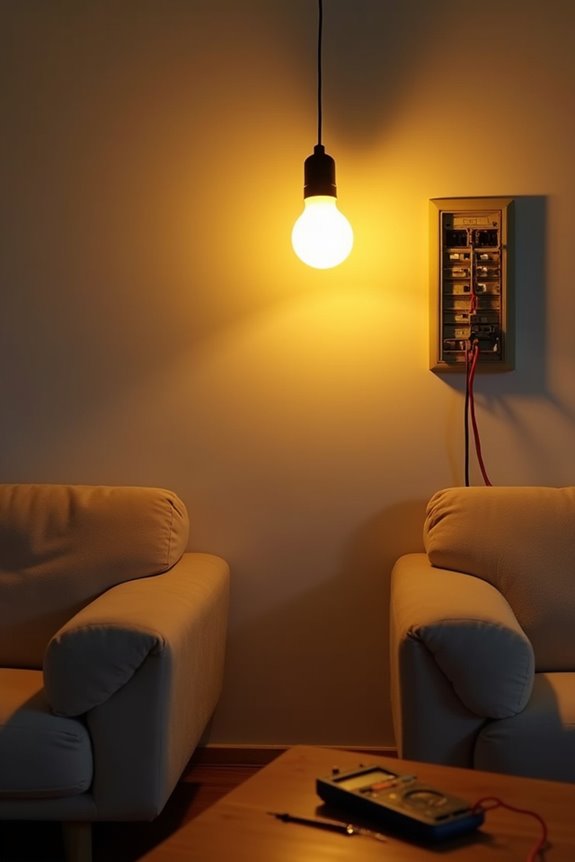
If your lights flicker across multiple rooms at once, the problem likely isn’t your bulbs or outlets—it’s probably hiding in your circuit breaker box or the wiring that feeds it. Loose connections, worn-out breakers, or damaged wires at your main panel can’t distribute power evenly, so you’ll notice your lights dimming and brightening together when appliances kick on. Since these issues affect your whole electrical system and pose real safety risks, you’ll want a licensed electrician to inspect your panel and service entrance before things get worse.
Breaker Box Wiring Issues
Problems at your breaker box—the nerve center of your home’s electrical system—can actually cause flickering in multiple rooms at once, and that’s a sign you shouldn’t ignore. A loose neutral connection at your service entrance wiring creates unstable power delivery throughout your entire house. Similarly, poor wiring in your breaker panel itself can disrupt electricity flow to different circuits simultaneously. You might notice lights dimming and brightening together across several rooms, which signals a main panel issue rather than isolated bulb problems. If your breaker keeps tripping or you’re experiencing this widespread flickering, you’ll want a licensed electrician inspecting those connections immediately. They’ll check your neutral bar integrity and grounding to pinpoint the problem. Addressing breaker box issues early prevents potential fire hazards and restores stable power to your home.
Tripping And System Failures
Circuit breaker trips and panel failures are often the culprits when flickering spreads across your whole house instead of staying in one room. When your breaker trips repeatedly, it’s telling you something’s wrong. Maybe your circuits are overloaded, or your panel’s aging out. Here’s the thing: if you’re experiencing frequent breaker trips alongside flickering, that’s your system’s way of protecting itself. An outdated panel can’t handle modern electrical demands. Loose connections at the main panel create simultaneous dimming across different areas. I’d strongly recommend calling a licensed electrician rather than tackling panel problems yourself. The risks aren’t worth it. If you notice burning smells or a warm panel alongside panel problems, stop everything and contact a professional immediately. Your safety comes first.
Professional Panel Inspection Needs
When your lights flicker alongside breaker trips, that’s your cue to get a licensed electrician to inspect your electrical panel. I’d recommend this because your panel is the heart of your home’s electrical service, and problems there affect everything. A professional panel inspection reveals loose connections, corroded parts, and improper wiring that cause those annoying flickering lights. Your electrician will check voltage levels, test for dangerous drops, and examine your main disconnect. They’ll look for burnt bus bars or degraded neutral bars—signs your panel’s struggling. If they find issues, you might need a service upgrade or rewiring. Think of it as preventive care for your home. Getting ahead of panel problems now saves you from bigger headaches and keeps your family safer.
External Power Problems (Utility and Weather)
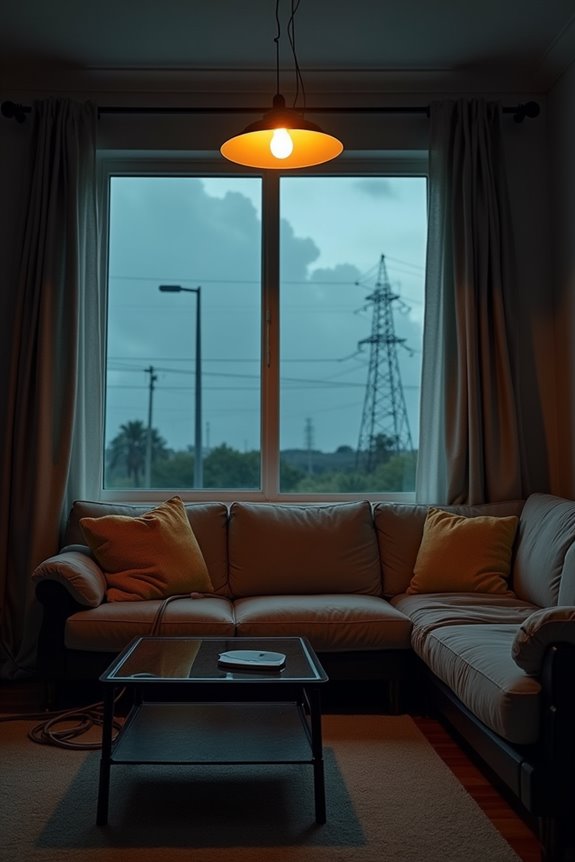
Have you noticed your living room lights flickering at the same time your neighbor mentions their power’s acting up? You’re not alone. Flickering due to external power problems often affects entire neighborhoods simultaneously.
Utility service issues can originate right at the power company’s entrance to your home. Damaged service wires running from poles to your meter create unstable conditions that cause flickering throughout multiple rooms. Weather-related voltage fluctuations from storms or lightning strikes trigger sudden sags and surges in your electrical supply.
When you spot this pattern, contact your utility company. They’ll check for infrastructure problems or scheduled maintenance affecting your area. This simple step confirms whether external factors are responsible. If flickering coincides with outages your neighbors report, you’ve likely identified the culprit—and the solution lies outside your home.
Safety Hazards Hidden in Flickering Lights
Beyond the inconvenience, flickering lights can hide serious dangers like fire hazards from overheating wiring, damage to your appliances, and even effects on your health over time. I want you to understand that persistent flicker—especially when paired with burning smells, hot fixtures, or sizzling sounds—isn’t something to ignore or hope goes away on its own. Let’s explore what’s actually happening behind your walls and why getting professional help quickly matters for keeping your home and family safe.
Fire Risk and Overheating
Why should you care about a light that flickers on and off? Because that annoying flicker might be hiding serious danger in your walls.
When lights flicker, here’s what could be happening:
- Loose connections are heating up inside fixtures, creating fire risk
- Overheating filaments cause bulbs to burn out faster and damage surrounding materials
- Dangerous wiring conditions can ignite insulation around your electrical system
I know it’s easy to ignore a flickering light, but trust me—this isn’t something to brush off. When warmth or warm smells appear near fixtures alongside dimming, that’s your warning sign. These failing connections heat up under electrical load and become genuine fire hazards.
If you notice buzzing, crackling, visible heat, or scorch marks around outlets, get a professional inspector immediately. Your home’s safety depends on it.
Electrical Damage to Appliances
That flickering light in your living room could be quietly damaging your refrigerator, washing machine, or air conditioner right now. Here’s what’s happening: loose wiring or voltage fluctuations behind your walls stress these appliances constantly. They’re working harder than they should, wearing out faster.
| Appliance | Risk | Warning Signs |
|---|---|---|
| Refrigerator | Compressor failure | Food spoils faster |
| Washing Machine | Motor burnout | Strange noises |
| Air Conditioner | Compressor damage | Won’t cool properly |
| Dishwasher | Electrical failure | Won’t start |
When electrical damage goes unchecked, you’re looking at expensive repairs or replacement costs. A $15 professional inspection today beats a $2,000 refrigerator replacement tomorrow. Don’t wait. Contact an electrician who’ll identify loose wiring and voltage issues before they cascade into appliance damage throughout your home.
Long-Term Health Consequences
Danger lurks behind those innocent-looking flickers—and I’m not exaggerating. When your lights flicker repeatedly, you’re facing real electrical safety concerns that demand attention.
Here’s what happens over time:
- Fire risk escalates – Arcing and loose connections generate heat that can ignite nearby materials
- Your home’s systems degrade – Voltage fluctuations stress fixtures, outlets, and your main panel, causing cumulative damage
- Appliances fail prematurely – Those constant electrical surges shorten lifespans, draining your wallet through replacements
I know flickering seems minor, but ignoring it compounds problems. Overheating connections don’t fix themselves—they worsen. A professional inspection catches issues before they become disasters. You’ll sleep better knowing your home’s electrical safety is solid. Trust me, addressing this now prevents costly repairs and keeps your family protected.
How to Diagnose Flickering Lights Step by Step
How’d you like to stop playing guessing games with your flickering light?
Let’s start simple. First, check if your bulb’s loose. Tighten it in the socket—you’d be surprised how often that’s the culprit. Next, inspect the fixture, switch, and outlet behind your light for loose wiring or damaged parts that could cause intermittent contact.
Check if your bulb’s loose, then inspect the fixture, switch, and outlet for loose wiring or damaged parts causing intermittent contact.
Got a dimmer switch? Make sure it’s compatible with your bulb type, especially if you’re using LED bulbs. Older dimmers often don’t play nice with LEDs.
Here’s a detective move: notice if flickering happens when you run other appliances like your AC or vacuum. That suggests circuit overload.
Still stuck? Swap in a different bulb. If flickering continues across multiple fixtures, that’s your sign to call a professional electrician for a deeper inspection.
Quick Fixes You Can Try Today
Now that you’ve figured out what’s causing the flicker, let’s get it fixed. Here are three quick fixes you can tackle right now:
- Tighten that loose bulb. Unscrew it completely, then twist it back in firmly. A loose bulb is surprisingly common and often solves the problem instantly.
- Check dimmer compatibility. If you’re using LED bulbs with an older dimmer switch, they might not work together. Try swapping in a standard incandescent bulb to test this theory.
- Unplug high-power appliances. Turn off your HVAC or vacuum when the lights flicker. If flickering stops, you’ve got a circuit overload situation.
These fixes are simple, cost nothing, and work for most people. You’ve got this.
When to Call a Licensed Electrician
Sometimes those quick fixes just don’t cut it, and that’s when you need to bring in a pro. If flickering persists across your entire home after you’ve tightened bulbs and checked dimmers, call a licensed electrician. You should also reach out if you notice burning smells, hot fixtures, or discolored outlets—these signal dangerous wiring faults.
Watch for red flags like repeated breaker trips or flickering in multiple rooms tied to heavy appliances. These suggest panel wiring issues upstream that need professional diagnosis. After storms, electrical problems especially warrant inspection.
Don’t open your service entrance yourself or test for loose neutrals on multiple circuits. A licensed electrician has the expertise and tools to safely assess your panel wiring and recommend upgrades if needed. Getting help protects your home and family.