
It depends on your space’s layout and light. If you’ve got an open-plan setup, matching colors creates flow and eliminates visual breaks. But if your hallway and living room are separate, try going one shade lighter or darker within the same neutral family—this keeps continuity while adding subtle depth. Test paint samples throughout the day since light transforms color differently across rooms. The right choice becomes clear once you understand these key factors.
Decide First: Open-Plan or Separate Spaces?
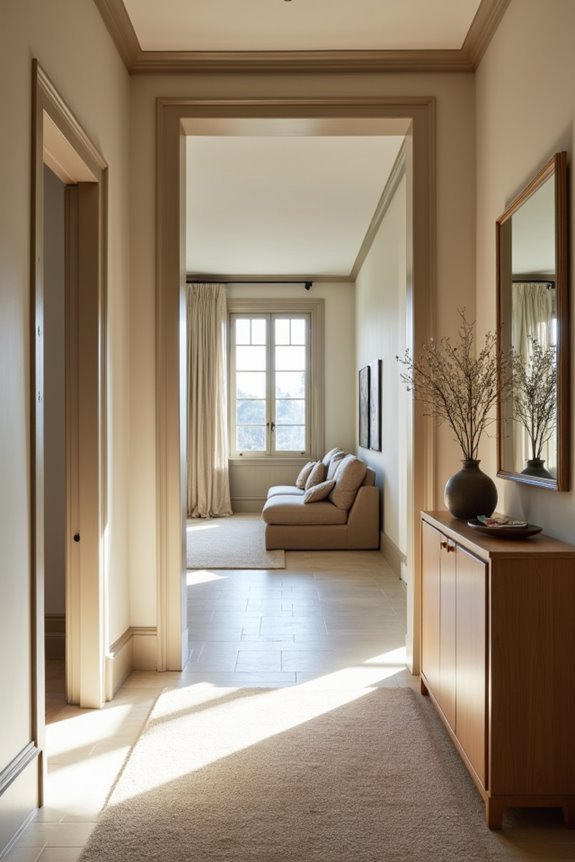
How’s your home laid out—does your hallway flow directly into your living room, or are they distinct rooms with a door between them?
Does your hallway flow into your living room, or are they separated by a door? Your layout determines everything.
This question matters more than you’d think. In open-plan spaces, I recommend painting your hallway and living room the same color. This creates cohesion across sightlines and eliminates visual breaks that make spaces feel disconnected. When those rooms visually merge, you’re establishing flow that makes your home feel unified and intentional.
However, if doors separate your spaces, you’ve got more flexibility. Natural light differences between rooms can make identical colors read differently anyway. Here’s where tonal variation becomes your friend—same color family, different shade. You’ll maintain continuity while defining distinct zones without feeling disjointed.
Know your layout first. Everything else follows from there.
How Light Shifts Your Color Strategy
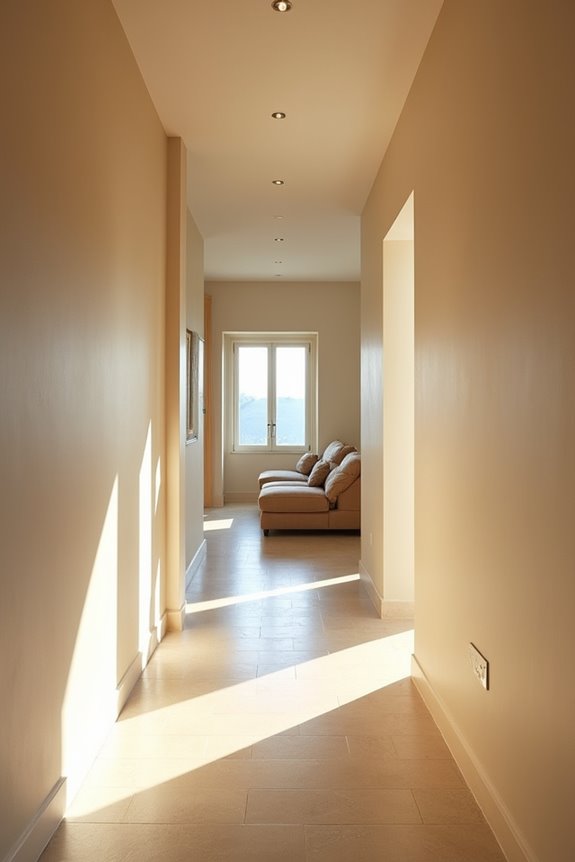
Now that you know whether your spaces are open or separate, here’s what’ll actually happen when you paint them: light will mess with your color in ways you didn’t expect.
Natural light transforms color dramatically between rooms. Consider these shifts:
- South-facing entryways read warmer and lighter than north-facing living rooms, making identical paint look different
- Bright light reveals true color tone, while dim spaces make paint appear deeper or washed out
- Time of day matters—morning and afternoon light hit your walls at different angles
Start with one base color, then adjust. Your north-facing living room might need a lighter or warmer variation to feel balanced. Your lighting fixtures and window treatments amplify these changes too. I’d recommend testing paint samples throughout the day in both spaces. This prevents surprises and keeps your tonal balance intentional, not accidental.
Match Exactly, or Go One Shade Lighter?
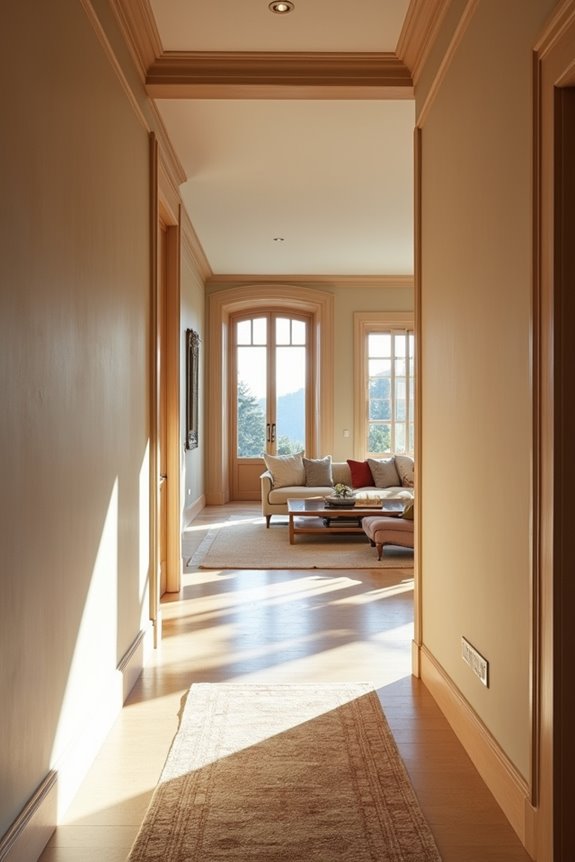
Should you paint both rooms identical, or introduce a subtle shift? I’d recommend going one shade lighter or darker in your hallway. This approach creates continuity without feeling flat or boring. You’re keeping that unified feeling, but adding just enough depth to make things interesting.
Here’s my thinking: if you match exactly, the spaces blur together—sometimes too much. Instead, try staying within the same neutral family. Use warm greige in your living room? Go slightly lighter in the hallway. This tonal variation maintains flow while giving your eye something subtle to appreciate.
The beauty here is balance. You’re not breaking the connection between rooms, but you’re also preventing that monotone trap. Your spaces feel intentional and thoughtfully designed—like you actually planned it all out.
When Bold in One Room Beats Matching in Both
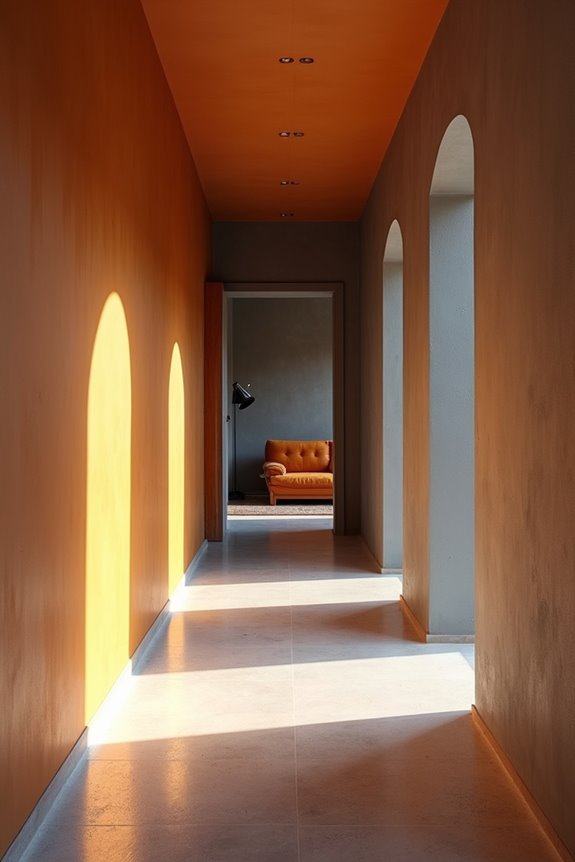
But what if matching isn’t your goal at all? I’ve discovered that using bold color in one room while keeping the other subdued creates something special—visual interest without monotony. Here’s why this strategy works:
- A bold living room draws attention to your favorite furniture or art, while a calmer hallway lets people move through smoothly
- Contrast between spaces actually enhances cohesion by defining each room’s purpose
- Strategic lighting and softer textures in adjoining areas prevent color clashes
Think of it this way: your bold living room becomes the star, and your understated hallway plays the supporting role. They’re different, yet they belong together. This approach gives you the best of both worlds—personality where you need it, flow where it matters. You’re not abandoning harmony; you’re creating it intentionally.
Your Color Checklist: 5 Factors Before You Paint

Before you pick up a paintbrush, let’s walk through five essential factors that’ll help you make the right choice for your hallway and living room.
First, assess your light conditions. Dark or north-facing spaces need warm neutrals like greige to feel open. Second, consider your layout. Open-plan spaces benefit from cohesion through matching colors, while separate rooms can handle slight tonal differences. Third, evaluate your confidence level. Color drenching requires commitment; if you’re unsure, try a neutral hallway first.
Fourth, think about your lifestyle. A neutral hallway works harder in busy homes, grounding the transition between spaces. Finally, test samples on your walls. Watch how they shift throughout the day.
These five steps transform guesswork into a confident plan you’ll love living with.