Before you build that backyard tiny home, I’d tackle three things first. Check your local zoning laws—setbacks, height limits, and whether it’s classified as a dwelling or RV matter tremendously. Next, budget an extra 15-20% beyond construction costs for utilities, permits, landscaping, and taxes. Finally, plan your layout around how you’ll actually use it: office space, guest room, or rental income? Getting these foundations solid now prevents expensive mistakes later—and there’s plenty more to discover about making this work.
Check Zoning Laws and Permitting Requirements First
Before you break ground on your backyard tiny home, do you know what your local government will actually allow? I learned this the hard way—zoning laws and permitting requirements differ dramatically between cities and states. What’s permitted in one neighborhood might be completely prohibited in another.
Start by contacting your local planning department. Ask specifically about ADU regulations, height limits, and setbacks for your area. Understand whether your structure will be classified as a dwelling or RV, since this affects building codes and occupancy eligibility.
I recommend reviewing your municipal zoning codes yourself too. Look for setback requirements—how far your tiny home must sit from property lines. Check height restrictions and parking rules.
This early research prevents costly mistakes and delays. Spending a few hours now saves thousands later.
Budget for Hidden Costs Beyond Construction
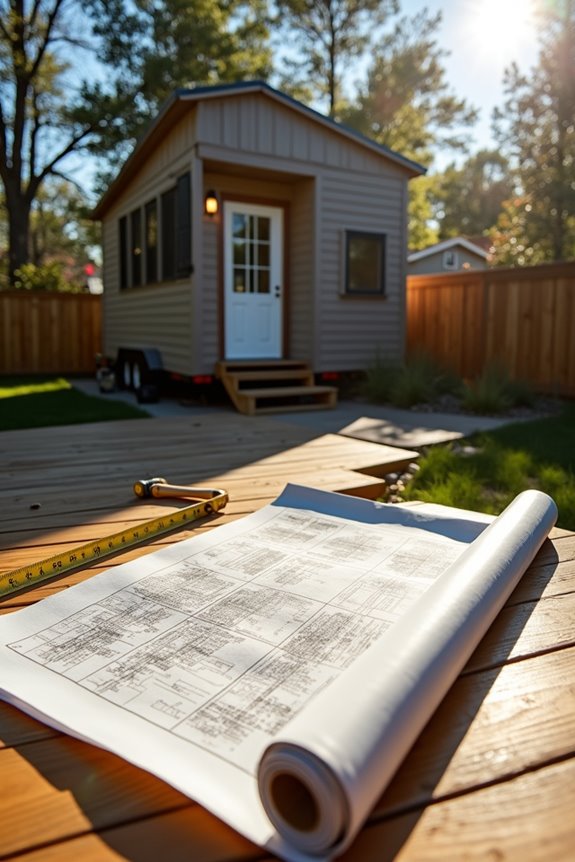
How much are you actually spending on that tiny home? I’ve learned that construction costs are just the beginning. You’ll face utility connection fees and impact charges that often surprise homeowners. Then comes landscaping restoration, new fencing, and driveway repairs—expenses that add up fast.
Don’t forget furnishing and outfitting your space. That’s a significant investment beyond the structure itself.
Here’s what catches most people off guard: property tax increases. Your added dwelling raises your property’s value, affecting ongoing expenses. Budget for post-construction maintenance and additional utilities too.
I recommend creating a separate fund for these hidden costs—aim for 15-20% beyond your construction budget. List everything: fees, repairs, furnishings, taxes, and maintenance. This approach keeps you prepared and prevents financial stress later.
Plan Your Layout Around Your Actual Use Case
Once you’ve locked in your budget and accounted for those sneaky hidden costs, it’s time to figure out what your tiny home actually needs to do for you. Will you work from home? Host guests? Raise a family? Your answers drive everything.
Start by mapping functional zones. If remote work matters, dedicate space for a focused office area. Need rental income? Design a guest sleeping zone with privacy. Prioritize multi-use spaces and convertible furniture to stretch your square footage.
Don’t forget storage solutions—under-bed drawers, vertical shelving, pullout racks work harder than you’d think. Consider accessibility too. Check local ADU regulations and utility placement requirements early. Planning around your actual lifestyle prevents costly redesigns later and creates a home that genuinely serves you.