
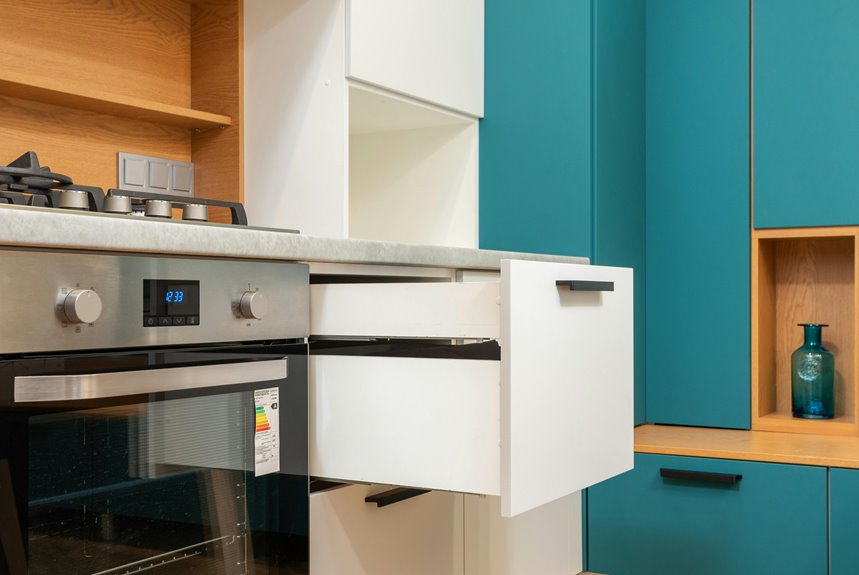
Standard base kitchen cabinets are 24 inches deep—that’s measured from your back wall to the front edge. When you add a countertop overhang of about 1–1.5 inches, you’re looking at roughly 25–26 inches total depth. Wall cabinets are shallower at 12 inches, which keeps upper storage from jutting out too far. This 24-inch standard works great for most kitchens and aligns perfectly with dishwashers. But if you’re working with a tiny space, you might want shallower options. There’s more to discover about customizing depths for islands and tight corners.
What Is Standard Base Cabinet Depth?
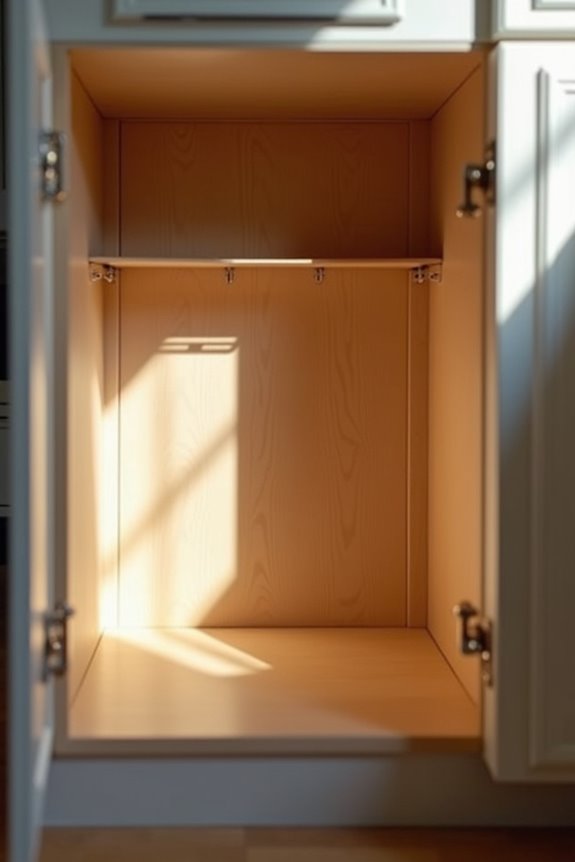
Ever wonder why your kitchen cabinets feel just right when you’re working at the counter?
The standard base cabinet depth is 24 inches, measured back to front. This measurement creates that comfortable workspace we all appreciate. With countertop overhang added, your total cabinet depth reaches about 25–26 inches, giving you that perfect counter edge.
Inside, the interior usable depth is around 23 inches—plenty of space for dishes, pots, and everyday items. Base cabinet heights are typically 34.5 inches without countertops, reaching 35–36 inches once you add the countertop.
Here’s what’s cool: you have options. Shallow depth options range from 12–18 inches if you need flexibility. Want more storage? Deep cabinet options go 27–30 inches for specific layouts. Understanding these measurements helps you plan kitchens that work for your lifestyle.
Why 24 Inches Works (and When It Doesn’t)

Why does the 24-inch standard work so well for most kitchens? I’ll tell you—it’s built around what we actually use. Your dishwasher depth matches your base cabinet depth, so everything lines up perfectly. The countertop overhang adds that extra 1 to 1.5 inches, giving you a total working depth of about 25–26 inches. That’s comfortable for meal prep without feeling cramped.
But here’s the thing: 24 inches doesn’t work for everyone. Got a tiny apartment? Shallow options at 12–18 inches might suit you better. Need serious storage space? Deeper configurations at 27–30 inches could be your answer. Wall cabinet depth and appliance widths also matter. When standard base cabinets don’t fit your situation, those alternatives exist. You’re not stuck with one-size-fits-all thinking.
Wall and Tall Cabinet Depths: When You Need Shallower Storage
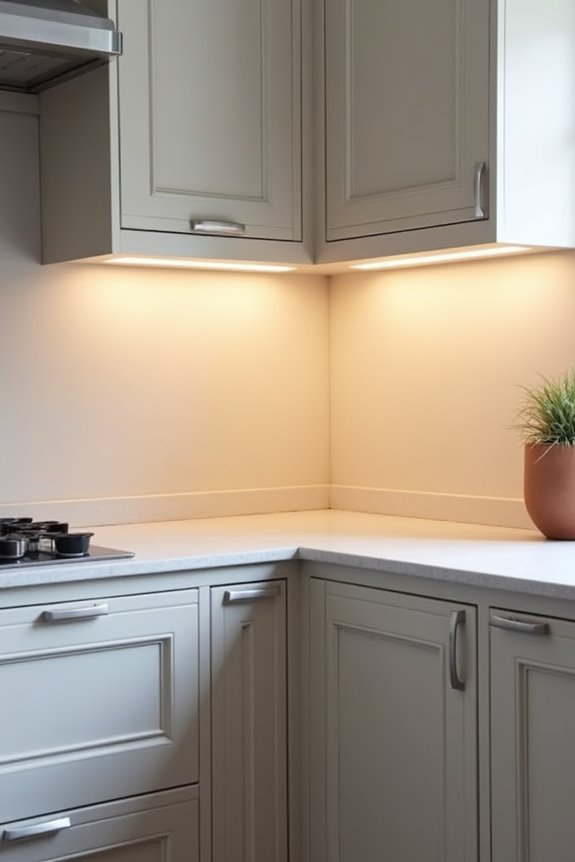
How do you know when to go shallow with your wall cabinets instead of matching your base cabinet depth? I’ve found that standard 12-inch shallow storage works best in most kitchens. You’ll want this depth for tight spaces, narrow kitchens, or when you’re planning a kitchen remodel with limited room.
| Cabinet Type | Standard Depth | Best Use |
|---|---|---|
| Wall cabinets | 12 inches | Most kitchens |
| Tall pantry cabinets | 12–24 inches | Flexible storage |
| Over refrigerator | 15–18 inches | Alignment needs |
| Base cabinet depth | 24 inches | Lower storage |
| Shelving depth | Varies | Custom layouts |
Shallow storage keeps your kitchen feeling open and prevents that cramped feeling. I recommend 12-inch wall cabinet depths when you’ve got limited wall space. Your tall pantry cabinets can match this depth too, creating visual harmony throughout your kitchen layout.
Custom Depths for Islands, Appliances, and Tight Spaces
Standard 24-inch base cabinets don’t always work in every kitchen, and that’s where custom depths come in handy. Maybe you’re squeezing cabinets into a tight galley kitchen or designing an island that anchors your space. I find that shallow base cabinets—typically 12 to 18 inches deep—work wonderfully in cramped layouts, while deeper options up to 30 inches maximize storage where you’ve got room. Islands often need special consideration; I typically see them built 36 to 39 inches deep using back-to-back 24-inch bases with overhang. When you’re installing nonstandard appliances or creating wall-to-base coordination in tricky spaces, custom cabinet depths ensure proper clearance and smooth door swings. Pantry cabinets and deep base cabinets offer flexibility that standard depths simply can’t match, giving your kitchen that tailored feel.
How to Measure Your Total Kitchen Depth
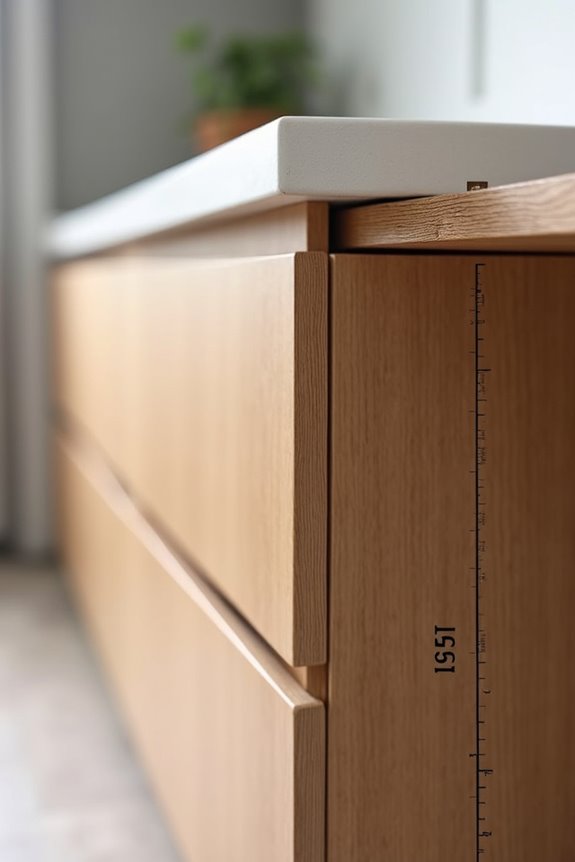
Once you’ve settled on your cabinet depths—whether you’re going standard or custom—you’ll want to know your kitchen’s total depth from wall to countertop edge.
I recommend measuring in three key steps:
- Measure your cabinet box depth — Standard base cabinets run 24 inches, while wall cabinets typically measure 12 inches.
- Add the countertop overhang — Most overhangs extend 1–1.5 inches, bringing your standard base depth to about 25–26 inches total.
- Account for appliance depths — Dishwashers need roughly 24 inches; refrigerators demand 30–36 inches. Factor these into your overall kitchen depth.
The countertop-to-base gap of 18 inches helps you visualize your workspace. Always measure from the wall to your countertop’s outer edge—not just the cabinet box. This gives you the true total depth you’re working with.
Choosing the Right Depth for Comfort and Accessibility
What matters most when picking your cabinet depth? Your comfort and how easily you’ll use your kitchen daily.
Standard base cabinets run 24 inches deep, but you might consider shallower options at 18–21 inches. Why? Better knee clearance and easier reach to items in the back. Wall cabinets typically sit at 12 inches deep, though deeper pantry depth choices exist at 15–18 inches.
Think about that countertop overhang too—it adds inches to your overall cabinet dimensions. With about 18 inches between countertop and upper cabinets, you’ll want accessibility in mind.
If your kitchen feels tight or you have mobility concerns, shallow base cabinets genuinely improve your daily experience. You’ll spend less time stretching and straining. Choose cabinet dimensions that work for your body and lifestyle, not just what’s standard.