

Your standard kitchen table sits 28–30 inches high, with 30 inches being most common. That height pairs perfectly with chairs that have seats around 17–19 inches tall, giving you the ideal 10–12 inches of legroom underneath. This setup lets you sit comfortably without your knees bumping the table. If you’ve got a table with an apron (that decorative support piece), measure to its bottom since it eats into your legroom. Want to explore how counter and bar heights compare, or discover which seating style works best for your space?
Standard Kitchen Table Heights: 28–30 Inches
Why does your kitchen table height matter? It’s the foundation for comfortable dining and everyday gatherings.
The standard dining table height sits between 28–30 inches from floor to tabletop, with 30 inches being most common. This kitchen table height works because it pairs perfectly with chair seat heights of about 17–19 inches, creating roughly 10–12 inches of clearance under the table. That space lets you sit comfortably without your knees bumping the underside.
This range balances dining room ergonomics for most adults while supporting accessibility needs. Whether you’re eating breakfast or hosting dinner, you’ll find this height accommodates different body types and abilities. Some tables vary based on style, but this 28–30 inch standard remains your reliable baseline for seating comfort and functional design.
The 10–12 Inch Clearance Rule: Why It Matters
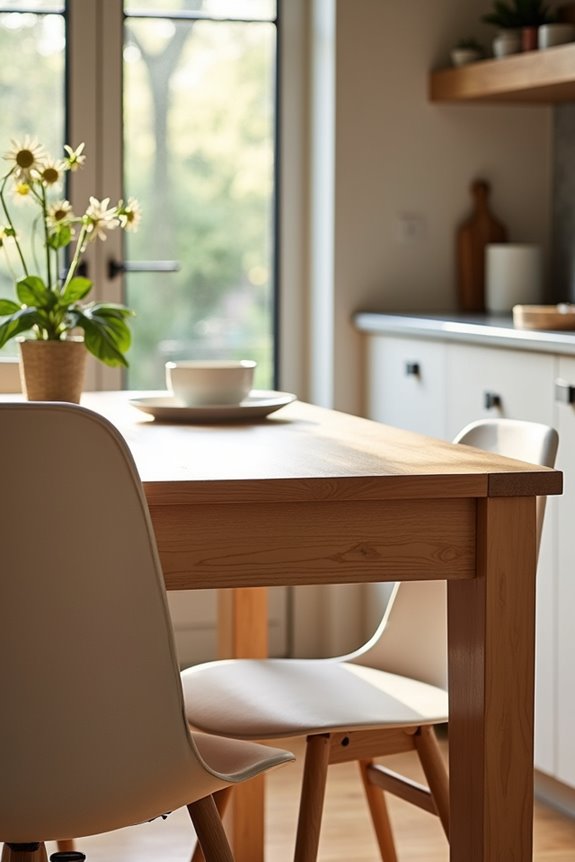
Once you’ve settled on a standard 28–30 inch table height, you’ll want to ensure there’s about 10–12 inches of space between your chair seat and the table’s underside—this clearance prevents your knees from bumping the table when you sit down. Here’s where table aprons (those decorative supports under the tabletop) complicate things: they can eat up 9–11 inches of that precious legroom, so you’ll need to measure your specific table and subtract accordingly to find the right chair height. I’d recommend measuring from your table’s underside down 10–12 inches, then testing actual chairs at that height before you buy, since comfort varies from person to person.
Comfort and Leg Room
How do you know if you’ll actually fit comfortably under a kitchen table? Test it before buying. Standard height dining tables sit 28–30 inches tall, while chair seat height runs 17–19 inches. That difference creates your 10–12 inch clearance—the legroom you need to sit without cramping your legs.
Here’s the catch: under-table aprons shrink usable space by 3–5 inches. Measure clearance to the apron’s bottom, not the tabletop. Pedestal and trestle designs beat refectory tables with rails, which eat into your legroom.
Don’t skip the comfort test. Pull up a chair, sit down, and see how your legs feel. You’ll know immediately if that dining room table suits you. Your future self will thank you for checking now.
Adjusting for Table Aprons
The table apron—that structural support running beneath your tabletop—is exactly why you can’t just measure from the table’s surface down to the floor. Here’s the thing: aprons reduce your usable legroom by about 3–5 inches, so you’ll want to measure to the apron’s bottom, not the tabletop itself.
When you’re sizing your kitchen table and chair seat height, aim for that 10–12 inch clearance sweet spot. Subtract your chair’s seat height from the table underside clearance. But wait—don’t forget cushion compression shrinks effective height by 1–2 inches.
Test this before buying. Sit in the chair with cushions, and verify you’ve got comfortable legroom. Getting these measurements right means you’ll actually enjoy meals together without cramped legs.
Pairing Chairs With Your Table: The 17–19 Inch Standard
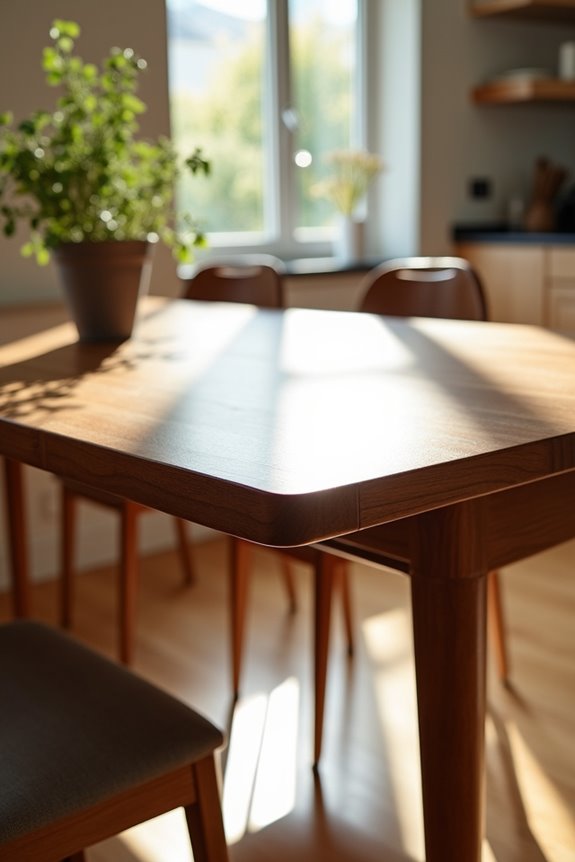
Finding the right chair height for your kitchen table matters more than you might think. I want you to feel comfortable during every meal, and that starts with proper table and chair pairing.
The standard chair seat height ranges from 17–19 inches, with 18 inches being most common. When you pair these chairs with a 28–30 inch table, you’re creating ideal legroom and ergonomic seating. The magic happens when there’s about 10–12 inches of clearance between your chair seat and the table underside.
Here’s what I’ve found: cushioned chairs sit closer to 18–19 inches due to padding, while wooden chairs typically measure 17–18 inches. Before buying, measure your table’s height and test chairs for comfort. You’ll know you’ve found the right match when your legs have breathing room and your arms rest naturally on the table.
Counter Height Tables: 34–36 Inches Explained
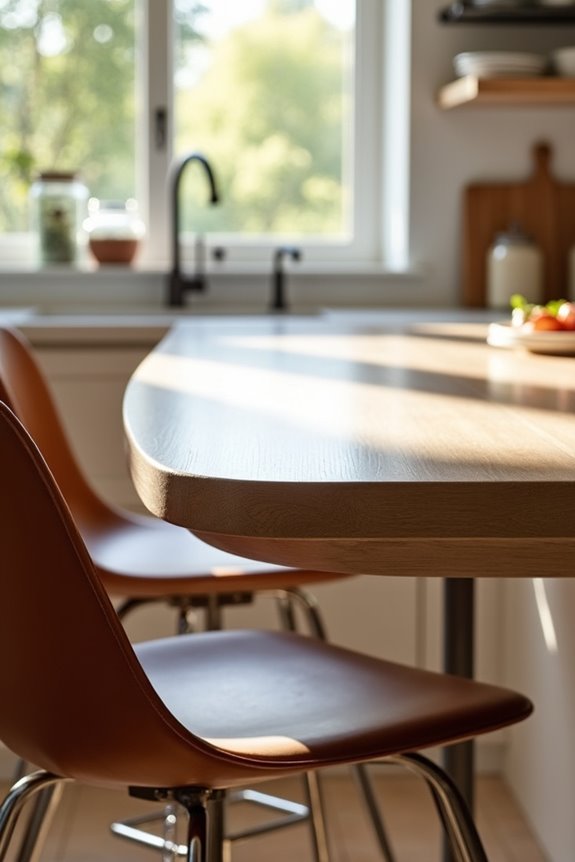
Want a dining setup that feels less formal than a traditional table but still gives you plenty of space?
Counter-height tables might be your answer. Standing at 34–36 inches tall, these pieces create an informal dining atmosphere that works wonderfully in kitchen-adjacent spaces. Here’s what makes them special:
- Pair with the right stools — Choose stools measuring 24–26 inches high for comfortable legroom height and proper proportions
- Match your kitchen aesthetics — Their height visually aligns with counters and islands, creating a cohesive look
- Embrace versatility — They strike a dining height comparison sweet spot between formal dining tables and bar-height options
I’ve found counter-height tables excel for large gatherings and buffet-style setups. They invite casual conversation while maintaining functionality. They’re not too formal, not too casual—just right for how many of us actually gather today.
Bar Height Tables: 40–42 Inches Explained
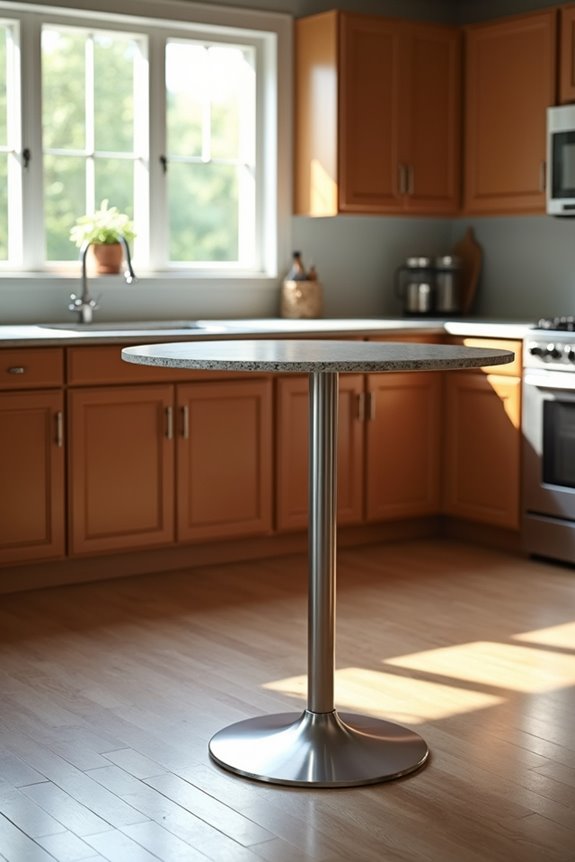
Bar height tables sit at 40 to 42 inches tall—significantly higher than standard dining tables—and I’ll show you how they pair with 28 to 30-inch bar stools to create that trendy, social vibe you’ve probably seen in modern kitchens. You’ll want to consider three key factors: whether the height works with your space and lifestyle, how the sleek aesthetic fits your home’s style, and honestly, whether everyone in your household can comfortably use them (they can be tough for kids and seniors). Let me break down each of these points so you can figure out if bar height is the right choice for your kitchen.
Height and Stool Pairing
How do you create that casual, lounge-like vibe in your dining space? I’ll tell you—it’s all about matching your bar height table with the right stools.
Here’s what you need to know:
- Bar height tables stand 40–42 inches tall, which is significantly higher than your standard dining table height
- Pair them with stools that have a 28–30 inch seat height to maintain proper legroom and comfort
- Skip standard dining chairs entirely—they won’t work with this counter height setup
This seating arrangement transforms your dining room dimensions into an entertainment hub. The stool pairing creates that standing-friendly atmosphere where conversation flows naturally. You’ll find bar height works beautifully for casual gatherings, and your guests will appreciate the relaxed feel. It’s the perfect solution when you want your dining space to feel less formal and more social.
Aesthetic and Entertaining Appeal
Once you’ve paired your bar height table with the right stools, you’ll release something special—a dining setup that effortlessly encourages mingling and conversation. Unlike standard height dining chairs, bar height seating creates an entirely different vibe. You’re standing taller at counter height, which naturally brings people together in a lounge-like atmosphere. This isn’t just about the seating height; it’s about transforming how you entertain. Your kitchen table becomes a gathering spot where guests linger longer, chat more freely, and feel welcomed. The elevated dining chairs and bar height design work together to soften formality, making your space feel relaxed and inviting. Whether you’re hosting casual weeknight hangouts or weekend entertaining, this setup says: “Come closer, stay longer, belong here.” That’s the real appeal.
Accessibility and Space Considerations
When you’re shopping for a bar height table at 40 to 42 inches tall, there’s an important trade-off you’ll want to contemplate before committing.
Bar height tables demand specific consideration for accessibility and comfort. Here’s what matters:
- Seating requirements: You’ll need bar stools or high-top chairs with seat heights around 28 to 30 inches, creating significant chair height differences from standard dining setups.
- User limitations: Children struggle with the elevated seat height, and people with mobility challenges find reaching and sitting difficult at this table clearance.
- Space dynamics: The taller profile demands more vertical clearance and feels less intimate than standard height tables.
I’d recommend bar height tables primarily for entertaining spaces where guests won’t linger for hours. Consider your household’s actual needs. If accessibility and comfort matter most, standard height tables offer better everyday functionality for everyone.
Standard vs. Counter vs. Bar Height: Quick Comparison Guide
Why do some kitchen tables feel just right while others leave your knees bumping the underside? The answer lies in understanding three main dining table height options.
Standard height tables sit at 29 inches—perfect for formal dining and everyday meals. Pair them with chairs offering 10 to 12 inches of legroom clearance beneath the table surface.
Standard height tables at 29 inches offer perfect versatility for formal dining and everyday meals with proper legroom clearance.
Counter height tables measure 34 to 36 inches, designed for casual eat-in kitchen spaces. They work beautifully with 24 to 26 inch seating, creating an inviting gathering spot.
Bar height tables stand tallest at 40 to 42 inches, paired with 28 to 30 inch bar stools. They foster social, entertaining vibes.
Each dining table height serves different purposes. Standard works for versatility, counter suits casual areas, and bar height transforms your dining room dimensions into entertaining-focused spaces that bring people together naturally.
Bench Seating vs. Chairs: Height Differences and Trade-Offs
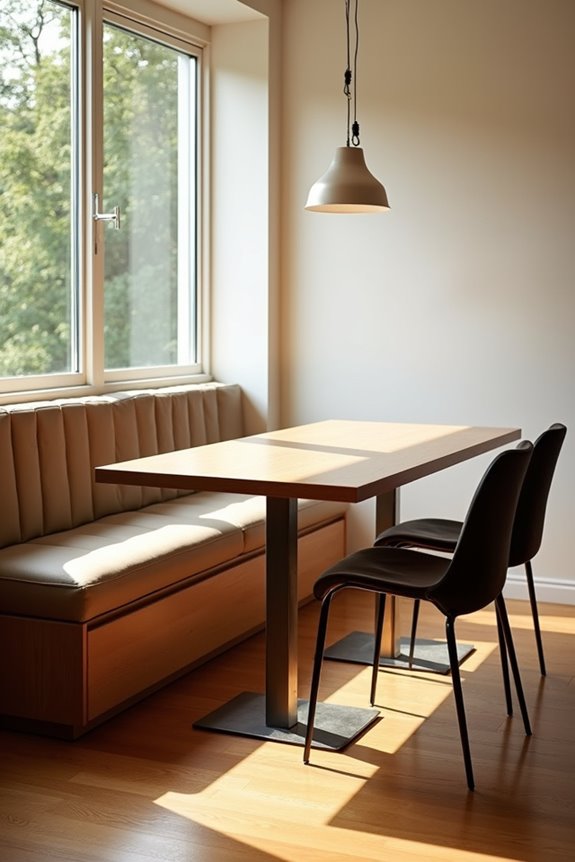
How much difference can a backrest really make? Here’s what I’ve discovered about bench seating versus chairs.
- Seat Height Matters: Benches sit slightly higher at 18-20 inches compared to standard chair height of 17-19 inches, affecting your overall comfort during meals.
- Posture Changes: Without a backrest, you’ll naturally sit more upright or lean forward, which impacts how long you’re comfortable sitting.
- Legroom Trade-offs: Benches offer flexible seating width and fit an extra person, but they reduce under-table clearance for longer legs.
The key? Keep your bench height aligned with your dining table height so you maintain about 10-12 inches of table clearance. This ensures proper legroom and proportion. I’d recommend measuring your table underside (typically 71 cm) before choosing bench height to guarantee everyone feels welcome at your table.
Adjustable and Extendable Tables: Flexibility in Dining Design
There’s a breakthrough hiding in modern dining furniture: tables that actually adapt to your life instead of the other way around. Adjustable height tables let you customize everything to match your needs, whether you’re working, dining, or entertaining. I love how extendable tables use sliding leaves to grow larger without looking awkward. Telescoping legs preserve that cohesive look while increasing seating capacity. For counter-height compatibility, adjustable stools compensate perfectly when your table height changes. This dining ergonomics approach means everyone sits comfortably at the same table. Height customization transforms rigid furniture into flexible solutions. You’re not forced into one setup anymore—your table evolves with you. Seating flexibility like this creates spaces that truly work for your family’s unique rhythm and gatherings.
Selecting Your Height: Comfort, Access, and Space Considerations
Once you’ve picked your table style, the next big decision is getting the height just right—and I’ll be honest, this matters more than most people realize.
Picking your table height is crucial—it affects comfort, functionality, and how your dining space truly works for everyone.
Here’s what I want you to consider:
- Comfort first: Standard dining table height sits at 28–30 inches, with chair seat height around 17–19 inches. This gives you that sweet 10–12 inches of clearance between seat and tabletop that makes eating and conversing feel natural.
- Legroom counts: Plan roughly 10–12 inches of space between the chair underside and table. Armed chairs need at least 6 inches minimum.
- Your lifestyle matters: Standard height works for most families and wheelchairs. Counter height (34–36 inches) or bar height (40–42 inches) work too, but standard height remains your most versatile baseline for genuine accessibility and belonging.