
Mice hide in five bedroom spots you need to know: inside walls and behind baseboards where they travel 10–30 feet, under beds in dark cluttered zones, behind dressers near baseboards, around window sills and curtain rods, and in gaps where warmth and darkness attract them. They’re most active at night, leaving droppings and gnaw marks as evidence. Sealing entry points and removing clutter helps, though understanding their specific hiding patterns will reveal how to tackle this problem effectively.
Inside Walls and Behind Baseboards
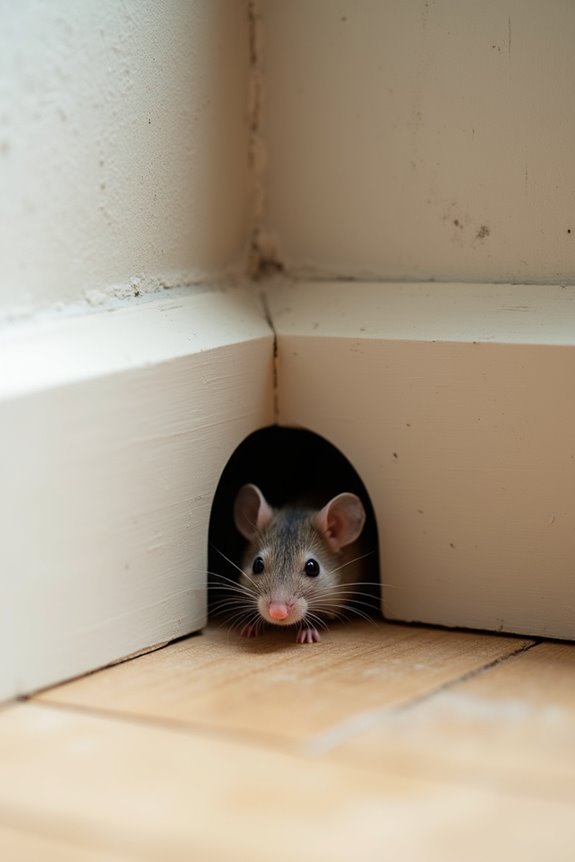
Ever heard scratching sounds coming from your bedroom walls late at night? That’s likely mice activity happening in your wall voids. I’ve found that mice favor these hidden pathways because they’re dark, quiet, and perfect for concealment. They travel 10–30 feet through baseboards and wall cavities to reach your bedroom from food sources elsewhere.
Here’s what makes walls so attractive to them: the insulation provides ideal nesting materials. Mice shred fibers, cloth, and cardboard to build cozy nests inside these spaces. You’ll typically hear scratches at dawn and dusk when they’re most active.
Check your baseboards carefully. Look for small holes or gnaw marks indicating entry points. Pay attention to sounds behind drywall—these are your clues that mice have established hiding spots in your bedroom walls.
Under Beds and Inside Closets
While mice travel through your walls to reach your bedroom, they’re also setting up camp in the spaces closest to you—under your bed and inside your closet. These hiding spots offer the quiet, undisturbed refuges mice crave, plus quick access to food sources within 10–30 feet.
Mice nest under beds and in closets, creating hidden refuges with quick access to food sources within 10–30 feet of your bedroom.
I want you to know what you’re dealing with:
- Under beds: Mice exploit dark, cluttered areas created by blankets and storage boxes, using fabric fibers as nesting materials for their cozy hideouts.
- Inside closets: Hanging clothes and cardboard boxes provide perfect cover, where mice shred insulation and textiles to build nests.
- Warning signs: Watch for droppings along baseboards, tiny gnaw marks on wooden frames, and scratching noises at night indicating active bedroom infestation.
Behind Dressers and Other Bedroom Furniture
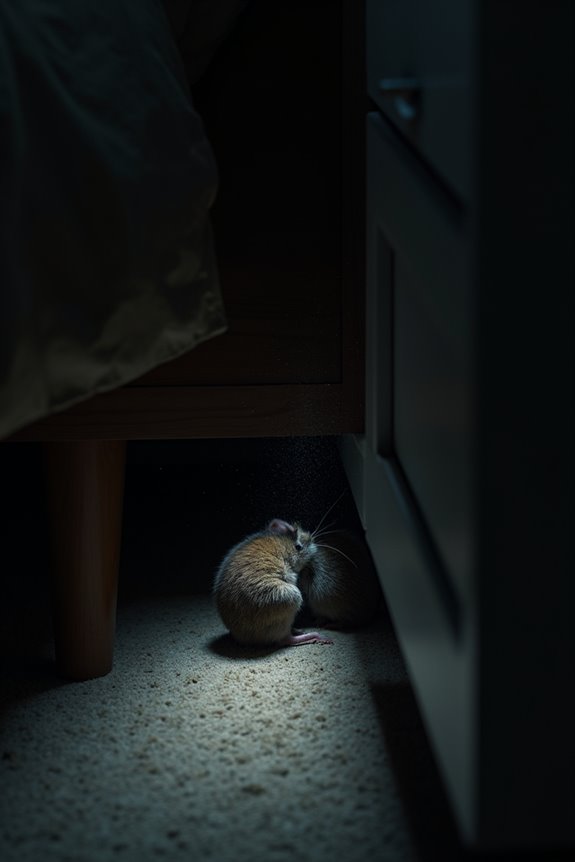
Why do mice love the space behind your dresser? They’re drawn to the dark, undisturbed areas where they can build bedroom nests safely. These tight spaces offer easy baseboard access and protection from your movement during quiet period activity.
| Sign | Location | What It Means |
|---|---|---|
| Droppings | Dresser area | Active nesting |
| Shredded fabric | Behind furniture | Insulation as nesting material |
| Scratches | Along baseboards | Mice hiding behind furniture |
| Pet food crumbs | Under dresser | Food source attraction |
| Paper bits | Wall voids | Recent nest building |
You’ll notice wall voids between your dresser and walls create perfect highways. Clutter behind dressers traps pet food, attracting mice seeking shelter and meals. Listen for scratches behind furniture during nighttime hours when activity peaks. Check for droppings in the dresser area and shredded materials—these signal established bedroom nests. Mice exploit these hidden zones because they’re warm, quiet, and full of nesting supplies.
Window Sills, Curtain Rods, and Gaps
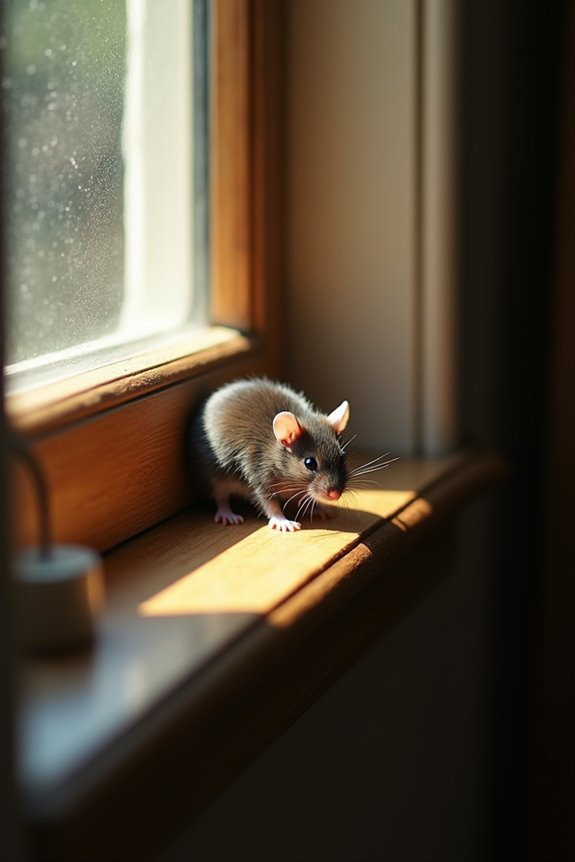
Mice don’t stop at your furniture—they’ll climb right up to your windows if you let them. I’ve found that windows are prime real estate for mouse activity in bedrooms. They’re drawn to the warmth, shelter, and easy access these spots provide.
Here’s where mice hide around windows:
- Window sills and gaps – Mice squeeze into small cracks around frames, leaving dust and droppings as telltale signs of nesting sites.
- Curtain rods and cornices – These elevated perches let mice scout entry points while staying hidden from view.
- Behind drywall and concealed cords – Mice travel through these sheltered routes between rooms, creating hidden highways throughout your bedroom.
Check your window areas regularly for gnaw marks or droppings. Sealing gaps and removing clutter near windows makes your bedroom far less inviting to these unwanted visitors.
How Warmth and Darkness Help Mice Hide
Ever wonder why you find mouse droppings in the same spots repeatedly? Mice crave warmth and darkness—conditions your bedroom provides perfectly. They’ll nest in insulation, shredded fabric, and cardboard tucked into hidden areas. Dark wall voids and gaps along baseboards become highways for traveling while staying concealed. Your clutter offers ideal hiding spots; mice nestle behind dressers, under beds, and inside closets where stable temperatures and shadows keep them safe. They’re most active at dusk and before dawn, exploring bedrooms when darkness shields them. If you’ve got crumbs or pet food near sleeping areas, you’re essentially inviting them into cozy hideouts. Understanding these preferences helps you spot potential nesting areas and take action before mice establish themselves in your space.