
Whether you can legally own a backyard goat depends on your local zoning laws, not state regulations. I’d recommend calling your city or county zoning office first to ask about permitted livestock and herd limits. Then check your property deed and HOA rules—they might be stricter than city codes. You’ll likely need about 200–250 square feet per goat, four-foot fencing, and a predator-proof shelter. Getting these details right upfront saves you headaches and fines down the road, so let’s explore what your specific situation requires.
Check Local Zoning Laws First
Before you bring home your first goat, here is the thing: your city or town—not your state—decides whether you can actually keep one in your backyard.
Local laws vary wildly. What’s legal in one neighborhood might be completely forbidden in another. Seattle, for example, allows goats but restricts how many based on your lot size and requires them to be pygmy, dwarf, or miniature breeds with annual licenses.
Your first step? Contact your local city or county zoning office. They’ll tell you exactly what’s permitted on your property. Ask about breed restrictions, herd size limits, and licensing requirements. Some areas require written permission; others have no restrictions at all.
This research takes an hour but saves you headaches later. You’re building a sustainable backyard farm responsibly.
Review Your City’s Code on Backyard Goats
So where do you actually find these rules? Your city’s municipal code contains all the specifics you need. In San Diego, for example, Section 44.0307 outlines exact requirements for single-family homes, including a 400 square foot outdoor enclosure and proper setbacks from property lines. Seattle’s code focuses on lot size restrictions, dehorning, and neutering requirements.
I’d recommend starting with your city’s website or calling Development Services directly. They’ll point you toward the zoning maps and specific ordinances affecting your property. Ask about mandatory features like a goat shed, fencing height, and animal limits. Getting these details upfront saves you headaches later. Most cities post their codes online, making research quick and straightforward. Your local government wants you informed, so don’t hesitate reaching out with questions.
Verify Deed Restrictions and HOA Rules
Before you bring home your first goat, you’ll need to check two critical documents: your property’s deed restrictions and your HOA’s covenants, which often contain rules about livestock that are separate from city laws. These documents might specify minimum lot sizes, limit how many animals you can keep, require certain fence heights, or even prohibit goats entirely—so it’s essential to read them carefully before moving forward. If restrictions do exist, you can either look for alternatives like keeping rabbits instead, or contact your HOA to request a variance or written permission to keep goats.
Understanding Deed Restrictions
What’s hiding in your property paperwork might surprise you—and it could make or break your goat dreams. Your deed restrictions are legal rules attached to your land that previous owners agreed to follow. They’re binding on you too.
I recommend you pull out your property documents and search for livestock limitations. You’ll want to check for specific language about animals, farming, or agricultural use. Some deeds prohibit all animals beyond household pets. Others allow certain livestock but set requirements like minimum lot sizes or specific setback distances from property lines.
Your HOA rules layer on additional restrictions. They might limit shelter construction, require approval before acquiring goats, or impose noise and fencing standards. Contact your HOA directly—they’ll clarify exactly what’s permitted. Understanding these rules upfront saves you from costly mistakes later.
Reviewing HOA Covenants
Your HOA covenants might be the biggest hurdle standing between you and your backyard goats—even if your city says it’s okay. Many communities explicitly prohibit livestock, regardless of local regulations. You’ll want to pull out your deed restrictions and review them carefully.
| Covenant Type | What It Covers | Your Action |
|---|---|---|
| Animal Prohibitions | Bans on goats/livestock | Check your documents |
| Number Limits | Maximum animals allowed | Count what you want |
| Setback Requirements | Distance from property lines | Measure your space |
| Enclosure Standards | Fence height and materials | Plan your setup |
| Permission Requirements | Board approval needed | Submit formal request |
Before you bring home your first goat, contact your HOA board directly. Request written approval in advance. This protects you from unexpected fines and keeps your community relationship strong.
Checking Local Ordinances
Once you’ve checked your HOA documents, it’s time to look at what your city actually allows. Your local ordinances set the rules for backyard goats, and they vary dramatically depending on where you live. Contact your city’s planning department or animal control office to learn the specific requirements in your area. Many cities require permits before you bring goats home. You’ll discover important details: how many goats you can keep, minimum distances from property lines, and enclosure standards. Some cities permit only miniature or dwarf breeds. Others prohibit goats entirely in residential zones. Document everything you learn in writing. This groundwork prevents costly mistakes and ensures your goat-keeping adventure starts on solid legal footing.
How Much Space Do Your Goats Actually Need?
Before you bring home your first goat, you’ll want to understand how much room these animals actually need to thrive. Most local ordinances require about 200–250 square feet per goat, though I recommend checking your specific area’s guidelines. Here’s the thing: goats are herd animals and shouldn’t live alone. They’re happier and less stressed in pairs or groups, which means you’ll need to multiply that space requirement accordingly. If you’re planning two goats, aim for at least 400–500 square feet. This space should include a predator-proof outdoor enclosure with sturdy fencing, shelter from weather, shaded areas, and easy access to fresh water and food. Think of it as creating a safe community where your goats can move freely and express natural behaviors.
Plan Adequate Fencing and Predator Protection
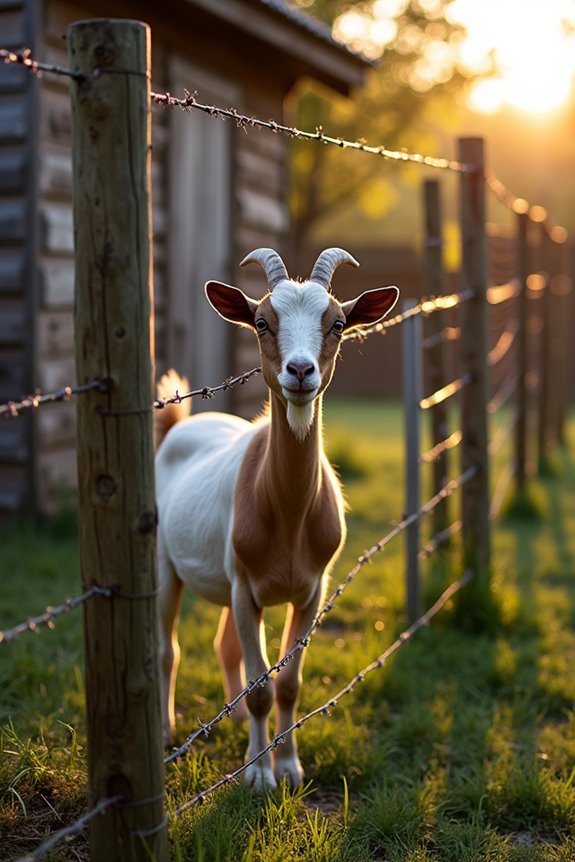
How secure is your current fencing? Strong fencing is your goats’ first line of defense. I’d recommend cattle panels or sturdy wire fencing at least four feet high—goats are climbers and escape artists. Check your fencing regularly for gaps and weak spots where predators might enter.
Beyond fencing, you’ll want predator protection. Consider adding a livestock guardian dog, donkey, or llama to your setup. These animals deter wolves, coyotes, and other threats naturally. Position your goat shelter on higher, well-drained ground to keep moisture away. Build it with three solid walls and one open side for ventilation.
Add climbing structures inside—goats love heights and staying active keeps them healthy. These preparations work together, creating a secure environment where your goats can thrive safely.
Ensure Compliant Veterinary Care and Waste Management
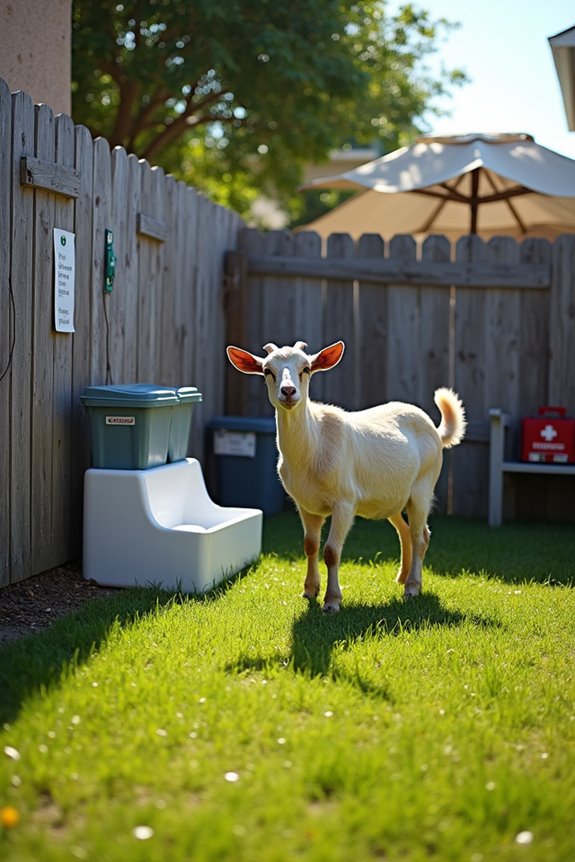
Before you bring goats home, I’d recommend finding a veterinarian who specializes in goat care—they’ll help you handle everything from vaccinations to neutering and keep your herd healthy. You’ll also need a solid plan for manure management, since goat waste can carry harmful bacteria like E. coli and Salmonella if you’re not careful about composting it properly at the right temperature. Getting these two pieces in place now saves you headaches (and potential legal issues) down the road.
Veterinary Care Requirements
You’ll want to find a veterinarian who knows goats well before you bring one home. Getting this right protects your animals and keeps you legally compliant.
Here’s what you need to arrange:
- Annual health checkups tailored to your goat herd
- Parasite control and disease prevention programs
- Emergency care during kidding season
- Dehorning, neutering, and vaccination services
- Documentation for local permit requirements
I recommend calling local vets now to ask about their goat experience. Some vets specialize in livestock, while others focus on companion animals. You’ll want someone who’s delivered kids and handled common goat issues.
Once you’ve selected your veterinarian, establish a written health plan together. This agreement shows local authorities you’re serious about proper veterinary care and demonstrates your commitment to responsible goat ownership.
Manure Management Solutions
Proper manure management is one of the most important responsibilities of backyard goat ownership, and it directly connects to the veterinary care plan you’ve just established. You’ll need a solid composting system to safely handle goat droppings. Heat your compost pile to 130–150°F for three days to kill harmful bacteria like Salmonella and E. coli. Turn the pile regularly for proper aeration. This process sanitizes the manure before you apply it to gardens. Store finished compost separately from your goat area to minimize flies and rodents. Always wash your hands after handling goats or their environment, especially before eating or helping children. This simple habit is essential to reducing disease transmission. You’re building a safe, healthy space for your family and animals.
Budget for Feed, Veterinary Care, and Daily Labor
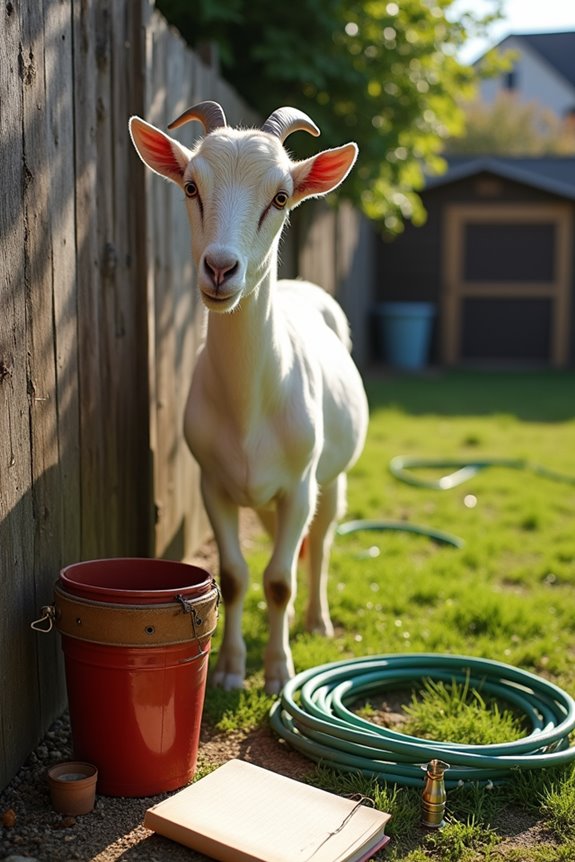
Several costs’ll pop up once your goats arrive, and knowing what to expect helps you plan without surprises. Your goat budget should cover:
Several costs’ll pop up once your goats arrive, and knowing what to expect helps you plan without surprises.
- Feed expenses: Fresh hay, minerals, and browse (their preferred food)
- Veterinary care: Annual vaccinations, parasite control, and health checkups
- Daily labor: Feeding, watering, cleaning, and hoof trimming
- Automatic waterers: Reduces daily work and keeps water fresh
- Specialized feeds: Dairy or kid-appropriate options when needed
I’d recommend setting aside money monthly for unexpected vet visits. Feed costs vary by season and location, but most backyard goat owners spend $30–50 per animal monthly. Veterinary care runs $100–300 yearly per goat. The daily labor’s honestly the biggest commitment—these animals need consistent care, but you’ll develop a rewarding routine together.
Avoid Common Legal Mistakes Before You Buy
Before you bring home your first goat, you’ll want to check your local ordinances, review any deed restrictions from your HOA, and verify your property’s zoning laws and setback requirements. I’d recommend starting with a call to your city or county zoning office to ask three specific questions: Are goats allowed in my residential zone, how many can I have, and what permits do I need? Taking these steps now saves you from costly fines or having to rehome your goats later.
Check Local Ordinances First
Where you live matters way more than you’d think regarding keeping goats in your backyard. Before buying your first goat, you’ve got to check your local ordinances. City codes, not state law, determine what’s actually allowed where you live.
Here’s what I’d recommend:
- Contact your city’s Development Services department first
- Review your local zoning map for setback requirements
- Check your municipal animal code for livestock rules
- Verify enclosure size and shed placement standards
- Confirm licensing or permit needs with your city
Seattle requires dehorning and neutering, while San Diego mandates 400-square-foot enclosures. Houston, Dallas, and Austin have their own specific animal codes. One quick phone call or email to your local government prevents costly mistakes. Trust me, this homework saves headaches later.
Review Deed Restrictions Early
Why would you check city codes but skip what your deed says? Your property’s deed restrictions often matter more than local ordinances. Many neighborhoods include covenants that limit permitted animals or ban livestock entirely.
Before bringing home goats, review your deed carefully. Look for language about animals, herd size, and required facilities. Some deeds specify setback distances from property lines or neighbor homes.
Here’s what to do: Request your deed from your realtor or county records office. Read it thoroughly, highlighting any livestock restrictions. If your deed allows goats but your HOA doesn’t, follow the stricter rule.
Finding restrictions early prevents costly mistakes. You’ll avoid purchasing goats only to face fines or removal orders. When restrictions and city laws conflict, seek legal guidance. This step protects your investment and keeps your community relationships intact.
Verify Zoning and Setbacks
You’ve checked your deed and city codes—now comes the zoning verification, and it’s just as vital.
Your zone determines everything about keeping goats legally. Here’s what you need to do:
- Use the Use Zoning Map application to find your zone name
- Check the Development Regulations Table for goat-specific restrictions
- Review setback requirements from property lines
- Note enclosure sizes and fencing standards required
- Call Development Services at 619-446-5000 to confirm exact distances
Different zones have different rules. Your lot’s setbacks might prevent goat housing altogether, or they might allow it with specific distances from neighbors. Seattle residents, check SMC 23.42.052—you’ll need annual licensing and can only keep pygmy, dwarf, or miniature goats.
Don’t guess on zoning. One phone call saves months of regret and potential fines. Getting this right protects your investment and your neighborhood relationships.
Prepare Your Backyard Before Bringing Goats Home
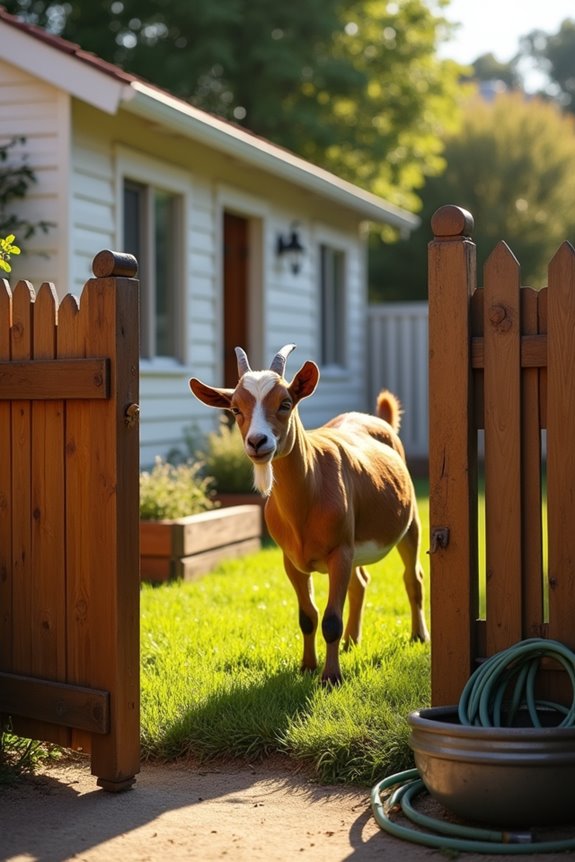
Before you bring home your first goats, a little groundwork now will save you headaches later. I’d recommend investing in durable fencing like cattle panels and building a secure, predator-proof shelter. Your goats need about 400 square feet of outdoor space minimum—think of it as their living room.
| Essential Item | Purpose | Cost Range |
|---|---|---|
| Cattle panels | Sturdy fencing | $30–$60 each |
| Shelter structure | Protection from weather | $200–$500 |
| Feed containers | Daily nutrition | $20–$50 |
| Water system | Hydration access | $30–$100 |
| Grooming tools | Hoof and coat care | $25–$75 |
Plan your layout thoughtfully. Separate spaces for bucks and does help you manage breeding. Daily routines for feeding, watering, and hoof care become easier when everything’s organized. You’ve got this—proper backyard prep makes goat ownership genuinely enjoyable.
What Does Daily Goat Care Actually Involve?
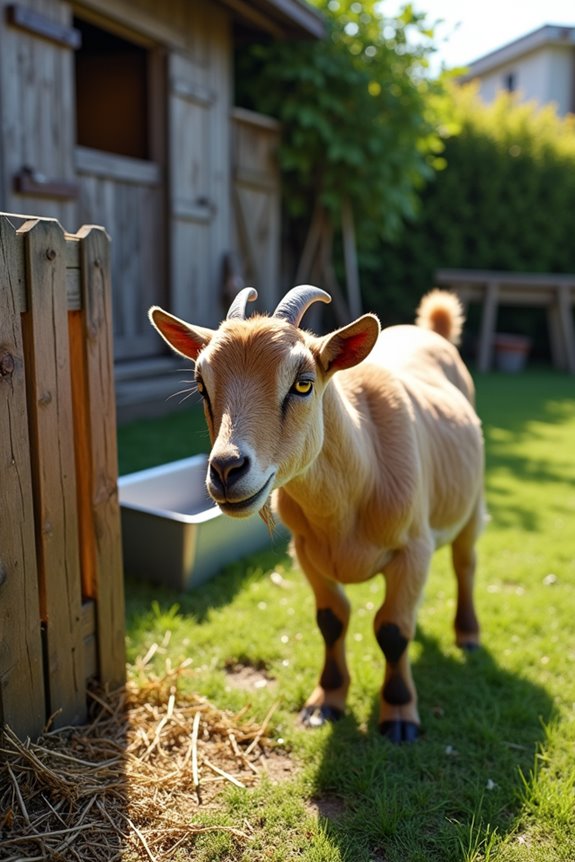
Once your setup is ready, the real work begins—and I won’t sugarcoat it, daily goat care demands consistency.
Daily goat care demands consistency—and I won’t sugarcoat it, the real work begins once your setup is ready.
You’ll join a community of dedicated goat keepers who understand what it takes. Here’s what your daily care routine looks like:
- Provide continuous access to clean water
- Feed browse and hay according to their needs
- Observe your herd for signs of illness or injury
- Trim hooves regularly and manage worms
- Keep their living area clean and sanitary
Beyond daily tasks, you’ll handle milking if you’ve got dairy goats, plus periodic health checks with your vet. Wash your hands and clothes after handling them, and compost manure properly. It’s demanding work, sure. But countless backyard goat owners find the routine rewarding. You’re not just maintaining animals—you’re building a sustainable lifestyle with animals that depend on you.