To legally live in your backyard shed, you’ll need to check three things first: local zoning laws, HOA rules, and building codes. Contact your city or county zoning office to confirm sheds are livable in your area, then review any HOA restrictions—they’re often stricter than municipal rules. Next, verify setback distances from property lines, height limits (usually 12 feet), and size thresholds. You’ll need permits for construction and utilities before starting work. Finally, pass inspections for structural safety, electrical, plumbing, and code compliance to get your occupancy certificate. The specifics vary dramatically by location, so understanding your exact requirements upfront prevents costly mistakes down the road.
Check Your Local Zoning Laws and Residency Restrictions
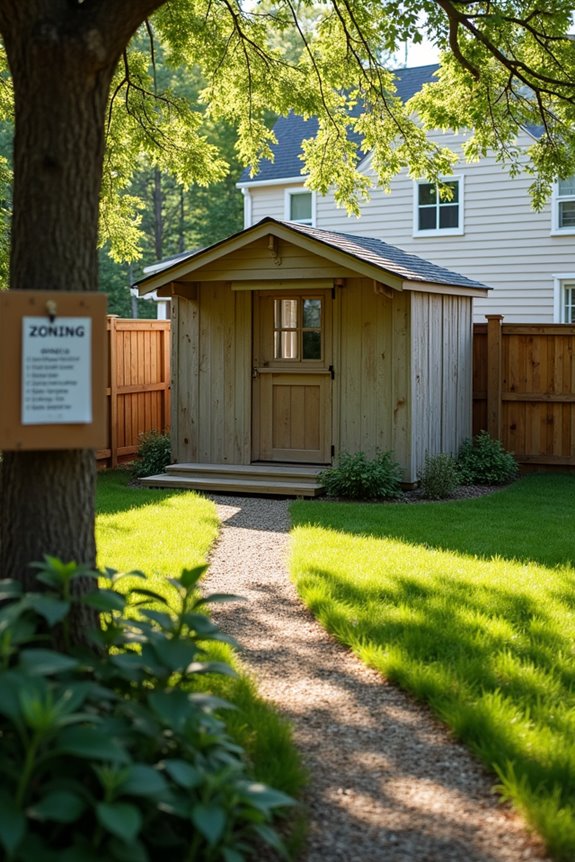
Before you move a single box into that backyard shed, you’ll need to understand what your local zoning laws actually allow. Start by contacting your city or county zoning office—they’re your best resource. Ask three key questions: Can I legally live in a shed on my property? What permits do I need? What are the setbacks required from property lines?
Residency restrictions vary dramatically by location. Some areas permit shed habitation with proper permits; others prohibit it entirely. You’ll also need to understand habitation rules specific to your zone. Check setback distances from your property boundaries, fences, and septic systems. These measurements often determine whether your shed qualifies for residential use. Document everything in writing. This groundwork prevents costly mistakes and ensures you’re building legally from day one.
Building Codes for Shed-to-Home Conversions
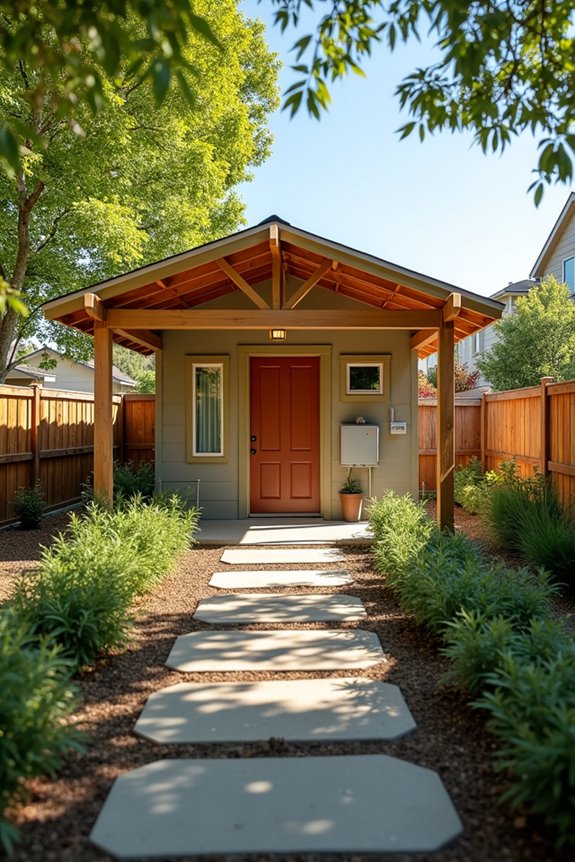
Once you’ve confirmed your shed conversion is allowed, you’ll need to meet residential building codes that cover everything from structural safety to electrical systems. You’ve got three main areas to tackle: making sure the space meets habitability standards (proper ceiling height, windows for light and emergency exits), installing utilities like electricity and water with separate permits, and ensuring your electrical, plumbing, and insulation work passes inspection. Think of it this way—your local building department wants to confirm your shed is as safe and functional as any house on your street, which means getting permits for each trade (electrical, plumbing, HVAC) and scheduling inspections before you move in.
Residential Code Compliance Standards
When you’re thinking about converting your shed into a living space, you’ll need to meet residential building codes—and that’s where things get specific. These standards aren’t optional; they’re designed to keep you safe and protect your investment.
Here’s what you’ll tackle:
- Minimum room sizes – Bedrooms typically need at least 70 square feet, with adequate ceiling height
- Insulation and thermal performance – Your shed must maintain comfortable temperatures year-round
- Ventilation systems – Proper air circulation prevents moisture and mold issues
- Emergency egress – You’ll need functioning windows or doors for safe exits
You’ll work with local building officials throughout inspections. Getting your occupancy certificate means you’ve passed zoning compliance checks and earned the right to call your shed home legally. This process takes time, but it’s absolutely worth it.
Utility Installation And Permits
Now that you’ve got your shed meeting those residential code standards, you’ll need to bring in the utilities—and that’s where permits really matter. Here’s what I’d tackle first: electrical work requires a separate permit before you flip any switches. You’ll need a licensed electrician to run wiring that meets local codes. Plumbing demands its own permit too, especially for sewage connections—your health department has specific rules here. Contact your zoning office early. They’ll tell you exactly which permits you need and any restrictions your area has. Some jurisdictions won’t allow full-time shed living regardless of permits, so verify everything upfront. Getting permits seems tedious, but it protects you legally and ensures your utilities are safe and compliant.
Habitable Space Conversion Requirements
Because you’re transforming a storage structure into an actual living space, your shed now has to meet residential building codes—not just storage standards. This habitable conversion requires a building permit and triggers zoning requirements in most jurisdictions.
Here’s what you’ll need to address:
- Foundation and structure: Verify your shed sits on a proper foundation meeting residential standards
- Insulation and walls: Install adequate insulation and finish interior walls to code specifications
- Utilities and inspections: Connect electrical, plumbing, and HVAC systems with separate permits and final inspections
- Room dimensions: Ensure ceiling heights (typically 7 feet minimum) and room sizes meet residential codes
Your local building department will inspect everything. These requirements aren’t bureaucratic obstacles—they’re your safety net, ensuring your new space is genuinely livable and protected.
Setback Rules and Property Line Requirements for Sheds
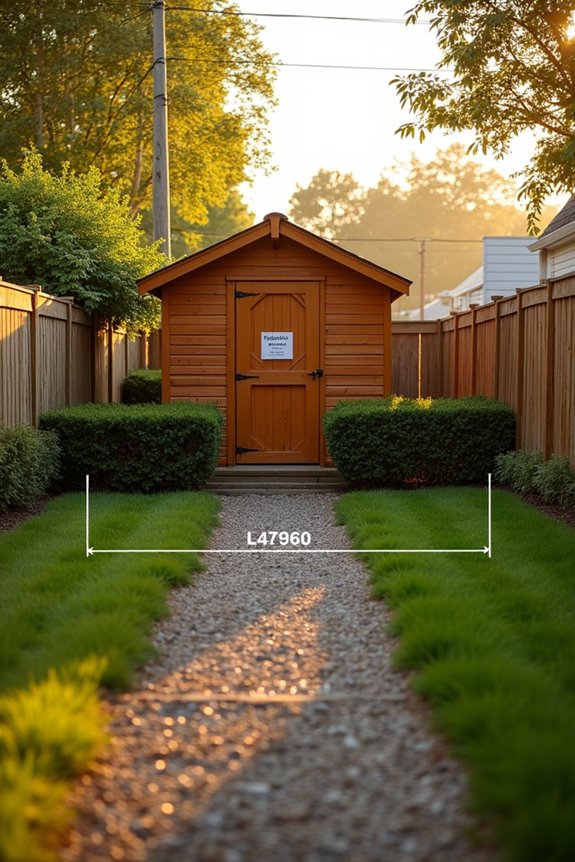
Where can you actually place that shed on your property? That’s where setbacks come in. These rules specify the minimum distance your shed must sit from property lines, fences, and existing structures. Your zoning district determines exact distances—Johnston County requires 10 feet from side and rear lines for larger sheds, while Wake County typically needs just 5 feet.
Here’s what you need to do: First, check your local zoning department’s website for your specific setback requirements. Second, measure your lot carefully from each property line. Third, investigate whether easements exist on your property—these legal agreements can further restrict shed placement and may require special approvals.
Don’t skip this step. Getting setbacks wrong means removing your shed later. Verify everything before building.
Shed Size and Height Limits in Your Area
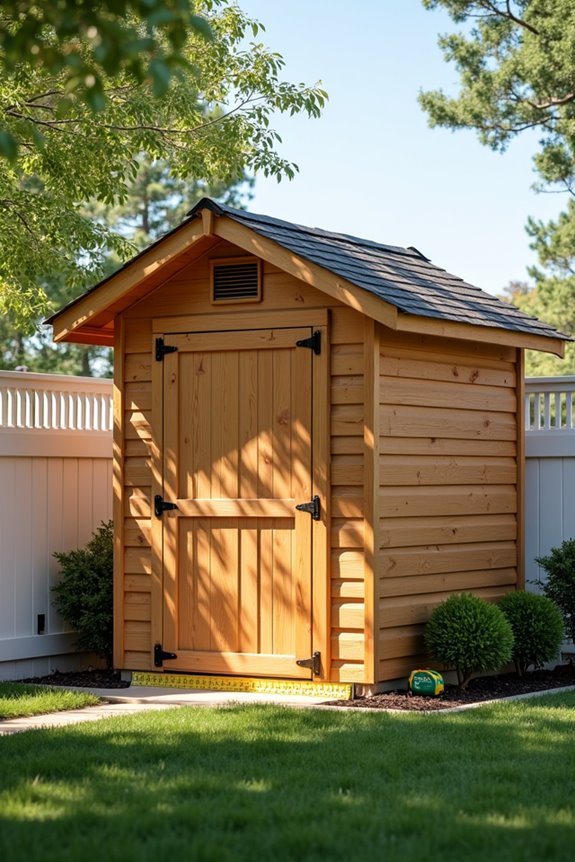
How big can you actually build? Your shed size limits depend entirely on local zoning regulations. Most jurisdictions allow sheds under 120–144 square feet without building permits, but that’s just the starting point.
Most jurisdictions allow sheds under 120–144 square feet without building permits, but local zoning regulations ultimately determine your shed size limits.
Here’s what typically matters:
- Height restrictions often cap sheds at one story or 12 feet maximum before requiring permits
- Shed size limits vary—some areas demand permits for anything exceeding 12×12 footprints
- Setback requirements force you back from property lines, effectively shrinking usable space
- Building permits become mandatory when dimensions exceed local thresholds
Check your specific zoning regulations because HOA covenants or historic district rules can impose stricter standards. I’d recommend contacting your local building department first—they’ll give you exact numbers for your address. These regulations exist to protect your neighborhood’s character while keeping everyone’s projects legitimate.
Obtain Required Permits Before Construction Begins
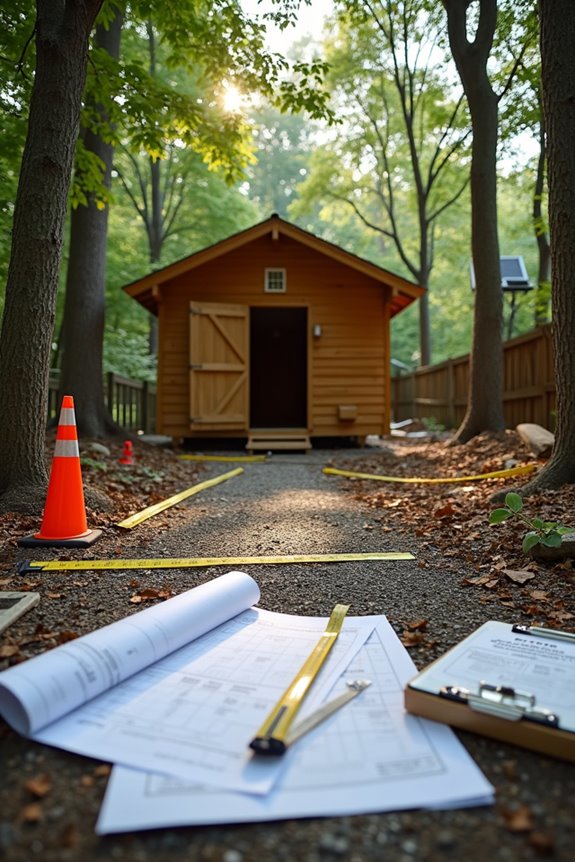
Before you break ground on your backyard shed, you’ll need to understand what permits your local jurisdiction requires—and trust me, skipping this step can cost you way more than the permit fees themselves. I’m going to walk you through the different permit types you’ll encounter, what documents you’ll need to gather for your application, and what actually happens if you build without permission. Let’s start with the basics so you can get this done right the first time.
Permit Types And Requirements
What permits you’ll actually need depends on your shed’s size, location, and your local rules—and yes, this matters more than you might think.
You’re likely looking at two main permit types:
- Zoning permits check that your shed respects setback distances from property lines and follows land-use rules
- Building permits ensure your structure meets safety codes and structural standards
- Site plans document your shed’s exact dimensions, placement, and construction details
- Local variations mean some towns (like Ithaca) skip permits for sheds under 144 square feet, while others like Batavia require them for everything
Contact your building department directly—they’ll tell you what applies to your situation. Fees typically run $25–$100+, and you’ll schedule inspections after submitting your application. Getting this right upfront saves headaches later.
Application Process And Documentation
Once you’ve identified which permits your shed needs, you’re ready to start gathering paperwork and submitting applications—and I won’t sugarcoat it, this is the step that actually protects you from fines and removal orders down the road.
You’ll need to prepare several documents for your permit application. Start with a completed application form from your local zoning department. Include a detailed site plan showing your shed’s placement, setbacks from property lines, and easements. Add your shed’s exact dimensions and structural details. Don’t forget ownership information and HOA documents if applicable.
| Document | Purpose | Timeline |
|---|---|---|
| Application form | Official request | Submit first |
| Site plan | Show placement | Required with form |
| Shed dimensions | Verify compliance | Attached to plan |
| Ownership proof | Establish rights | Include upfront |
| Payment | Process fee | Due at submission |
Submitting everything together speeds up inspections and your final certificate.
Penalties For Non-Compliance
Now that you know how to submit your paperwork correctly, I need to be straight with you about what happens if you skip this step entirely.
Building without permits isn’t worth the risk. Here’s what you’re facing:
- Fines ranging from hundreds to thousands of dollars, with daily penalties until you comply
- Stop-work orders that halt construction immediately
- Mandatory inspections and retroactive permitting after the fact
- Property value drops and sale complications that’ll haunt you later
Non-compliance with zoning laws creates real problems. You might face legal action, insurance issues, or liens against your property. Even worse, you could be ordered to remove or modify your shed entirely.
Getting permits upfront protects you. It’s genuinely the easiest path forward. Your future self will thank you for doing it right the first time.
Site Plans and Structural Documentation for Shed Permits
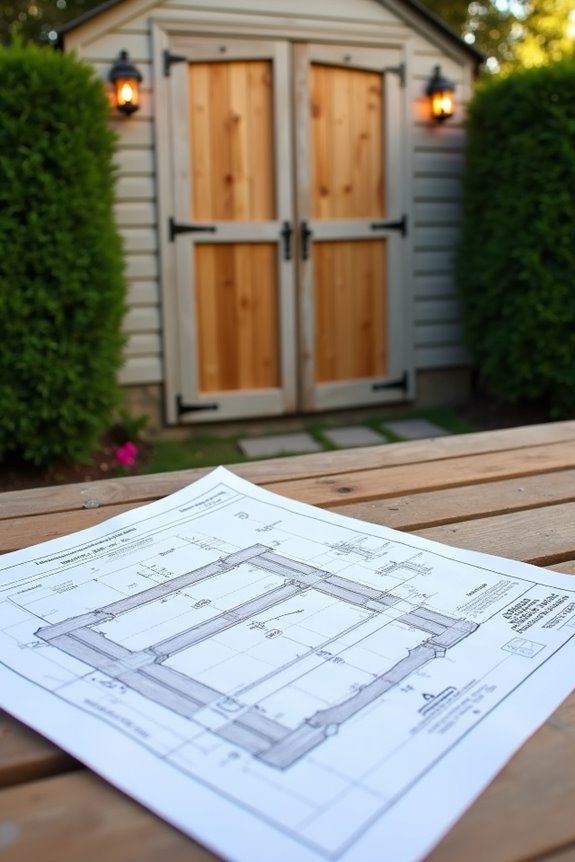
You’ll need two key documents to move forward with your shed permit: a site plan and structural plans. Your site plan shows where your shed sits on your property, including distances from property lines, setbacks, and any easements. Think of it as a bird’s-eye view of your backyard layout.
Structural plans become required if any shed dimension exceeds 12 feet. Don’t worry—your shed vendor can often provide these, or you can hire a licensed professional. Many jurisdictions, including Raleigh and Fuquay-Varina, treat shed permits more like zoning permits and may not demand detailed structural plans for smaller sizes.
Submit both documents through your local online portal. After submission, inspections follow to ensure everything meets code. Companies like Carolina Yard Barns can supply structural plans and assist with documentation, making your permitting process smoother and less stressful.
Passing Shed Inspections: Code Compliance Checklist
Now that you’ve got your site plans and structural documentation in order, the inspector’s going to check three main things: whether your shed’s structure can actually handle living in it, whether you’ve got all the right paperwork showing your work meets code, and whether your utilities—like electrical wiring and plumbing—are safe and properly installed. I’ll walk you through each of these areas so you know exactly what the inspector’s looking for and how to get ready. Think of this checklist as your roadmap to passing that final inspection without surprises.
Structural Safety Standards
What makes the difference between a shed that passes inspection and one that fails? Structural safety standards. I’ve learned that inspectors carefully examine how your shed’s framing, foundations, and anchorage meet local building codes.
Here’s what I focus on:
- Framing: Ensure studs are properly spaced and secured with adequate fasteners
- Foundations: Install footings below the frost line to prevent shifting and moisture damage
- Anchorage: Secure the shed to its foundation with bolts or straps, especially in windy areas
- Building codes: Check your local requirements since standards vary by region
I’ve found that understanding these structural safety basics prevents costly corrections later. When your shed’s foundation stays solid and framing remains sound, inspections become straightforward. It’s about building something that’ll last while keeping everyone safe.
Code Compliance Documentation
The paperwork you’ll need to pass shed inspections is just as important as the shed itself. You’ll gather your site plan, structural plans, and permit applications before construction starts. As you build, inspectors visit at key milestones—foundation, framing, electrical, and final occupancy—to verify code compliance with zoning regulations.
Document everything. Keep copies of approved permits for electrical, plumbing, insulation, and the dwelling conversion itself. Photograph each inspection stage. When inspectors arrive, they’re checking that your shed meets residential building codes: minimum square footage, proper egress windows, ventilation, and natural light.
Missing documentation? You risk fines or stop-work orders. Stay organized. Request inspection schedules ahead of time. Answer inspector questions honestly. This documentation proves you’ve done things right and protects your investment in making your backyard shed a legal, safe home.
Utility System Requirements
How do you get electricity, water, and heat safely into your shed so inspectors will approve it?
You’ll need separate permits for each utility system you install. Electrical code requirements are strict—your wiring must meet local standards. Here’s what inspectors will check:
- Electrical work: Hire a licensed electrician and pull utility permits before installation
- Plumbing systems: Separate permits required for water lines and drainage connections
- HVAC installation: Individual permits needed for heating and cooling equipment
- Inspections: Schedule inspections at each stage—rough-in, completion, and final approval
Don’t skip these steps. Inspectors verify everything meets code before you move in. Your utility installation directly affects whether you get approved for habitation. Getting permits upfront saves headaches later and keeps your shed legally compliant and safe.
ADUs and Dwelling Units: Compliant Alternatives
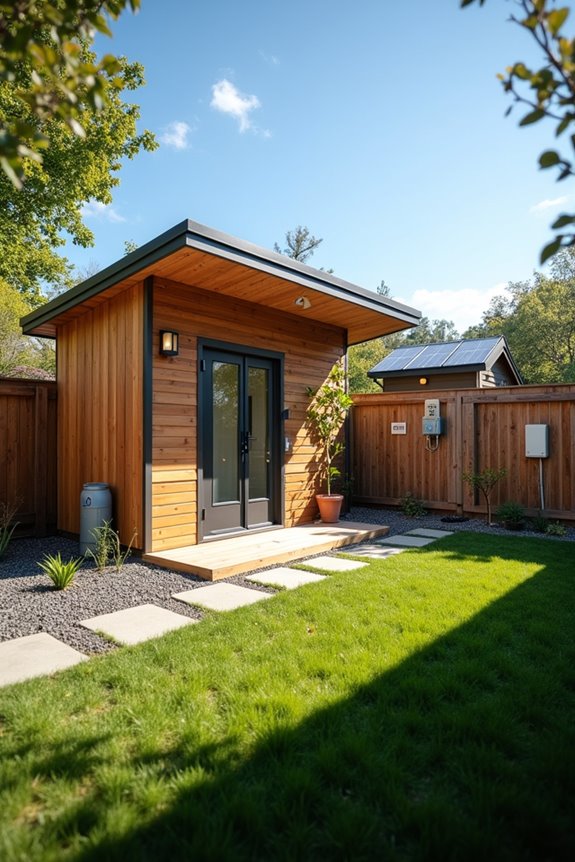
If you’re set on living in a backyard structure, converting your shed into an accessory dwelling unit (ADU) is often your best legal path forward.
ADUs offer a legitimate way to achieve zoning compliance while creating a dwelling unit that meets local standards. You’ll need permits and inspections to ensure your conversion satisfies building codes—think electrical systems, plumbing, proper egress windows, and fire safety measures.
ADUs provide legal zoning compliance while meeting building codes—electrical, plumbing, egress windows, and fire safety included.
Most jurisdictions impose occupancy requirements, meaning you or a family member must live in either the primary home or the ADU. Size limits typically cap your ADU at a percentage of your main house’s footprint.
Check your local zoning office first. They’ll explain setback rules, parking needs, and height restrictions specific to your area. This step saves you headaches later.
HOA Rules: Can Your Homeowners Association Block a Shed?
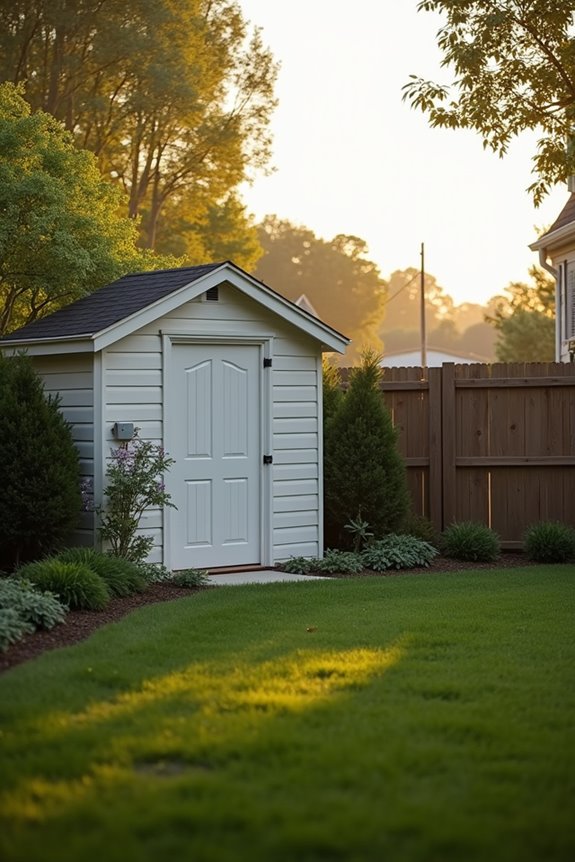
Before you finalize your shed plans, you’ll want to check whether your homeowners association can actually block your project—and spoiler alert, they often can.
Your HOA rules might restrict shed placement, size, style, and color beyond what local zoning allows. Here’s what you need to know:
- Check covenants early. Review your HOA documentation before investing time and money.
- Understand setback requirements. Your HOA may enforce stricter setback rules than your municipality.
- Know habitable use restrictions. Many HOAs prohibit living in sheds or attaching them to other structures.
- Expect enforcement actions. Noncompliance can trigger fines or required modifications.
Getting HOA approval upfront protects you. Even with their blessing, you’ll still need local permits. Aligning HOA rules with building codes ensures your project stays legally solid and keeps your community relationship intact.
After Approval: What Comes Next
Once you’ve cleared the approval hurdles with your HOA and local zoning office, you’re not quite at the finish line—you’ve just moved into the inspection phase. Building inspectors will visit multiple times, checking specific items in sequence. You’ll need permits for each stage, and inspectors verify code compliance before moving forward.
| Inspection Stage | What Gets Checked |
|---|---|
| Foundation & Framing | Structural safety and building codes |
| Utilities | Electrical, plumbing, HVAC systems |
| Final Walk-Through | Overall code compliance and occupancy readiness |
After passing all inspections, you’ll receive your certificate of occupancy—your legal permission to live there. Here’s the thing: any changes you make later, like adding utilities or layout amendments, require new permits and inspections. Stay proactive about keeping documentation current.