
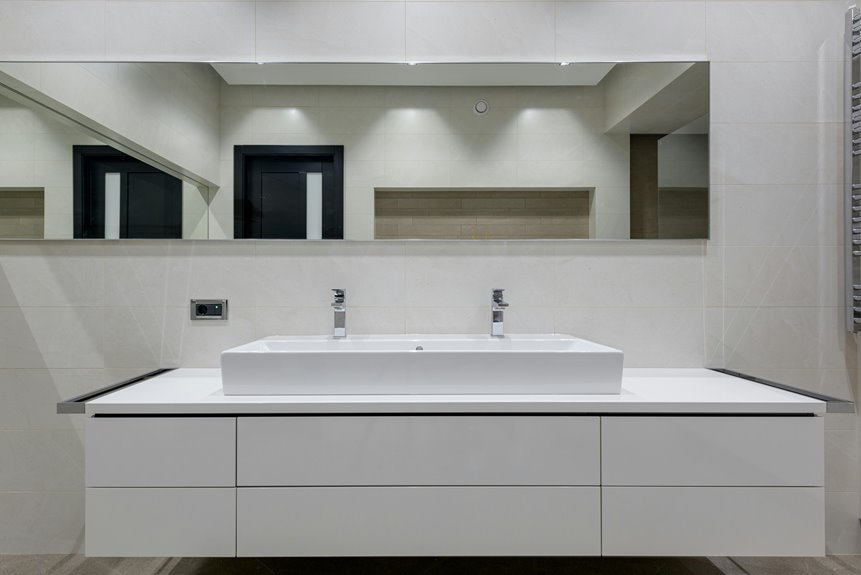
Standard bathroom vanity heights typically range from 30 to 32 inches, though comfort height models go up to 34 to 36 inches. I’d recommend measuring your space and considering who’ll use it most—taller folks benefit from comfort height to reduce back strain, while shorter users prefer standard height. Don’t forget that your countertop adds another 0.75 to 1.5 inches to the final measurement. Getting this right at the planning stage saves you headaches during installation, and there’s quite a bit more to consider when tailoring the perfect fit for your bathroom.
Standard Bathroom Vanity Heights: 30 to 36 Inches
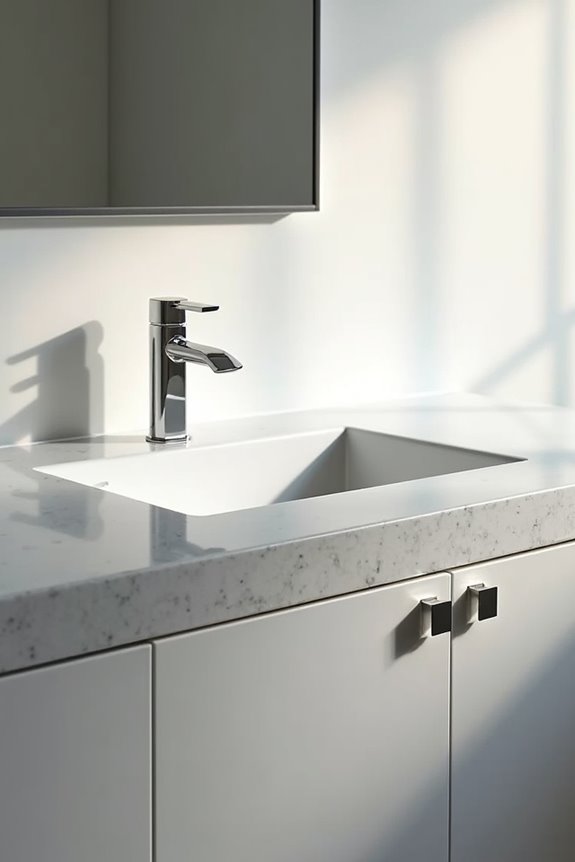
What height should your bathroom vanity actually be? I’ve found that standard bathroom vanity height ranges from 30 to 36 inches, giving you options that work for different needs. Traditional vanities sit around 30–32 inches, while comfort height vanities reach 34–36 inches. Here’s what matters: countertop thickness adds 0.75 to 1.5 inches to your overall height, so factor that into your space planning. I consider 34 inches a smart compromise that balances taller and shorter users alike. If accessibility matters to you, ADA guidelines cap countertop height at 34 inches maximum. When selecting your vanity cabinet and sink height, remember that flooring and installed surfaces can shift everything by about an inch. Your space planning should account for these real-world details to get it right.
Comfort Height vs. Standard Height: Which Fits Your Bathroom
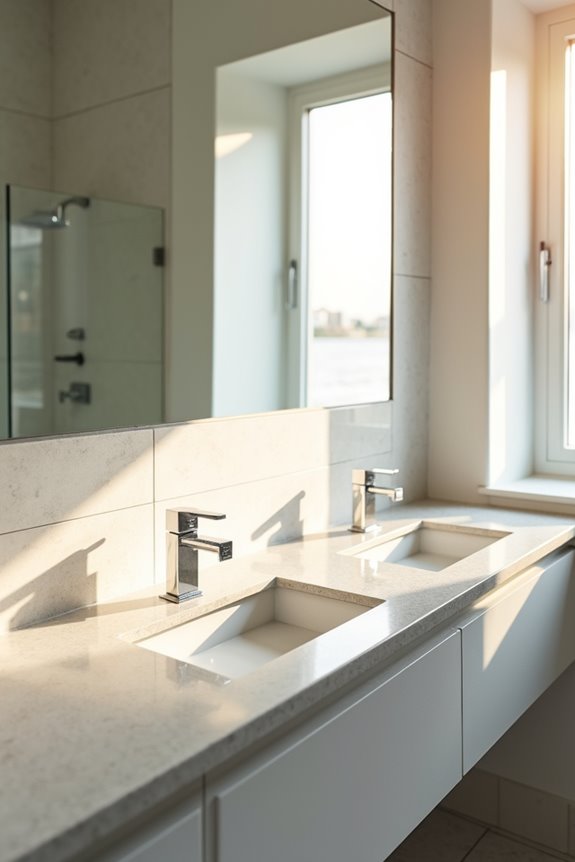
How do you know which vanity height actually works best for your bathroom?
Comfort height vanities, ranging from 34 to 36 inches, reduce back strain for taller users and match kitchen countertops. Standard height vanities, at 30 to 32 inches, work better for children and shorter adults, offering easier accessibility. Your choice affects sink ergonomics and overall bathroom design.
Comfort height vanities (34-36 inches) reduce back strain for taller users, while standard height (30-32 inches) works better for children and shorter adults.
Consider your household. If you’re tall, comfort height minimizes strain. If you have kids or shorter family members, standard height feels more natural. ADA guidelines cap countertop height at 34 inches, important for accessibility compliance.
Think about knee space and open space under vanity too. Floating vanities now offer adjustable heights, blending comfort with modern aesthetics. You’re not locked into one choice anymore. Pick what fits your body and lifestyle.
Choosing the Right Height for Your Needs and Space
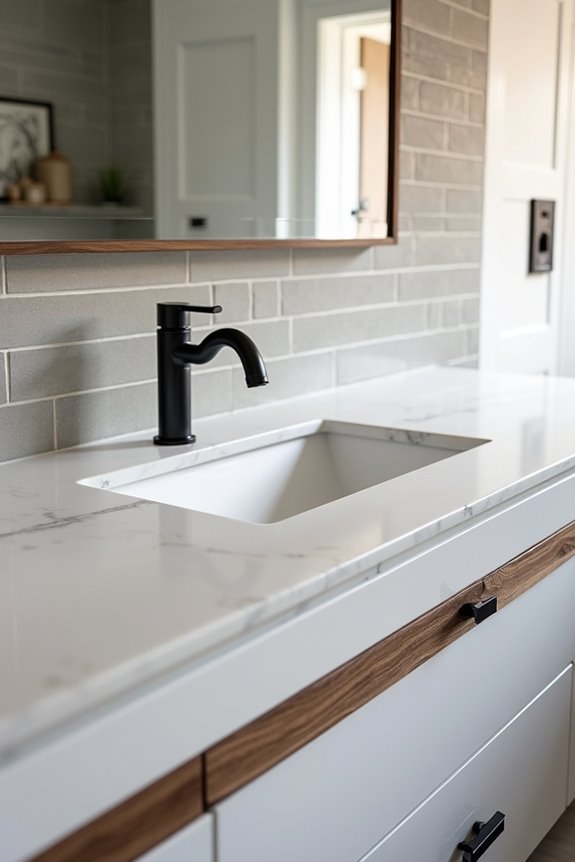
Once you’ve decided between standard and comfort heights, the real work begins: figuring out what actually fits your bathroom and your body.
I’d start by measuring your space and considering who’ll use it. If you’re taller, comfort height works better for user ergonomics. If you’re shorter or have kids, standard vanity height might suit you. Think about vessel sinks—they add 5–6 inches, so you’ll want a shorter vanity cabinet height to stay comfortable.
Check ADA height guidelines too, especially if accessibility matters. The 34-inch countertop maximum with 27 inches knee clearance gives you room to maneuver. Don’t forget mirror placement about 5–10 inches above—it affects how natural everything feels. Measure twice, choose once, and you’ll love your setup.
ADA Compliance and Accessibility: Planning for All Users
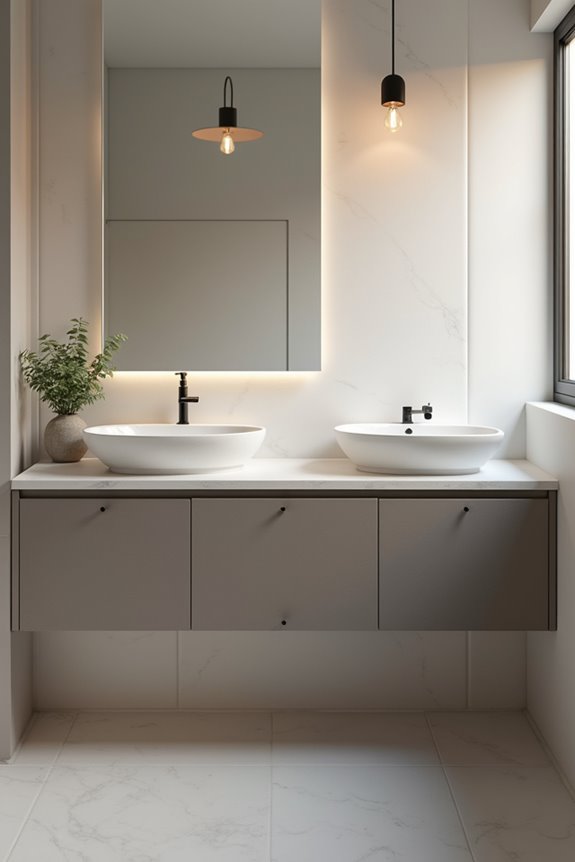
Why should accessibility matter in your bathroom design? Because everyone deserves a comfortable, safe space. ADA compliance ensures your vanity works for all users, including those using wheelchairs.
The standard countertop height of 34 inches accommodates most people. You’ll need knee clearance of at least 27 inches high, 30 inches wide, and 19 inches deep beneath the vanity. A floating vanity creates this space naturally while maintaining style.
Clear floor space measuring 30 by 48 inches in front of your vanity allows wheelchair access. This seems spacious once you visualize it.
Protect exposed plumbing with insulation or guards—sharp edges cause real injuries. Countertop thickness matters too, since thicker tops raise the actual usable cabinet height below.
These adjustments aren’t just helpful for wheelchair users. They benefit aging parents, injured friends, and anyone needing extra comfort in the bathroom.
Countertop Thickness, Flooring, and Installation: The Real Height Impact
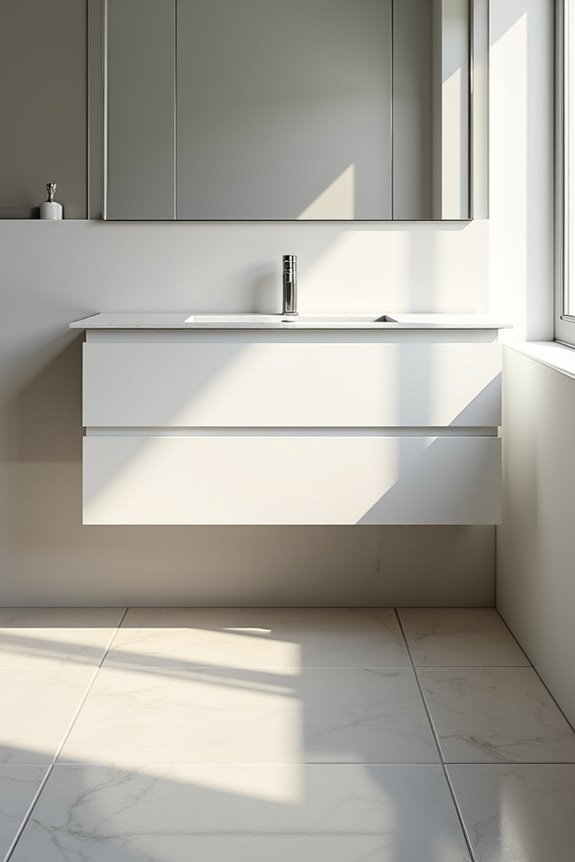
You’ve probably focused on that standard 34-inch cabinet height, but here’s what catches most people off guard: your countertop itself adds real inches to the final measurement. Most countertop thickness ranges from 0.75 to 1.5 inches, so that 34-inch cabinet plus a 1.25-inch top gives you roughly 35.25 inches total vanity height.
But wait—flooring matters too. I recommend installing flooring first to catch any flooring-induced height changes before mounting your vanity. Different flooring types create different finished floor-to-countertop measurements, so measure carefully after your floor’s down.
When you’re ready for installation height, use a laser level for accuracy and secure everything to studs. Account for that countertop thickness impact from the start, and you’ll nail the ergonomics that make your space feel just right.