
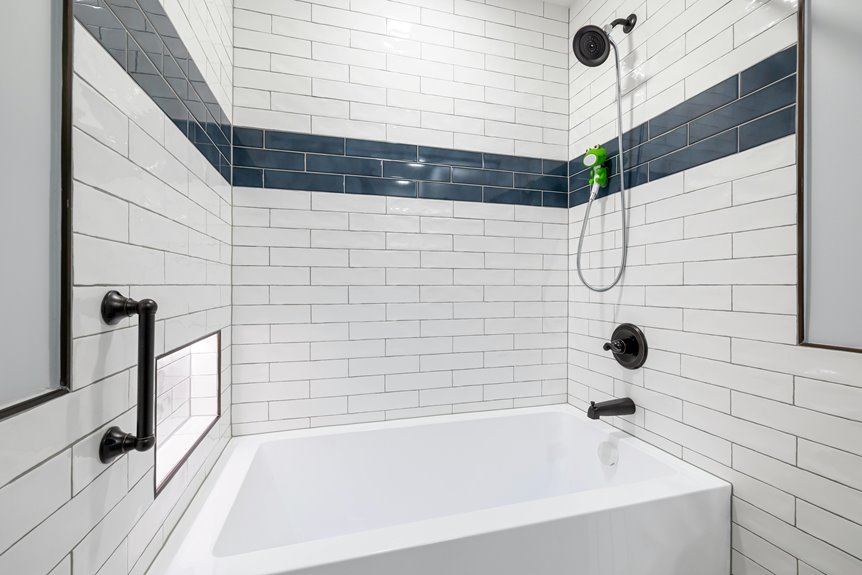
It depends on what you’re changing. Cosmetic updates—like painting, swapping mirrors, or replacing fixtures in their current spots—don’t need permits. But here’s the thing: any plumbing work (moving toilets or pipes), electrical changes (new outlets or circuits), or structural modifications absolutely require permits. I’d recommend checking with your local building department first, since rules vary by location. Skip the permit and you’re risking fines, insurance problems, and headaches when selling. Understanding exactly which projects need approval will save you serious trouble down the road.
When Bathroom Permits Are Required
When do you actually need a permit to renovate your bathroom? Here’s the reality: most substantial changes require one. If you’re relocating your toilet, sink, or shower, you’ll need a permit. Adding new plumbing lines? Same deal. Moving electrical outlets or installing new wiring? That’s another trigger.
Most substantial bathroom changes require permits—relocating fixtures, adding plumbing lines, or moving electrical outlets all trigger inspection requirements.
Structural changes demand permits too. Removing load-bearing walls or creating a completely new bathroom footprint means you’re getting inspected.
Why does this matter? Permits ensure your bathroom remodel meets local codes and keeps your home safe. Think of permits as your protection plan.
However, cosmetic updates like painting or replacing fixtures in their current spots typically don’t require permits. Swapping out a mirror? You’re fine.
When in doubt, contact your local building department. They’ll clarify what your specific project needs.
Bathroom Cosmetic Updates That Don’t Require Permits
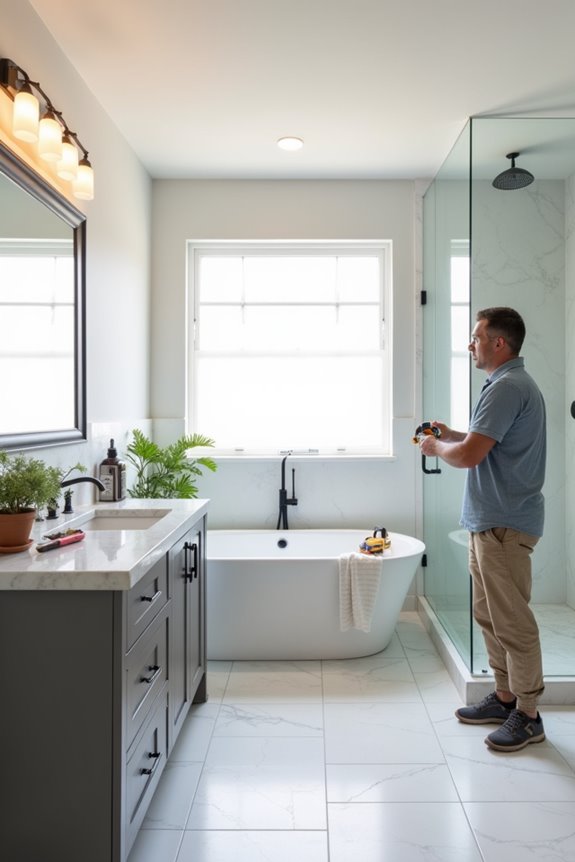
Many bathroom updates won’t require permits because they’re purely cosmetic—think painting walls, revitalizing cabinets, or swapping out a mirror and light fixture without rewiring. You can also replace your vanity or toilet in the same spot, install new flooring over your existing subfloor, or update fixtures without touching plumbing or electrical systems. The key is that if your project doesn’t affect plumbing, electricity, or your home’s structure, you’re usually in the clear—but always check with your local building department first, since rules vary by location.
Painting And Cabinet Updates
How’d you like to transform your bathroom without worrying about permits? Painting and cabinet updates are your best friends here. I’m talking about cosmetic updates that’ll breathe new life into your space without red tape.
Fresh paint on your walls costs little and changes everything. You pick colors that match your style. Cabinet refacing works similarly—you’re updating what’s there, not moving plumbing or electrical lines.
Here’s what makes these permit-free: you’re not altering the bathroom’s bones. You’re simply refreshing surfaces. New cabinet hardware, paint colors, or cabinet door replacements fall squarely in the cosmetic category.
These bathroom renovation projects let you join the DIY crowd without navigating permit paperwork. You’ll save money and time while creating the bathroom you’ve imagined. That’s the beauty of cosmetic updates.
Fixture Replacements In Place
Swapping out your toilet, sink, or faucet for a new one doesn’t automatically trigger permit requirements—as long as you’re keeping everything in the same spot. These fixture replacements count as cosmetic updates when you’re not touching the plumbing connections underneath.
Here’s what stays permit-free:
- Replacing a toilet in its existing location without moving water lines
- Swapping a sink for another without altering supply lines or traps
- Installing a new faucet using the same connections
- Direct fixture substitution with no changes to hot/cold shutoff valves
That said, local building codes vary considerably by area. I’d recommend calling your city or county building department before starting work. They’ll confirm whether your specific fixture replacement needs permitting. This quick call saves you headaches down the road.
Flooring And Mirror Swaps
When you’re updating your bathroom’s look with new flooring or a fresh mirror, you’re in good news territory—these changes almost never require permits.
| Update Type | Permit Needed | Local Codes Apply |
|---|---|---|
| Mirror replacement | No | Check locally |
| New flooring over subfloor | No | Verify first |
| Fixture finish updates | No | Always confirm |
I love that bathroom remodeling doesn’t always mean paperwork. Installing new tile or laminate directly over your existing subfloor counts as cosmetic updates. Swapping mirrors without rewiring? You’re good. These permit requirements stay minimal when you’re not touching plumbing or electrical systems.
Still, don’t skip checking with your local building department. Codes vary by city, and I want you protected. A quick call confirms your specific project needs nothing, giving you confidence to move forward.
Plumbing Changes That Always Require Bathroom Permits
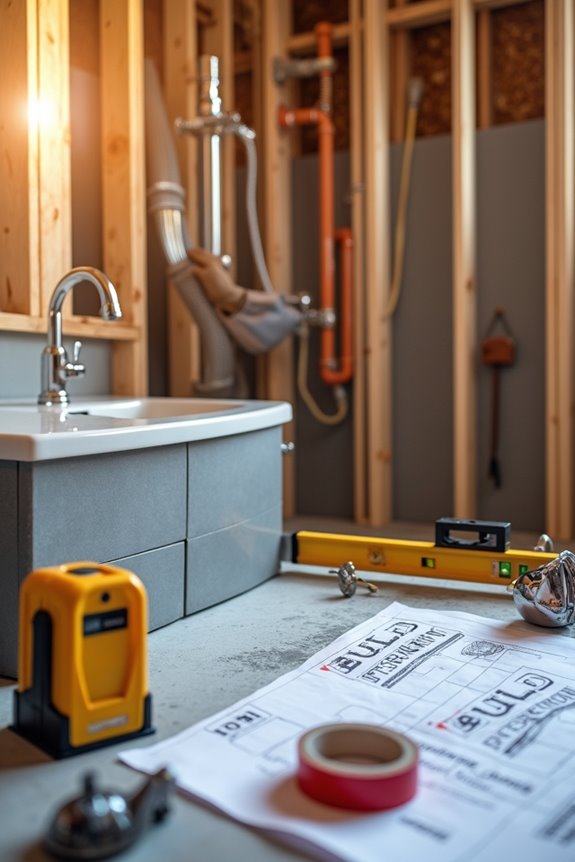
Why do plumbing modifications trigger permit requirements more than other bathroom updates? Because they’re safety-critical. When you’re relocating toilets, sinks, or showers, you’re affecting water supply and waste lines—systems that need professional oversight.
Here’s what always requires permits during your bathroom renovation:
- Relocating toilets, sinks, or showers to new locations
- Installing new plumbing lines or moving existing drains
- Changing venting systems or vent stack locations
- Adding new fixtures like bidets or additional sinks
Even seemingly minor plumbing changes demand permits and inspections. You’ll need to submit detailed plans showing where everything goes. I know it feels tedious, but these permit requirements exist to protect your home’s water quality and structural integrity. Trust the process—it keeps your bathroom safe and code-compliant long-term.
Bathroom Electrical Work: Why Permits Always Apply
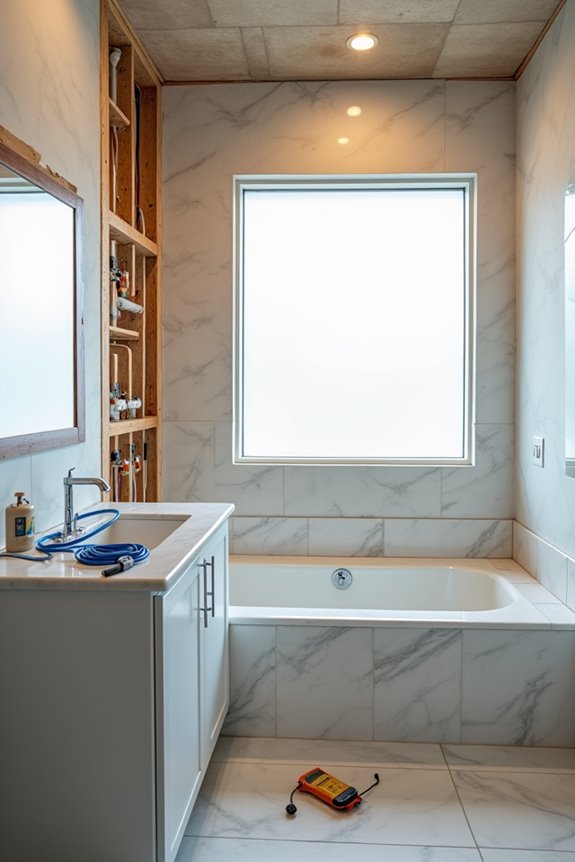
Electrical updates in your bathroom aren’t like painting a wall—they’re safety-critical work that almost always needs a permit. Here’s why: bathroom electrical work involves your home’s safety system, and inspections protect you from hazards like shock or fire.
| Work Type | Permit Needed | Why |
|---|---|---|
| Adding outlets | Yes | Affects circuit load |
| Relocating switches | Yes | Requires code compliance |
| Upgrading circuits | Yes | Safety inspection required |
| Installing ventilation fan | Yes | Electrical connection needed |
Permit requirements exist because inspectors verify your work meets current safety standards. You’ll submit plans, get inspected during and after work, and receive approval—it’s your assurance that everything’s done right. Even small changes trigger permits, so check with your local building department before starting.
How Long Does Your Bathroom Permit Take?
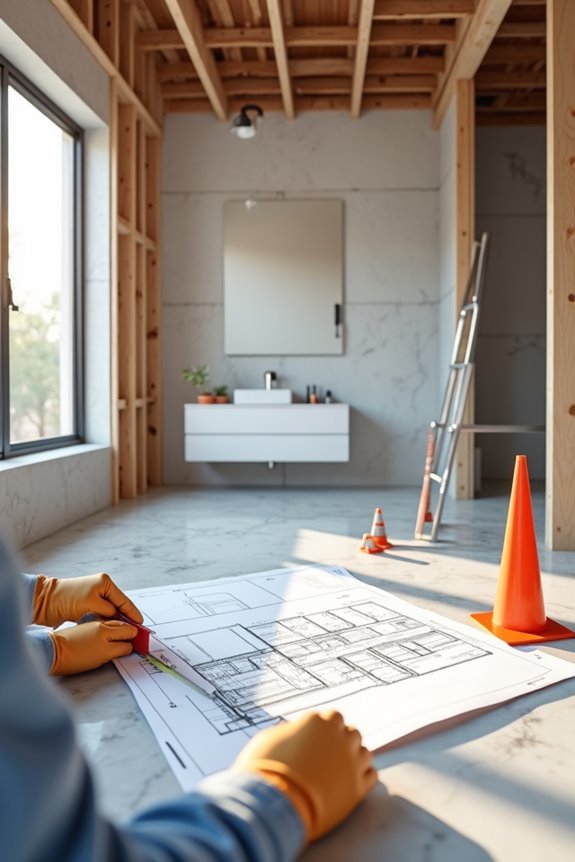
The permit review process typically takes 5–10 business days, though you’ll want to know what affects your specific timeline and how to plan accordingly. I’ll walk you through the standard review timeframes, the factors that can speed things up or slow them down, and smart strategies for protecting your project schedule from unexpected delays.
Typical Review Timeframes
Once you’ve submitted your bathroom renovation permit, you’re probably wondering when you can actually start swinging that sledgehammer.
Here’s what to expect:
- Initial review takes 5–10 business days for standard projects with complete submissions to your Planning or Building Department.
- Total permit review times range from 2–6 months depending on your bathroom remodeling complexity and whether historic approvals are needed.
- Complex projects extend timelines significantly—moving load-bearing walls or adding plumbing lines can push beyond typical timeframes.
- Inspections happen at various renovation stages after permit approval to verify your work meets codes and approved plans.
I know waiting feels endless, but thorough review times protect your investment and ensure everything’s done right. You’ve got this.
Factors Affecting Approval Speed
What determines whether your permit sails through in a few weeks or gets held up for months? Several key factors shape your approval timeline.
Simple cosmetic updates move faster—maybe two to three months. But if you’re relocating plumbing or electrical systems, you’re looking at the longer end of that six-month window. Complex projects require more detailed inspections at different stages.
Your submission quality matters too. Complete bathroom layout drawings and specs that meet local plumbing codes speed things along. Incomplete paperwork? That delays everything.
Historic buildings face extra scrutiny, adding weeks to your timeline. Martinsburg’s Planning Department typically needs five to ten business days just for their initial review.
Here’s the bottom line: straightforward projects move quickly, while anything involving major plumbing or electrical work demands patience and thorough preparation.
Planning For Project Delays
How much buffer time should you build into your renovation schedule? I’d recommend adding extra weeks to protect your timeline. Here’s what I’ve learned about planning around delays:
- Permit approval takes 2–6 months for extensive work, so start your application early and don’t assume the fastest timeline.
- The permit process includes Planning Department review, which needs 5–10 business days after you submit complete drawings and specs.
- Inspections happen at multiple renovation stages, and scheduling gaps can push your project back unexpectedly.
- Building associations add their own requirements, meaning condo owners face longer approval periods than homeowners.
I suggest adding 4–8 weeks as your safety net. This cushion keeps you from feeling stressed when inspections get delayed or documentation needs revisions. You’re setting yourself up for success.
What Bathroom Permits Cost and How Long They Last
Bathroom permit fees typically run between $150 and $400, though the exact cost depends on how big your project is and what you’re changing. Once you’ve paid and received approval, your permit validity lasts about six months. That gives you a solid window to start work before you’d need to renew.
The permit approval timeline usually takes five to ten business days for review. During your renovation, inspections happen at different stages to ensure everything meets plumbing, electrical, and structural codes. Here’s what matters: if you’re moving pipes or touching load-bearing walls, expect longer timelines. Budget these costs and timeframes into your planning so you’re not caught off guard.
Why Licensed Contractors Handle Permits Better
Now that you understand the costs and timeline for permits, you might wonder if tackling this paperwork yourself makes sense—and here’s where hiring a licensed contractor really pays off.
- They handle permit submission: Licensed contractors gather your drawings, specs, and applications, then submit everything to your local authority on your behalf.
- They ensure code compliance: Contractors know building codes inside out, reducing fines and rework after inspections.
- They schedule inspections properly: Licensed contractors coordinate plumbing and electrical inspections at the right project stages, keeping your renovation safe and compliant.
- They provide documentation: You’ll get clear contracts, project scope details, and communication records that support smoother approvals with fewer misunderstandings.
Hiring a licensed contractor transforms permits from stressful paperwork into a managed process.
What Happens If You Skip the Permit (and Why It Matters)
What’s the real cost of skipping that permit? It’s bigger than you’d think, friend.
Unpermitted work invites serious fines from your local municipality—costs that quickly stack on top of your renovation budget. But money’s just the beginning. Your insurance company may deny claims if damage occurs from faulty plumbing or electrical work. That’s a nightmare scenario.
When you eventually sell, inspections reveal unpermitted work, derailing sales and requiring costly retroactive permits with penalties. Safety risks are real too. Improper electrical installations cause fires. Bad plumbing causes water damage.
Here’s the truth: a permit verifies code compliance. Without it, future buyers refuse to purchase or demand expensive corrections. Taking shortcuts now creates massive headaches later. Get the permit. Your wallet—and your peace of mind—will thank you.