
To legally keep backyard chickens in Texas, you’ll need to complete a hen care course, then submit a permit application with a detailed site plan. Check your local zoning rules—flock limits vary by city. Ensure your coop meets setback requirements (usually 3–50 feet from property lines) and verify HOA restrictions don’t prohibit chickens. Maintain weekly coop cleaning and proper feed storage to stay compliant. Each city has different rules, so confirming your specific requirements upfront prevents costly violations down the road.
Get Your Annual Chicken Permit: What North Richland Hills Requires
Ready to bring chickens home to your North Richland Hills backyard? You’ll need an annual permit from the Neighborhood Services Department. Here’s what you’re looking at.
First, complete an educational course on backyard hen care. This ensures you’re ready to care for your flock properly. Next, prepare a site plan showing your coop and attached exercise area. Include exact measurements and locations.
Complete an educational course on backyard hen care, then prepare a detailed site plan with coop measurements and locations.
If you rent, get landlord approval in writing. Submit your application with the site plan and course completion certificate. The 2023 ordinance removed the old 1-acre requirement, making backyard chickens more accessible for many residents.
If you already had backyard chickens before December 11, 2023, you needed to apply within 60 days. Check current requirements with the Neighborhood Services Department to confirm your specific situation and timeline.
Check Your Property’s Eligibility for Backyard Chickens

You’ve got your permit application ready, but before you submit it, you need to know whether your specific property even qualifies. Your HOA might restrict Texas chickens even if your city allows them. Check your deed and covenants first. Next, contact your local planning or zoning department—they’ll tell you the maximum flock size for your lot. Arlington allows 4–25 chickens depending on acreage. Houston permits up to 30 on larger properties. They’ll also specify setback requirements, like how far your coop must sit from buildings and property lines. These rules vary dramatically across Texas cities. Don’t assume what works for your neighbor applies to you. Getting these details upfront saves frustration later and ensures your chicken dreams align with local reality.
Complete the Required Educational Course on Hen Care
Why does North Richland Hills require an educational course before you can keep backyard chickens? The city wants you to succeed. By completing backyard chickens permit education, you’ll learn proper care, safe enclosure standards, and how to prevent neighborhood issues.
Here’s what you need to do: First, enroll in the required hen care course. If you’re new to chickens, complete it before applying for your permit. Already keeping chickens? You’ll need to finish the course within 60 days of December 11, 2023.
The education covers essentials like daily feeding, water management, and coop maintenance. You’ll understand local zoning rules and nuisance prevention too. This knowledge protects your flock and keeps your neighbors happy. Think of it as your foundation for responsible chicken keeping.
Submit Your Chicken Permit Application Within the Deadline
Once you’ve completed your hen care course, it’s time to move forward with your backyard chickens permit application—and timing matters. If you already own chickens, you’ve got a deadline: submit your application within 60 days of December 11, 2023.
Here’s what you’ll need to include. First, prepare a site plan showing your property layout. Next, provide detailed information about your coop and exercise area, including dimensions and materials. You’ll also need to confirm your property meets setback requirements from property lines and structures.
If you’re renting, get landlord approval in writing beforehand. Once you’ve gathered everything, submit your application to Neighborhood Services. There’s no permit fee, so you’re just investing time. Don’t miss this deadline—it keeps you legally compliant and part of your community’s chicken-keeping program.
Meet Setback and Fencing Requirements for Your Coop
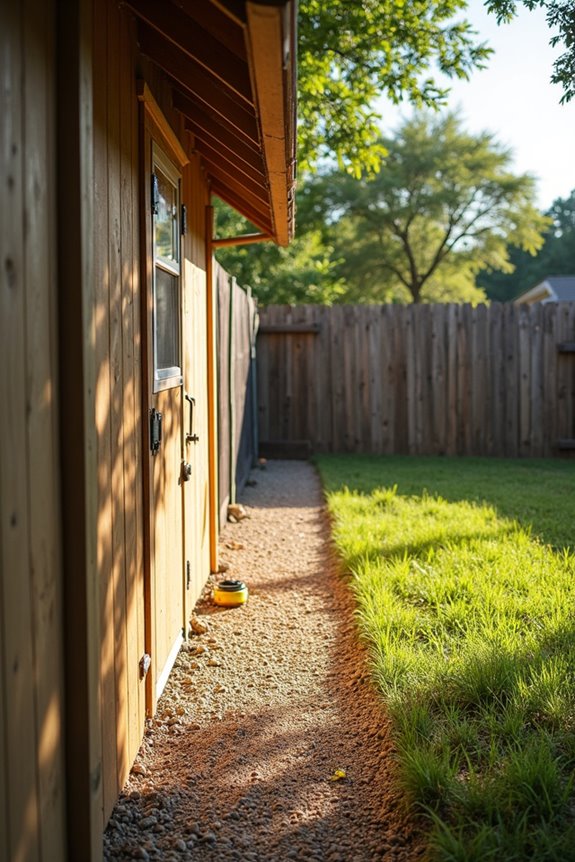
Now that you’ve submitted your permit application, you’ll need to understand the specific spacing and fencing rules that’ll determine where you can actually place your coop on your property. Your coop and exercise area must sit at least 3 feet away from your property lines and any structures that need permits, which means you can’t just plop it anywhere in your backyard. If your lot is smaller than a quarter acre, you’re required to keep the whole setup behind a 6-foot fence for security and to keep your neighbors happy.
Setback Distance Requirements
Before you build your coop, you’ll need to check how far it must sit from your neighbors’ homes and property lines—and here’s the thing: these distances aren’t the same everywhere in Texas.
In Houston, your coop needs a 100-foot setback from any building or residence. Arlington and Laredo both require 50 feet minimum, though Laredo lets you keep 5+ chickens if you push that to 100 feet. Corpus Christi asks for 25 feet, while Lubbock’s only 5 feet if you’re in the right zone.
San Antonio’s flexible: smaller flocks can go anywhere on your lot, but 8+ chickens need 50 feet distance.
Check your city’s specific rules first. This setback requirement makes the difference between legal backyard farming and costly violations. You’re building something your community will accept, and that starts with respecting these boundaries.
Fencing Height and Materials
How high does your fence actually need to be? Most Texas jurisdictions require at least a 6-foot minimum fence to contain your backyard chickens and prevent escapes. Check your specific city’s regulations, as some areas demand higher barriers for predator protection.
Material matters too. You’ll want sturdy, durable fencing that withstands Texas heat—think sturdy wire mesh or hardware cloth rather than chicken wire alone. Hardware cloth resists predators better and lasts longer in our climate.
When considering backyard chickens legality in Texas, remember that your fence serves double duty: keeping hens contained and protecting them from predators. Inspect your fence regularly for gaps or damage. Secure fencing isn’t just recommended; it’s often legally required. This investment protects your investment in your flock.
Property Line Considerations
Where exactly should you place your coop on your property? Understanding setback rules is essential for backyard chickens legality in North Richland Hills. Your coop and attached exercise area must sit at least 3 feet away from property lines and permit-requiring structures. This distance protects your neighbors’ privacy and prevents disputes.
Here’s what matters next: if your lot’s smaller than 1/4 acre, you’ll need a 6-foot fence behind the coop. Distance from neighbors directly affects how many chickens you can keep—30 feet allows six chickens, while 50+ feet opens more possibilities.
Start by measuring your property lines carefully. Mark the required setback zones with stakes. This simple step guarantees you’re compliant before building anything.
Design a Secure Rear-Yard Chicken Enclosure
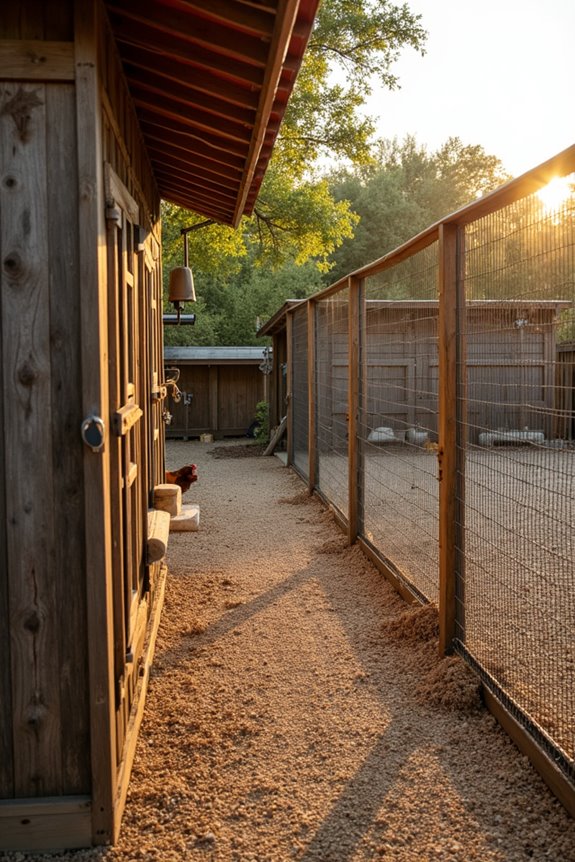
Now that you’ve figured out where your coop can go, it’s time to build an enclosure that actually works—one that keeps your chickens safe from predators while meeting your city’s specific requirements. I’ll walk you through the essential specs you’ll need, from the right amount of roosting space to proper drainage, so you’re not scrambling later. Let’s make sure your setup is both legal and built to last.
Enclosure Specifications And Requirements
The foundation of keeping backyard chickens in Texas comes down to one thing: building a secure, comfortable home for your flock. Your coop needs at least 10 inches of roosting space per chicken and one nesting box for every four birds. Make sure your enclosure sits the proper distance from property lines and neighboring structures—this matters for staying on good terms with neighbors and following local rules.
In smaller lots under a quarter acre, position everything behind a 6-foot fence in your rear yard. Keep the space ventilated and predator-proof. Remove manure weekly into permanent containers that minimize odors. This setup protects your chickens while keeping your backyard pleasant for everyone nearby.
Placement And Setback Considerations
Before you hammer a single nail, you’ve got to figure out exactly where your coop can go on your property. Your city or county has specific setback rules—the minimum distance your backyard chickens must stay from neighbors’ homes, buildings, and property lines.
| City | Setback Distance | Notes |
|---|---|---|
| Houston | 50 feet | From residences |
| Laredo | 50 feet | Check local updates |
| Lubbock | 50 feet | Verify current code |
I recommend checking your local ordinances first. Requirements vary wildly—some areas demand 20 feet, others 100+ feet. Call your city planning department or search online for your specific codes. Once you know the boundaries, measure your yard carefully. Mark potential spots with chalk or stakes. Choose a location with afternoon shade and good drainage. This prep work keeps you compliant and your neighbors happy.
Manage Manure and Coop Cleaning: North Richland Hills Standards
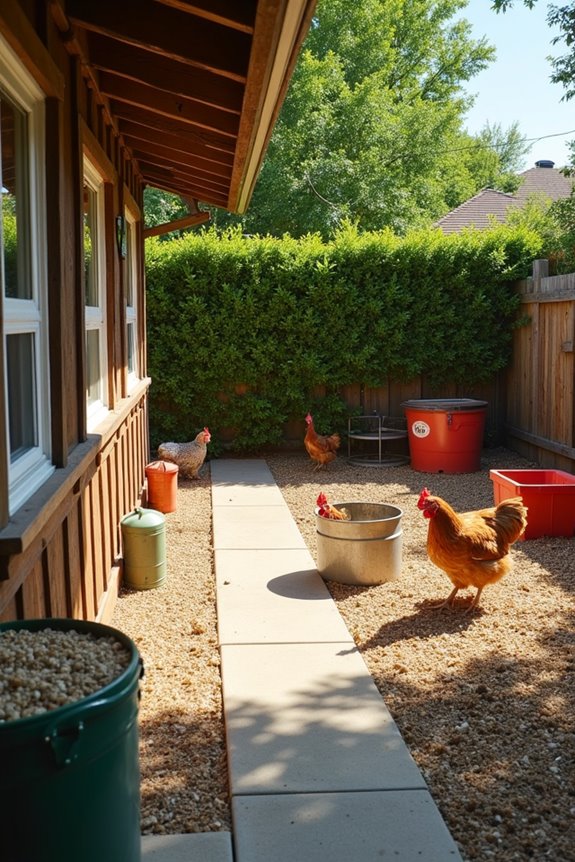
Since you’re keeping chickens in North Richland Hills, staying on top of manure management is one of your most important responsibilities—and it’s actually pretty straightforward. You’ll need to remove droppings at least weekly to keep your coop clean and your neighbors happy. Store all manure in permanent, waste-minimizing containers—think sealed bins or designated compost areas that prevent odors from spreading. This consistent routine protects your backyard chickens’ health and shows your community you’re a responsible keeper. Proper storage also prevents runoff issues during rain. When you establish this habit early, it becomes second nature. You’re not just following rules; you’re being the kind of neighbor everyone appreciates. That dedication keeps backyard chickens welcome in our community.
Follow Feeding, Watering, and Storage Guidelines
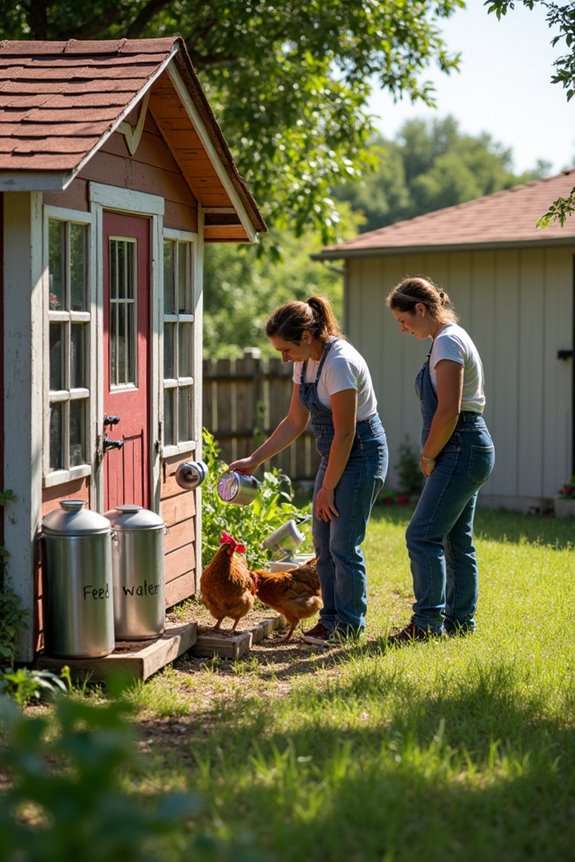
How do you keep your chickens healthy and your neighbors satisfied? Smart feeding and watering practices make all the difference.
- Use impervious containers or platforms for feeders to prevent spills and pest attraction
- Provide clean, reliable water daily with systems that prevent contamination and leakage
- Store feed in sealed, pest-proof containers away from moisture
- Remove uneaten food promptly to minimize odors and rodent problems
Your backyard chickens depend on consistent care. I recommend setting up feeders on raised platforms—this keeps waste contained and makes cleanup easier. Fresh water’s essential; consider automatic waterers that prevent spillage and bacterial growth.
Store your feed in airtight bins in a cool, dry spot. Spoiled feed creates health problems and attracts unwanted visitors. By following these guidelines, you’re protecting your flock, respecting your neighbors, and joining a thriving community of responsible chicken keepers.
Prepare Your Coop for City Inspection
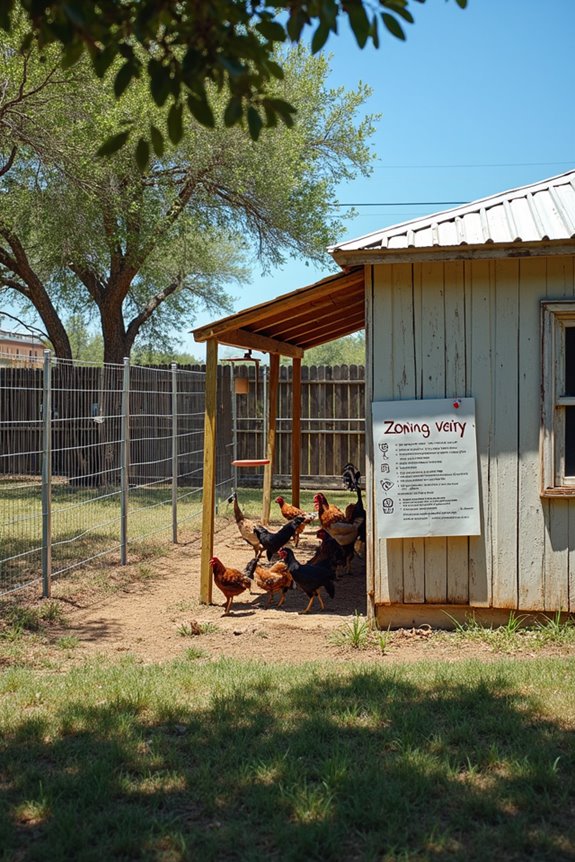
Once you’ve got your feeding and watering systems down, it’s time to make sure your setup meets North Richland Hills’ inspection requirements.
Neighborhood Services will visit to verify your coop meets all standards. Here’s what you need ready: First, show your site plan detailing coop placement and exercise area location. Second, confirm your coop sits at least 3 feet from property lines. Third, if your lot’s under 1/4 acre, ensure a 6-foot fence surrounds everything. Fourth, demonstrate proper housing conditions—clean bedding, adequate ventilation, and secure fencing against predators.
Understanding backyard chickens legality means meeting these specific expectations. Document everything with photos showing measurements and fence height. Keep inspection records handy. This preparation protects your flock and your permit status, keeping you confident in your chicken-keeping journey.
Check Your HOA Rules Before You Start

Even if your Texas city allows backyard chickens, your HOA can still say no—those private covenants sometimes override local rules, so you’ll want to check your HOA documents before you bring home your first bird. Look through your HOA restrictions for specific rules about chickens, flock size limits, coop placement, and any mention of nuisance concerns like noise or odor that could disqualify your setup. If you can’t find clear answers in your paperwork, contact your HOA board or management company directly and ask for a written response, which protects you if disputes come up later.
HOA Restrictions Override Local Laws
What if your city says you can keep chickens, but your HOA says you can’t?
Here’s the reality: HOA restrictions override local laws in Texas. Your city’s permission doesn’t protect you if your homeowners association has stricter rules. Many Texas HOAs treat poultry restrictions as binding contracts you signed when you bought your home.
Consider these HOA limitations:
- Bans on backyard coops entirely
- Restrictions on rooster ownership
- Limits on the number of hens allowed
- Enforcement through fines or legal action
I recommend reviewing your HOA bylaws and covenants carefully before investing in chickens. Contact your HOA board directly about their poultry policies. Understanding these restrictions upfront saves you frustration, money, and conflict with neighbors who might report violations.
Private Covenant Enforcement Mechanisms
How does your HOA actually enforce its rules against backyard chickens? Your community likely has teeth behind those restrictions. Most HOAs can levy fines starting at $50 to $500 monthly for violations. They might also restrict your ability to make other landscaping improvements or upgrades until you comply.
Here’s what matters: Review your HOA covenants carefully. These binding documents spell out exactly what penalties apply if you keep chickens without approval. Some HOAs escalate enforcement by placing liens on your property or restricting your voting rights.
The key? Don’t assume local city laws protect you. Your HOA covenants override them. Before bringing home chickens, contact your HOA board directly. Ask about their specific enforcement process and whether exceptions exist for limited numbers or designated areas.
Know When Your Permit Can Be Revoked or Denied
Your permit can disappear faster than you’d expect if you’re not careful about the details.
I want you to understand permit revocation happens when you stop following the rules. Here’s what’ll get your approval yanked:
- Enclosure failures. Your coop isn’t secure enough, and predators or escaped chickens become neighborhood problems.
- Setback violations. Your setup’s too close to property lines or your neighbor’s house.
- Distance requirements. You’re not maintaining the required feet from residences that cities like Arlington enforce.
- Zoning non-compliance. Your operation expands beyond what your permit allows.
Cities enforce these standards seriously. If you’re facing permit revocation, check your local appeals process—most jurisdictions let you fix problems before losing approval entirely. Stay proactive, and you’ll keep your flock legal.
Maintain Long-Term Compliance to Keep Your Chickens Legal
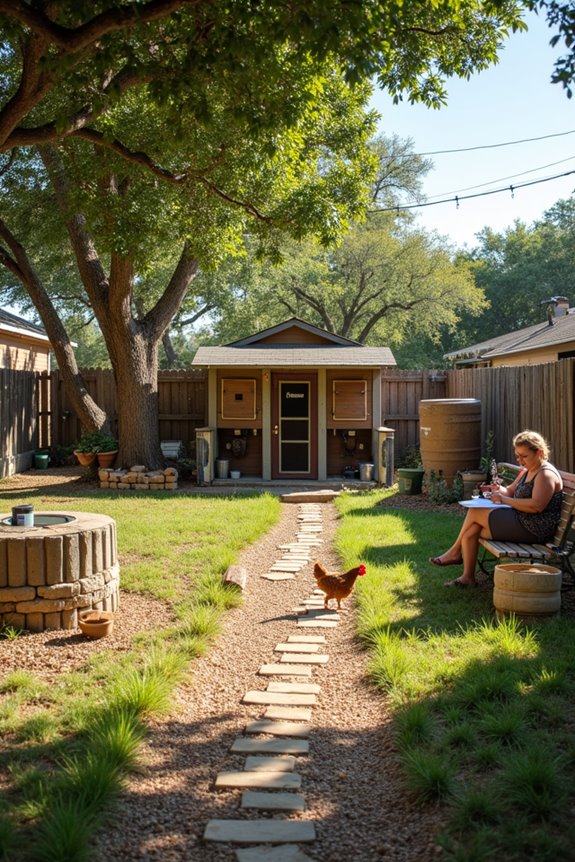
Once you’ve got your permit squared away, keeping it isn’t a one-time job—it’s an ongoing commitment. I recommend checking your local regulations annually since rules can change. Keep your permits visible and accessible—inspectors may request them during routine visits. Maintain your coop properly: clean bedding weekly, ensure good ventilation, and fix any damage promptly. Document your flock size and update permits if you add chickens. Watch for neighborhood complaints about noise or odor, and address them quickly. Stay connected with local poultry groups to catch wind of regulation updates. If your city proposes new rules, attend meetings and advocate for reasonable standards. Your consistent care and transparency build trust with officials, protecting your backyard flock’s legal status long-term.
How to Handle Common Challenges and Violations
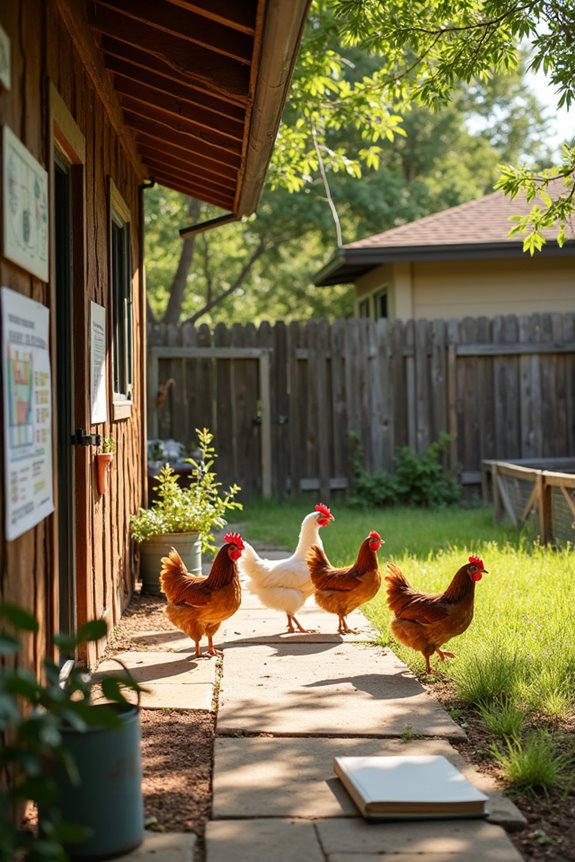
Even with the best intentions, keeping backyard chickens can hit some bumps—and knowing what problems might arise helps you tackle them before they become real violations.
Even with the best intentions, backyard chickens can present challenges—knowing what problems might arise helps you prevent violations.
You’re not alone if you face challenges. Here’s what commonly trips up chicken keepers:
- Odor complaints: Manage manure regularly by cleaning coops weekly and composting waste properly
- Noise issues: Roosters aren’t allowed in most areas; stick to hens only
- Enclosure problems: Your coop must meet local ordinances for setbacks and ventilation standards
- Predator concerns: Secure your run completely to prevent escape and injury
When inspectors visit, they’re checking whether your setup matches your city’s specific rules. Stay ahead by reviewing your local ordinances annually. Document your compliance efforts. If violations occur, respond quickly—fix the issue and communicate with your city.
You’ve got this.