
I’ve found that the three best foods for backyard deer are browse, nuts, and mast. Browse—buds, twigs, and branches—forms your foundation since it mimics their natural diet year-round. Nuts and acorns pack dense calories and protein for winter survival. Here’s what I do: prune branches at deer height, introduce nuts gradually over two weeks to avoid digestive issues, and aim for 12–16% protein through variety. Skip shelled corn; it lacks fiber. Spread multiple feeding sites to prevent concentration. Keep it modest and natural. There’s much more to master about creating a sustainable feeding strategy.
Browse: The Best Foundation for Year-Round Deer Feeding
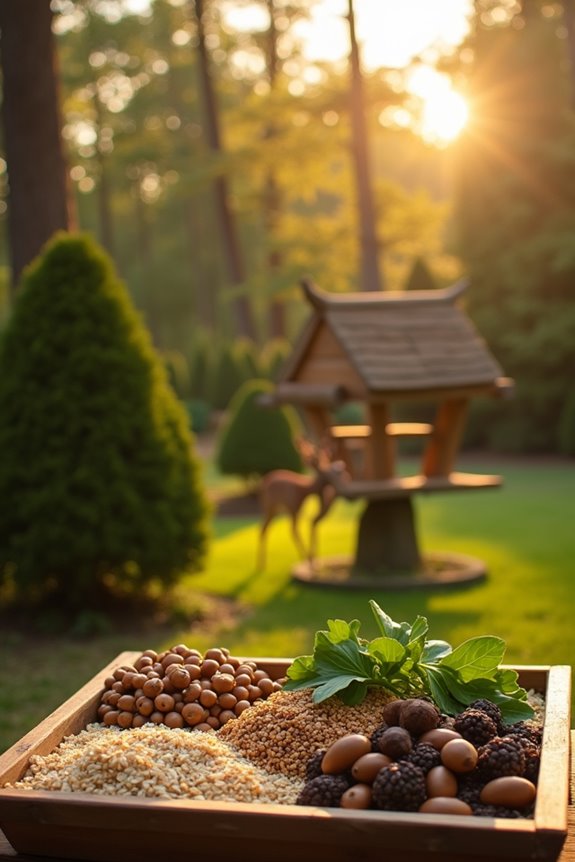
When winter arrives and snow covers the ground, deer can’t rely on the tender plants and fresh growth they enjoy in warmer months—so they’ve got to eat what’s available: woody plant matter like buds, twigs, and branches, which we call browse. This is their natural diet, and it’s the foundation feeding strategy you should prioritize.
Here’s what I’ve learned: winter browse keeps deer healthy and supports their rumen health better than sudden food changes. Instead of introducing new foods mid-winter, try pruning branches from shrubs and trees on your property. Make those buds and twigs accessible at deer height. Plant a diverse mix of woody plants that provide year-round nutrition. This approach respects deer nutrition needs while building a sustainable system that works alongside nature, not against it.
High-Protein Foods to Give Deer in Winter: Nuts and Mast
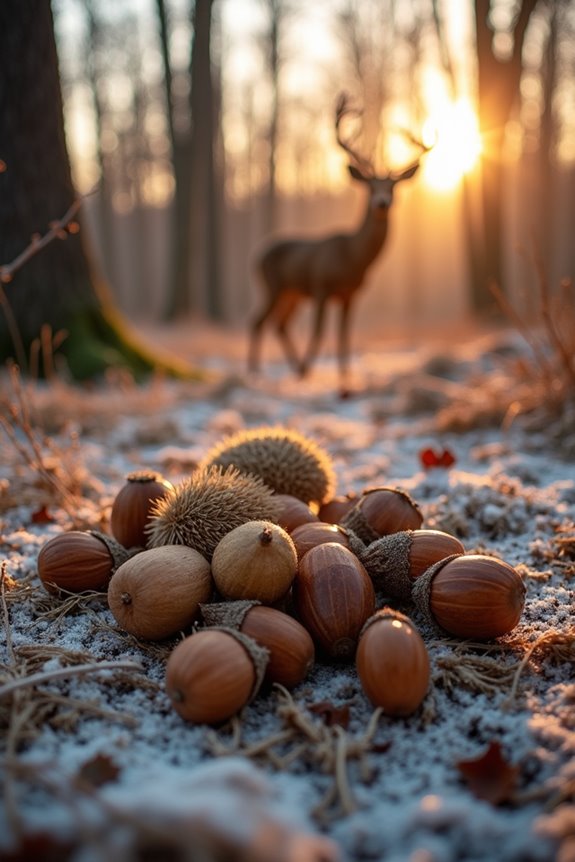
While browse forms the backbone of your deer feeding strategy, adding nuts and mast takes their winter nutrition to the next level. I’ve found that nuts and mast—like acorns and soft fruits—deliver dense calories and protein your deer desperately need during cold months. These protein-rich foods support antler development and boost body condition when food’s scarce.
Here’s what I recommend for your supplemental feed approach: introduce acorns and other nuts gradually over two weeks to avoid digestive upset. This slow transition protects your deer’s rumen function. I avoid shelled corn as a primary winter feed because it lacks fiber and causes gut problems.
The key to success? Don’t rely on one food source. Rotate between different nuts and mast varieties to keep your deer diet balanced at 12–16% protein. Your herd will thrive.
Safe Feeding Practices: How Much, How Often, and Legal Considerations
How do you know if you’re feeding your deer the right amount? I’ve learned that successful backyard feeding means following smart practices that keep both deer and your property safe.
Here’s what I do:
- Check local wildlife feeding ordinances before starting supplemental feeding, since deer feeding regulations vary by location
- Introduce feed gradually over two weeks to prevent digestive upset and help deer adjust naturally
- Spread multiple feeding sites across your yard to avoid concentration points that attract predators
I keep my base natural plant matter and avoid high-starch foods like corn and bread. I never over-feed—the goal is modest supplementation, not dependency. Starting gradual introduction gives deer time to adapt while respecting legal considerations in your area. This approach protects both the herd and your community.