Building your own backyard putting green takes five straightforward steps. First, find a flat spot and decide between natural grass or synthetic turf based on your budget and maintenance willingness. Next, excavate and lay down a compacted base of crushed rock and decomposed granite. Then install proper drainage with a gentle slope to prevent pooling. Finally, secure your turf edges, add infill material, and compact everything for a true playing surface. Each step builds on the last, creating a professional-quality green you’ll actually use.
Step 1: Assess Your Site, Budget, and Commitment Level
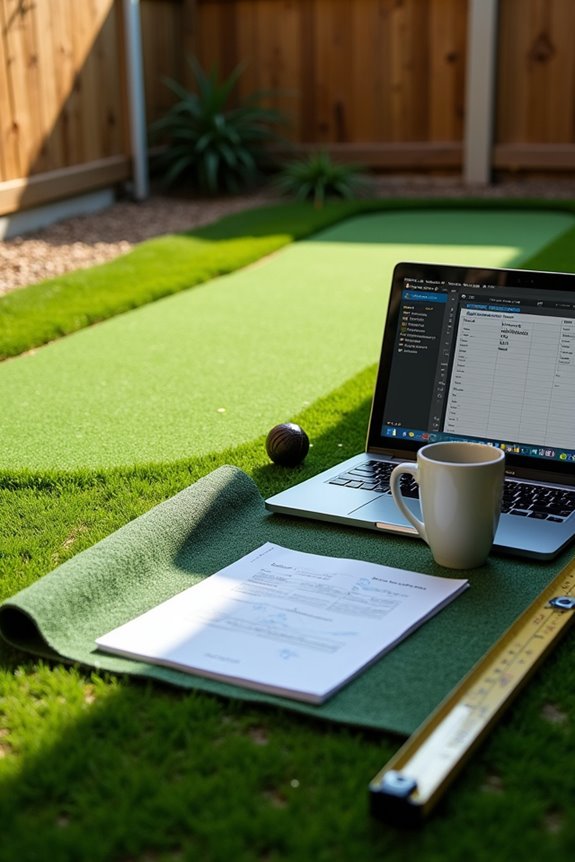
Where should you actually put this putting green? I’d recommend finding a relatively flat spot in your yard—no more than a 3% slope works best. This keeps your putting green kit stable and your base panels level.
Next, think about your budget. Basic backyard greens cost less, while premium setups with bend-a-board edging and dense crushed rock bases cost more. Consider what fits your wallet.
Your commitment level matters too. Natural greens demand ongoing maintenance and licensed pest control. Synthetic turf? That’s much easier—minimal upkeep required. I’d honestly suggest synthetic if you’re busy.
Finally, decide: DIY installation or hiring a contractor? Installing base panels and placing cups yourself saves money but takes time. Assess your site, your budget, and your commitment level first. Everything else follows from these choices.
Step 2: Choose Between Natural Grass and Synthetic Turf
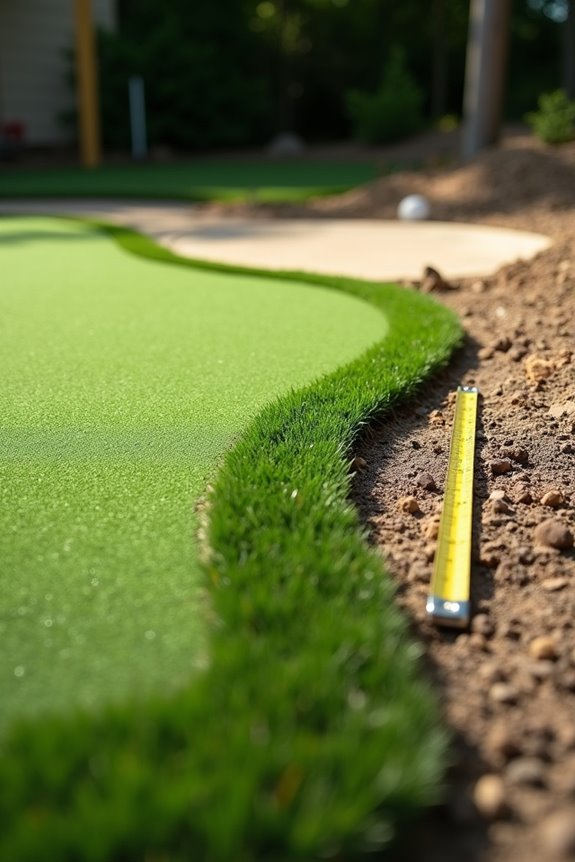
How do you decide which surface fits your life?
I’ll be honest—this choice shapes everything about your DIY backyard putting greens project. Let me break down what matters most:
- Natural grass costs $18–$20 per square foot and demands drainage systems, irrigation, and routine mowing
- Synthetic turf requires simpler base construction (2–4 inches gravel, 6–8 inches compacted aggregate) with turf surface speed around 11–13 feet
- Maintenance commitment: Natural grass needs licensed pest control and fertilization; synthetic offers lower ongoing work
- Installation timeline: Synthetic’s modular design means faster setup; natural grass takes longer and requires realistic dedication
Natural grass feels premium but asks more from you weekly. Synthetic turf lets you enjoy your green without the constant upkeep. Consider your schedule honestly before deciding.
Step 3: Prepare Your Backyard Site and Build the Foundation
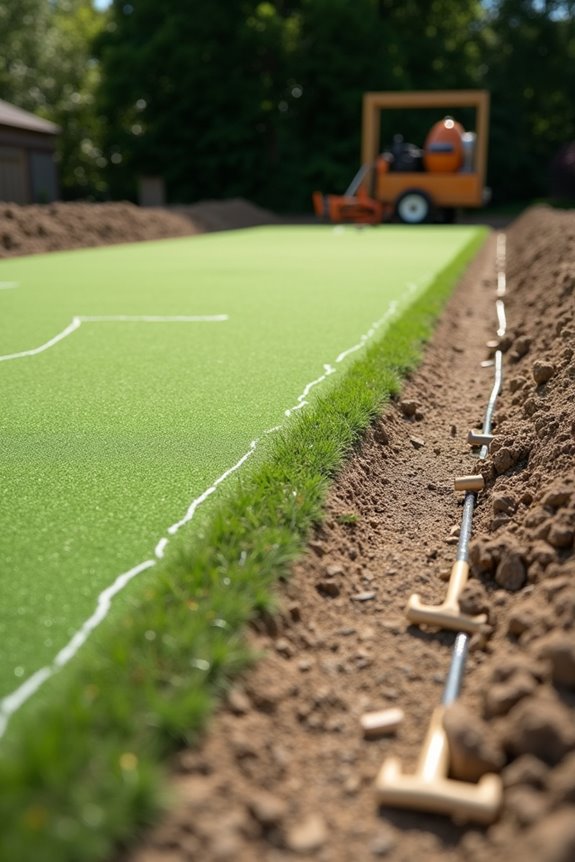
The foundation you build now determines whether your putting green stays level and plays true for years—or develops soft spots and drainage problems. Start by selecting a flat spot with no more than a 3% slope, then excavate 3–5 inches of native soil. Add a weed barrier if you’d like extra protection, then lay down 4 inches of crushed rock and compact it to 90–95% density. This compacting crushed rock creates your putting green sub-base’s backbone. Top it with 1 inch of decomposed granite, compacted evenly for stability. Finally, secure perimeter edging with seam tape using 5-inch nails every foot. You’ve now built a solid installation base that’ll keep your DIY backyard green playing beautifully for seasons ahead.
Step 4: Install Drainage and Your Playing Surface
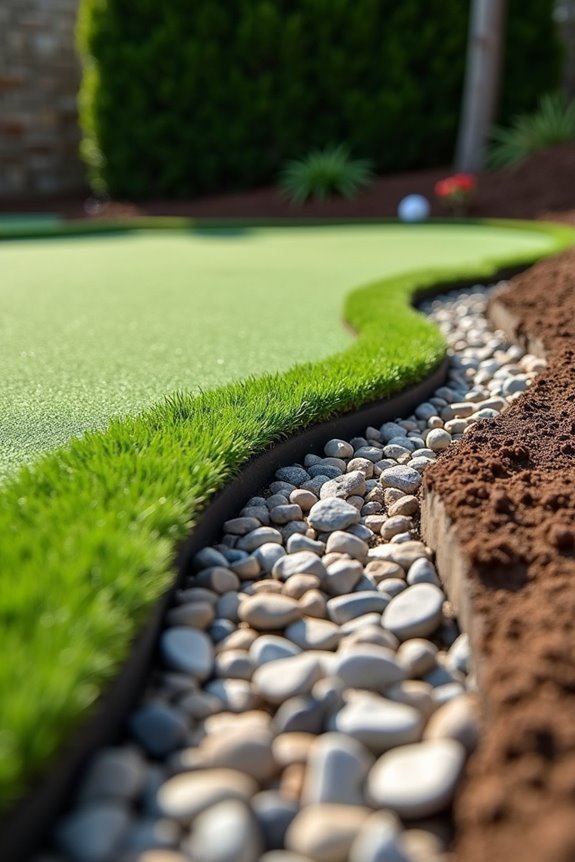
Proper drainage makes or breaks your putting green, so don’t skip this step—it’s what keeps your surface playable instead of soggy. I’ll walk you through creating a system that actually works.
Here’s what you need to do:
- Lay a 2–4 inch gravel base with compacted aggregate underneath your surface for proper water movement
- Create a gentle 2% slope across your green so water flows away from the playing surface
- Install surface drainage channels to prevent pooling in low spots
- Seal all seams with seam tape and fasteners to keep everything secure
Once your drainage base is solid, you’re ready for your turf or panels. Secure everything tightly—this foundation prevents future maintenance headaches and keeps your green in top shape for years.
Step 5: Secure Edges and Compact Your Green
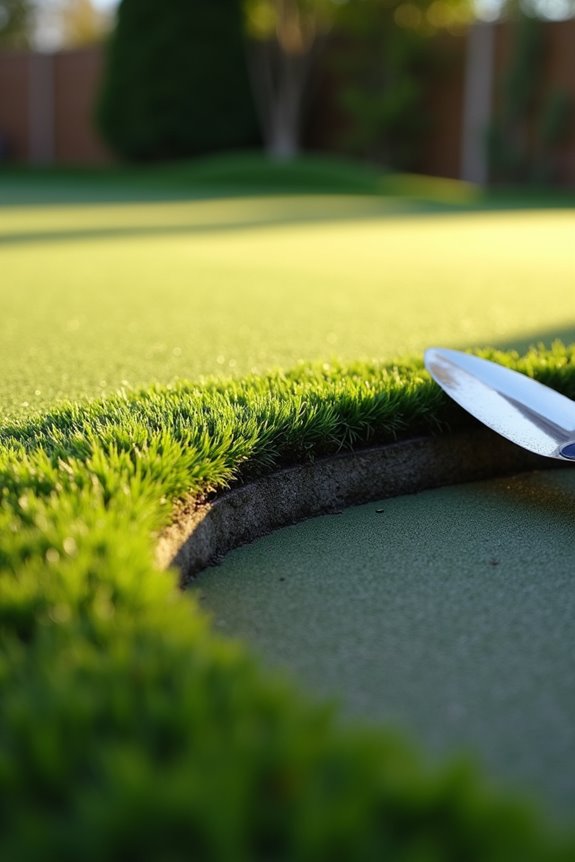
Now that your drainage is locked in, it’s time to anchor everything down so your green stays put. Start by attaching seam tape to your interlocking base with 5-inch nails every foot. Next, glue your putting green onto the seam tape, then secure the perimeter with nails spaced 3–6 inches apart around the edge. For the fringe and interior, use 1-inch staples every 3 square feet to prevent shifting. This edge security keeps your base panel stable during play. Finally, spread 0.5 to 1.5 pounds of infill per square foot across the surface. Rake it evenly into the thatch for consistent play. Compacting the material properly ensures your green performs beautifully for years. You’re almost there—your backyard oasis awaits.