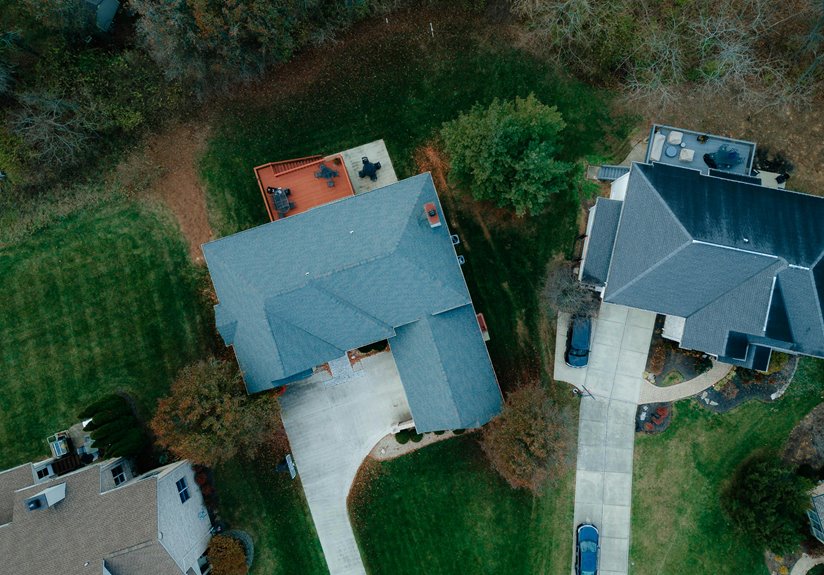
Before you build a backyard tiny home, check your local zoning code first—most areas limit them to 800–1,200 square feet with setbacks of 5–20 feet from property lines. Second, budget for hidden costs like utility connections ($5,000–$15,000), site prep ($3,000–$10,000), and property tax increases. Third, understand your specific terrain because challenging ground means extra grading expenses. I’d add a 15–20% budget buffer for surprises. Getting real quotes from neighbors who’ve built similar homes reveals where your money actually goes.
Check Your Zoning Code for Size, Setback, and Height Limits
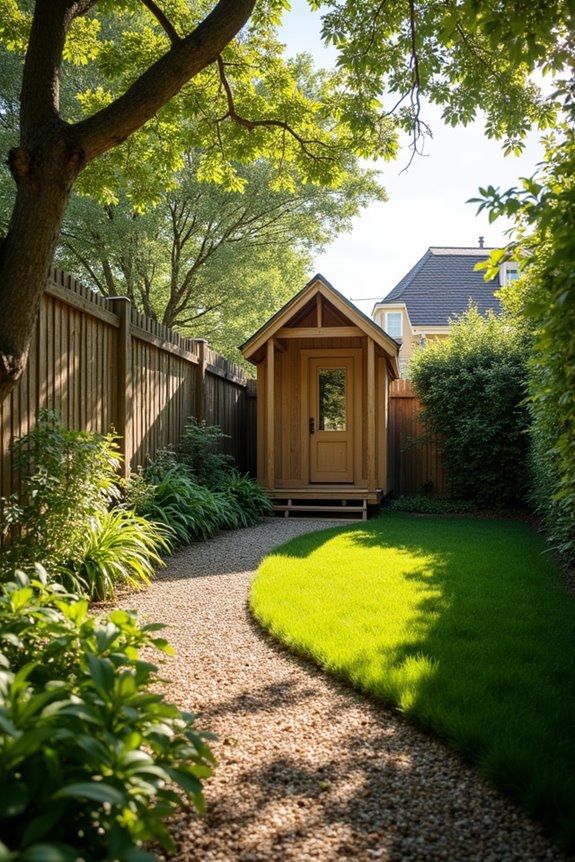
Before you break ground on that backyard tiny home, have you checked what your local government actually allows?
Your zoning code is your blueprint for success. Most jurisdictions classify backyard tiny homes as ADUs with size limits between 800 and 1,200 square feet, though your area might differ. Setback requirements typically range from 5 to 20 feet from property lines, determining where you can actually build. Height restrictions usually span 16 to 25 feet—crucial if you’re considering two stories.
But here’s the thing: these building codes vary wildly. Your suburban neighborhood might have different lot regulations than nearby urban zones. Parking mandates and utility connections also factor in. Before diving deeper into plans, contact your local planning department. Ask about permits, variances, and exterior light restrictions. They’ll guide you through classifications specific to your area, turning confusion into clarity.
Budget for These Hidden Costs (Utilities, Landscaping, Taxes)
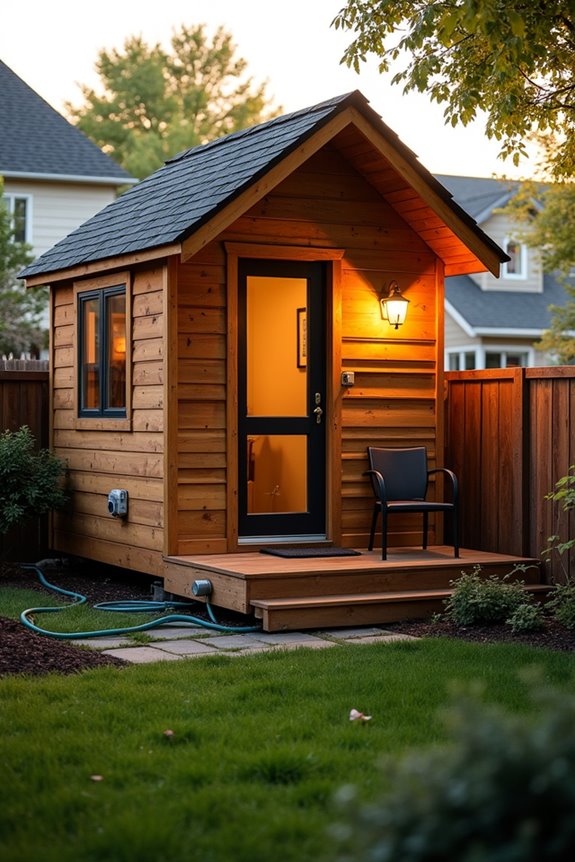
Once you’ve got the green light from your local planning department, it’s time to face the real budget conversation—and I’m not talking about what you’ll spend on the actual structure. Utility connection fees and site preparation often surprise homeowners. You’ll also encounter landscaping restoration, fencing and driveway repairs, and permitting overruns that weren’t obvious upfront. Then there’s furnishing and outfitting your finished space, which adds real dollars fast. Don’t overlook property tax increases from your added home value or ongoing maintenance costs. Utility upgrades and concealed costs from inspections can push your total well beyond initial estimates. Build a buffer into your budget—maybe 15-20% extra. Talk with neighbors who’ve built tiny homes. They’ll tell you where their money actually went, helping you plan smarter and avoid financial surprises.
Site Prep and Utility Connection Costs in Tight Backyard Spaces
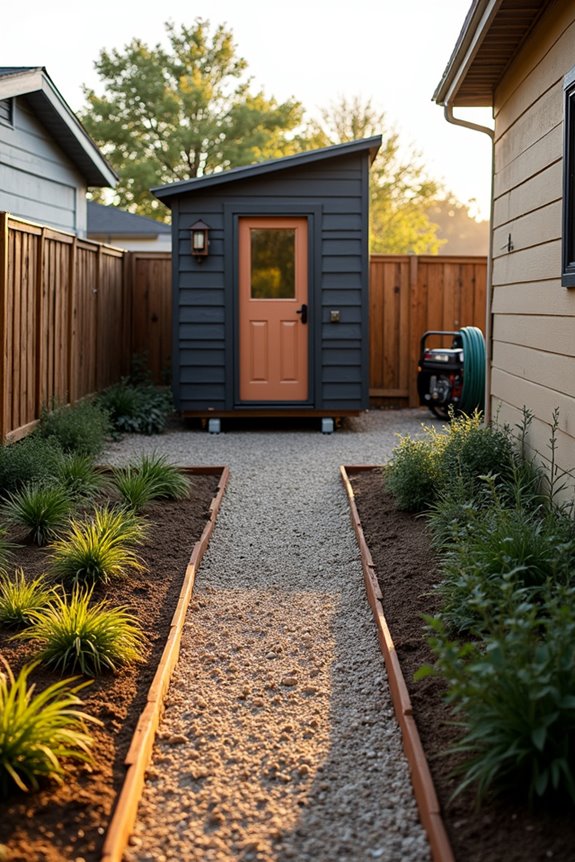
How much does it actually cost to get water, power, and sewer lines to your backyard tiny home? You’ll want to budget carefully for site prep and utility connections—they’re where costs can surprise you.
Here’s what you’re looking at:
- Utility extensions: $5,000–$15,000 depending on distance from existing lines
- Site preparation: $3,000–$10,000 for grading, foundation work, and trenching
- Challenging terrain: Sloped or unstable ground requires extra grading and retaining structures
- Access routes: Driveways or pathways for delivery and maneuvering
- Drainage systems: Critical for preventing moisture damage long-term
Your backyard’s layout matters enormously. If your lot slopes steeply or sits far from utilities, costs climb quickly. Permits add another layer too. I’d recommend getting quotes from local contractors who understand your specific site conditions. They’ll give you realistic numbers and help you avoid expensive surprises down the road.