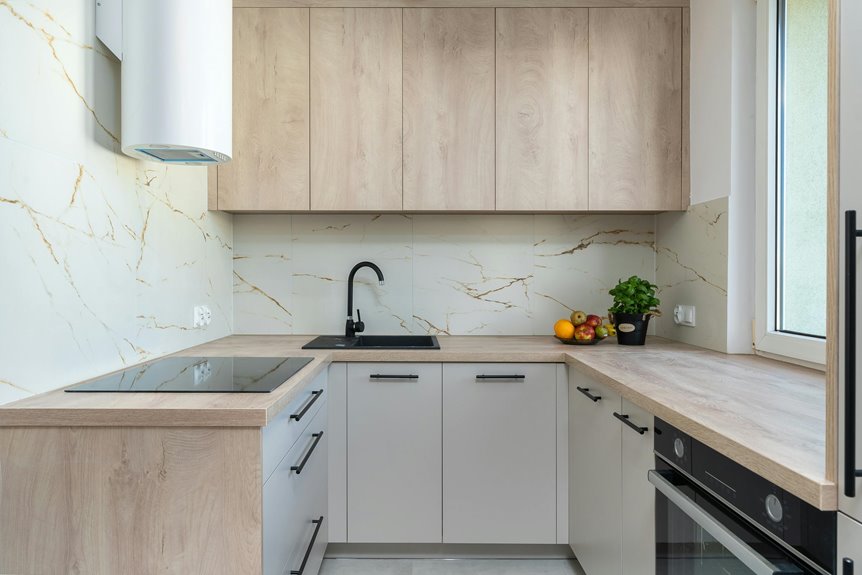
Kitchen cabinets typically last 10–50 years, depending on materials and care. Painted cabinets need rejuvenation every 10–20 years, while unpainted solid wood can stretch 50+ years. Plywood handles moisture better than MDF, which struggles after 15–20 years. Your biggest enemies? Moisture, heat, and neglect. Wipe spills immediately, run exhaust fans, and maintain steady humidity levels. These simple habits dramatically extend your cabinet’s life. Want to know the specific strategies that’ll keep yours looking great for decades?
How Long Do Painted vs. Unpainted Kitchen Cabinets Last?
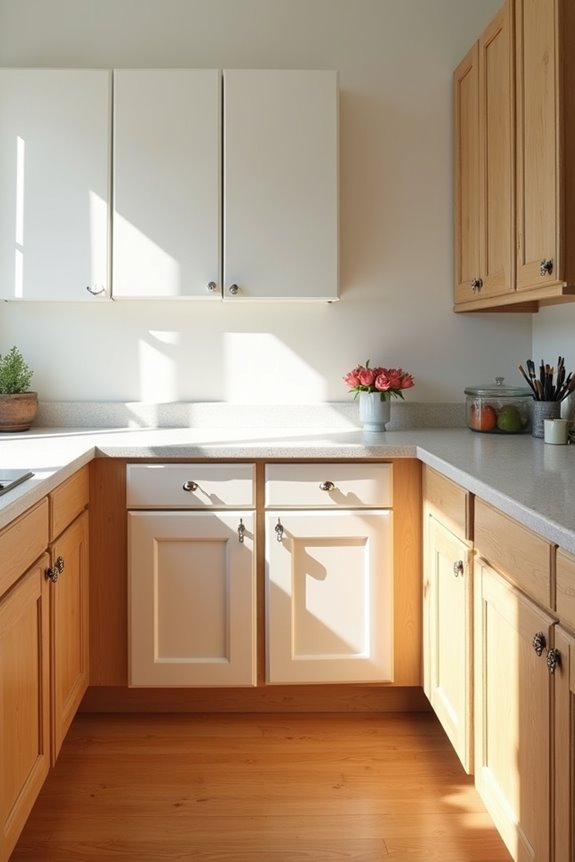
So, which cabinet finish will actually stand the test of time in your kitchen?
I’ll be honest—painted cabinets typically last 10–20 years, while unpainted cabinets can stretch 20–50 years or longer. Here’s why that matters for you: unpainted cabinets resist moisture better and age gracefully with minimal maintenance. Painted cabinets require more TLC. Professional enamel or urethane finishes outperform DIY paint jobs significantly. Your environment plays a huge role too. High-traffic kitchens or humid spaces will wear painted surfaces faster, pushing that lifespan toward the lower end. Poor prep work, harsh cleaners, and inadequate ventilation accelerate deterioration.
Think about your lifestyle. If you’re comfortable refreshing your painted cabinets every decade or so, that works. Otherwise, unpainted options offer longer-lasting peace of mind.
How Cabinet Materials Affect Durability and Longevity
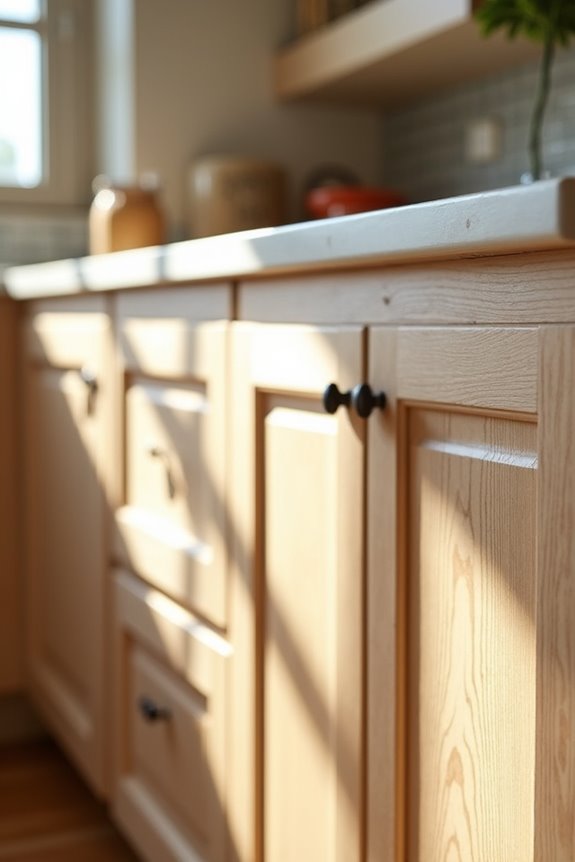
I’ll show you how your cabinet material choice makes all the difference in how long they’ll actually last in your kitchen. Solid wood cabinets like oak and maple can serve you for 50+ years, while engineered materials like plywood last 25–30 years and cheaper options like MDF or particleboard typically give you only 15–20 years before they start showing wear. The real story isn’t just about the material itself—it’s about how well it’s built, how you maintain it, and whether your kitchen environment (think moisture and humidity) works for or against it.
Solid Wood Vs. Engineered Materials
Why does the type of wood you choose for your cabinets matter so much? Your material choice directly impacts how long your investment lasts. I’ll break down the key differences between solid wood and engineered materials:
- Solid wood cabinets (oak, maple, cherry) exceed 50 years with proper care
- Plywood cabinets last 25–30 years and resist humidity better than particleboard
- MDF fronts endure only 15–20 years and struggle with moisture
- Laminate cabinets span 10–15 years with delamination risks
The longevity of engineered materials depends heavily on core construction and edge treatments. In humid kitchens, solid wood and plywood outperform particleboard and MDF when properly sealed. Think of engineered materials as budget-friendly starters; solid wood represents the long-term commitment that keeps your kitchen looking great for decades.
Material Quality Impact On Longevity
When you’re deciding between cabinet materials, you’re really deciding how many years you’ll keep them before needing replacements.
Here’s what I’ve found: solid wood cabinets like oak or maple last over 50 years with basic care. That’s a genuine investment. Plywood boxes rank second, holding strong for 25–30 years, especially in damp kitchens. MDF doors and drawers? They’ll serve you 15–20 years but struggle with moisture. Laminate finishes typically manage 10–15 years before peeling occurs.
Metal cabinets—stainless steel or aluminum—match solid wood’s 50+ year durability, though dents happen.
The pattern’s clear: better materials equal longer durability. Your cabinet’s longevity directly reflects what it’s made from. Choose quality wood or plywood if you want lasting durability. You’ll appreciate the investment later.
What Damages Cabinets Fastest: Heat, Moisture, and Daily Wear?
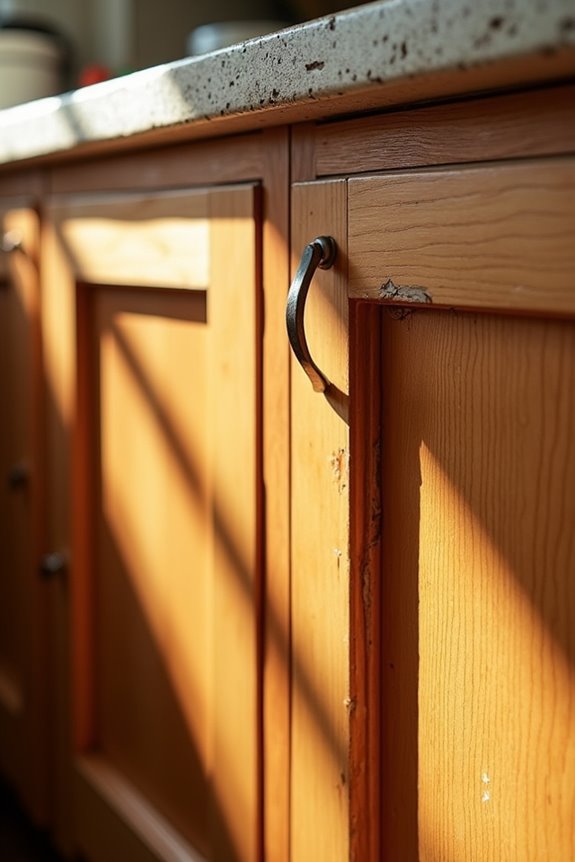
While your cabinet materials matter plenty, I’ve found that what really speeds up damage is what happens to them daily—moisture sneaking in from spills and steam, heat blasting from your stove, and constant opening and closing wearing down hinges. You’ll notice water damage shows up fastest because swollen, warped wood loses its structural integrity way quicker than normal aging, especially in cheaper materials like MDF. The good news is that understanding these three culprits—moisture, heat, and daily wear—gives you concrete ways to protect your investment.
Moisture and Water Damage
Of all the threats to your kitchen cabinets, moisture might be the sneakiest culprit—it works silently but relentlessly to break down even quality materials.
I want you to understand how serious water damage and moisture really are for cabinet durability. Here’s what happens:
- MDF and particleboard cores absorb water, causing them to swell and warp beyond repair
- Leaks and improper sealing can make cabinets structurally unreliable, sometimes requiring replacement
- Steam from cooking and humidity accelerate finish breakdown, creating peeling and bubbles
- Regular maintenance stops the damage—drying cabinets promptly after exposure extends their life significantly
Humid environments demand moisture-sealed cabinets with proper ventilation. Without these protections, your cabinet’s lifespan shrinks dramatically. The good news? You can prevent most moisture problems through simple preventive steps and quick action when spills happen.
Heat and Daily Wear
Your kitchen cabinets face constant stress from heat and everyday use, and these two forces work together to age them faster than you might expect. Heat from your oven and cooktop weakens finishes and adhesives, while daily wear causes chipping and hardware problems.
| Damage Type | How It Happens |
|---|---|
| Paint failure | Steam and heat weaken protective coatings |
| Warping | Temperature swings cause expansion and contraction |
| Gaps | Repeated heating cycles increase misalignment |
| Hardware fatigue | Daily opening and closing stresses hinges |
| Peeling | High-traffic areas experience accelerated wear |
Temperature fluctuations create gaps over time. Steam from cooking compounds finish degradation. Poor ventilation speeds this process considerably. You’ll notice these issues first near heat sources. Understanding these wear patterns helps you protect your cabinets’ durability and extend their lifespan.
Maintenance Tips for Painted, Solid Wood, and Plywood Cabinets
Getting the most life out of your kitchen cabinets comes down to how you treat them day-to-day. I’ll walk you through practical steps that’ll keep your painted cabinets, solid wood, and plywood looking great for decades.
Here’s what I recommend:
- Wipe spills immediately with a soft, damp cloth to prevent moisture damage and finish degradation
- Use gentle cleaners like mild soap and water instead of harsh chemicals that strip protective coatings
- Avoid excessive steam from cooking by running your exhaust fan during and after meal prep
- Touch up damage promptly with matching paint to prevent bare spots where moisture creeps in
Regular cabinet maintenance isn’t complicated. These simple habits protect your investment and extend your cabinet lifespan significantly. You’re building durability one day at a time.
The Five Factors That Make or Break Cabinet Longevity
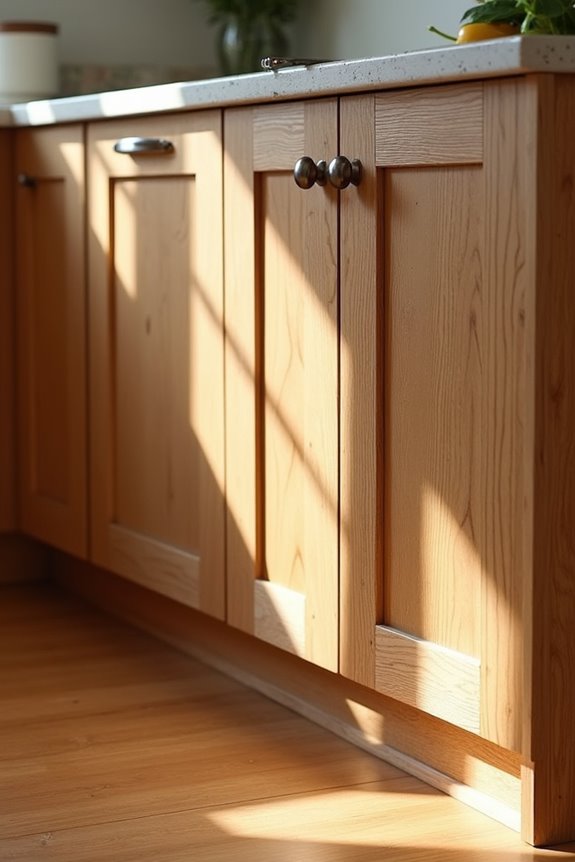
While daily maintenance keeps your cabinets looking fresh, what really determines whether they’ll last 15 years or 50+ comes down to five specific factors working together.
| Factor | Impact | Your Control |
|---|---|---|
| Material Quality | Solid wood outlasts MDF significantly | Choose wisely upfront |
| Moisture Exposure | Causes swelling and delamination | Seal gaps, fix leaks quickly |
| Heat from Appliances | Accelerates wear and finish damage | Install proper ventilation |
| Construction Grade | Full plywood boxes beat particle board | Inspect before buying |
| Maintenance Habits | Regular cleaning extends lifespan years | Clean weekly, touch up promptly |
You’re not stuck with whatever cabinets you have. Understanding these five factors helps you either extend what you’ve got or make smarter choices next time. Quality materials matter, but honestly? Your attention to moisture and consistent maintenance do the heavy lifting.
Should You Replace or Repair Your Cabinets?
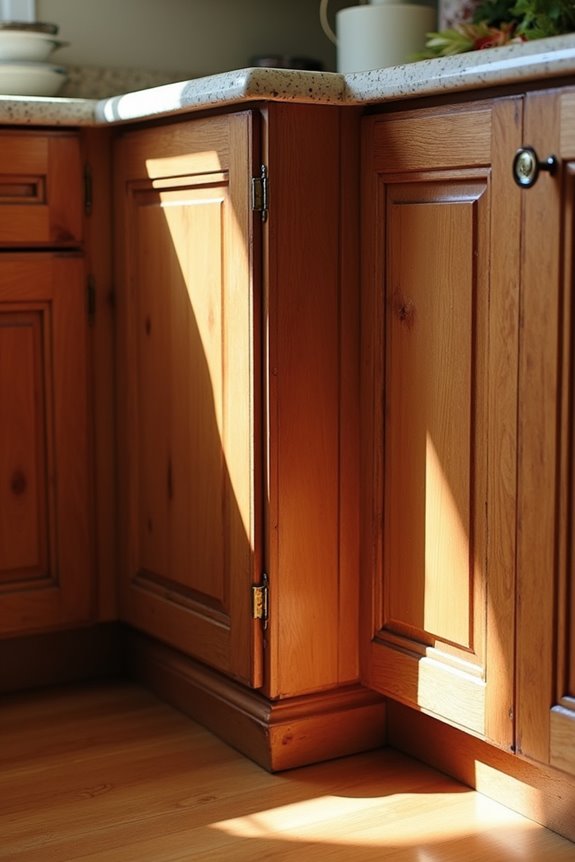
When should you call it quits on aging cabinets versus investing in fixes? Here’s what I’ve learned: if your cabinets’ lifespan is nearing its end, watch for these signs of failure:
- Warped or water-damaged carcasses that won’t close properly
- Soft cabinet walls indicating structural breakdown
- Hinges that repeatedly fail despite repairs
- Persistent issues costing more to fix than replace
The real question isn’t whether your cabinets look tired—it’s whether they still function. When you’re constantly calling repair specialists, that’s your cue. Compare ongoing repair costs against replacement expenses. I’d recommend replacing when issues stack up, because continuous fixes drain your wallet faster than starting fresh. Sometimes, we belong in kitchens with cabinets that work reliably.
How to Make Your Cabinets Last Decades Instead of Years
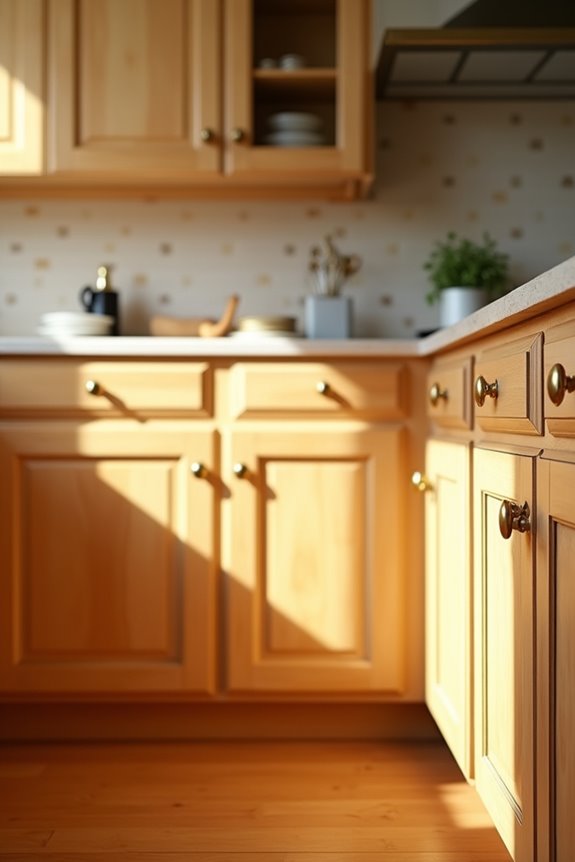
Now that you know when to replace your cabinets, let’s focus on preventing that day from coming anytime soon. I’ve found that solid wood cabinets dramatically outlast cheaper materials when you invest in proper maintenance. Here’s what works: wipe spills immediately to prevent moisture damage. Use coasters under glasses. Avoid excessive heat near cabinet doors. Keep humidity levels steady—too much moisture warps wood, while dryness causes cracking. Clean hinges and soft-close hardware regularly so they operate smoothly. Sand and refinish surfaces every few years if needed. Control your kitchen environment by running exhaust fans during cooking. These simple habits transform cabinets into lasting investments. You’re not just maintaining furniture; you’re protecting decades of daily life in your kitchen.