
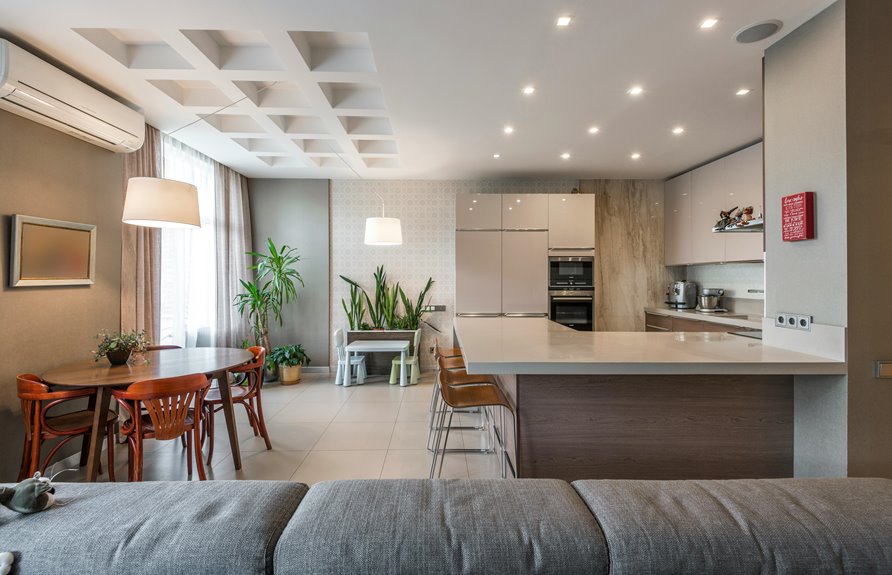
A kitchen soffit is that hollow box above your cabinets hiding ductwork, electrical wiring, and plumbing. You’ve got three solid options: remove it for a modern, spacious feel and taller cabinets; hide it with custom cabinetry for a seamless look; or redesign it with trim, shiplap, or paint as a intentional feature. Before deciding, peek inside to see what utilities you’re working with—that’ll determine what’s actually feasible for your space and budget. The right choice depends on what matters most to you.
What Is a Kitchen Soffit and Why It Exists?
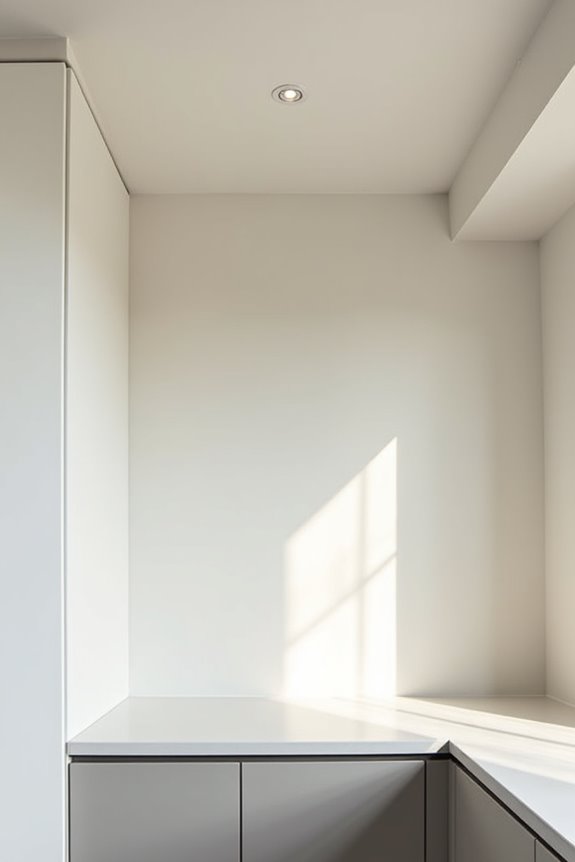
Ever wondered why there’s a boxy gap between your kitchen cabinets and ceiling? That’s your soffit. I’ll explain what it is and why it exists in most kitchens.
A soffit is basically a hollow box made from drywall or wood that fills the space above your cabinetry. It serves a practical purpose: concealment. Behind that soffit hide plumbing lines, ductwork, electrical wiring, and vents that’d be eyesores otherwise. Think of it as your kitchen’s hidden storage for utilities.
Soffits also solve ceiling problems. When standard cabinets don’t reach your ceiling or when it’s uneven, a soffit creates a finished line. Rather than rerouting expensive utilities or rebuilding your ceiling, builders install soffits as the cost-effective solution. It’s straightforward problem-solving that’s stood the test of time.
What’s Hiding Inside Your Kitchen Soffit?
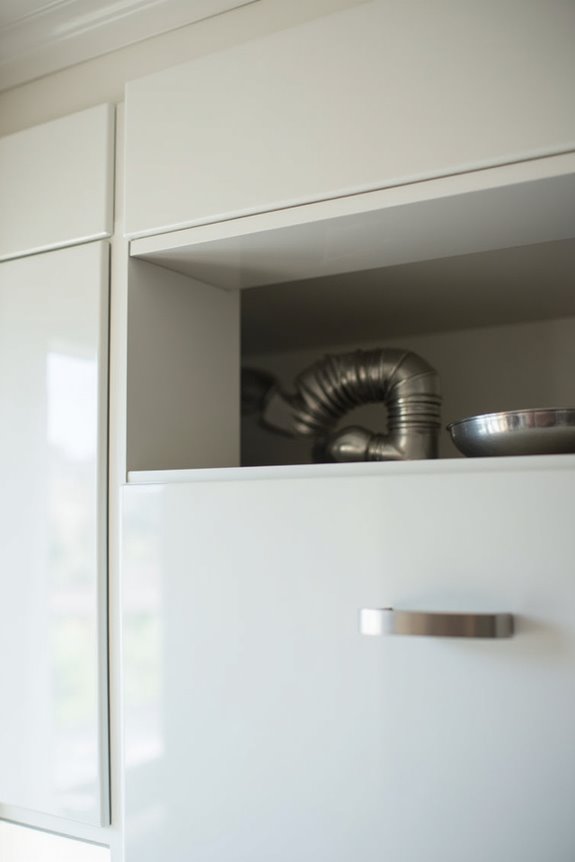
What’s actually tucked behind that bland box above your cabinets? The soffit contents vary dramatically from home to home. You might find HVAC ducts running through there, delivering cool or warm air throughout your kitchen. Electrical wiring could be hidden inside, powering outlets and lights. Plumbing vent stacks sometimes occupy that space, allowing gases to escape safely. Structural elements like beams might be concealed. Here’s the thing: some soffits contain nothing but empty space, existing purely to fill gaps or match your cabinet height. Before you demolish anything, grab your home’s blueprint or take a photo of your ceiling plan. Identifying what’s behind your soffit determines whether removal is simple or requires rerouting hidden utilities. That knowledge transforms your remodeling project from risky guesswork into manageable planning.
How to Decide: Remove, Hide, or Redesign?
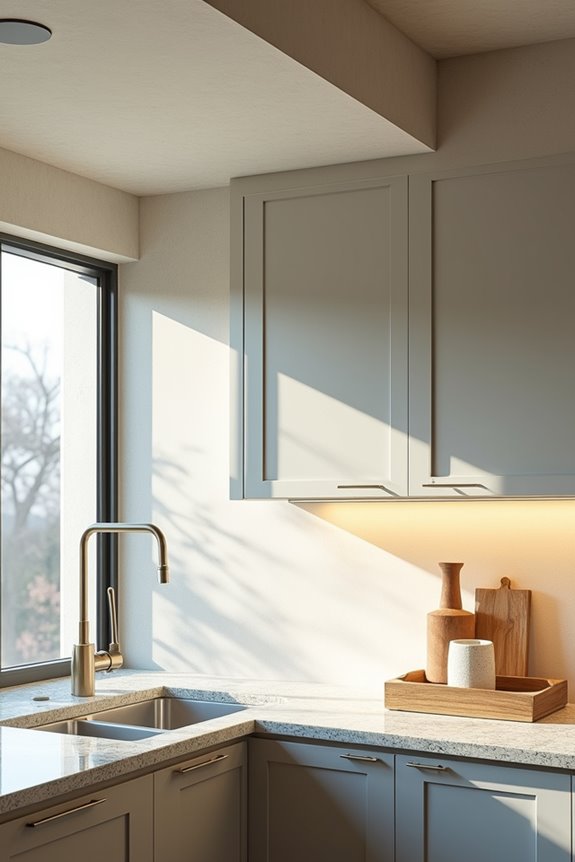
Now that you know what’s hiding in that space above your cabinets, you’ve got a decision to make. Your three main options are soffit removal, hiding it, or redesigning it entirely.
Soffit removal works great if you want storage expansion and a modern look, but utility relocation might be necessary if pipes or wiring run through there. Hiding your soffit with custom cabinets gives you that polished, floor-to-ceiling appearance without major work. Redesigning it—adding trim, shiplap, or fresh paint—keeps costs down but won’t increase storage.
Here’s my honest advice: consider what utilities live inside first. Then think about your budget and how much you value extra storage. A professional remodeler can assess your specific situation and help you pick the best path forward.
Three Ways to Deal With a Kitchen Soffit
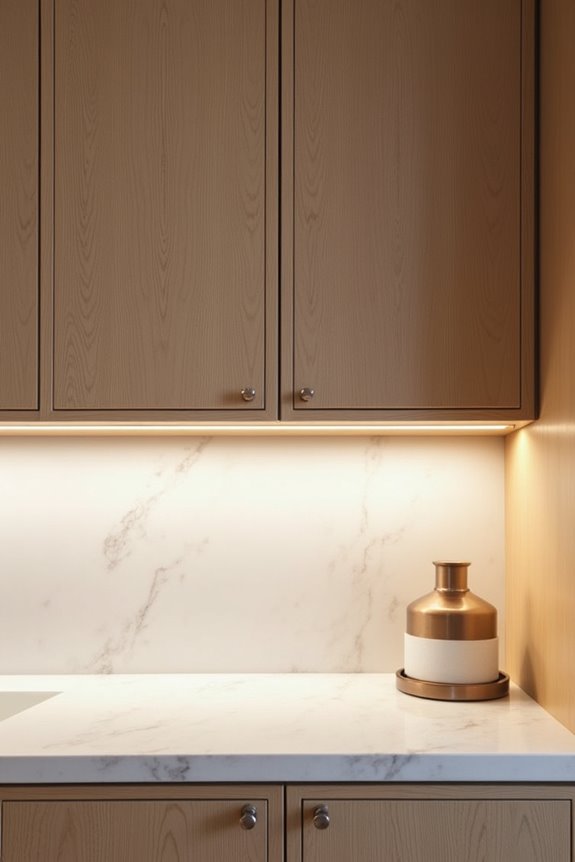
How you handle that soffit depends on what you want your kitchen to become.
You’ve got three solid paths forward. First, soffit removal opens up your space—taller upper cabinets reach the ceiling, boosting storage and creating that modern, airy vibe. However, you’ll need to reroute whatever utilities hide inside and patch your ceiling.
Second, custom cabinetry conceals the soffit entirely. This approach gives you that seamless, polished look without the hassle of removing anything. Your storage stays the same, but the visual payoff? Worth it.
Third, redesign transforms it into a feature. Add trim, shiplap, or paint to make it intentional rather than awkward. This budget-friendly option celebrates what’s there instead of fighting it.
Each path works. Pick the one matching your budget and style goals.
How to Remove a Kitchen Soffit
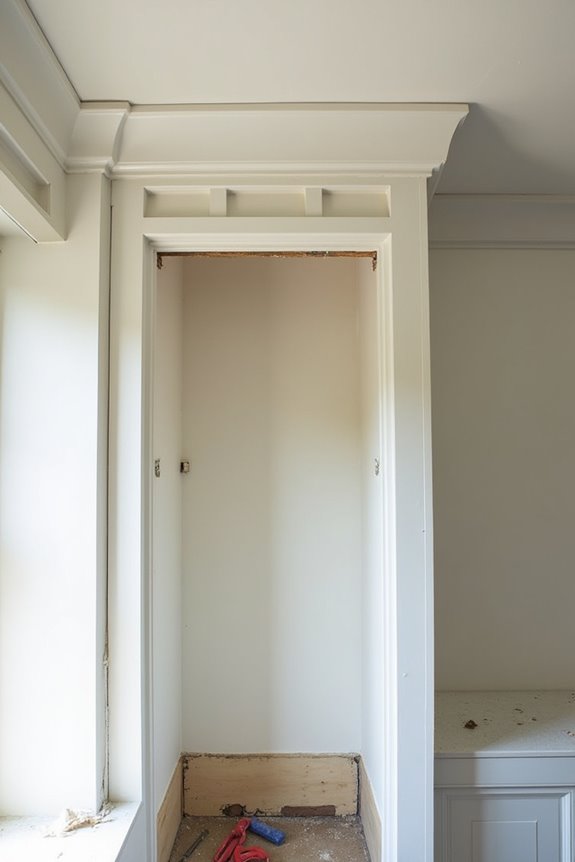
Before you grab a crowbar, I’ll walk you through three critical steps: first, we’ve got to assess what’s hiding behind that soffit—could be electrical wiring, plumbing, or ductwork that’ll complicate things. Next, if we find utilities back there, we’ll need to reroute them safely, which usually means calling in professionals like electricians or plumbers. Finally, once the soffit comes down, you’re left with patching and repainting that ceiling to match the rest of your kitchen.
Assessment and Feasibility Planning
What’s hiding behind your kitchen soffit? That’s your first question. Before you remove anything, you need a feasibility assessment. I recommend getting professional evaluation from a contractor who can review your home’s plans or blueprints. They’ll identify what’s actually back there—wiring, plumbing, ductwork, or structural supports. This matters because it determines your relocation feasibility. If utilities are hiding behind that soffit, moving them costs more and takes longer. A licensed team (electrician, plumber, contractor) can safely handle rerouting if needed. They’ll also spot any surprises. This step feels like extra work upfront, but honestly, it saves headaches later. You’re protecting your investment and ensuring the project goes smoothly.
Utilities Rerouting and Relocation
Once you’ve identified what’s hiding in your soffit, the real work begins—rerouting those utilities. You’ll likely need to call in specialists: an electrician handles electrical wires, a plumber manages plumbing lines, and an HVAC technician deals with ducts. These professionals safely detach and reterminate services before demolition starts. If utilities are active, you must plan access panels and temporary shutoffs for water and power to prevent leaks or outages. This step takes coordination, but it’s essential for safety. After rerouting completes, you’ll patch and repaint your ceiling to conceal relocated lines and create that seamless finish you’re after. It’s teamwork that pays off.
Ceiling Repair and Finishing
Now that your utilities are safely rerouted and your soffit’s demolished, you’re left with an exposed ceiling that needs some serious TLC. Here’s where soffit removal truly becomes complete.
First, you’ll need ceiling patching. Your professional contractor will fill gaps with drywall compound, smoothing everything flush. This is critical work—uneven patches show.
Next comes matching your drywall texture. Whether your existing ceiling has popcorn, orange peel, or smooth finish, your patch must match exactly. Mismatched texture screams renovation. Your contractor knows this.
Finally, you’ll patch and paint. Primer goes first, then paint in your ceiling color. Multiple coats ensure even coverage.
This finishing phase ties everything together beautifully. Your kitchen transforms from dated to modern. The work demands precision, but the results prove worth it.
Extend Cabinets to the Ceiling for More Storage
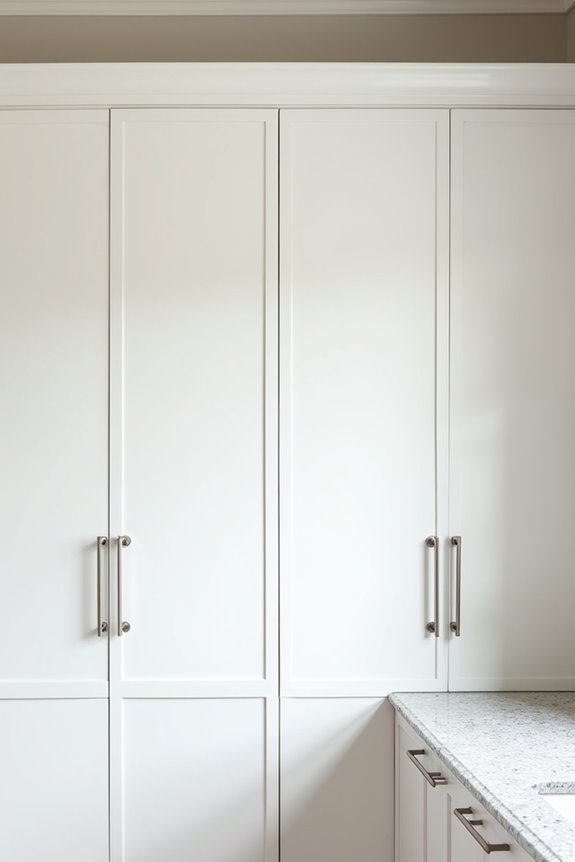
If you’re tired of staring at that awkward gap above your kitchen cabinets, extending them all the way to the ceiling is a game-changer. When you extend cabinets to the ceiling, you’ll gain extra storage space without eating up floor area. I’d recommend this approach because it creates that seamless, built-in look you’re probably craving.
Here’s what to expect: you’ll need semi-custom or custom taller upper cabinets, and you might need to adjust crown molding for a polished finish. The real challenge comes when you remove soffit—hidden utilities like pipes or wiring may need rerouting, which increases costs. But here’s the payoff: taller cabinets visually enlarge your kitchen by drawing eyes upward. Lighter finishes bounce light around beautifully. You’ll love how polished and spacious everything feels.
Hide the Soffit With Custom Cabinets and Trim
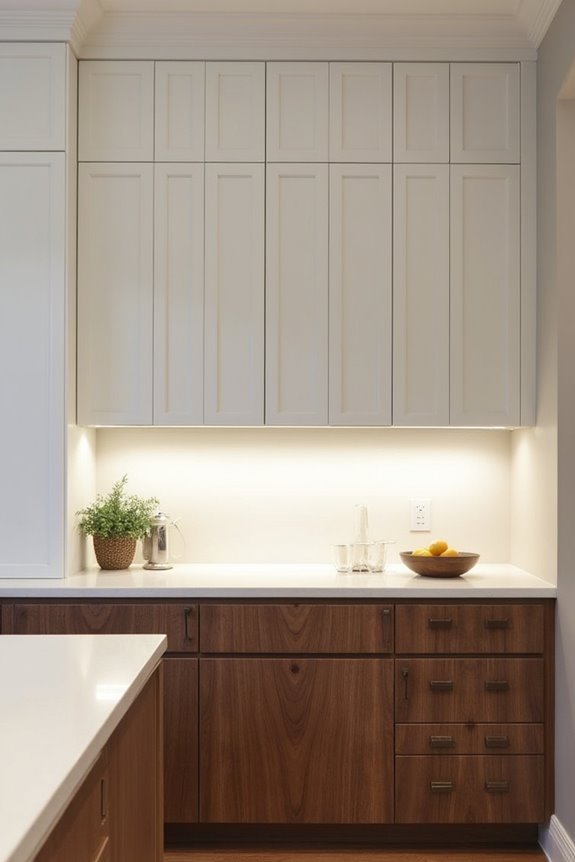
Want a kitchen that looks intentionally designed rather than unfinished? Custom cabinets and trim work together to hide that awkward soffit and transform your space. I’ll show you how.
Building custom cabinets that extend to your ceiling creates a seamless, polished appearance. Here’s what makes this approach work:
- Cabinets stretch from countertop to ceiling, concealing the soffit completely
- Trim pieces blend the cabinet edges into your existing ceiling
- The ceiling height illusion makes your kitchen feel more spacious
- You gain valuable hidden storage without major renovations
- Your design looks intentional and professionally finished
This solution costs more than standard refacing but less than rerouting utilities. You’re preserving your kitchen’s existing structure while achieving that high-end look. The key? Ensuring your builder accurately accounts for what’s inside that soffit—ductwork, wiring, plumbing—so your custom cabinets fit perfectly around everything.
Redesign the Soffit as a Design Feature
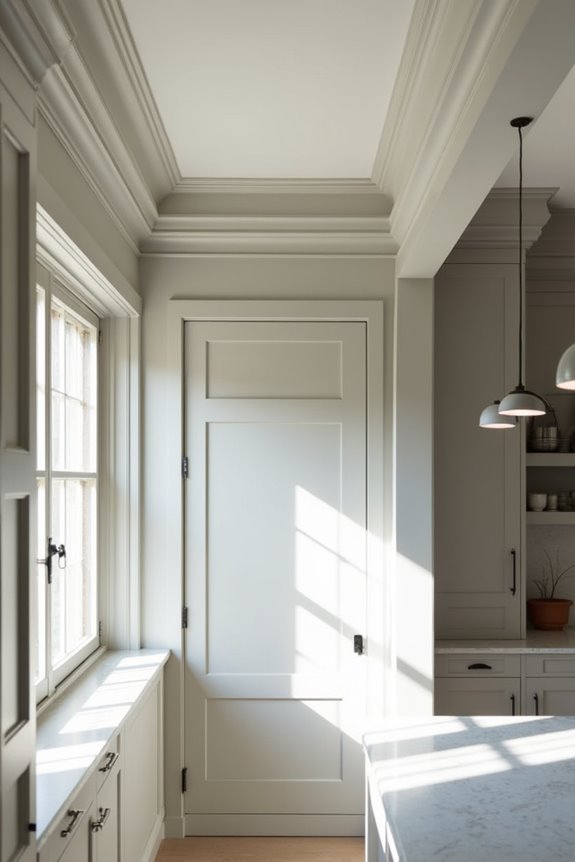
Sometimes the best solution isn’t hiding your soffit—it’s making it work for you. I’ve found that transforming your decorative soffit into an intentional design feature creates real character in your kitchen.
Here’s what I recommend: apply crown molding along the edges for elegance, add shiplap or tile for texture, or use paint finishes to match your cabinets. These trim details don’t require structural changes—just cosmetic updates that cost surprisingly little.
Try painting your soffit a complementary accent color, or install crown molding that echoes your cabinet style. You’ll find that a thoughtful soffit design turns that bulky space into something you actually notice and enjoy.
This approach works when removal feels impractical. You’ll personalize your kitchen’s character without major demolition, creating a kitchen that genuinely feels like yours.
How Does Soffit Removal Affect Lighting and Electrical Planning?
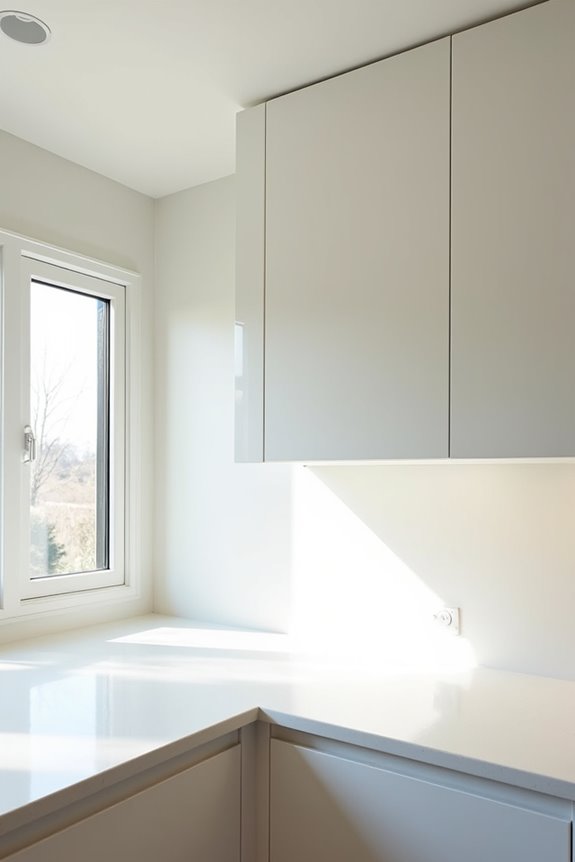
When you remove a soffit, you’re opening up real estate on your ceiling—and that’s where strategic lighting design comes in. You’ll want to work with an electrician early to plan where outlets, switches, and power lines need to move so you can install recessed cans, LED strips, or pendant lights exactly where you want them. The key is coordinating this rewiring before installation starts, so hidden electrical work doesn’t derail your timeline or force costly changes later.
Redesigning Ceiling Light Fixtures
How much brighter could your kitchen be? When you remove that soffit, you’re opening doors to completely reimagine your ceiling light fixtures. I’ve found that soffit removal creates the perfect opportunity to redesign overhead lighting for better coverage and ambiance.
Here’s what becomes possible:
- Install recessed LEDs across the entire ceiling without obstruction
- Position pendant lights exactly where you need task lighting
- Create layered lighting zones for cooking and dining areas
- Coordinate fixtures with your under-cabinet lighting scheme
- Plan dimmer switches for flexible mood control
The catch? You’ll need electrical rerouting to accommodate new fixture locations and power outlets. Working with an electrician early in your kitchen remodel ensures your wiring supports these improvements. This planning prevents expensive changes later and guarantees safe installation throughout your redesigned space.
Rewiring Electrical Pathways Strategically
Now that you’ve planned your new lighting design, you’ll face the real challenge: getting power where it needs to go. When you remove that soffit, existing electrical wiring and outlets need new homes. You’ll likely reroute circuits for under-cabinet lighting and ceiling fixtures while maintaining code compliance.
Here’s where it gets important: hire a licensed electrician. They’ll map your current wiring paths, locate hidden junction boxes, and determine if you need new dedicated circuits. Maybe you’re adding LED strips or recessed lights—your electrician ensures everything connects safely.
This isn’t a DIY moment. Improper rewiring creates fire hazards and code violations. Work with your electrician early to plan conduit placement and new box locations. Strategic planning prevents future headaches and keeps your kitchen both beautiful and safe.
More Storage: Cabinet Height After Removal
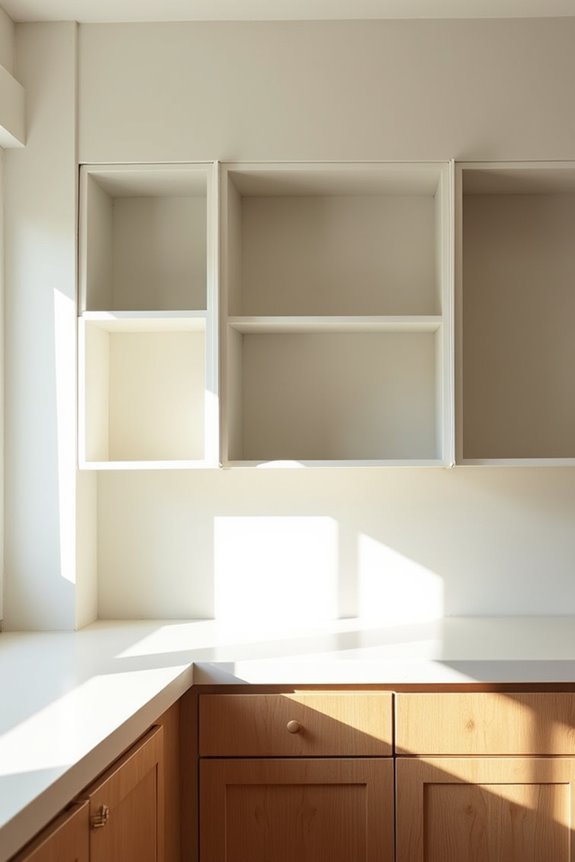
One of the biggest perks of removing a soffit? You’ll gain serious cabinet height. When I eliminated mine, I suddenly had room to extend upper cabinets all the way to the ceiling. This soffit removal transformed my kitchen storage dramatically.
Here’s what you’ll unlock:
- Extra vertical storage for seasonal dishes and rarely used items
- Seamless, modern look without those dust-collecting gaps
- Space for pantry-style organizers above standard cabinet heights
- Better organization that reduces lower shelf clutter
- Ceiling reach that maximizes every inch of wall space
The real magic happens when your cabinets stretch floor to ceiling. You’re not just gaining inches—you’re gaining functional, visible storage that actually changes how you organize your kitchen. Just remember: check for utilities hiding in that soffit first, since rerouting wiring or plumbing might affect how tall you can go.
When Should You Keep Your Soffit?
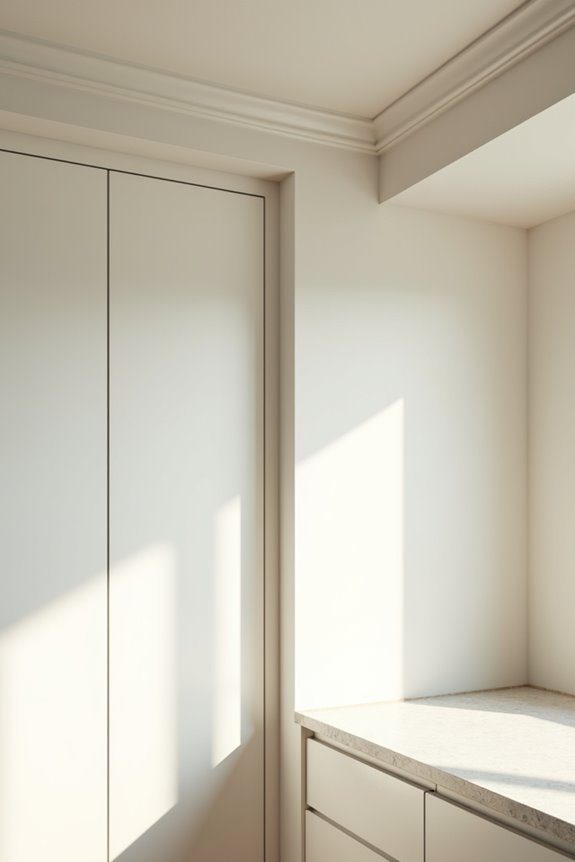
Before you tear out that soffit, consider whether removing it actually makes sense for your situation. I’d encourage you to evaluate your specific circumstances carefully.
Keep your soffit if it houses essential utilities like ducts, wiring, or pipes that’d cost thousands to relocate. If removal means major ceiling repairs or extensive patching and repainting, staying put saves money. Similarly, uneven ceilings hidden by your soffit might become eyesores once exposed.
Your soffit removal decision should factor in your budget. A budget-friendly renovation might mean working with what you’ve got rather than tackling unnecessary construction. Additionally, if your soffit supports design cohesion—like complementing traditional crown molding—keeping it maintains your aesthetic vision without compromise. Honestly, sometimes the smartest choice is leaving well enough alone.