
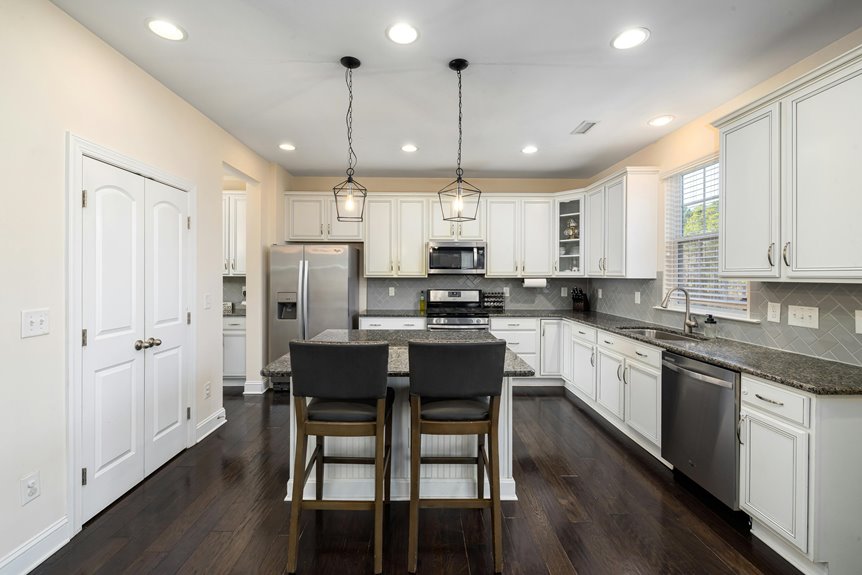
Start by measuring your kitchen’s length and width, then multiply them together to get square footage. Next, divide each dimension by your ceiling height’s spacing distance—roughly 4 feet for 8-foot ceilings—and round up any fractions. Multiply those two numbers for your total light count. Finally, adjust upward if you’ve got an island or task areas needing extra coverage. The specifics of your layout will determine whether you’re perfectly balanced.
Step 1: Measure Your Kitchen and Space Recessed Lights
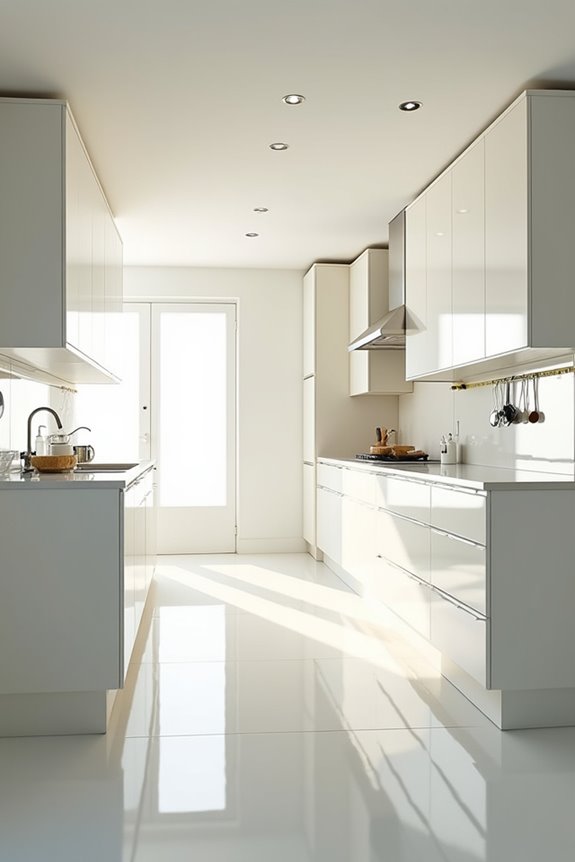
The foundation of good kitchen lighting starts with two simple measurements: your kitchen’s length and width. I’ll walk you through this together. First, grab a tape measure and note both dimensions in feet. Multiply them to find your square footage—this tells you how much ambient lighting you’ll need.
Next, measure your ceiling height. This number matters because it determines your light spacing. If your ceiling’s 8 feet high, you’ll space lights roughly 4 feet apart. Then identify your first-row distance from walls, typically 2–3 feet out. This prevents dark corners and ensures even coverage throughout your space.
With these measurements, you’re ready to calculate your total recessed light count using the 4–6 square feet per light guideline. A lighting calculator makes this step simple.
Step 2: Calculate How Many Recessed Lights You Need
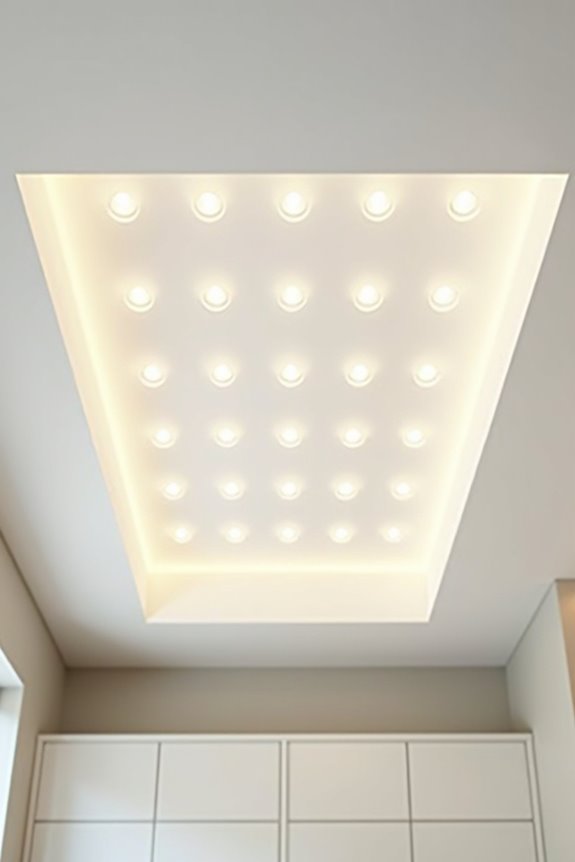
How do you turn your measurements into an actual number of lights? I’ll walk you through the lighting calculation process that transforms your room dimensions into a fixture layout.
Take your room length and width, then divide each by your spacing distance—roughly half your ceiling height. Round up any fractions to ensure complete coverage without dark spots.
| Room Dimension | Spacing Distance | Calculation | Result |
|---|---|---|---|
| 12 ft length | 4 ft | 12 ÷ 4 | 3 lights |
| 14 ft width | 4 ft | 14 ÷ 4 | 3.5 → 4 lights |
| Total square feet | — | 3 × 4 | 12 recessed lights |
Multiply your length fixtures by width fixtures for your total number of lights. This distribution method ensures balanced lighting design throughout your kitchen’s square feet, creating the even illumination you’re seeking.
Step 3: Refine Your Count for Islands, Task Areas, and Other Fixtures
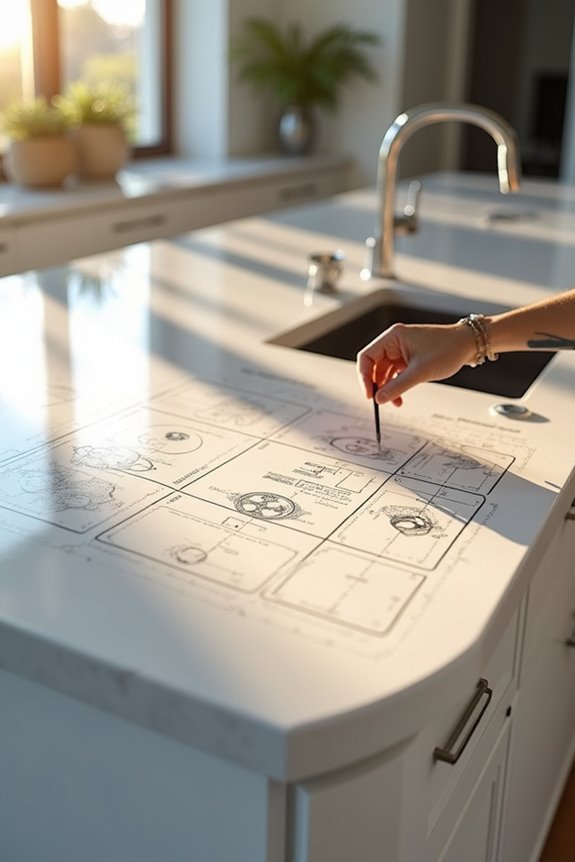
Once you’ve figured out your base lighting count, you’ll want to adjust it for the specific zones in your kitchen—especially islands and task areas where you do the most work.
For island lighting, I’d recommend spacing adjustable fixtures about 4 feet apart on an 8-foot ceiling. If your ceiling’s higher or your island’s larger, bump that to 5–6 feet. This spacing rule prevents dark spots and creates even light distribution across your work surface.
Don’t stop with recessed lighting alone. Layer in pendant lights or under-cabinet task lighting for better coverage. Treat your island as its own lighting zone separate from general room illumination. Align fixtures in linear patterns so light pools overlap naturally. This multi-layer approach ensures you’re not fighting shadows when preparing meals. Your lighting zones work together, creating a cohesive, functional space you’ll genuinely enjoy.