
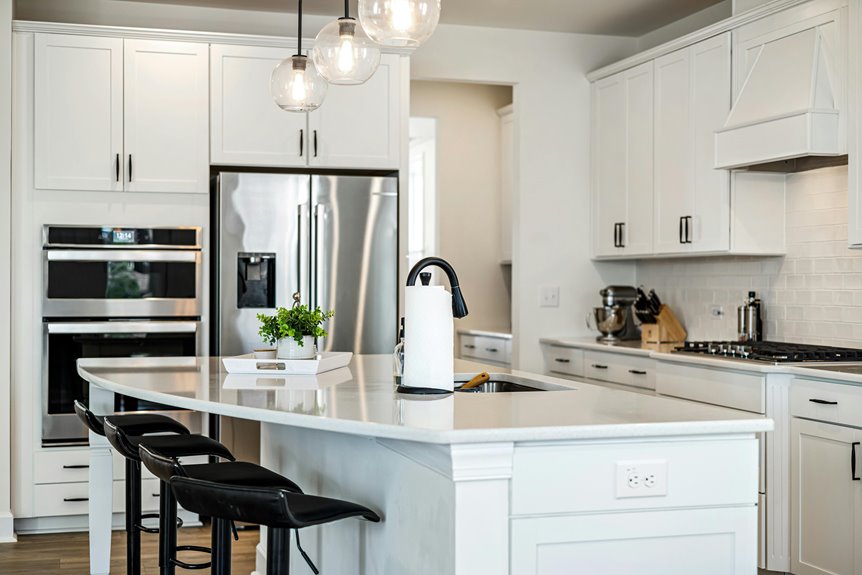
Kitchen cabinets are your biggest expense, eating up 25% to 40% of your total remodel budget. I’d expect to spend $10,000 to $30,000 depending on whether you choose stock, semi-custom, or custom options. Custom cabinets run $500 to $1,200 per linear foot because they’re built to your exact specifications and last decades. Stock cabinets cost far less—just $100 to $300 per linear foot—but offer fewer design choices. The right cabinet choice sets your kitchen’s entire look and function, so understanding your options helps you spend wisely.
Cabinets: The Largest Budget Item in Kitchen Remodels
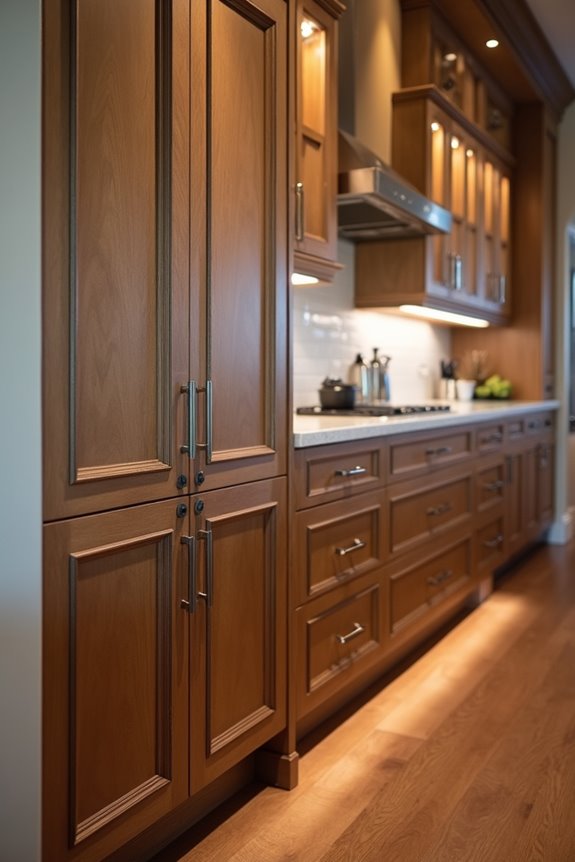
When you’re planning a kitchen remodel, here’s what you’ll discover pretty quickly: cabinets eat up the biggest slice of your budget. I’m talking 25% to 40% of everything you’ll spend. Custom cabinetry runs $500 to $1,200+ per linear foot, with total costs landing anywhere from $5,000 to $30,000+. Semi-custom options cost less but can still surprise you if you choose premium finishes. Here’s why cabinets matter so much: they cover the most space and set your entire kitchen’s look and feel. Quality installation demands skilled professionals for precise alignment. Think of cabinetry as your kitchen’s foundation—it influences both how beautiful and how functional your space becomes. Getting this right pays dividends.
Why Kitchen Cabinets Cost So Much
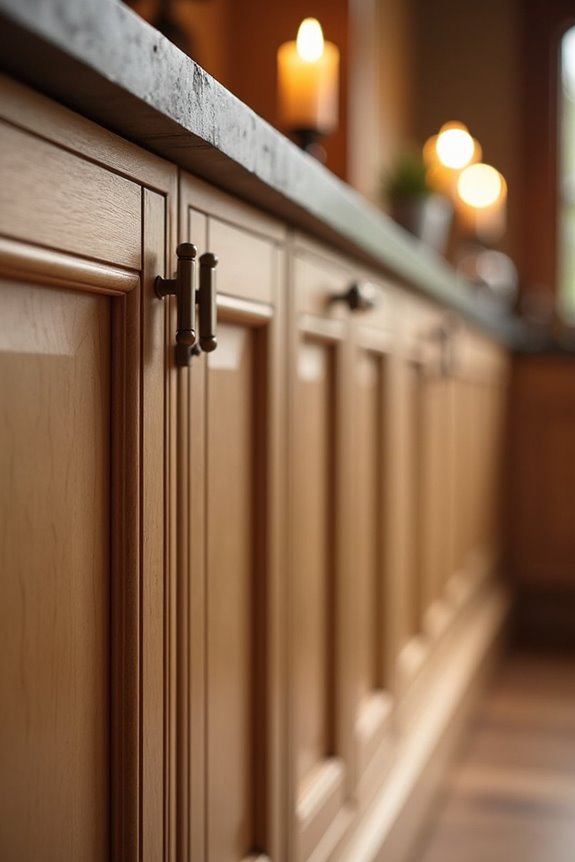
I’ll level with you: kitchen cabinets come with a hefty price tag because they’re built to last decades, and that durability depends on quality materials like solid hardwood and expert craftsmanship. When a skilled carpenter custom-fits your cabinets, aligns every door perfectly, and installs hardware with precision, you’re paying for that specialized knowledge and time—it’s not something a quick DIY project can replace. The materials themselves (think premium wood versus cheap laminate) make a real difference too, since solid oak or maple cabinets hold up better over years of daily use than budget alternatives.
Material Quality and Durability
The real reason cabinets command such a hefty price tag comes down to what they’re made from and how long they’ll actually last. When you choose solid wood cabinetry materials, you’re investing in durability that spans decades. Solid wood outperforms laminates and MDF significantly—it resists warping, handles moisture better, and maintains its beauty over time. Laminates chip and peel. MDF swells when wet. Solid wood? It ages gracefully. That material quality difference justifies the cost. You’re not just buying cabinets today; you’re choosing kitchen storage that’ll serve your family for 20+ years. Think of it as paying now or replacing everything in a few years. Solid wood wins every time.
Labor and Craftsmanship Expertise
Why does installing custom cabinets cost so much more than just buying them off the shelf? Skilled labor is the answer. Cabinet installation demands precision and expertise that takes years to master. When professionals measure your space, cut materials to exact specifications, and align everything perfectly, they’re investing their craftsmanship into your kitchen.
Labor costs reflect this reality. Custom cabinet work isn’t quick—installers spend considerable time ensuring doors hang straight, drawers glide smoothly, and everything fits your unique layout. They handle non-standard sizes and built-ins that require problem-solving on the job.
You’re not just paying for materials; you’re investing in someone’s expertise. That’s what separates a cabinet installation that lasts decades from one that disappoints.
Average Cabinet Costs by Type and Material

When you’re shopping for cabinets, you’ll find three main options that’ll hit your wallet differently: stock cabinets run you $100–$300 per linear foot, semi-custom ones land between $150–$650, and custom cabinets can cost $500–$1,200+ per linear foot. I’ll show you how these price tiers break down so you can figure out what actually fits your budget and kitchen needs. Understanding the difference between these types helps you make a smart choice instead of overspending on features you don’t need or cutting corners where it matters most.
Stock Cabinet Price Range
How much you’ll actually spend on cabinets depends on which type you choose, and honestly, the difference is pretty significant. Stock cabinets are your budget-friendly option, running $100–$300 per linear foot. They’re ready-made and come in standard sizes, so you’re not waiting around or paying extra for customization. If your kitchen is about 10 linear feet, you’re looking at roughly $1,000–$3,000 for stock cabinets alone. While they’re the most affordable choice, stock cabinets still make up a solid chunk of your remodeling budget. Understanding these cabinet costs helps you plan smarter and decide what matters most for your space.
Custom vs. Semi-Custom Costs
If you’re willing to spend a bit more than stock cabinets, you’ve got two solid middle-to-premium options: semi-custom and custom cabinets.
| Cabinet Type | Price Per Linear Foot | Total Cost Range | Best For |
|---|---|---|---|
| Stock | $100–$300 | $5,000–$15,000 | Budget-conscious remodels |
| Semi-Custom | $150–$650 | $10,000–$20,000 | Quality with flexibility |
| Custom | $500–$1,200+ | $20,000–$30,000+ | Unique designs |
Semi-custom cabinets strike that sweet balance. You’re getting solid craftsmanship and design flexibility without the full premium of custom work. Labor costs remain reasonable because manufacturers use standardized processes.
Custom cabinetry, though? That’s where cabinet costs climb substantially. You’re paying for bespoke design, non-standard sizes, and premium materials. The labor costs reflect true craftsmanship tailored specifically to your kitchen’s unique dimensions and style preferences.
Countertops: The Second Biggest Kitchen Remodel Cost
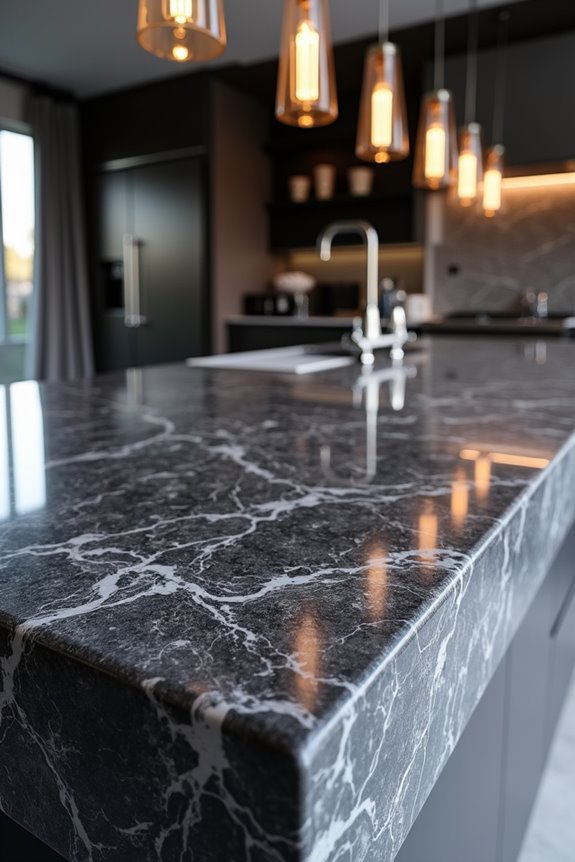
Right after cabinets, countertops become your next major budget consideration—and for good reason. You’re looking at spending $2,000 to $10,000+ depending on what material costs you choose. Quartz countertops like Cambria or Caesarstone offer that gorgeous high-end look, but they’ll hit your wallet harder than budget-friendly options.
Here’s what matters: your countertops handle everything—hot pans, knife cuts, spills. They need to match your cabinetry too, which influences your overall design direction. That’s why picking the right material matters beyond just looks.
Think of countertops as the workhorse of your kitchen. Premium options significantly impact your budget impact, so weigh durability and aesthetics carefully before committing. This choice shapes both your space and your finances.
Appliances: Your Second-Largest Kitchen Remodel Expense
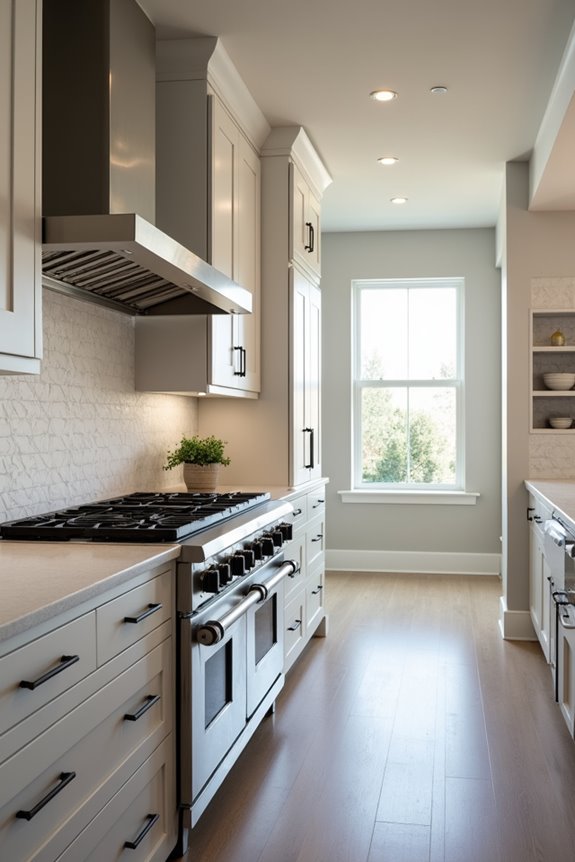
Once you’ve locked in your countertops, appliances become your wallet’s next big challenge—and they’ll eat up about 17% of your entire remodel budget. You’re looking at spending anywhere from $3,000 to $15,000+ for your second-largest expense in kitchen remodel costs.
Here’s what I’ve learned: basic appliances cost less, but premium appliances and smart options jump that price considerably. Built-in or professional-grade models? They’ll stretch your budget further, though they elevate your kitchen’s look and performance.
The smart move? Hunt for appliance packages during seasonal promotions. You’ll maximize value without sacrificing quality. Consider whether you’re replacing damaged units—that choice impacts your total project cost significantly. Planning strategically here means you’re investing wisely in your kitchen’s future.
Labor Costs in Your Kitchen Remodel: Breaking Down the 13

When you’re planning your kitchen remodel, you’ll need multiple skilled trades working together—think cabinetmakers, electricians, plumbers, and tile installers—and coordinating all these specialists takes time and expertise. The installation complexity really matters here; moving walls, relocating utilities, or handling intricate tile work requires permits and experienced professionals, which pushes your labor costs higher. I’ve found that understanding these coordination challenges helps you appreciate why labor typically runs 20-35% of your total budget, making it a crucial piece of your planning puzzle.
Multiple Skilled Trades Required
Why does labor feel like such a big part of your kitchen remodel budget? It’s because you’re paying multiple skilled trades to work together cohesively. Here’s what you’re actually investing in:
- Carpenters build your cabinets and handle structural framing
- Electricians rewire outlets, lighting, and appliances safely
- Plumbers install new sinks, faucets, and reconfigure water lines
- Tile installers create your backsplash and flooring
These trades don’t work independently—they coordinate carefully. When you move plumbing or electrical lines, complexity skyrockets. You’re not just paying for time; you’re paying for expertise, permits, and precision. That’s why labor typically claims about 13% of your total budget. Quality work from skilled professionals ensures everything functions properly and lasts for years.
Installation Complexity And Coordination
Beyond just hiring skilled workers, you’ve got to manage how they all work together—and that’s where your labor costs really climb. When you’re coordinating carpenters, electricians, and plumbers on the same job site, scheduling becomes tricky. Each tradespeople needs the right timing—your electrician can’t run wiring before walls are framed, for instance. This coordination challenge drives up installation expenses significantly.
Moving walls or rerouting plumbing and gas lines? That complexity multiplies your labor demands and costs. You’re not just paying for individual workers; you’re paying for the project manager keeping everyone synchronized. Geographic location matters too—labor rates vary by region, affecting your total demolition and finish work expenses. Full-service remodels compound these coordination challenges, making labor costs a substantial portion of your budget investment.
Flooring and Lighting: Hidden Budget Drivers
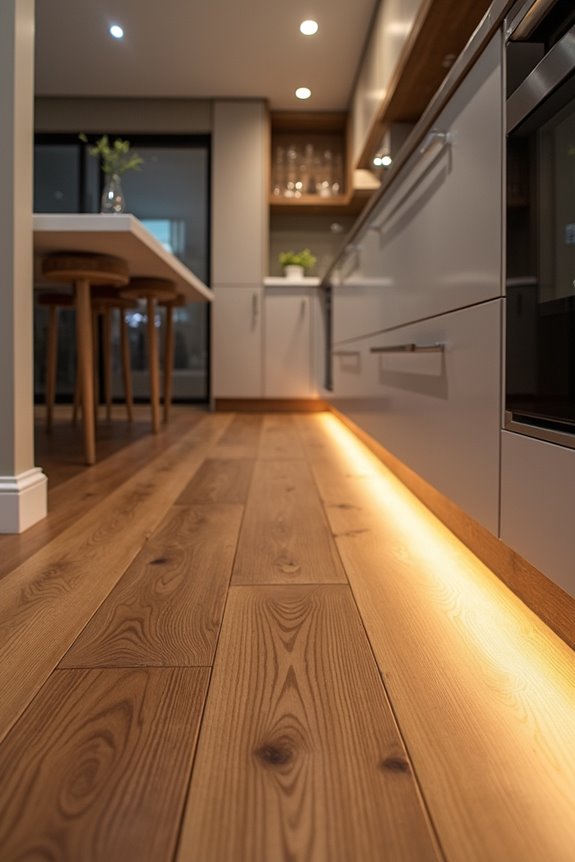
How often do homeowners overlook flooring and lighting until they’re deep into a kitchen remodel? I’ve seen it happen countless times, and these hidden budget drivers can catch you off guard.
- Flooring costs range from $1,500–$5,000+ depending on materials like hardwood, ceramic tile, or luxury vinyl plank
- Labor costs spike when subfloor prep and installation become necessary, extending your timeline
- Lighting budget typically runs $500–$3,000 for recessed, under-cabinet, and pendant fixtures that shape your kitchen’s feel
- Electrical work and permits for fixture placement add unexpected expenses
You’ll also want to consider underlayment choices and flooring transitions that affect long-term durability. These aren’t glamorous upgrades, but they’re essential investments protecting your kitchen’s foundation and functionality for years ahead.
Cabinet Refacing vs. Replacement: Where to Invest
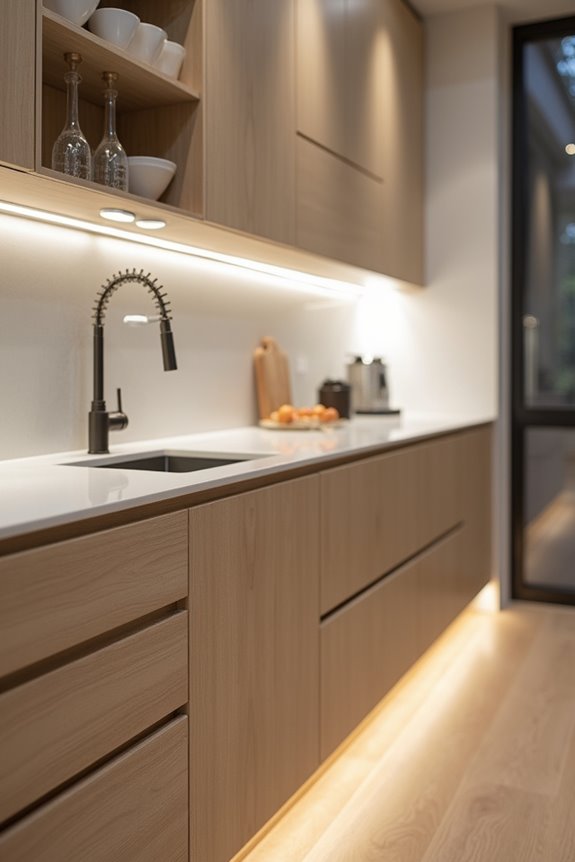
When you’re facing cabinet costs that’ll make your eyes water, you’ve got a real choice to make: spend $500–$1,200+ per linear foot replacing everything, or save thousands by refacing your existing cabinets. I’ll walk you through the trade-offs—refacing refreshes your look fast and cheap, but replacement gives you better storage, new layouts, and cabinets that’ll last decades longer. Let’s compare what each option really costs you now and down the road.
Cost Comparison: Refacing Vs. Replacement
Should you refresh what you’ve got, or start fresh? I’ll help you weigh these cabinet options.
Refacing costs less upfront. You’re updating doors and surfaces while keeping existing boxes—typically saving thousands. Here’s what matters:
- Refacing runs $100–$300 per linear foot, making it budget-friendly
- Replacement costs $500–$1,200+ per linear foot, especially for custom builds
- Refacing preserves your current layout, limiting design changes
- Replacement offers complete flexibility for reorganizing storage and flow
Think of refacing like giving your kitchen a makeover without moving walls. Replacement, though pricier, lets you reimagine everything. Your choice depends on your budget and whether you’re happy with your kitchen’s bones. If your layout works but cabinets look tired, refacing wins. Need a total transformation? Replacement’s your answer.
Long-Term Value And Durability
While the upfront savings of refacing are tempting, I want to talk about what happens five, ten, or fifteen years down the road—because that’s where refacing and replacement really diverge.
Replacement cabinetry wins on durability. You’re investing in new materials, new hinges, and new internals that’ll last decades. Refacing keeps your existing structure, which means those original boxes eventually show their age. When you sell your home, buyers notice quality cabinetry. Solid hardwood replacements signal long-term care and boost resale value significantly more than refreshed surfaces.
| Aspect | Refacing | Replacement |
|---|---|---|
| Lifespan | 10–15 years | 20–30+ years |
| Materials | Original structure | Premium new options |
| Resale Appeal | Moderate | Strong |
| Design Flexibility | Limited | Extensive |
| Long-term durability | Fair | Excellent |
Think of replacement as future-proofing your kitchen investment.
Structural Changes That Dramatically Increase Costs
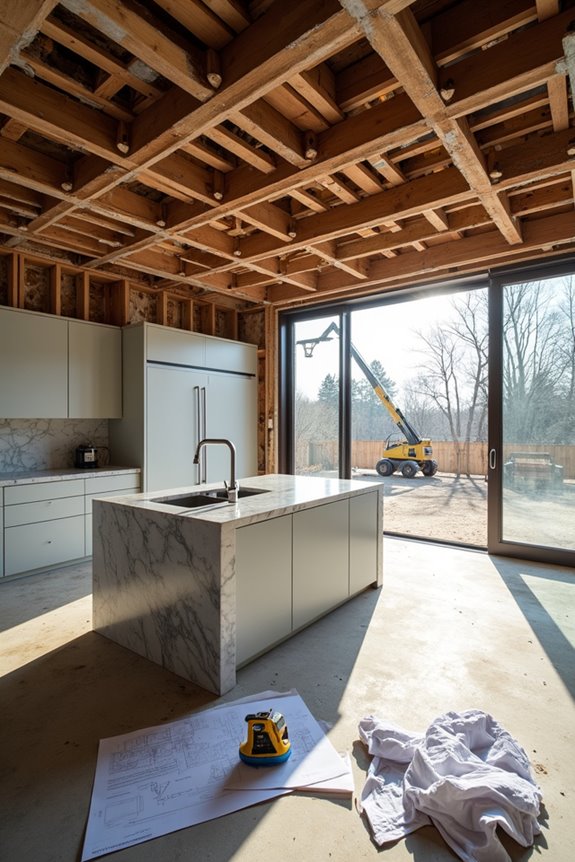
Why do some kitchen remodels cost two or three times more than others? Often, it’s structural changes that make the difference. When you’re considering major modifications, here’s what’ll impact your budget:
Kitchen remodel costs vary dramatically—structural changes like moving walls, relocating plumbing, and rewiring electrical systems drive up budgets significantly.
- Moving walls requires permits, engineering, and extensive labor that can add tens of thousands of dollars
- Relocating plumbing involves code compliance inspections and potential discoveries of outdated systems needing replacement
- Rewiring electrical systems demands licensed electricians and compliance with current safety codes
- Design alterations necessitate engineered drawings and multiple inspections before work begins
These foundational changes affect your home’s core systems. Unlike cosmetic updates, structural modifications extend timelines substantially and create ripple effects across trades. You’re investing in your home’s integrity, which costs more upfront but protects your long-term investment.
Why Kitchen Remodels Cost More in Your Area
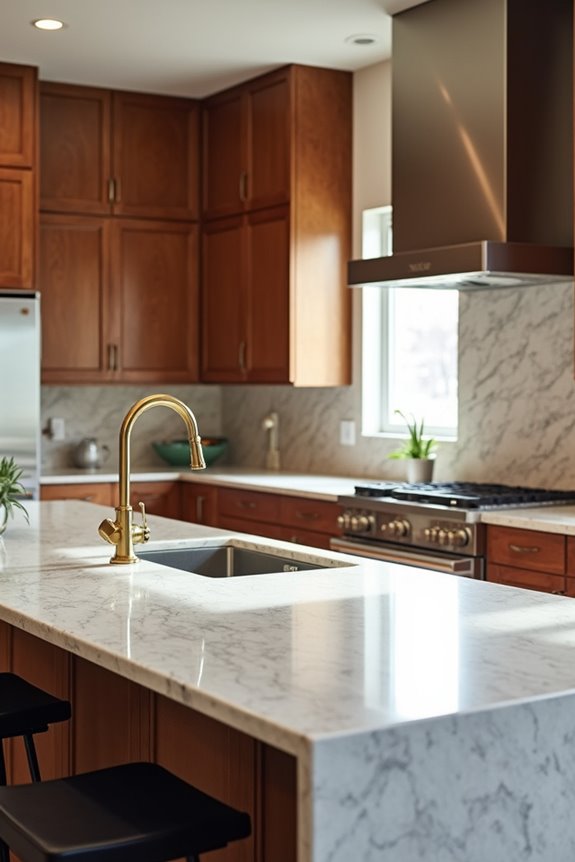
Ever wonder why your neighbor’s kitchen remodel cost 40% more than your friend’s across town?
Geographic variation plays a huge role. Your location directly impacts your remodel budget through several key factors. Labor costs vary significantly by region—contractors charge more in high-demand areas where skilled tradespeople command premium wages. Permitting and inspections differ too; some municipalities require extensive documentation and multiple inspections, adding thousands to your project.
Material costs fluctuate based on local supply chains and transportation expenses. Cabinetry and countertops cost more where delivery distances are longer. Market conditions matter as well. Your area’s home values and demand influence contractor pricing. If kitchens sell homes in your neighborhood, builders charge accordingly. Understanding these regional differences helps you budget realistically and avoid sticker shock.
Where to Splurge vs. Where to Save on Your Kitchen Remodel
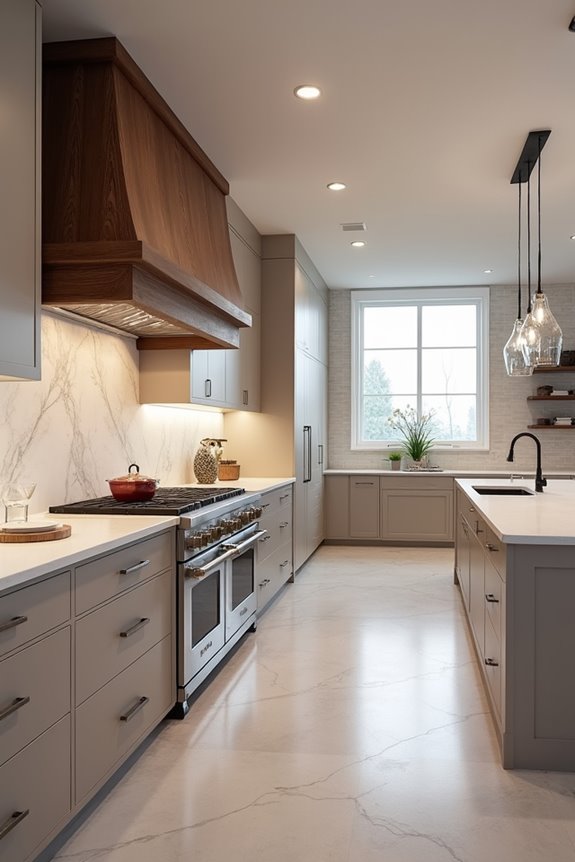
Should you invest big money in cabinets or find savings elsewhere? I’d suggest being strategic. Since cabinetry eats 25-40% of your budget, here’s where to focus:
- Splurge on cabinetry quality – Solid hardwood cabinets last decades and transform your space’s entire look.
- Consider refacing instead of replacing – You’ll save thousands while keeping that custom cabinet aesthetic without the custom cabinet price tag.
- Skip expensive hardware upgrades – Basic handles work fine; fancy soft-close features add cost without changing functionality.
- Keep your layout unchanged – Moving plumbing or electrical pushes costs skyward fast.
Budgeting smartly means investing in what matters most. Quality cabinets anchor your kitchen’s design and durability, making them worth the splurge.
Smart Shopping Strategies for Appliances and Materials
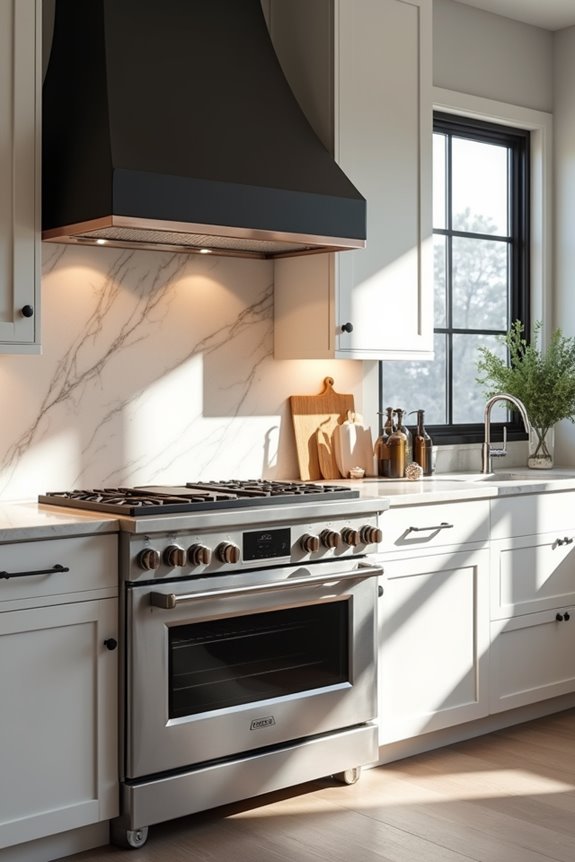
How much of your remodel budget should appliances really consume? I’d recommend allocating about 17% for appliances, which typically runs $3,000 to $15,000 depending on your choices.
Here’s my smart shopping strategy: Time your purchases during seasonal sales like Black Friday or holiday promotions. You’ll find meaningful discounts, especially with bundled deals that combine appliances and other materials.
Focus on high-use items first—ranges, refrigerators, and dishwashers deserve your investment. Standard sizes cost less than custom options, so consider what fits your space without extra expenses.
Compare prices across retailers before buying. Don’t chase every fancy feature; prioritize functionality that matters to your daily cooking. Smart appliances look great, but basic models often work just as well.
This approach keeps you part of savvy remodelers who maximize value.
Keep Your Plumbing in Place: Why Moving Fixtures Doubles Labor Costs
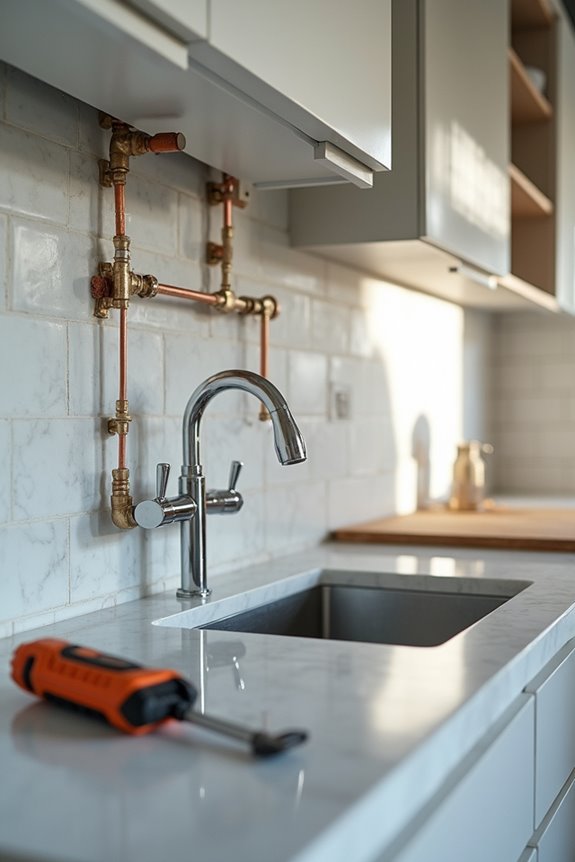
One of the quickest ways to blow your kitchen remodel budget is relocating where your sink, dishwasher, or water lines sit. I’ve seen moving fixtures add 20%–35% to total costs, and here’s why:
- New permits and inspections slow your project timeline significantly
- Trenching and repiping require plumbers to reroute everything underground or behind walls
- Venting reconfiguration demands electricians and drywall specialists join the crew
- Collateral damage disrupts cabinetry, flooring, and wall finishes unexpectedly
Even small shifts create headaches. Your plumbing labor costs skyrocket when multiple trades coordinate around moving fixtures. Plus, you’re risking leaks and code violations that’ll drain your wallet further. Keep your sink where it is. Preserve your plumbing locations, stabilize your remodeling budget, and stay on schedule. Trust me—your future self will thank you.
Which Custom Features Cost the Most (and Which You Can Skip)
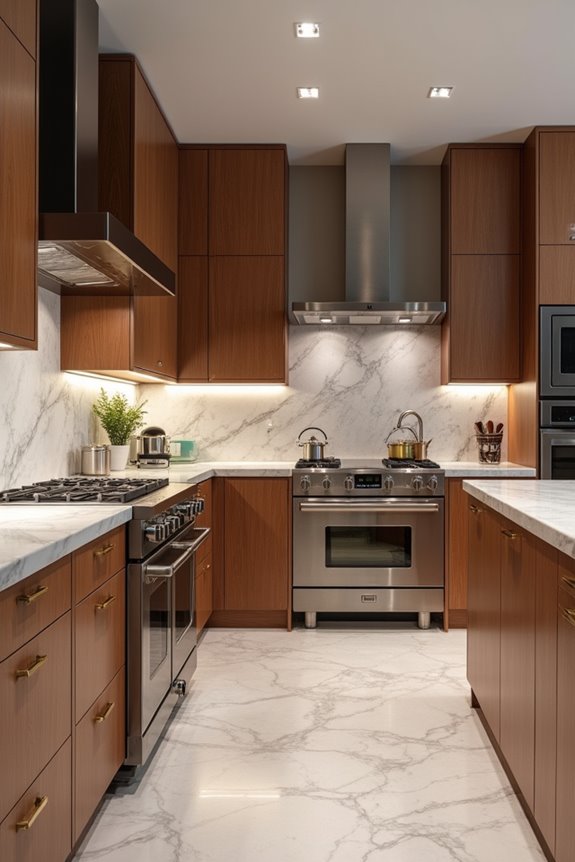
Now that we’ve tackled plumbing placement, let’s talk about what really drains your kitchen budget: custom cabinets. Here’s the truth: solid hardwood cabinets with premium finishes can cost $150,000 to $500,000+. But you don’t need every bell and whistle.
| Feature | Custom Cost | Semi-Custom Cost |
|---|---|---|
| Solid hardwood cabinets | $80,000+ | $25,000–$40,000 |
| Soft-close hardware | Included | $3,000–$5,000 |
| Moving plumbing/electrical | $10,000–$20,000 | Often unnecessary |
Smart move? Skip the ultra-premium finishes and choose semi-custom cabinets instead. You’ll preserve your layout, avoid moving plumbing/electrical, and still get that high-end look. Custom cabinetry delivers quality, but semi-custom options give you 80% of the style at half the price. That’s belonging without breaking the bank.
Build Your Budget: Allocate 29% to Cabinets, 17% to Appliances, 13% to Labor
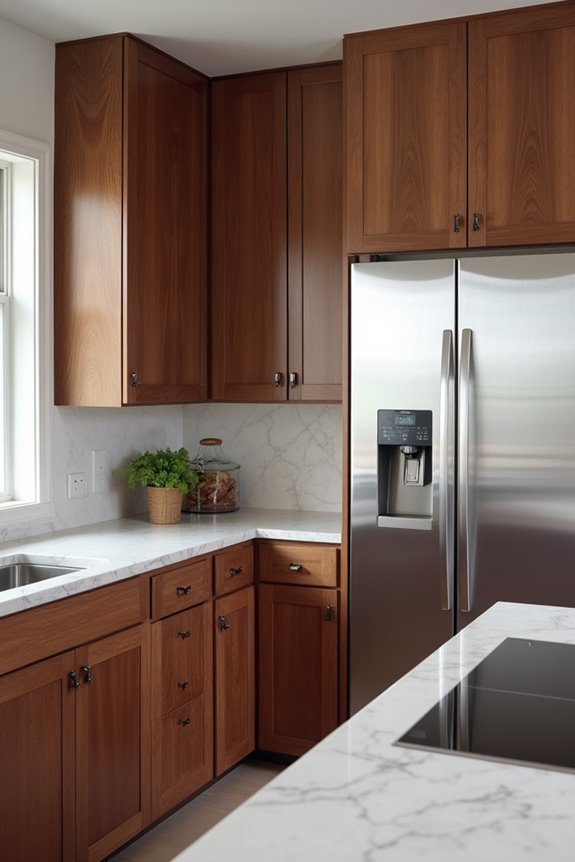
So what’s the actual breakdown when you’re planning your kitchen remodel?
Here’s how I’d suggest allocating your budget:
- Cabinets (29%) – This is your biggest investment. You’re paying for quality materials, skilled labor, and precise installation that makes everything align perfectly.
- Appliances (17%) – Refrigerators, ovens, and dishwashers come next. Energy-efficient models cost more upfront but save you money long-term.
- Labor (13%) – Professional installation ensures your cabinets fit right and everything functions smoothly.
- Other costs (41%) – Countertops, flooring, lighting, plumbing, and electrical work fill the remaining budget.
Think of cabinets as your foundation. They cover the most space and set your kitchen’s look. When you prioritize this wisely, you’re making a smart investment that’ll make your entire remodel feel polished and intentional.