Backyard putting green costs range from $1,500 for small DIY projects to $100,000+ for premium installations. Size matters most—expect $25–$35 per square foot. Professional installation runs higher than DIY, but proper site prep often doubles costs. Turf quality, drainage systems, and add-ons like bunkers push prices up considerably. Portable mats offer budget alternatives under $500. Understanding these ten factors helps you plan realistically and avoid unexpected expenses.
How Much Does a Backyard Putting Green Cost?
What’s the real price tag for turning your backyard into a mini golf paradise? Installation costs for backyard putting greens range from $1,500 to $15,000+, depending on size and complexity. A 100-square-foot green typically runs $1,800–$3,000, while a 500-square-foot green averages $9,000.
Price per square foot varies significantly. Smaller greens under 500 square feet cost $30–$35 per square foot, while larger installations drop to $18–$25. Here’s where you save: DIY vs professional installation makes a huge difference. Going the DIY route costs just $4–$6 per square foot, though you’ll handle base preparation yourself. Professional installation handles everything, offering convenience at premium prices. Your budget determines which path works best for your backyard dreams.
Size and Scope: The Primary Cost Driver
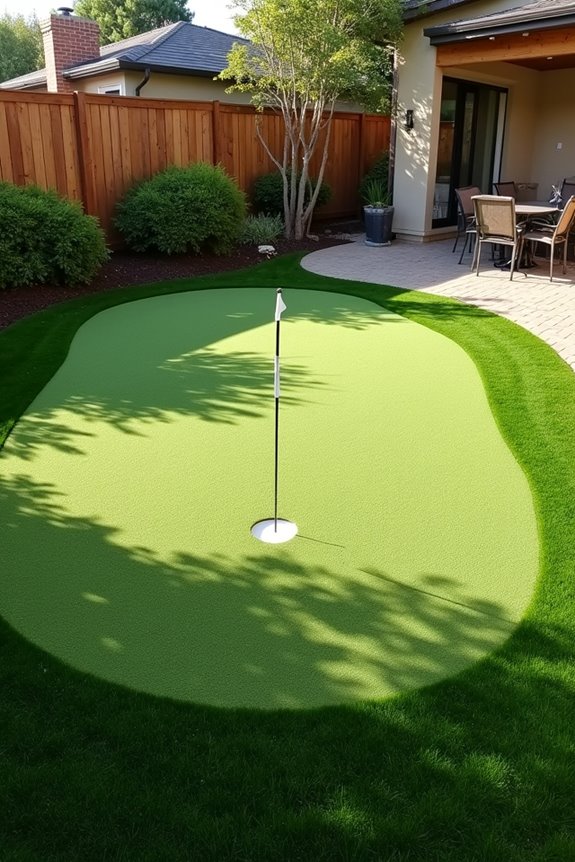
Size is really your biggest budget lever—a 300 sq ft green runs around $9,000, while a 1,000 sq ft space jumps to $28,000–$30,000, so you’re looking at $30–$35 per sq ft for smaller spaces and $25–$30 per sq ft for larger ones. Beyond square footage, what you choose to include matters too: adding slopes, multiple tiers, bunkers, or premium turf pushes costs higher, while a simple flat design keeps things lean. Your overall vision shapes the price tag, so knowing upfront whether you want a basic practice area or a tournament-style course with custom features helps you plan your actual investment.
Square Footage Impact On Price
How much you’ll spend on your putting green comes down to one thing: how big it’ll be. The square feet of your space directly determines your price per square foot. Here’s what I’ve found: smaller projects under 500 square feet run about $30 to $35 per square foot, while larger ones over 500 square feet drop to $25 to $30 per square foot. That bulk sizing discount matters. A 1,000 square foot green at $28 per square foot costs $28,000. A 3,000 square foot area at $25 per square foot totals $75,000. Even DIY kits offer savings—$13 to $18 per square foot for 200–500 square foot areas. Your installation cost scales directly with the space you’re working with.
Complexity And Custom Features
Beyond the basic turf itself, you’ve got choices that’ll dramatically shift your budget—and I’m talking about the features that make your green actually fun to play. Custom add-ons like bunkers, water hazards, undulations, and tee boxes can significantly bump up your putting green costs beyond that base price per square foot. Design complexity matters too. A simple flat green costs less than one with multiple breaks and elevation changes. These intricate designs require experienced specialists, which increases installation costs. Think of it this way: a basic green might run $25–$30 per square foot, but adding challenging slopes, bunkers, or a practice area could push you toward $40+ per square foot. You’re investing in playability and enjoyment.
Design Scope Determines Investment
What you’re really paying for when you build a backyard putting green comes down to two things: how much space you’re covering and how complicated you want it to be.
A smaller green under 500 sq ft runs $30–$35 per sq ft, while larger ones over 500 sq ft drop to $25–$30 per sq ft. That size difference matters because bigger greens spread costs across more area.
Your design complexity pushes prices up too. Simple, flat layouts cost less than multi-tiered greens with bunkers and slopes. Installation quality—including base preparation and drainage—affects your total investment beyond turf alone.
Here’s the encouraging part: choosing DIY labor saves $4–$10 per sq ft on professional installation fees. You’re controlling your budget while building something you’ll genuinely use.
Professional Installation vs. DIY: Where You’ll Save the Most
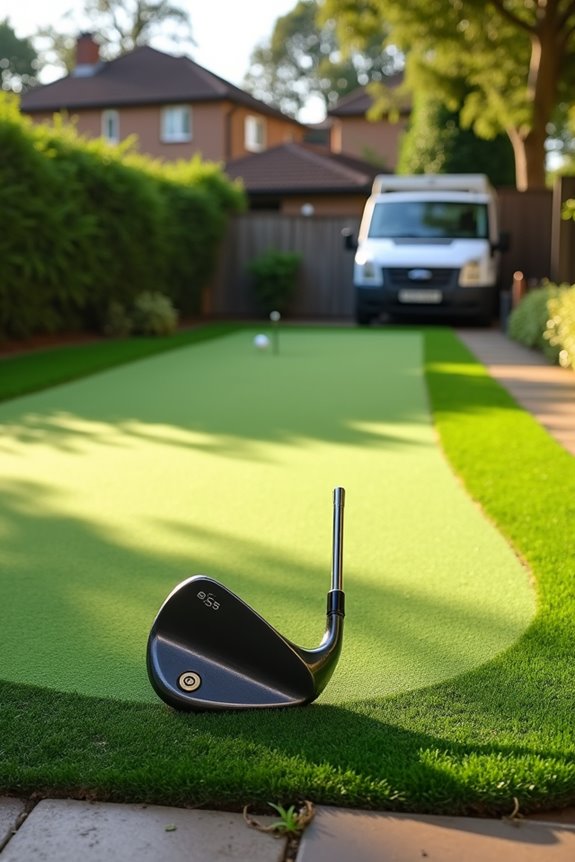
When you’re deciding between hiring a pro or going the DIY route, you’re really choosing between paying $4–$10 per square foot for labor versus handling the work yourself and spending just $4–$6 per square foot. The biggest savings come from labor, but here’s the catch: you’ll need to manage site prep, drainage, and leveling on your own, which takes real time and effort. I’d recommend getting quotes from installers first, then comparing that cost to your honest assessment of whether you’ve got the skills and weekends to tackle it yourself.
Professional Installation Costs
How much difference does hiring a pro actually make compared to doing it yourself? Professional installation costs range from $20 to $30 per square foot for larger projects exceeding 500 square feet. Smaller installations run $30 to $35 per square foot. For a 3,000 square foot putting green, you’re looking at roughly $75,000 at $25 per square foot pricing.
Here’s the catch: backyard putting green installation costs often exclude site preparation costs. Base preparation and grading add substantial expenses when you hire professionals. These hidden fees can markedly impact your total budget.
The per square foot pricing advantage shifts with project size. Larger installations enjoy better rates, while smaller greens cost more per unit. Understanding what’s included in quotes matters tremendously for accurate planning.
DIY Savings Breakdown
by skipping the professional labor costs that run $4–$10 per square foot.
When you go the DIY route for your backyard putting green installation, you control the process and cut significant expenses. The real savings hide in tasks professionals charge extra for:
- Base preparation and grading
- Drainage system installation
- Material selection and sourcing
- Site-prep work before laying down turf
Smaller projects see the biggest percentage savings. A 100–200 sq ft DIY green can slash your total cost dramatically compared to hiring pros. Larger installations still save money, but the cumulative advantage spreads across more square footage.
You’re not just installing a putting green—you’re building something yourself. That hands-on approach transforms your backyard while keeping more cash in your pocket.
Labor Expenses Comparison
Now that you’ve seen how DIY work cuts costs, let’s look at the real numbers behind professional labor versus doing it yourself. Professional installation labor runs $4 to $10 per square foot, depending on your location and project complexity. DIY installation drops that to $4 to $6 per square foot when you handle materials and setup yourself. Here’s where you really save: site preparation. Professionals bundle grading, drainage, and excavation into their estimates, inflating labor costs. You can tackle these tasks yourself and pocket those savings. Complex designs with undulations cost professionals more in labor hours. DIY kits simplify everything, cutting your need for specialized expertise. The gap widens when your site’s tricky to access—professionals charge premium rates. Bottom line? DIY saves you hundreds.
Turf Quality: The Hidden Cost Driver in Putting Greens
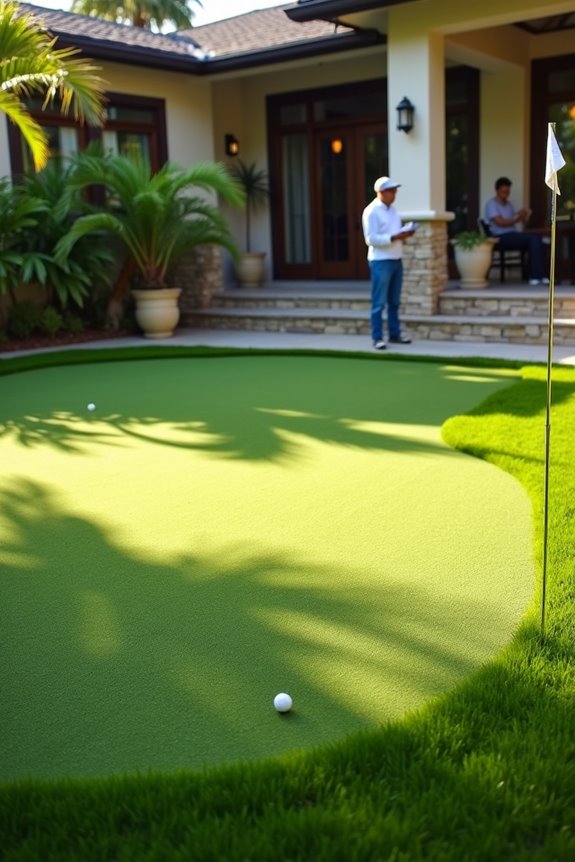
When you’re shopping for turf, you’ll quickly discover that not all grass is created equal—and that difference shows up dramatically in your wallet.
Here’s what I’ve learned about putting green turf quality and how it impacts your total investment:
- Basic turf costs $4–$10 per square foot, while premium golf-grade runs $10–$20
- Higher-quality synthetic turf demands more robust base preparation and installation costs
- Premium materials last significantly longer, reducing replacement frequency over time
- DIY installation saves labor costs but won’t offset expensive turf choices entirely
The real insight? Your turf choice cascades through your entire budget. Premium options push per-square-foot expenses higher, especially on larger greens. However, that investment pays dividends through better performance, lower maintenance, and years of durability. You’re not just buying grass—you’re buying longevity and playability that cheaper alternatives simply can’t match.
Site Prep for Putting Greens: When Costs Double
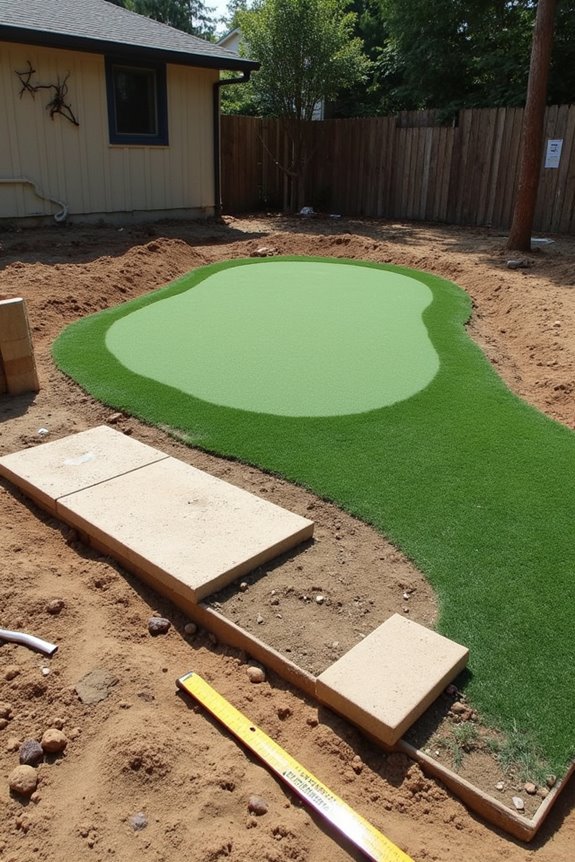
Have you ever noticed how the cheapest quote suddenly jumps in price once the contractor visits your yard? That’s because proper site prep often doubles your costs. Here’s what happens: your contractor needs to handle leveling, which smooths uneven ground. Then comes drainage—a critical step that prevents water from pooling on your green. Base preparation requires removing old turf or soil, depending on your location. If your yard has slopes or obstacles, you’ll need retaining walls and grading work. Equipment constraints and maneuvering around existing structures demand extra labor hours. These aren’t hidden fees; they’re essential investments. Without solid base preparation, your putting green fails quickly. Think of site prep as the foundation of a house—skip it, and everything else crumbles.
Tour-Quality Greens: $20K–$100K+ Explained
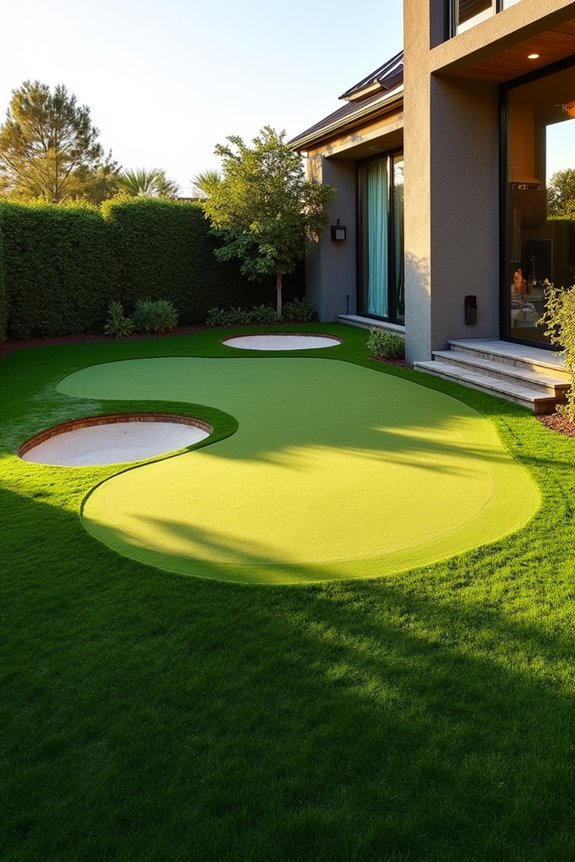
Once you’ve locked in your site prep and understand what that foundation costs, you’re ready to explore what separates a backyard putting green from a professional-grade one.
Tour-quality greens demand premium everything. You’re investing $20,000 to $100,000+ because you’re getting:
- Advanced synthetic turf that rivals actual fairways
- Complex drainage systems preventing water pooling
- Custom undulations creating realistic playing surfaces
- Professional installation by trained dealer teams
Square footage matters hugely here. Most tour-quality installations span 2,000+ square feet, demanding extensive site prep and precision work. You’re not buying a kit you assemble yourself. You’re purchasing a turnkey solution where specialists handle every detail.
Yes, the installation cost stings. But you’re gaining a green that plays like the real thing and lasts years without compromise. That’s what separates weekend putters from serious players.
Budget-Friendly Alternatives: DIY Kits and Portable Mats
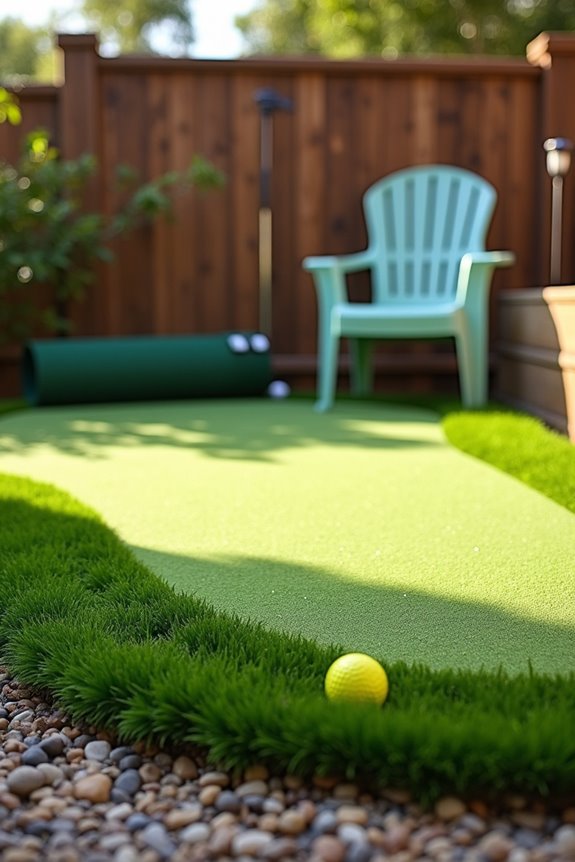
What if you want a putting green without the $20,000 price tag? You’re in luck. DIY kits and portable mats let you join the backyard golf club affordably.
DIY kits range from $13 to $18 per square foot. A 100-square-foot green costs roughly $1,800 to $3,000, while 500 square feet runs $6,500 to $9,000. Kits like Bella Turf include seam tape, cups, pins, and flags—everything you need.
Installation costs drop substantially when you do it yourself: $4 to $6 per square foot versus professional pricing. That saves you hundreds.
Prefer something simpler? Portable roll-up mats cost just $50 to $500 and require zero installation. They’re perfect for testing whether you’re ready for a permanent setup.
Add-Ons: Bunkers, Water Features, and More
Once you’ve decided on your basic putting green, you can really make it special by adding features like bunkers and water hazards—though they’ll definitely increase your costs. Bunker installation and water features are context-dependent, meaning the price depends on your yard’s layout and the materials you choose, so you might spend anywhere from a few hundred to several thousand dollars. I’ll walk you through what these add-ons actually cost and whether they’re worth the investment for your setup.
Bunker Installation Costs
How much extra should you budget when you’re ready to add bunkers or water features to your putting green?
Bunker costs depend on several factors that’ll impact your total investment:
- Excavation work requires heavy equipment and skilled labor to shape sand areas properly
- Drainage systems prevent water pooling and maintain playability year-round
- Edging materials like landscape borders or synthetic walls add durability and definition
- Sand quality matters—premium bunker sand costs more but lasts longer
I’d recommend getting a detailed quote that breaks down each component. Bunker installation typically adds $2,000 to $8,000 to your base green cost, depending on size and complexity. Multiple features compound these expenses through increased site preparation. Don’t skip proper drainage; it’s essential for long-term performance. Ask contractors specifically about maintenance considerations too—they’ll help you understand what you’re really investing in.
Water Hazard Features
Beyond bunkers, water features can really transform your putting green into something special—but they’ll also shift your budget considerably. Water hazards function as premium add-ons that significantly impact your installation cost. Think ponds, streams, or water-filled bunkers—these aren’t simple additions.
Here’s what affects pricing: design complexity matters most. A basic water feature costs less than an intricate one with multiple levels or circulation systems. Your site’s existing drainage influences expenses too. Some locations require minimal prep work, while others demand extensive groundwork.
I recommend getting detailed quotes from installers who specialize in water features. They’ll assess your yard and explain exactly what you’re paying for. These features genuinely elevate your putting experience, making them worth considering if your budget allows for that premium investment.
Hidden Costs: Drainage, Grading, and Infrastructure
When you’re pricing out your backyard putting green, the sticker shock often comes from expenses that aren’t immediately obvious.
The real costs hide in your yard’s bones. Here’s what I mean:
- Drainage systems prevent water pooling, which can cost $500-$2,000 depending on your soil
- Grading and site preparation require heavy equipment to level your terrain properly
- Base materials like crushed stone and sand create a stable foundation underneath
- Infrastructure upgrades might include irrigation lines or electrical work you didn’t anticipate
Your installer won’t include these in their initial quote because every yard’s different. Some properties need extensive grading. Others require serious drainage solutions. That pre-existing turf? Removing it costs extra. Access problems mean longer labor hours and higher bills.
Talk to your installer about what’s actually included. You’ll feel confident knowing exactly what you’re paying for.
Is an Artificial Green Worth It?
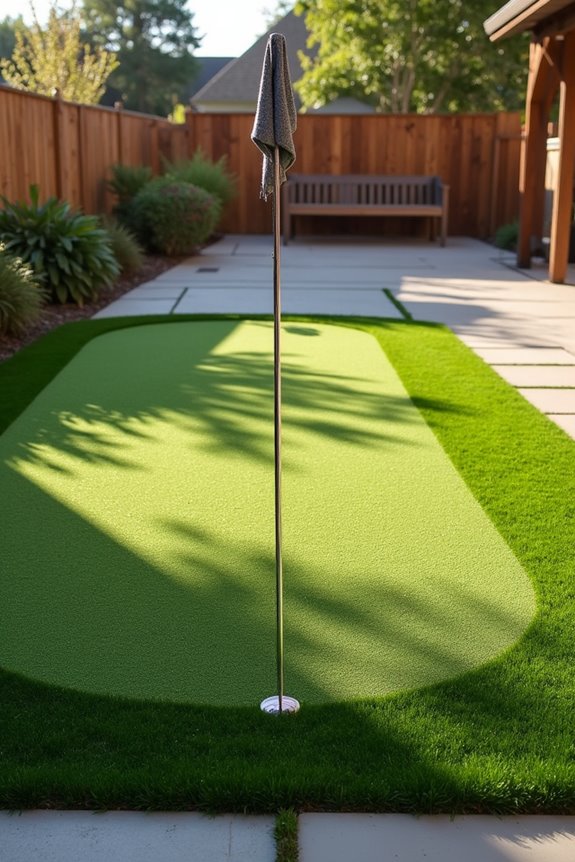
Whether you’re ready to invest in synthetic turf depends on what matters most to you: upfront cost or long-term savings.
I’ll be honest—artificial putting greens require real money initially. But here’s where they shine: you’re paying once, not constantly. Natural grass demands mowing, watering, fertilizing. Your artificial green? It’s done. You save hundreds yearly on maintenance.
| Factor | Natural Grass | Artificial Green |
|---|---|---|
| Year 1 Cost | $2,000–$5,000 | $3,000–$15,000 |
| Annual Maintenance | $500–$1,000 | $50–$100 |
| Lifespan | 5–7 years | 10+ years |
| Total 10-Year Cost | $7,000–$15,000 | $3,500–$16,000 |
| DIY Option | Limited | Available |
A DIY installation keeps costs down while giving you ownership pride. You’re making a smart investment in your home and your golfing happiness.