
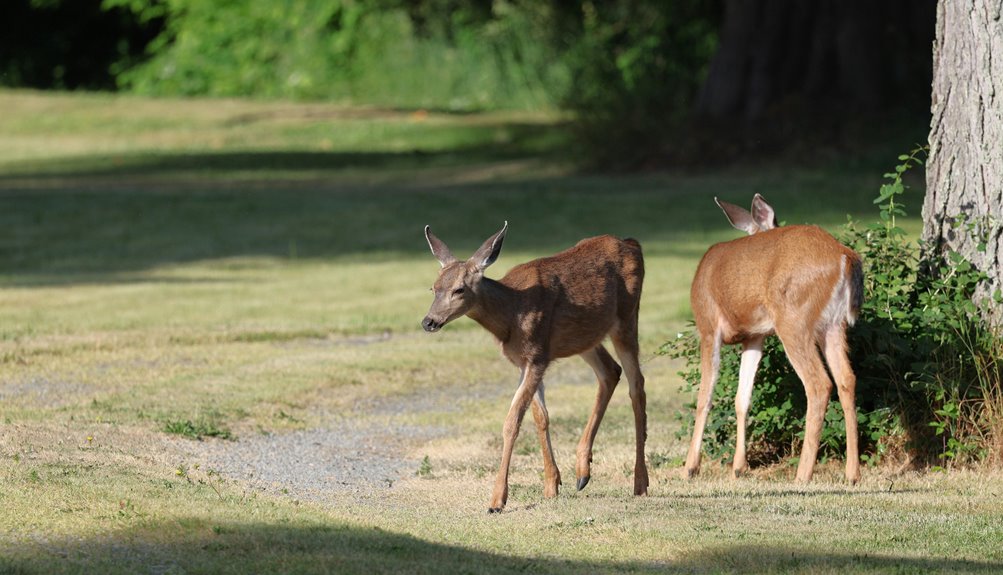
The best foods for backyard deer are woody browse, nuts, and fresh greens—not corn. I’d encourage you to plant native shrubs and trees first, since they provide year-round nutrition without creating dependency. If you must supplement, offer acorns and hickory nuts for protein, plus natural vegetation for fiber. These choices keep deer healthy while avoiding the property damage that regular feeding causes. Understanding the seasonal nutrition deer actually need opens up smarter feeding strategies.
Before You Feed: When Backyard Deer Feeding Is Actually Justified
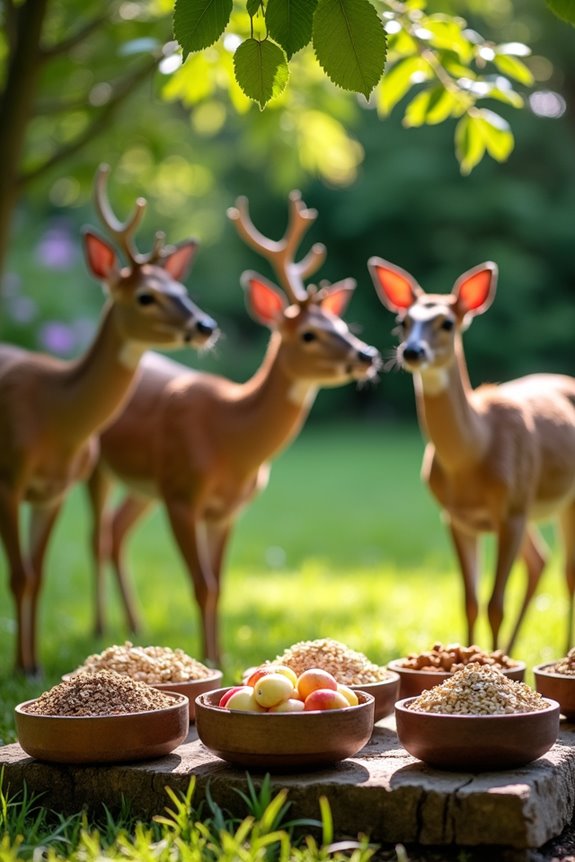
When should you actually feed the deer visiting your backyard? I’ll be honest—most of the time, you shouldn’t. Feeding is only justified when natural browse becomes genuinely scarce, like during harsh winters or severe weather when deer struggle to find food.
Here’s the thing: regular feeding creates dependency and increases habituation, leading to property damage and risky behavior around humans. Instead, focus on habitat management by planting native shrubs and trees that provide natural browse year-round.
If you decide supplemental feeding is necessary, introduce food gradually over two weeks minimum. Spread multiple feeding sites across your property to prevent concentration and reduce stress. Never start feeding late winter with new foods—sudden dietary changes harm deer health and digestion. Keep it temporary and monitored.
Browse From Woody Plants: Year-Round Nutrition Deer Need

How do deer actually survive winter? They rely heavily on deer browse—woody plants that provide essential nutrition when green vegetation disappears. Deer eat buds and twigs, bark and branches year-round, but winter forage becomes critical for survival.
I’ve found that understanding seasonal browse helps you support local herds. Winter browse provides fiber for rumen function, keeping their digestive systems healthy during harsh months. When you encourage habitat improvement by allowing natural woody growth, you’re directly supporting deer populations.
| Browse Type | Best Season | Nutrition Benefit |
|---|---|---|
| Buds | Winter | High protein |
| Twigs | Year-round | Structural fiber |
| Bark | Winter | Emergency nutrition |
| Branches | Fall-Winter | Sustained forage |
| New growth | Spring | Enhanced quality |
Nutritional browse from native shrubs and trees sustains deer better than supplemental feeding alone.
Nuts, Acorns & Fresh Greens: Protein and Fiber Over Corn
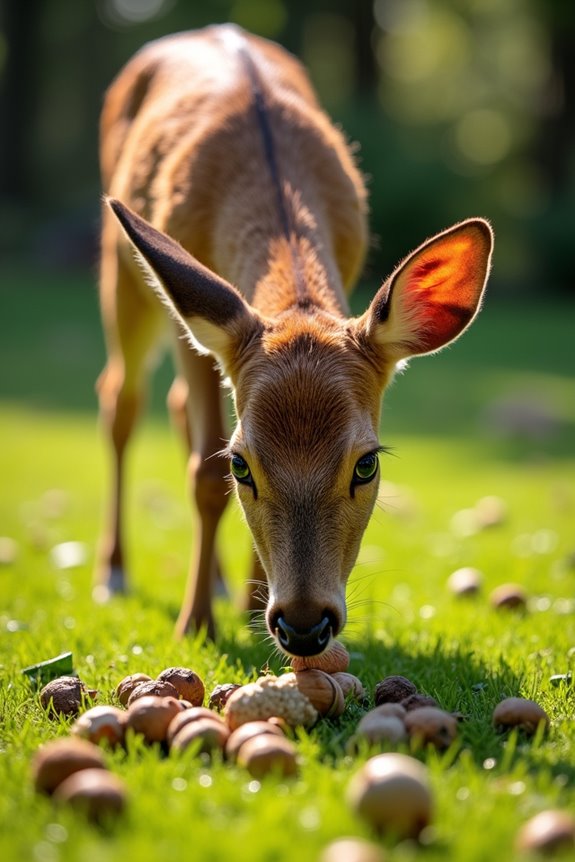
Most deer nutrition specialists agree: nuts and acorns beat corn every single time. I’ve found that acorns and hickory nuts provide the protein and energy deer truly need, especially during winter. Here’s why they work so well: these nuts support antler growth and body condition without disrupting your deer’s digestive system.
Acorns and hickory nuts provide superior nutrition for winter deer, supporting antler growth and digestion without the problems corn causes.
Fresh greens and browse complete the picture. Combine nuts with leaves, young twigs, and buds to give deer the fiber their stomachs require. This balanced approach keeps their rumen functioning properly.
Skip corn entirely. I know it seems convenient, but corn causes real problems—it disrupts gut microbiomes and leads to dehydration and digestive troubles.
Set up designated feeding stations with a variety of nuts plus fresh forage. This strategy delivers everything your backyard deer need to thrive.