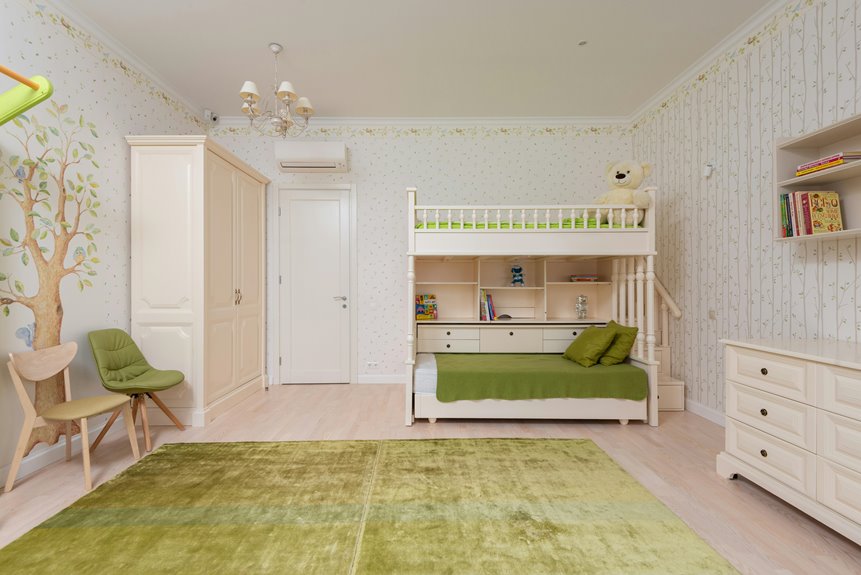
There’s no single magic age—it depends on your child’s development and your family’s setup. Infants benefit from room-sharing until six months to reduce SIDS risk. Around 18 months to three years, toddlers often show readiness through better sleep patterns. School-age kids need their own quiet space for homework and focus. As puberty hits, privacy becomes essential for dignity and independence. Start with gradual transitions like daytime naps in the new room first, then move bedtime there. The specifics of what works best for your situation? That’s ahead.
Infants and Co-Sleeping: When a Separate Bed Makes Sense
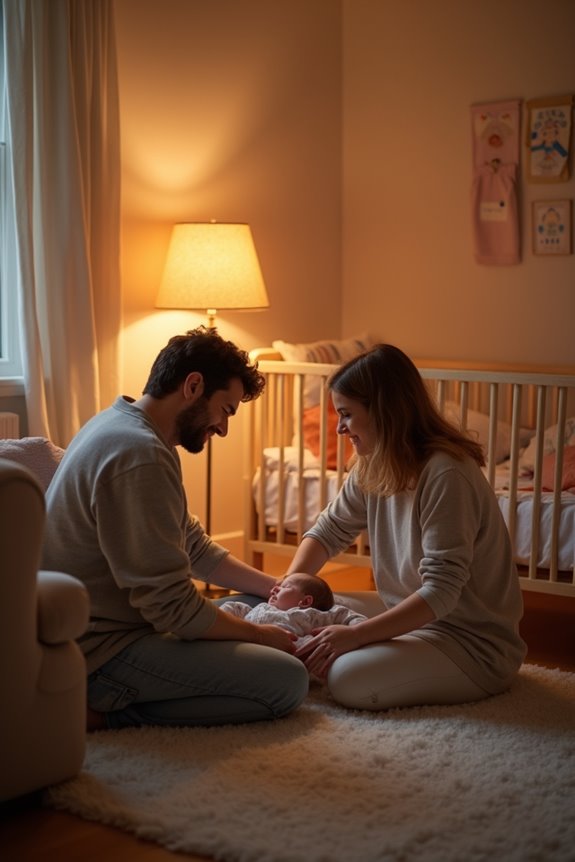
When should you move your baby to their own bed? The answer depends on your family’s needs and your infant’s development. I recommend keeping your baby in your room for at least the first six months—this reduces SIDS risk and makes nighttime caregiving easier.
Around 6–9 months, you might notice your infant waking more frequently or showing readiness signs. That’s when a gradual transition works best. Start small: try naps in the new room first, then move bedtime there before attempting full nights away.
Safety matters most during this transition. Keep their sleep surface secure and maintain familiar routines—these elements help your infant adjust smoothly. Room-sharing initially, then a separate bed nearby, then their own room. You’re building confidence alongside your baby, one step at a time.
Toddlers and the 18-Month to 3-Year Window: Timing Your First Transition
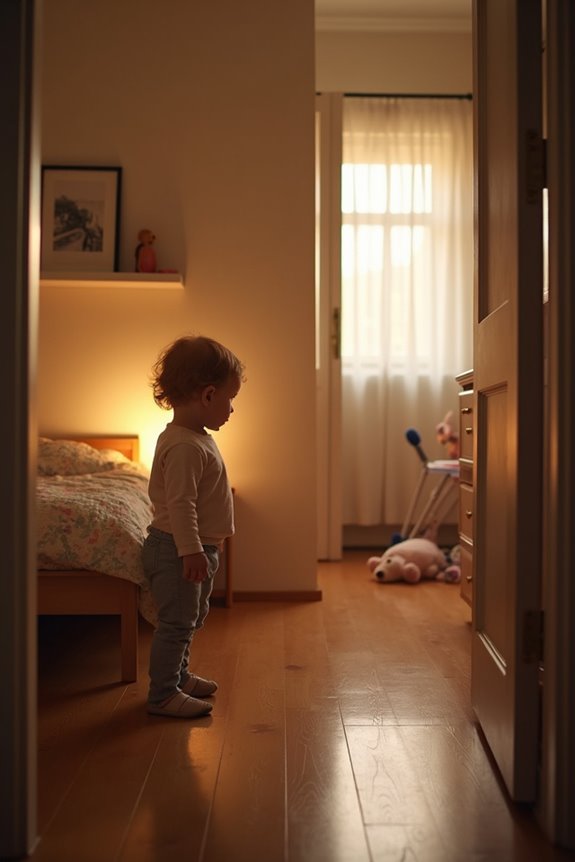
Your toddler’s growing independence marks a natural window for their own room—usually between 18 months and 3 years old. During this phase, you’ll notice your child’s sleep patterns shifting. When night wakings drop to about twice nightly, that’s your cue that a transition might work.
I recommend starting gradually. Keep your toddler in a separate bed within your room first. This approach lets them adjust while you remain nearby and responsive. Once they’re comfortable, you can move that familiar bed into their own space.
Consistency matters tremendously here. Maintain your bedtime routine exactly as before—same songs, same timing, same comfort items. Your toddler thrives on predictability during change. You’re not rushing this transition; you’re honoring your child’s readiness while staying connected.
School-Age Children: Why Their Own Quiet Space Matters
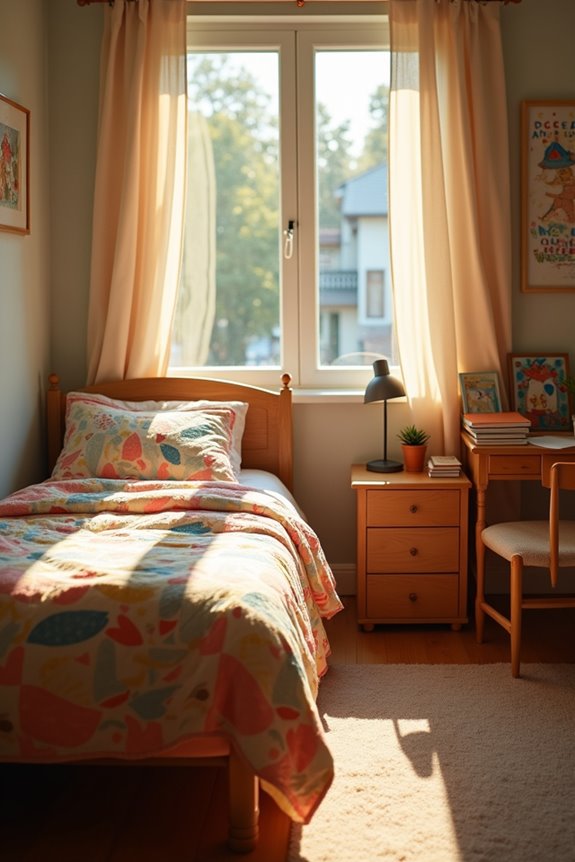
When your child enters school, they’re juggling homework, social pressures, and growing independence—all things that benefit from a calm, distraction-free zone where they can focus. I’ve found that a dedicated study space helps kids concentrate better on assignments and builds their confidence as independent learners, plus it gives them a personal retreat when they need a break from the noise of family life. Having their own room or a clearly defined corner with personal storage also supports their developing need for privacy and autonomy, which naturally increases during these years.
Homework And Academic Focus
How do you expect your child to focus on math homework when their sibling’s building blocks are tumbling across the floor? I understand the struggle. When kids share a room, academic focus becomes nearly impossible. Your child needs privacy and a dedicated study nook to concentrate on schoolwork effectively.
| Challenge | Solution |
|---|---|
| Distractions from siblings | Separate desk area with headphones |
| Clutter affecting focus | Individual storage for each child |
| Interruptions during studying | Clear “homework time” boundaries |
| Shared supplies causing chaos | Labeled, personal school materials |
Creating a quiet retreat transforms homework time. I recommend establishing a specific study corner with minimal visual clutter. Set firm limits during study hours. This routine builds accountability and independence. Your school-age child will concentrate better, complete assignments faster, and develop stronger academic habits.
Privacy Needs During Development
Privacy becomes progressively important as kids move through the school-age years, and I’ve found that many parents underestimate how much their children crave personal space during this developmental stage. As kids approach puberty, they’re developing modesty and self-consciousness about their bodies. They need boundaries—physical and emotional—that separate them from siblings and parents.
When your child expresses discomfort changing clothes around others or seems embarrassed about privacy matters, that’s your cue to listen. These aren’t random complaints; they’re signals about their development. Separate sleeping spaces protect their emerging sense of self and dignity.
If separate rooms aren’t possible, use curtains, shelves, or dividers to create defined zones. Your child’s comfort matters here. Respecting their privacy needs now builds trust and shows you understand their growth.
Personal Retreat Space Benefits
Beyond respecting your child’s physical modesty, school-age kids need a dedicated space where they can actually think—and that’s where a personal retreat becomes invaluable.
Your child thrives when they’ve got somewhere quiet to focus:
- Homework concentration improves without sibling distractions
- Independent play flourishes in their own zone
- Belongings stay protected as possessions multiply
- Conflict reduces over toys and clothes
- Privacy grows naturally before puberty hits
Even in shared rooms, creating distinct zones works. A defined personal space tells your child: “This is yours.” They can close a door, use a curtain, or claim a corner. This separation builds confidence and reduces daily friction with siblings. As your child approaches puberty, this private space becomes even more important for their developing sense of self and comfort.
Siblings of Different Ages: When Sharing a Room Becomes Awkward
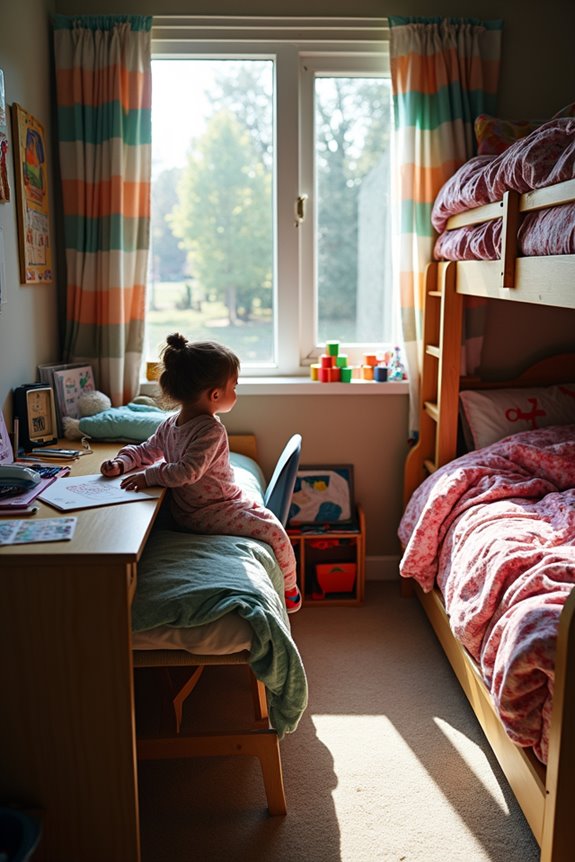
Sharing a bedroom gets trickier when your kids aren’t close in age. Privacy becomes a real concern, especially for the older child who needs personal space. That’s why experts often recommend separation once puberty enters the picture.
Here’s what I’ve found works: if your kids must share temporarily, create clear boundaries. Divide the room into distinct zones—one side for each child. Use curtains or room dividers for visual privacy. Give each kid their own closet space and study area.
An age gap of several years doesn’t automatically mean separation is necessary. What matters is defining expectations together. Let them decide on quiet hours and clothing privacy rules. When everyone understands the boundaries, awkwardness decreases significantly. You’re building respect and independence simultaneously.
Puberty and Privacy: Why Separation Becomes Essential
When your kids hit puberty, bedroom arrangements shift from a practical question to a personal one. Privacy becomes non-negotiable. Your children need space to develop healthy boundaries and respect their own bodies.
Here’s why separation matters during puberty:
- Modesty develops as kids become self-conscious about changing bodies
- Personal space supports emotional independence and identity formation
- Same-sex siblings may share briefly if both feel comfortable, but respect individual timelines
- Cross-sex siblings absolutely need separate rooms to maintain appropriate boundaries
- A private retreat offers essential emotional refuge during hormonal ups and downs
If space allows, I’d recommend separate bedrooms from puberty onward. You’re not just solving a logistics problem—you’re honoring your kids’ developmental needs. This investment in privacy shows them you respect who they’re becoming.
Working With Limited Space: Creative Room-Sharing Solutions
What if your kids could share a room without constantly butting heads?
I’ve found that thoughtful space-sharing solutions transform shared bedrooms into peaceful sanctuaries. Dedicated zones work remarkably well—assign each child specific storage areas, a personal corner, and defined sleeping spaces. This creates ownership without requiring separate rooms.
| Solution | Benefit | Example |
|---|---|---|
| Personal decor spots | Individuality | Reading nook with favorite books |
| Scheduled room rotation | Privacy time | Weekends alone in shared space |
| Separate changing zones | Dignity during routines | Curtain dividers for dressing |
| Color-coded storage | Organization | Blue bins for one child, red for another |
| Designated bathroom time | Respect for privacy | Staggered morning schedules |
I recommend rotating bedroom access so each child experiences solo time. This approach respects their growing need for privacy while making limited space work beautifully for your family.
Recognizing Readiness and Easing the Transition
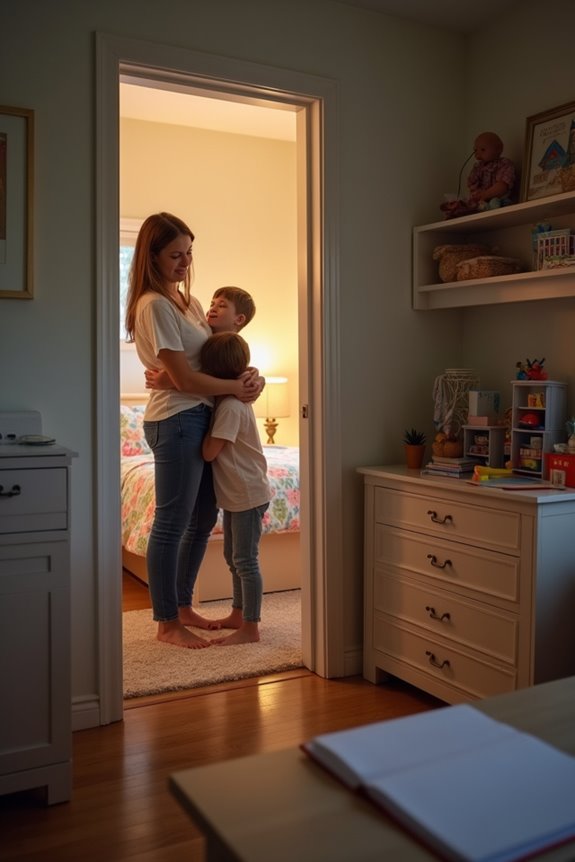
I’ve noticed that knowing when your child’s ready to move rooms can feel tricky, so let me walk you through the actual signs that tell you they’re prepared for this big step. You’ll want to watch for things like your baby waking up frequently at night, showing independence during the day, or seeming comfortable in their own space during naps—these are green lights that a transition might work. The good news is you don’t have to make one big move; instead, I’d suggest easing them into it gradually, maybe starting with nap time in their own room before tackling the full night shift.
Signs Of Readiness
How do you know if your child’s actually ready to sleep in their own room? Look for these readiness cues that signal it’s time for a transition:
- Your child is at least 6 months old and waking frequently at night
- Sleep disruption patterns suggest they’d benefit from their own private space
- A new sibling’s arrival is coming soon
- Your child expresses interest in privacy or independence
- You’re planning sleep training and want to coordinate the room change
When you spot these signs, you’re looking at genuine readiness indicators. Trust your instincts here—every child develops differently. If your little one’s showing interest in sleeping alone or your family situation’s shifting, that’s your moment. These cues mean your child’s developmentally ready to make this big step toward independence.
Smooth Transition Strategies
Once you’ve spotted those readiness signs, the real work begins—and yes, it takes patience. I recommend starting gradually. Begin with naps in the new space first—this feels less intimidating than nighttime. After your child adjusts to daytime sleep, extend the transition to bedtime.
Here’s what helps: keep consistent routines intact. The same bedtime story, same pajamas, same wind-down matters tremendously during this shift.
Consider moving your child from the shared room to a separate bed in your room before attempting full separation. This bridges the gap without feeling abrupt.
Every child adjusts differently. Your toddler might transition smoothly in weeks; another needs months. That’s normal. Match your pace to your child’s response. Patience here builds confidence for both of you.