

There’s no magic age for a bedroom TV—it’s really about whether you can enforce the rules that come with it. Kids at any age struggle with limits once a screen’s in their room. Before you say yes, ask yourself: Can you stick to homework-first rules? Will you monitor what they watch? Can you keep screens off before bed? If those feel hard, a bedroom TV might derail sleep and grades. The real question isn’t age—it’s readiness, and there’s much more to consider before deciding.
Your 5-Question Decision Framework: Before You Say Yes
Before you hand over the remote, ask yourself this: Are you ready to set limits that’ll actually stick?
Before handing over the remote, ask yourself: Are you ready to set limits that’ll actually stick?
This bedroom TV decision isn’t really about age guidelines—it’s about your family’s values. Start by examining your situation honestly. First, can you enforce homework before screen time without daily battles? Second, will your kid respect the no-TV rule within an hour of sleep? Third, do you have the energy to monitor what they’re watching?
Next, consider your child’s maturity level. Some ten-year-olds handle screen time rules responsibly, while others at fourteen struggle. Finally, ask yourself: Is this bedroom TV actually necessary, or is it habit?
Your answers shape everything. This framework helps you decide what works for your household, not what works for someone else’s.
Ages 5–9: Why Kids Ask and Parents Often Say No
Kids this age are curious and want what their friends have, but they’re not developmentally ready to manage a bedroom TV on their own—they still struggle with impulse control and turning screens off when they should be sleeping. You’ll face real challenges keeping a TV from disrupting their bedtime routine, since the blue light keeps their brains awake and a bedroom screen makes it harder to enforce the “no screens before bed” rule you’ve probably set. The truth is, saying no now isn’t about being strict; it’s about protecting their sleep and giving yourself a tool you can actually control, which gets much harder once that TV moves into their private space.
Developmental Readiness Concerns
Why do so many children between ages 5 and 9 suddenly want a television in their bedroom? The answer lies in developmental readiness concerns that matter more than you might think.
During these years, your child’s sleep patterns and routines are still forming. A TV in the bedroom creates real challenges:
- Sleep disruption: Screen light and stimulating content interfere with their developing sleep cycles
- Screen time control: You’ll struggle to monitor what they’re watching and for how long
- Age appropriate content: Kids this age need protection from unsuitable material
- Parental rules: Enforcing boundaries becomes harder when the TV’s out of sight
Consider establishing firm parental rules instead. Set screen time limits—no viewing within an hour before bed. Your judgment matters most here. You know your child’s developmental readiness better than anyone else. Trust your instincts.
Parental Control Challenges
Once you understand how screen light and content affect your child’s sleep, you’ll see why parental control becomes the real battleground in this age group. Here’s the truth: a bedroom TV means less oversight over what your kid watches and when they watch it.
You’re managing screen time rules across multiple devices now. Setting age thresholds—like “no TV until age 7″—gives you breathing room to establish sleep routines without midnight negotiations. Content management gets harder when screens hide in bedrooms.
Many parents delay bedroom TVs specifically to maintain control during these critical years. You can tie access to homework completion or bedtime compliance, creating accountability. This approach keeps you informed and protective during ages 5–9, when kids need guidance most.
Ages 10–12: The Bedroom TV Negotiation
How does your family handle the moment when your preteen starts asking for their own TV? Ages 10–12 mark a real turning point. This is when the bedroom TV conversation gets serious, and honestly, you’re not alone in facing it.
Here’s what many families find helpful during this negotiation:
- Set homework-first rules before any screen time happens
- Keep content management front and center with parental controls
- Consider family viewing in shared spaces initially
- Plan screen time limits that fit your family’s values
The key? You don’t have to decide yes or no immediately. Many families use this age range as a planning period, figuring out what works for their household. Whether you eventually say yes or keep screens communal, you’re making a thoughtful choice that fits your family’s needs.
Ages 13+: Weighing Independence Against Sleep and Focus
By the time your teen hits 13, the bedroom TV question shifts from “Should we?” to “What’s the real cost?” At this age, your kid’s craving independence, and a personal TV feels like a fair trade-off—but sleep and schoolwork hang in the balance.
I’ve found that screen time management becomes critical here. A bedroom TV can seriously impact sleep quality, especially with blue light keeping brains wired at night. Consider setting firm parental rules: no screens an hour before bed, homework completed first, or keeping the TV out entirely during school weeks.
Some families successfully navigate this by allowing age 13 teens limited access with clear boundaries. Others remove bedroom TVs around year 9, recognizing that protecting sleep matters more than independence at this stage. You know your teen—choose what actually works for your household.
The Sleep Cost: Why Bedroom TVs Disrupt Rest at Every Age
What’s really happening when your kid falls asleep with the TV on? Your child’s brain is fighting against sleep itself.
In-bedroom screens disrupt sleep at every age because they mess with melatonin production—the chemical that tells your kid’s body it’s time to rest. Here’s what I’ve learned works against healthy bedtime routines:
- Blue light delays sleep onset and keeps kids wired past their intended bedtime
- Sleep disruption compounds over time, affecting daytime focus and mood
- Melatonin disruption creates irregular sleep schedules that damage quality rest
- Age-appropriate TV doesn’t matter if it’s in the bedroom during sleep hours
The truth? Your kid’s developing brain needs uninterrupted sleep for growth and learning. Removing in-bedroom screens isn’t punishment—it’s protection. You’re building the foundation for their success.
How Bedroom TVs Derail Grades and Reading Time

The sleep problems we just talked about are only part of the picture—because when your kid’s tired from a bedroom TV keeping them wired all night, their grades suffer too. A bedroom TV doesn’t just steal sleep; it steals study time. Your child trades homework for screen time, and their academic performance takes a hit. Here’s what happens: reading time gets squeezed out completely. Instead of picking up a book, they’re watching shows. Meanwhile, that television creates constant distractions during homework sessions, killing their focus when they actually try to study. The research is clear—kids with screens in their rooms show reduced classroom engagement and lower grades. When you remove the bedroom TV, you’re not just protecting sleep; you’re protecting their education and their future.
Why Bedroom Placement Kills Parental Oversight
How do you monitor what your child watches when the TV’s behind a closed door?
A TV in bedroom creates a monitoring challenge that grows harder as screen time increases. You lose sight of content, viewing habits, and how long your child actually watches. Here’s what happens:
- Your oversight shrinks because passive, private viewing happens without your knowledge
- Around-the-clock access tempts kids to watch instead of sleep, study, or socialize
- Age appropriateness becomes harder to enforce when you’re not present
- Family time competes with bedroom entertainment that’s always available
Once installed, removing a bedroom TV triggers real conflict. Your parental oversight weakens, making screen time rules feel impossible to maintain consistently. The autonomy bedroom placement offers kids directly undermines the monitoring you need for healthy development.
If Your Kid Already Has One: Rules That Actually Work
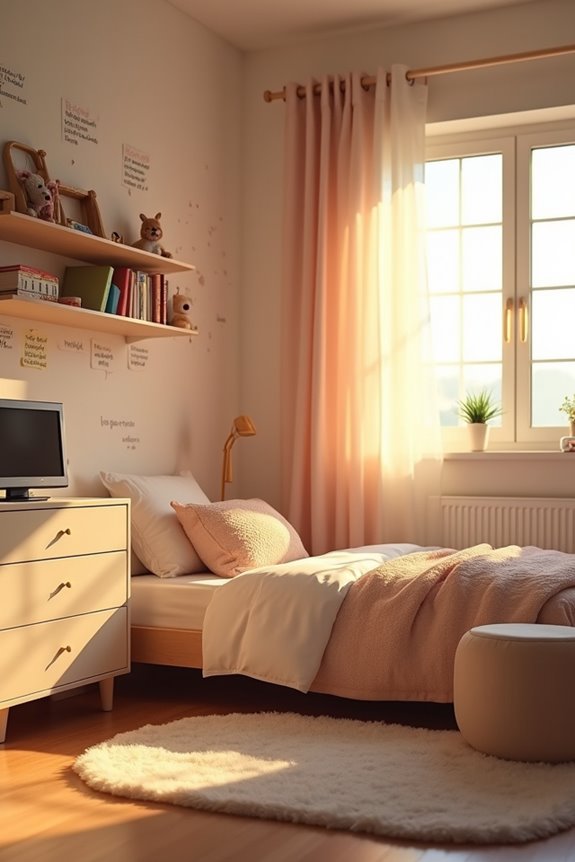
If you’ve already put a TV in your kid’s room, don’t panic—you’re not alone, and you can still set up boundaries that work. Start by establishing clear bedroom TV rules that fit your family. Try the homework-before-screen approach: no viewing until assignments finish. Set specific screen time limits—maybe one hour on school nights, more on weekends. Use parental controls to block inappropriate content and enforce viewing windows. Build a bedtime routine that excludes screens thirty minutes before sleep. Pick age-appropriate viewing together and watch occasionally with your child. Keep the TV off during meals and family time. These practical steps help you regain oversight while your kid keeps their TV. Consistency matters most.