

There’s no magic age for room-sharing—it depends on your kids’ development and needs. Start when nighttime wakings decrease, usually around age two or three. With the right setup, siblings can share well into their teens. I’d recommend positioning beds on opposite sides, using individual sound machines, and establishing clear quiet-time boundaries (like 8 p.m. stories, 8:30 p.m. lights out). Watch for signals like privacy requests or declining sleep quality—that’s when you’ll want to explore separation options.
When Can Siblings First Share a Room?
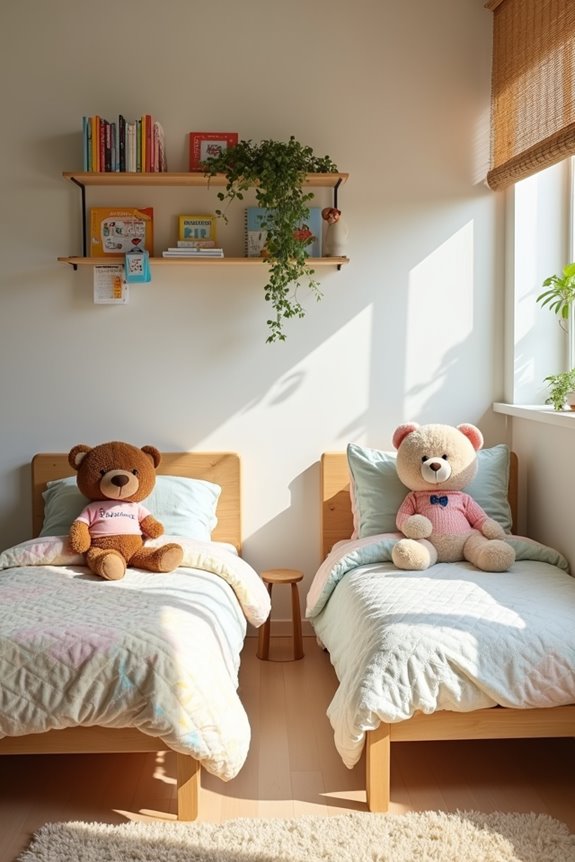
While there’s no magic age when siblings suddenly become ready to share a shared room, you’ll want to think about your kids’ development, comfort level, and what works for your family situation.
I’d start by considering whether both children are good sleepers. If your baby still wakes frequently at night, waiting until those wakings decrease makes sense for everyone’s rest. Once your little one settles into fewer nighttime disruptions, room-sharing becomes more realistic.
As kids grow toward puberty, privacy needs shift dramatically. You’ll notice increased self-consciousness and desire for personal space—clear signs it’s time to reconsider age-appropriate sleeping arrangements.
Your housing situation matters too. If separate rooms aren’t possible, that’s okay. Many families successfully navigate shared spaces by creating personal zones within one room using partitions or designated areas.
Pros and Cons of Room-Sharing for Kids
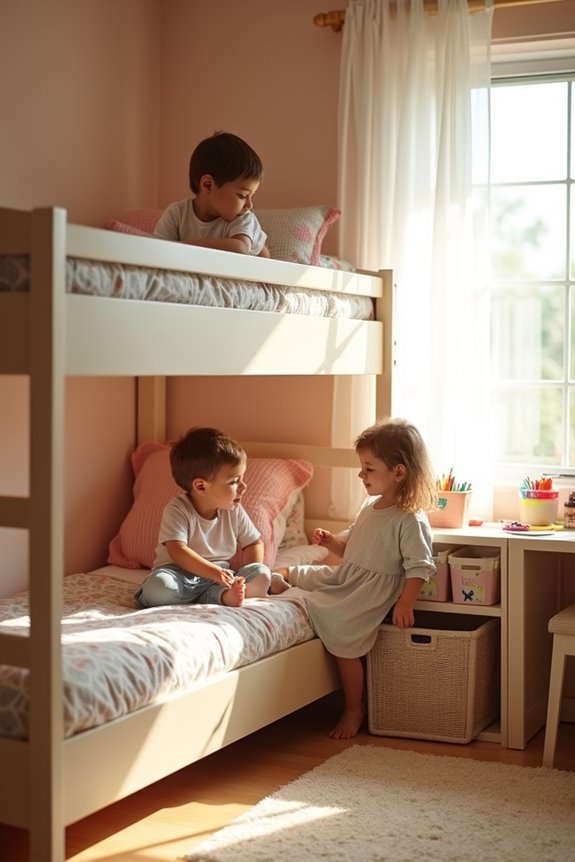
When your kids share a room, you’re giving them a built-in buddy system that naturally teaches cooperation, sharing, and respect for boundaries—skills that’ll serve them well beyond childhood. But here’s the real talk: shared rooms also mean navigating sleep disruptions, different bedtime needs, and the constant tension between needing personal space and making the arrangement actually work for your family. Understanding both sides helps you decide whether room-sharing fits your situation right now and when it might be time to reassess.
Building Sibling Bonds Together
Sharing a bedroom can actually be one of the best gifts you give your kids—if you set it up right. When siblings share a room, they’re learning cooperation and conflict resolution in real time. They’re figuring out how to navigate differences while building genuine connections.
Here’s what works: place beds on opposite sides to create distinct zones. Give each child a personal shelf or drawer—their own space matters. Set clear house rules together, like quiet time after 8 p.m. Use individual sound machines so one child’s sleep won’t disrupt the other’s.
The magic happens when kids feel heard and respected. They’ll develop stronger sibling bonds because they’re working through challenges together, not avoiding them.
Managing Sleep and Privacy Challenges
How do you know when a shared room stops working? Listen for the signs. When your kids request their own space, argue frequently, or sleep better apart, it’s time to consider a change. As children grow, their privacy needs naturally increase—especially during puberty when having personal space becomes important for development.
You don’t necessarily need separate rooms immediately. Try creating distinct zones within one room using screens or curtains. Designate quiet times so everyone can rest without disruption. These alternatives respect your child’s developing need for privacy while maintaining closeness.
However, if sleep quality suffers significantly, separation becomes worthwhile. Studies show better rest often follows. Evaluate your space availability and your family’s current arrangement honestly. Sometimes small adjustments work; sometimes separate rooms truly help everyone thrive.
Which Ages Need Separate Rooms (and Why)?
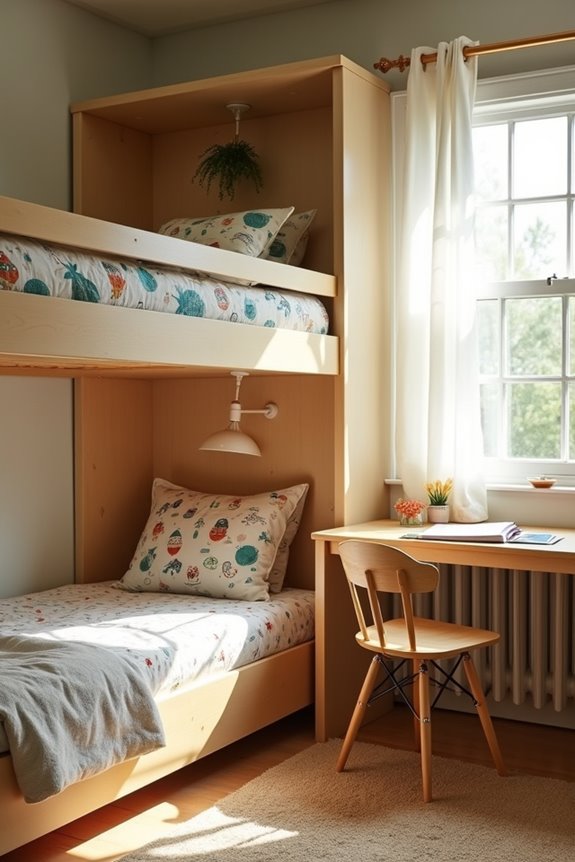
There’s no magic birthday when kids suddenly need their own rooms—it really depends on your family. Around ages 8–10, children often become more aware of privacy in a shared room. As puberty approaches, this need intensifies. Your kids might signal they’re ready through increased modesty or requesting alone time.
Around ages 8–10, kids often signal they need more privacy through increased modesty and requests for alone time.
Consider these factors: Does your child undress privately? Ask for space during personal moments? Show signs of puberty? These’re real indicators that separate sleeping spaces matter more.
Housing reality matters too. If you’ve got limited space, creative solutions work—room dividers, staggered bedtimes, or designated private zones help. Some families successfully share rooms through middle school with proper boundaries.
Trust your instincts about your kids’ comfort levels. Every family’s timeline differs, and that’s okay.
How to Set Up a Shared Bedroom That Works
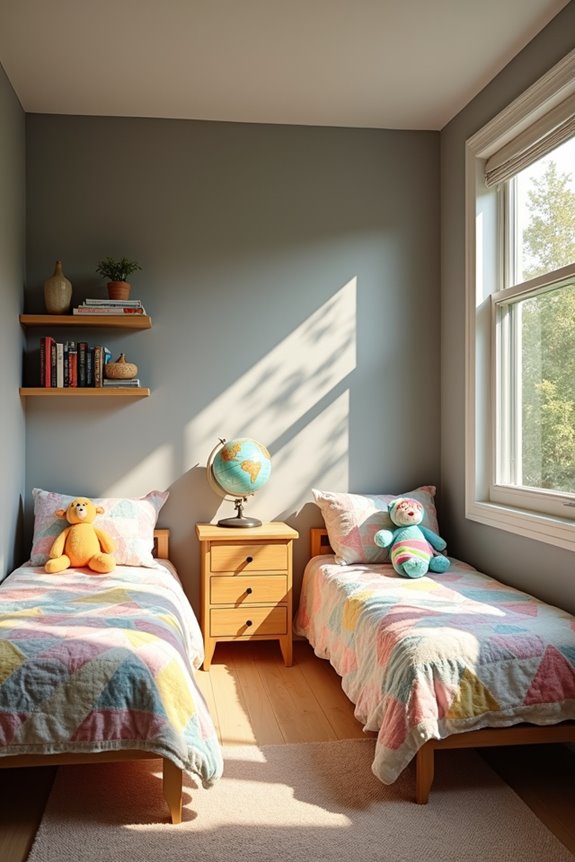
Once you’ve decided your kids are ready to share a room, setting it up right makes all the difference. Start by positioning the crib and bed on opposite sides to create natural separation. Individual sound machines help each child sleep undisturbed, even in close quarters.
Have an honest conversation with your older child about privacy boundaries, baby monitoring, and what to expect. This builds buy-in and reduces frustration.
Keep your sleep routines consistent—same bedtimes, same order of events. Shared bedrooms demand predictability.
If space feels cramped later, add visual dividers like curtains or screens before considering separate rooms. These defined personal zones respect growing privacy needs while maintaining the shared bedroom arrangement that works for your family.
Room-Sharing Rules and Sleep Schedules That Reduce Conflict

When your kids share a room, you’ll find that consistent bedtime routines and clear quiet-hour rules make a real difference in reducing those late-night conflicts and sleep interruptions. I’ve learned that staggered bedtimes work best when one child needs more wind-down time than the other—maybe your older kid gets thirty minutes of reading while your younger one’s already asleep, using a sound machine to mask any noise. The key’s establishing boundaries around what “quiet time” means: dedicated zones for study versus play, screens or curtains for privacy, and firm expectations about when talking stops so everyone actually gets the rest they need.
Bedtime Routine Consistency Matters
How do you get two kids with different sleep needs to settle down in the same room without it turning into a wrestling match? I’ve found that a consistent bedtime routine is your strategic advantage. When you establish the same wind-down activities each night—like reading or dimming lights at set times—your kids’ bodies expect sleep. This shared room consistency reduces conflict because everyone knows what’s coming next. You might start with quiet time at 8:00 PM, then stories at 8:15 PM, lights out at 8:30 PM. If one child needs later bedtime, adjust their routine separately but keep the sequence identical. Your children will feel secure knowing what to expect, and you’ll notice fewer bedtime battles. That predictability transforms your shared room from chaos into calm.
Managing Different Sleep Schedules
The real challenge with sharing a room isn’t that your kids need sleep—it’s that they need it at different times. I’ve found that staggered bedtimes work wonders. Try putting your younger child down first, then letting your older one stay up slightly later. This reduces nighttime disturbances significantly.
White noise machines are game-changers here. I place one on each side of the shared room to mask sounds when sleep schedules don’t align perfectly. Privacy screens between beds also help—your kids won’t see each other moving around during those transition periods.
Set firm quiet hours after a specific time. No screens, no rough play. Just winding down activities. When you monitor what actually happens—fewer night wakings, longer stretches of uninterrupted sleep—you’ll know your sleep schedules are finally clicking.
Establishing Quiet Time Boundaries
Once you’ve got the sleep schedules down, you’ll notice that the real magic happens when you set clear limits around quiet time itself. I’ve found that establishing firm quiet time boundaries transforms room sharing from chaotic to manageable.
| Quiet Time Rule | Example |
|---|---|
| Off-limits toys during sleep | Action figures stay in storage after 7pm |
| Shared storage boundaries | Each child gets one shelf |
| Agreed nap periods | 1–2pm quiet activity time |
| Sound machine use | Individual machines on each bed |
Create a fixed quiet time with clear start and end times. This predictability helps both kids adjust their sleep routines. Post your rules where they’re visible. During check-ins, ask what’s working and what isn’t. Adjust boundaries as your children’s needs change. This approach keeps everyone feeling respected while protecting everyone’s sleep quality.
Troubleshooting Shared Rooms: When It’s Not Working
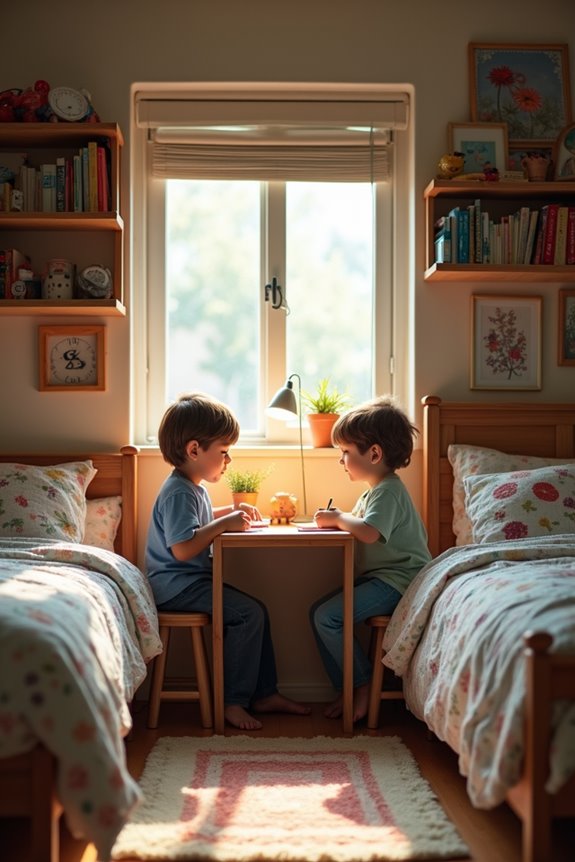
What started as a practical solution can sometimes become a source of real stress. I want to help you recognize when shared rooms aren’t working anymore. Watch for these signs: constant bickering between siblings, requests for privacy, and conflicting bedtimes disrupting sleep. As kids approach puberty, their privacy needs increase significantly. You might notice persistent complaints about homework requiring quiet study space or frustration about personal boundaries.
Don’t wait for a crisis. Address these issues early by creating defined personal areas within the same room using curtains or screens. Consider rotating bedroom use if space permits. These adjustments respect growing independence while keeping siblings connected. Trust your instincts—you know your kids best and understand when separation becomes necessary for everyone’s wellbeing.
When to Move Kids Into Separate Rooms
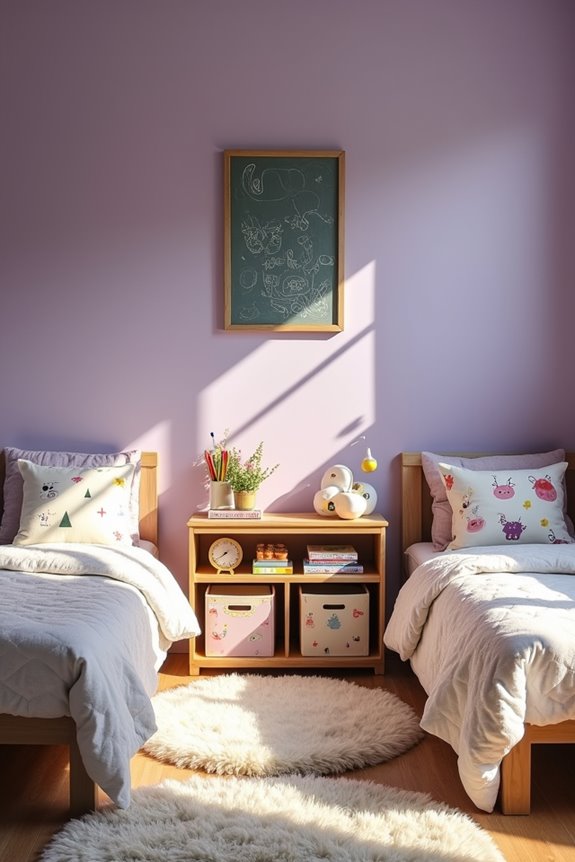
How do you know when it’s really time to give your kids their own rooms? Watch for clear signals. If your children consistently ask for privacy or seem uncomfortable changing clothes around each other, that’s telling you something. Notice their sleep quality too—do they rest better when not sharing a room? Maybe one child needs quiet for homework while the other wants to play.
You’re not bound by strict age rules. Instead, listen to what your kids show you. Puberty typically increases privacy needs markedly. Consider a gradual shift: one room becomes the study space, another becomes the play zone. This slower transition lets everyone adjust comfortably while respecting growing independence.