A split bedroom floor plan puts your master suite on one end of your home and other bedrooms on the opposite side, with your kitchen, dining, and living areas acting as a buffer zone between them. This setup gives you privacy from guest bedrooms and kids’ spaces while keeping your family connected through that central gathering area. You’ll get reduced hallway space, better noise control, and flexible rooms you can adapt as your life changes. There’s plenty more to discover about making this layout work perfectly for your situation.
How Split Bedroom Plans Differ From Open Concepts
Have you ever wondered why some homes feel so much quieter and more private than others? I’ve found that split bedrooms offer something open concept designs simply can’t match: genuine separation.
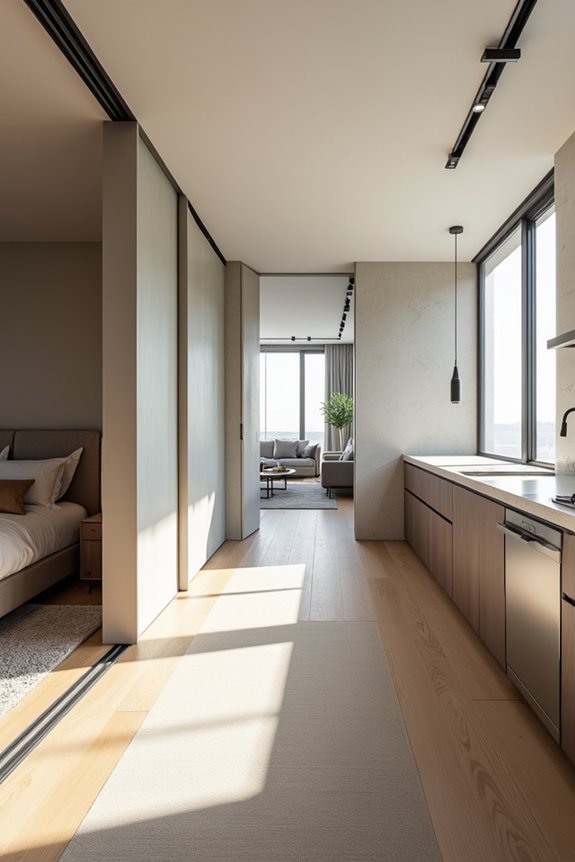
In open concept homes, everything flows together. Your master suite sits near the kitchen and living areas, so noise travels freely. With split bedrooms, I place my master suite on one end while other bedrooms occupy the opposite side. The central living area acts as a buffer between them.
This separation creates distinct zones. Your private retreat stays separate from guest bedrooms and kids’ spaces. You’re not hearing every kitchen conversation from bed. The privacy feels incredible—like having your own sanctuary while still keeping family connected through that shared central living area.
Why Split Layouts Work for Modern Homes
I’ll show you how split bedroom plans address three major challenges modern homeowners face. You get privacy for your master suite while keeping the kitchen, dining, and living areas central—so you’re not isolated from family—plus you can easily convert that extra bedroom into a home office or guest space depending on what your life needs this year. The design cuts down wasted hallway space, meaning you’re actually using more of your square footage for living instead of just walking through it.
Privacy Meets Central Gathering
Why does a split bedroom layout feel so right for today’s homes? Because it gives you the best of both worlds. Your master suite separation sits far from the kids’ bedrooms and main living areas, creating a peaceful retreat. Meanwhile, your open central area serves as the natural gathering space where family and friends naturally converge. I love how this design works: the kitchen, dining, and living zones flow together seamlessly in the middle, fostering connection without invading anyone’s private space. Your teenagers can study quietly in their wing while you relax in your master suite. The privacy meets central gathering beautifully—nobody feels isolated, yet everyone gets the solitude they need. This balance is exactly what modern families crave.
Flexibility For Diverse Lifestyles
Today’s families don’t fit into one-size-fits-all molds, and split bedroom layouts get that. I’ve found that this design adapts beautifully to how you actually live. Your master suite stays tucked away for peaceful mornings, while your central living area becomes the heart of your home—perfect for working, entertaining, or watching kids play. Need a home office? The space between your master suite and other bedrooms works wonderfully. Want a guest wing? You’ve got it. This flexibility means your home grows with you. Whether you’re juggling remote work, managing different sleep schedules, or hosting frequently, a split bedroom layout provides the privacy and communal space you need simultaneously. It’s practical design that truly supports modern life.
Efficient Space And Flow
A split bedroom floor plan reduces hallway space, meaning fewer interior walls and lower construction costs. Your central communal space becomes the heart of daily living—where you naturally gather, cook, and relax. This design improves flow and circulation between private and shared zones without forcing you through cramped corridors.
The layout enhances privacy too. Bedrooms positioned at opposite ends of your home minimize noise transfer and keep high-traffic areas separate from sleeping spaces. You’ll notice the difference when kids play while adults rest undisturbed.
One trade-off: energy efficiency. The distance between sleeping and living areas can affect heating and cooling patterns. Still, many homeowners find the streamlined layout and improved comfort worth this consideration.
The Design Essentials Behind Split Floor Plans

When you’re designing a home layout, how you arrange the bedrooms shapes everything else about how your family’ll live there. A split bedroom floor plan puts your master suite privacy at one end while keeping other bedrooms separated on the opposite side. Living spaces like your kitchen, dining, and great room sit comfortably between them.
Here’s what makes this design work:
- Central open areas reduce hallways and create natural gathering spaces
- Master suite stays far from secondary bedroom zones for quiet mornings
- Flexible rooms work as offices, guest spaces, or playrooms
- Brighter, larger common areas become your home’s heart
- Energy efficiency considerations require thoughtful placement of temperature zones
This layout lets you build a home that truly fits how you actually live. You get privacy when you need it and connection when you want it.
Privacy and Noise Control: The Real Advantages
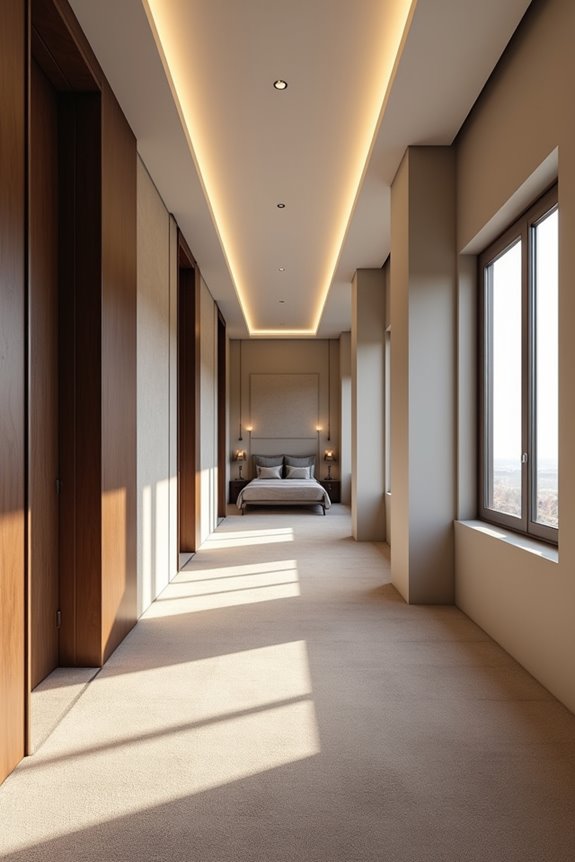
When you separate your master suite from other bedrooms, you’re building distance between yourself and household noise—that’s the core benefit of a split floor plan. Think about it: your peaceful retreat sits on one end of the home while kids’ rooms or guest spaces occupy the opposite end, with the kitchen and living areas acting as a sound buffer in between. This strategic zoning means you’ll actually enjoy the quiet you’re paying for, and you won’t hear every footstep, TV, or late-night conversation happening in other parts of your home.
Master Suite Sound Isolation
Why does peace and quiet matter so much when you’re trying to rest? A split-level master suite positioned away from the main living areas gives you the sound isolation you deserve.
Here’s what makes this setup work:
- Distance acts as your shield — separating the master suite from the living room and kitchen reduces noise transfer
- Buffer zones absorb sound — dining areas and common spaces create natural barriers between you and daily activity
- Strategic door placement — positioning doors away from hallways minimizes foot traffic noise
- Thick walls and materials — sound-dampening construction between the master wing and secondary bedrooms blocks intrusion
- Private entry points — dedicated bathroom access and separate master entrances reduce disruption
This privacy approach transforms your bedroom into a genuine retreat. You’ll sleep better knowing noise won’t interrupt your rest, whether it’s daytime or nighttime. That’s the real advantage of thoughtful master suite placement.
Zoned Noise Separation Strategy
How’d you like to enjoy your home without hearing the TV blaring from downstairs at midnight?
A zoned noise separation strategy makes this possible. By placing your master suite on one end and secondary bedrooms on the opposite end, you create natural distance between sleeping and living spaces. The central living area acts as a buffer, reducing sound transmission between zones.
Think of it this way: your kitchen noise stays contained while you sleep peacefully upstairs. Strategic door placement and sound-attenuating walls further disrupt direct sound paths. This split bedroom arrangement keeps high-traffic activity rooms separate from quiet zones.
You’ll notice the difference immediately—better sleep quality and genuine privacy. Buyers recognize this value too, appreciating the clear living-sleeping separation that makes a house feel like a real home.
Peaceful Sleeping Space Design
Imagine waking up refreshed because your bedroom sits far from the kitchen clatter and living room chatter—that’s the real magic of split bedroom design. Your master suite becomes a true sanctuary where you can actually rest.
Here’s what makes this work:
- Distance from living areas reduces morning noise disruptions
- Your peaceful sleeping space stays quiet during family gatherings
- Privacy increases when bedrooms aren’t near high-traffic zones
- Noise control improves naturally through layout, not expensive soundproofing
- You gain a personal retreat with en-suite comforts
The split bedroom design gives you something precious: uninterrupted sleep. While your family enjoys the open living areas, you’re protected in your quiet corner. This separation means you’re not hearing conversations, footsteps, or kitchen activity when you’re trying to rest or concentrate. That’s the real advantage.
Trade-offs: When Split Plans Aren’t the Right Fit
Despite their popularity, split bedroom layouts don’t work for everyone—and that’s okay.
I want you to consider what matters most to your family before committing to this design. While split-bedroom plans offer fantastic privacy, they come with real challenges you should weigh carefully.
| Trade-off | Impact | Consider If |
|---|---|---|
| Distance between bedrooms | Harder to supervise children | You have young kids |
| Noise from living areas | Sound travels to bedrooms | You value quiet nights |
| Higher energy costs | HVAC struggles reach far spaces | Utility bills concern you |
| Longer nighttime walks | Inconvenient midnight trips | You need bathroom access |
| Potential resale issues | Market may prefer clustered layouts | You plan to sell soon |
Think honestly about your daily routines. Do you need bedrooms close together? Does your family prefer togetherness or separation? These answers guide your best choice.
Split Layouts for Different Household Types
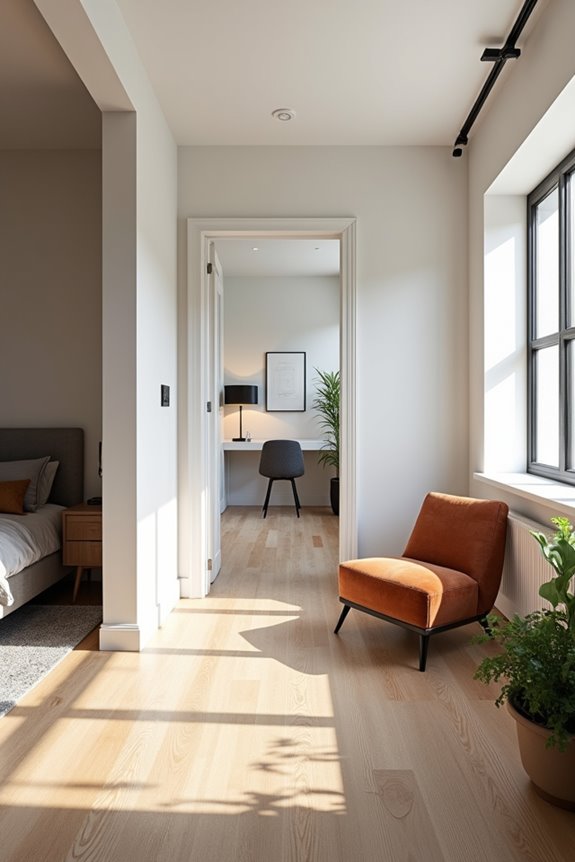
When you’re choosing a home layout, your family’s actual needs matter more than what looks good on paper. Split bedrooms work differently for different households, and I want to help you figure out if this layout fits yours.
Consider these household types:
- Young families: The master suite stays separate from kids’ rooms, giving you privacy while they sleep nearby
- Remote workers: Convert a secondary bedroom into an office with natural separation from living spaces
- Multi-generational homes: Guest bedrooms away from the master suite respect everyone’s boundaries
- Couples: Enjoy quiet retreat space without hearing kitchen activity
- Flexible planners: Customize bedrooms as your needs change over time
Split layouts give you the privacy and customization you’re looking for. They’re designed so your master suite becomes your genuine sanctuary while living spaces remain welcoming for everyone.
Optimizing Traffic Flow in Your Split Plan
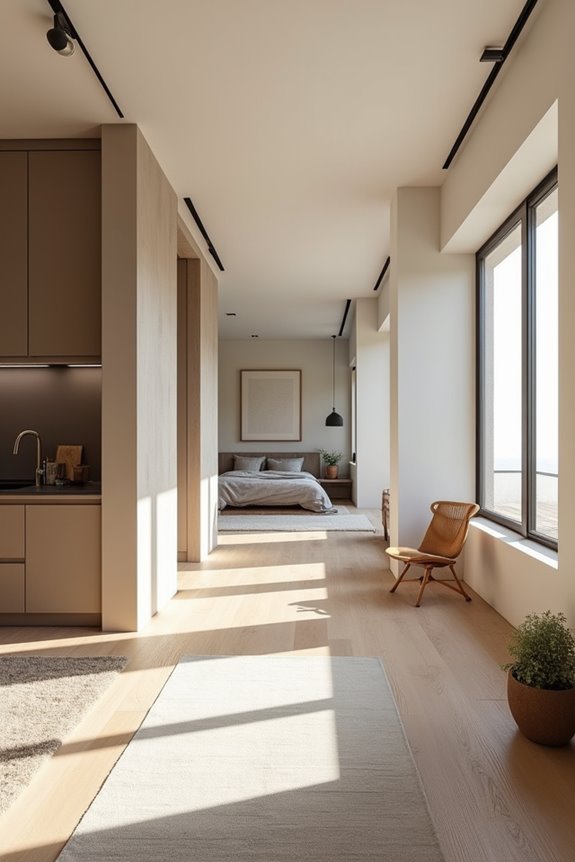
Now that you’ve matched your household type to a split layout, let’s make sure people actually move through your home the way you want them to.
Your split bedroom flow depends on smart positioning. I recommend placing your kitchen, dining, and great room between the primary suite and secondary bedrooms. This central living area becomes your natural traffic corridor, protecting bedrooms from constant activity and noise.
| Zone | Purpose |
|---|---|
| Entry foyer | Funnels guests through shared spaces first |
| Central living area | Shields bedrooms from kitchen noise |
| Primary suite | Positioned away from secondary bedrooms |
| Pathway | Routes from garage lead through living area |
Connect your garage, entry, and outdoor spaces so they lead naturally to your central living area before bedrooms. This traffic flow strategy reduces cross-traffic disruption while maximizing bedrooms separation and noise isolation throughout your home.
Keep Zones Private Yet Connected
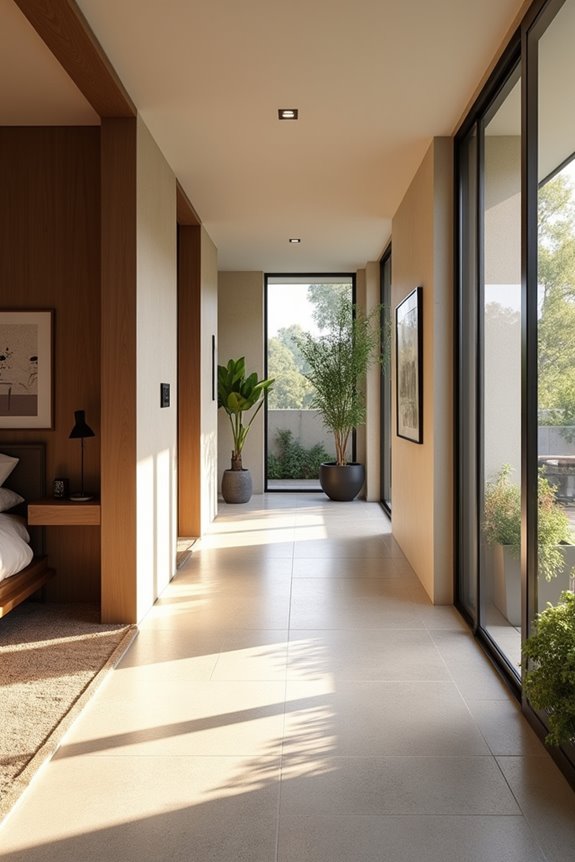
How do you create a home where your master bedroom feels like a peaceful retreat while still keeping your family connected?
A split bedroom floor plan achieves this balance beautifully. Your master suite separation creates privacy, while the central hub keeps everyone linked:
- Position your master suite away from children’s bedrooms
- Design an open-concept kitchen and living area as your gathering space
- Use wide doorways between zones for easy movement
- Keep hallways minimal to maximize real square footage
- Create sightlines so you can supervise without sacrificing privacy
This arrangement lets you recharge in your private zones while remaining accessible. Your family enjoys distinct sleeping areas, yet the central hub naturally draws everyone together for meals and connection. You’re not isolated—you’re intentionally separated, which strengthens your sense of belonging.
Should You Choose a Split Layout?
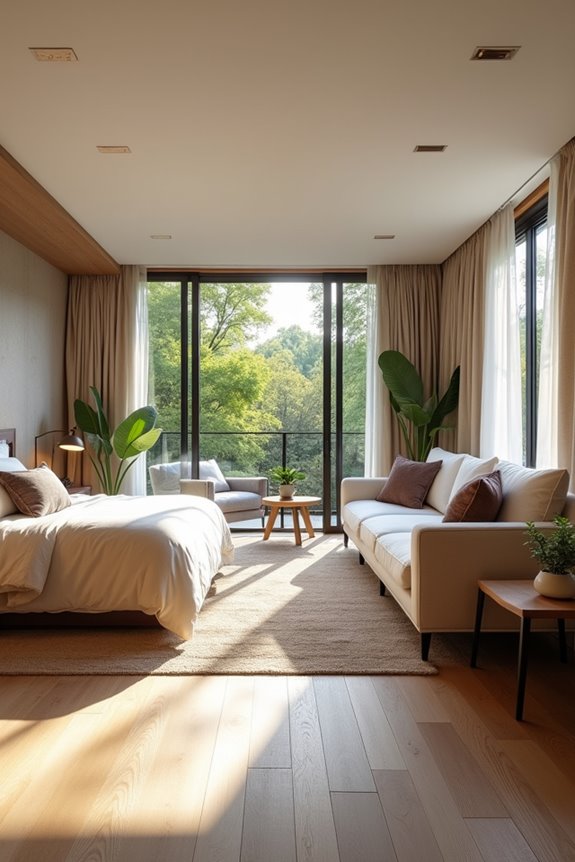
The beauty of a split bedroom plan sounds appealing, but it’s not right for every family or every home. You’ll want to consider your lifestyle carefully. If you value privacy and have a larger household, a split-bedroom layout works wonderfully. You’ll appreciate the master suite separation from kids’ rooms, giving everyone breathing room. However, if you’re concerned about energy efficiency, think twice—heating and cooling multiple zones costs more. Also consider your home’s size. A split layout requires adequate square footage to avoid feeling disconnected. For families who work from home, layout customization becomes crucial; you might use secondary bedrooms as offices, gaining flexibility. Ask yourself: Do I prioritize privacy over convenience? Will this design serve my family’s needs long-term?