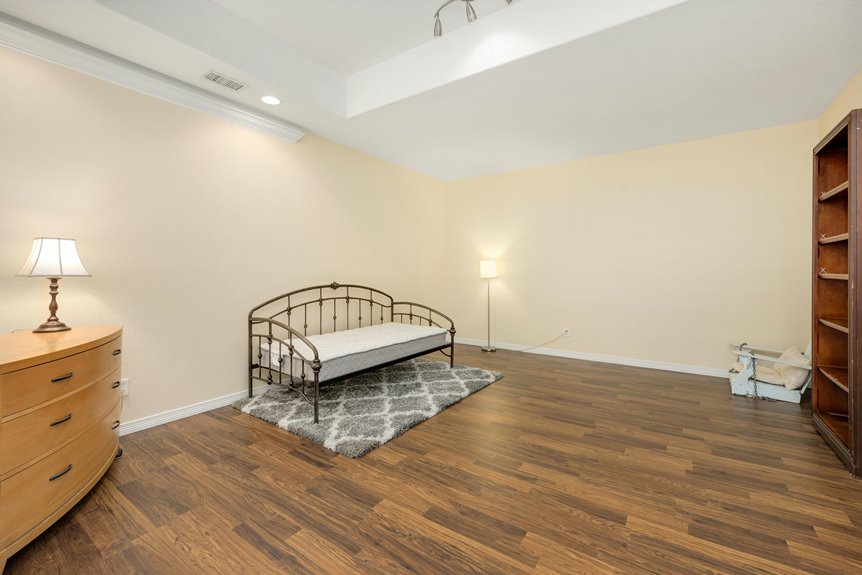
A flex bedroom is a multipurpose room that shifts between uses—guest room, home office, workout space—without expensive renovations. I’ll show you how: start with a Murphy bed or sofa bed that disappears when you need floor space, add a fold-away desk, then layer in modular storage that adapts to whatever you’re storing. Use neutral colors, smart lighting, and room dividers to separate zones instantly. The key is choosing furniture that earns its space by doing double duty. Keep reading to discover exactly which pieces matter most and how to arrange them strategically.
What Is a Flex Bedroom?
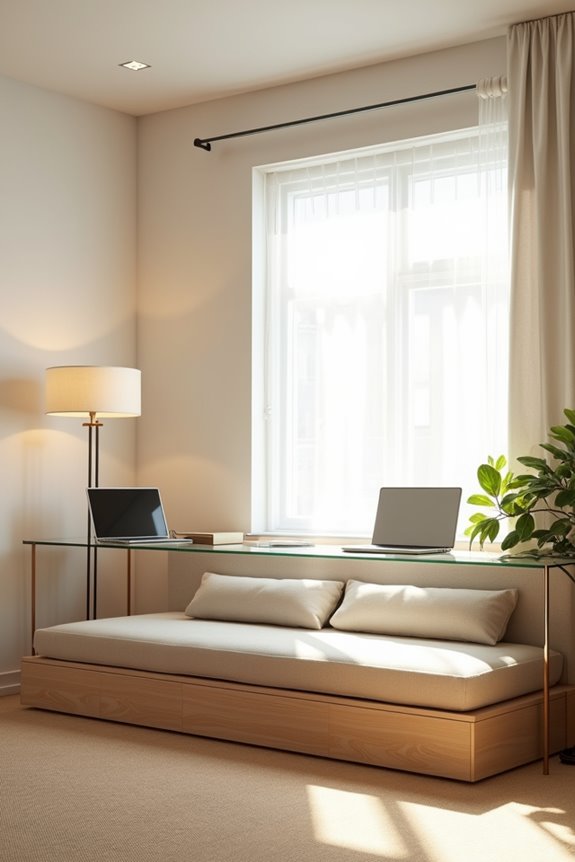
Ever wondered how some homes seem to do more with less? That’s the magic of a flex bedroom. I’m talking about a space that works harder for you by shifting between different roles—guest room one week, home office the next, then storage space when needed.
A flex room prioritizes adaptability over rigid purpose. Instead of dedicating square footage to a single function, you’re creating a multi-purpose zone that evolves with your family’s needs. This space-saving approach means you’re not wasting valuable real estate.
The beauty? You don’t need major renovations. Simple choices like fold-away beds, movable desks, and modular furniture let you reconfigure the room quickly. This flexibility transforms how your home works for you and your family, maximizing every square inch without stress or expense.
Why a Flex Bedroom Solves Space Problems
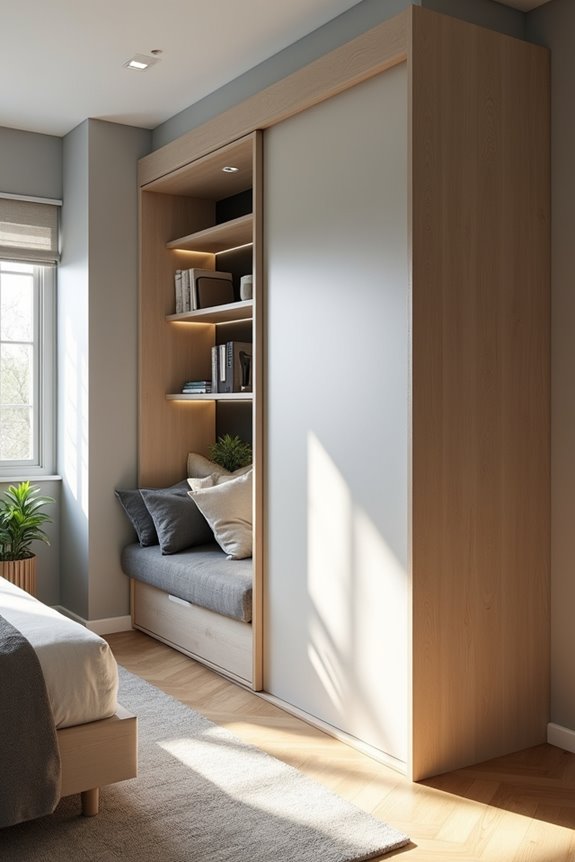
How many rooms in your home sit empty most of the time? I get it—space feels tight. That’s where a flex room changes everything. Instead of dedicating one room to a single purpose, you’re creating a multi-purpose space that adapts to your actual needs. Your guest bedroom becomes your home office on weekdays. Your storage room doubles as a meditation space when you need calm. This adaptable living approach means you’re not wasting square footage on functions you use rarely. Space optimization through flexibility lets you breathe easier in smaller homes. A daybed with drawers underneath, a fold-away desk, movable shelving—these simple swaps transform how you live. You’re not just saving space; you’re reclaiming it for what matters most to you.
What You Actually Need to Get Started
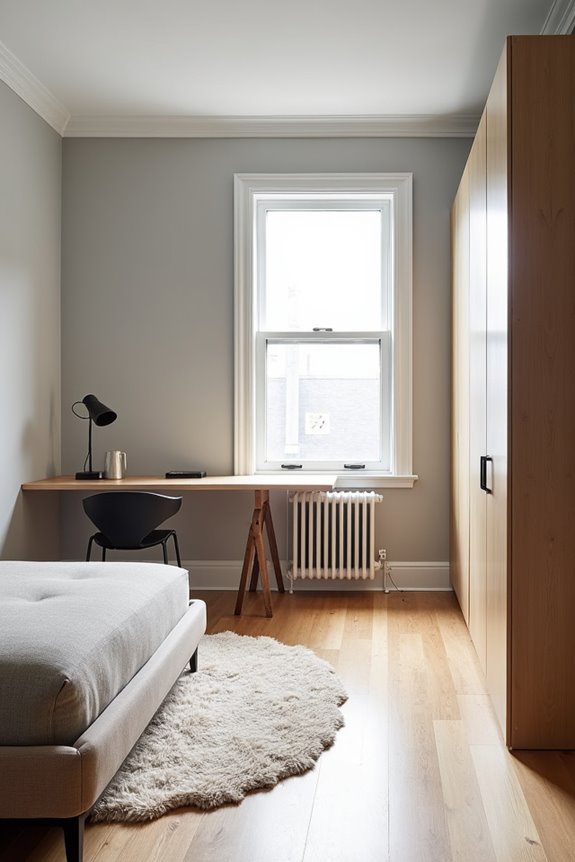
To transform your space into a flex bedroom that actually works, you’ll need to think strategically about three key areas: which furniture pieces will do multiple jobs for you, how you’ll organize everything so transitions feel smooth, and what realistic budget and timeline make sense for your situation. I’m going to walk you through each of these so you can start building your plan without feeling overwhelmed. Let’s start with the furniture that’ll form your room’s backbone.
Essential Furniture Pieces
A few key furniture pieces make all the difference when you’re setting up a flex bedroom. Start with multipurpose furniture like a Murphy bed or sofa bed—these transformers give you sleeping space that disappears when you need room for work. Next, invest in space-saving storage through built-ins or modular units that tuck clutter away smoothly. Add a compact desk that fits your space without dominating it. Include movable partitions or curtains to quickly separate zones. Finally, choose lightweight, easy-to-move pieces you can rearrange without frustration. I’d recommend prioritizing items that serve double duty. This approach keeps your room flexible and functional, adapting to whatever you need today—whether that’s sleep, focus, or hosting guests tomorrow.
Storage and Organization Solutions
Once you’ve picked your furniture pieces, you’ll realize that smart storage is what actually makes a flex bedroom work.
Start with built-in storage like shelves and under-bed drawers. They’re game-changers for maximizing every inch. Add stackable bins and fold-away organizers that you can reconfigure as your needs change. I recommend labeling everything so you know exactly where things live.
Next, create clear zones. Your sleeping area stays separate from your work zone. This simple organization trick keeps distractions away when you need focus, and maintains calm when you need rest.
Multi-purpose furniture doubles down on functionality. A storage ottoman handles both seating and hidden organization. Soft textiles like blankets in your storage boxes also dampen sound, creating that peaceful atmosphere you’re after.
Budget and Timeline Planning
How much should you actually spend on a flex bedroom? I’d recommend starting with a realistic budget of a few thousand dollars for essential pieces. You’ll want to prioritize multifunctional furniture first—like a Murphy bed or fold-away desk—since these items do the heavy lifting in your space-saving solutions strategy.
For your timeline, I suggest this approach: spend one week planning your specific use-case, then allocate four to seven weeks for purchasing and setup. This budget planning strategy keeps you focused without rushing.
Start by investing in your bed solution and wall-mounted desk. Next, add modular storage that adapts as your needs change. These targeted purchases maximize flexibility while keeping costs manageable, letting you build your ideal flex bedroom gradually.
Zoning Your Flex Bedroom for Multiple Uses
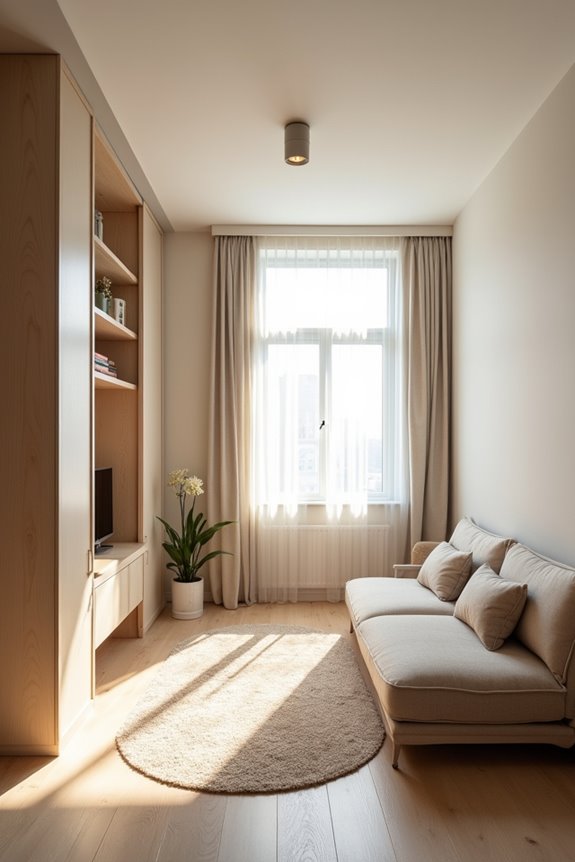
I’m going to show you how creating physical boundaries transforms your space from chaotic to controlled, and strategic furniture placement is your secret weapon. You’ll want to use movable partitions, bookshelves, or even a curtain rod to separate your work zone from your sleeping area—think of it like drawing invisible lines that keep your brain focused on one task at a time. By placing your desk in one corner with task lighting and your bed against the opposite wall, you’re telling yourself (and your mind) that each spot has a specific job to do.
Creating Physical Boundaries
The key to making a flex bedroom work is breaking it down into separate zones without knocking down any walls. I’ve found that flex room partitions and room dividers create natural boundaries between your work area, sleeping space, and storage zones. Lightweight movable furniture lets you shift things around whenever your needs change. A sheer curtain can separate your desk from your bed, giving you privacy without blocking light. Modular storage units work great because they define each zone while keeping clutter organized. The beauty? You’re not committed to one layout forever. When life shifts, your bedroom shifts with it. This flexibility means you’re building a space that grows alongside you, not one that limits you.
Strategic Furniture Placement
Where you position your furniture makes all the difference in whether your flex bedroom actually works or just feels cramped and confusing.
I’ll guide you through smart placement strategies that transform your multi-purpose space:
- Anchor each zone with key pieces – Place your Murphy bed on one wall and a fold-away desk on another to clearly separate sleeping from working areas
- Use movable partitions strategically – Position curtains or screens between zones to create privacy without permanent walls
- Incorporate smart storage solutions – Position built-in shelving and under-desk cabinets along walls to maximize your flex room while keeping clutter hidden
Plan Electrical Outlets and Tech Before Choosing Furniture
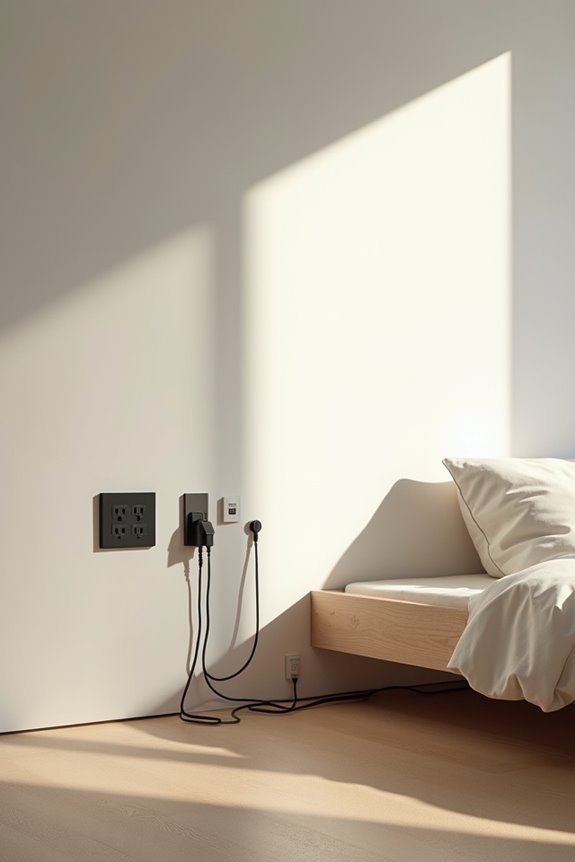
Most of us make a common mistake: we pick out furniture first, then scramble to find outlets and cables afterward. I’d encourage you to flip that approach. Start by mapping where you’ll need power. You’ll want outlets for your laptop, monitor, lamps, and charging stations clustered in one central hub. This prevents messy extension cords everywhere.
Choose outlet types strategically: standard outlets for most needs, USB-C for devices, and GFCI outlets if you’re near water. Add surge protection to keep your gear safe.
Here’s the smart move: integrate smart devices like thermostats and lights into one automation system from day one. It’s easier than retrofitting later.
Finally, allocate extra outlets for future equipment—fitness gear, guest electronics, or new tech you’ll eventually want. You’re building flexibility into your space.
Movable, Adaptable Furniture That Earns Its Space
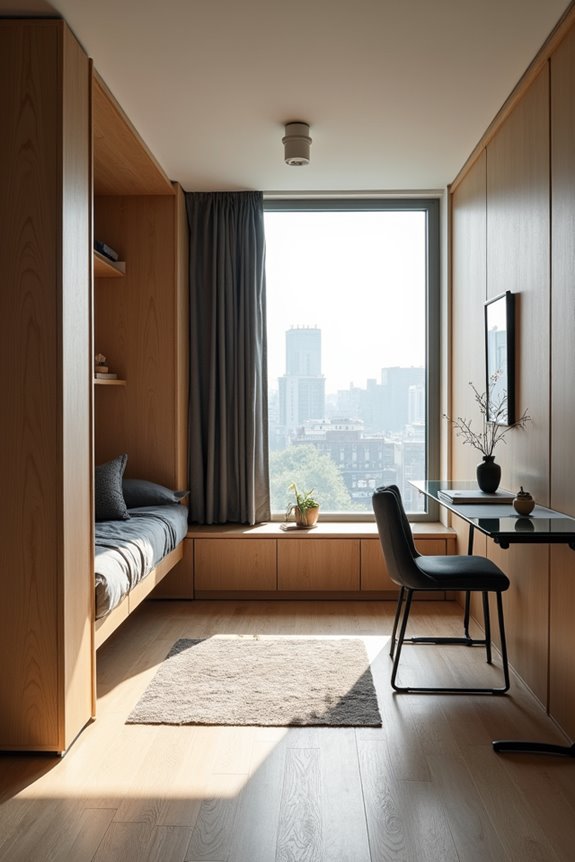
When you’re furnishing a flex bedroom, I’d encourage you to prioritize pieces that pull double duty—think Murphy beds that fold into walls, desks on wheels that slide under a window, and modular seating you can rearrange in minutes. Smart storage is your hidden asset here: vertical shelving, under-bed drawers, and wall-mounted cabinets keep your stuff organized and concealed when you shift the room’s purpose from bedroom to office to guest space. By choosing furniture and storage that adapts with you, you’re not just saving space—you’re building a room that actually works harder than any static setup ever could.
Multi-Functional Furniture Solutions
How do you fit a bedroom, office, and guest room into a single space without it feeling cramped or chaotic? Multi-functional furniture is your answer. I’ve found that smart pieces transform your flexible space into whatever you need, whenever you need it.
Here’s what works best:
- Fold-away desks disappear when you’re not working, freeing up floor space for guests
- Murphy beds tuck into walls, turning your home office into a comfortable guest room instantly
- Modular seating rearranges to support different activities—focused work one day, entertaining the next
The magic happens when each piece earns its space by serving multiple purposes. You’re not just buying furniture; you’re investing in flexibility. This approach means you’ll actually use every square inch without sacrificing comfort or style.
Smart Storage and Organization
Where does everything go in a room that’s constantly changing roles? Smart storage and organization are your best friends here. Built-in cabinets keep items hidden and accessible, while under-desk drawers tuck supplies away instantly. Vertical shelving maximizes wall space without eating into your floor area.
Here’s the trick: choose modular furniture that adapts with you. A shelf unit can hold office files one day and guest linens the next. Label everything clearly so you’re not hunting for things mid-transition.
Start small. Pick one storage solution—maybe under-desk drawers—and see how it works. Then add more as needed. When everything has a designated spot, switching between work mode and guest mode becomes effortless. You’ll feel more in control of your space.
Hide Clutter: Smart Storage and Room Dividers
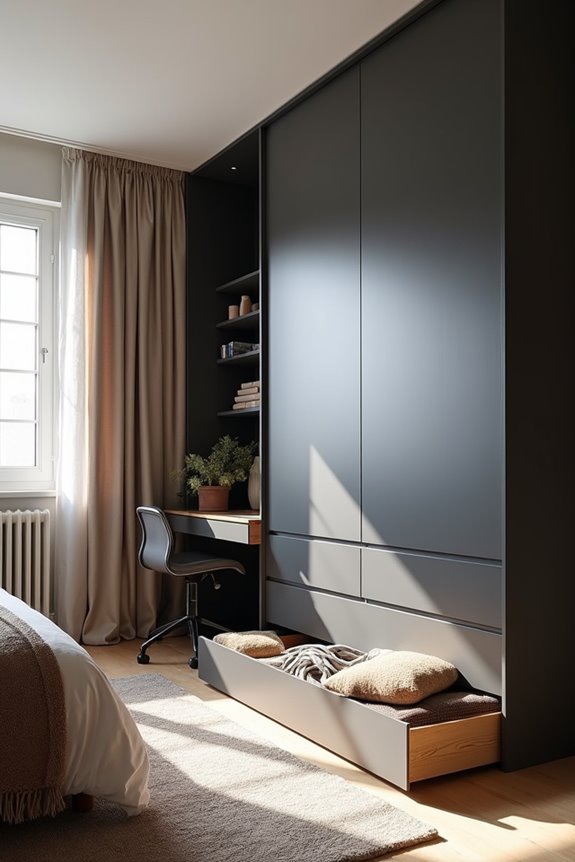
One key to keeping your flex bedroom functional is making sure stuff doesn’t pile up and take over. I’ve found that smart storage and room dividers work together to create a space that adapts to your needs.
Here’s what I recommend:
- Use multi-functional furniture with hidden compartments—ottomans with drawers and beds with storage underneath keep things tidy while serving double duty.
- Install built-in closets and under-bed drawers to maximize clutter-reduction without eating up floor space.
- Add room dividers like folding screens or curtains to separate your work zone from your sleep area instantly.
I also suggest dedicating one storage zone for off-season items and labeling bins clearly. Pair these storage solutions with neutral colors and minimal decor. When your space stays organized, switching between functions feels effortless and intentional.
Layer Your Lighting: Natural Light + Focused Work Lights
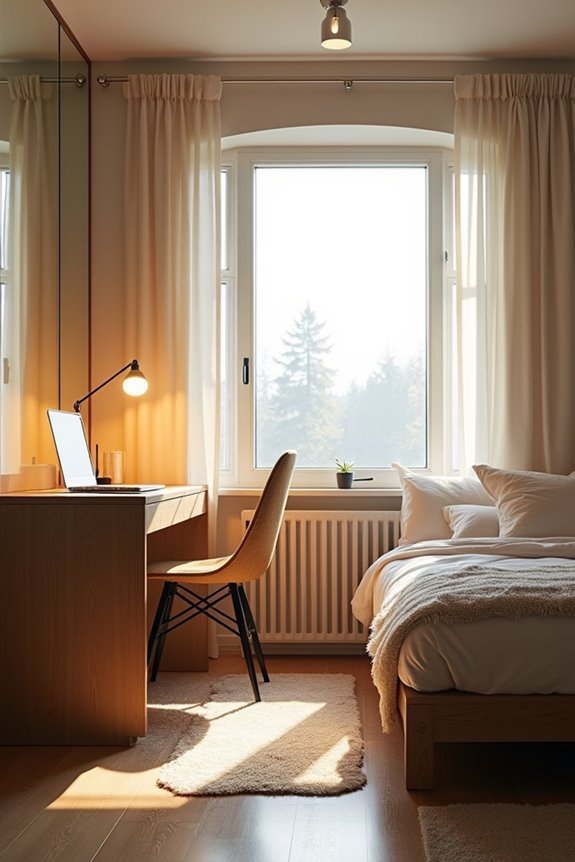
Why does lighting matter so much in a flex bedroom? It’s simple—good lighting transforms how your space functions. I’ve found that layering different light sources lets you shift between work mode and relaxation effortlessly.
| Lighting Type | Purpose | Example |
|---|---|---|
| Natural light | Reduces eye strain, brightens mood | Position desk near windows |
| Task lighting | Supports focused work | Adjustable desk lamp |
| Ambient lighting | Creates overall warmth | Ceiling fixture or floor lamp |
Start by maximizing natural light through sheer window treatments and mirrors. Add task lighting like adjustable desk lamps to reduce eye strain during work. Finally, install dimmer switches so you control the mood instantly. This three-layer approach means you’re never stuck in one lighting situation. You’ll feel more comfortable working, sleeping, or hosting guests—all in the same room.
Pick Colors and Styles That Work Across All Your Uses
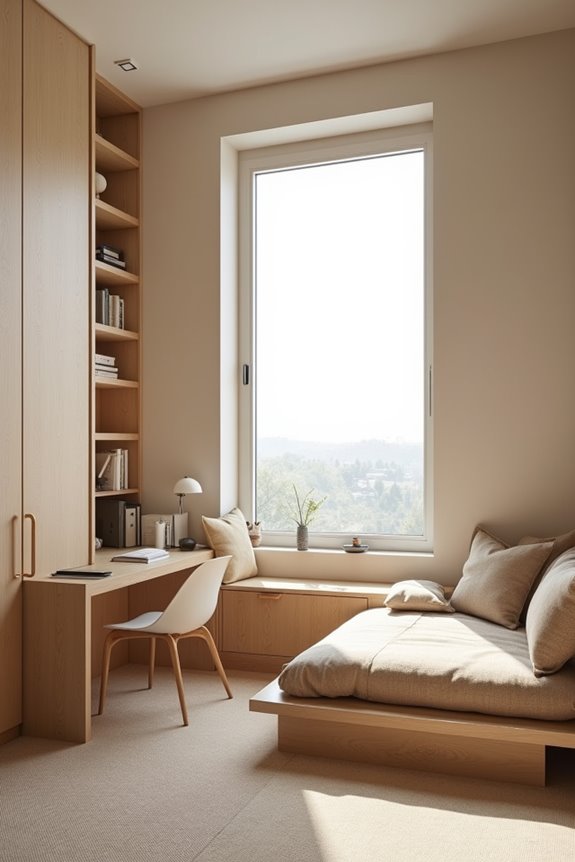
How do you pick colors that won’t feel wrong whether you’re sitting at a desk or sleeping in the same room? I’ve found that a neutral palette is your best friend in a flex room.
Here’s what works:
- Stick with greys, beiges, and whites – These flex room colors create a calm backdrop that supports work, rest, and play without competing for attention.
- Layer in textures instead of bold hues – Wool blends, natural woods, and varied finishes add visual interest while keeping your multi-use space cohesive.
- Match modular furniture to your palette – When your fold-away desk and stackable seating blend seamlessly, the room feels intentional and organized.
A neutral palette gives you freedom. You’re not locked into one mood or purpose. This approach transforms your space into something truly adaptable.
Concealing Furniture Between Uses (Beds, Desks, Gym Equipment)
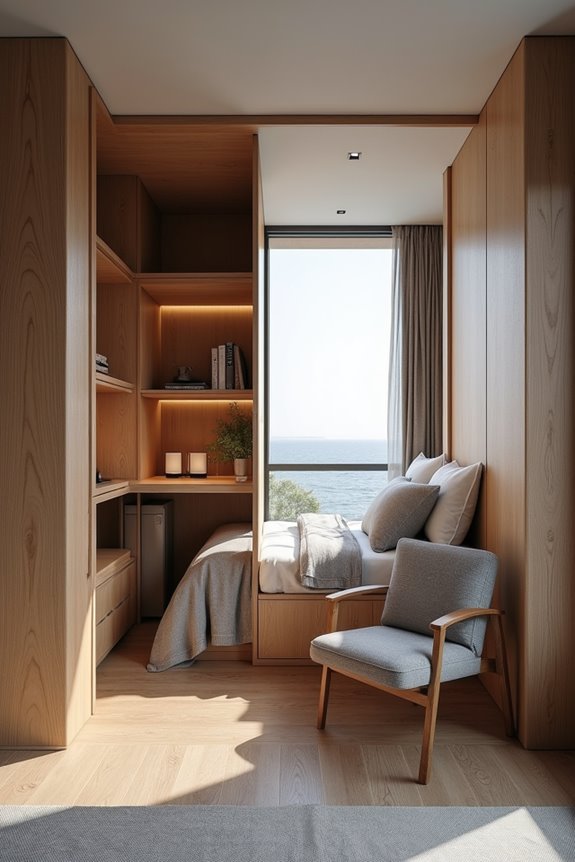
A neutral backdrop sets the stage, but now comes the real magic—making your furniture disappear when you’re not using it. Flexible furniture is your secret weapon here. Murphy beds fold up into the wall, revealing your workout space below. Wall-mounted desks swing away when you’re done working. I recommend investing in hidden storage—ottomans with compartments, under-bed drawers, and floating shelves keep clutter invisible. Your multi-function room transforms instantly when everything has a home. For gym equipment, rolling carts slide into closets. Ori-style solutions lift or fold components to reveal new purposes. The key? Every piece serves double duty and stores compactly. When your space-saving furniture vanishes between uses, your room stays calm and purposeful, whether you’re sleeping, working, or exercising.
Don’t Forget the Details: Soundproofing and Comfort Upgrades
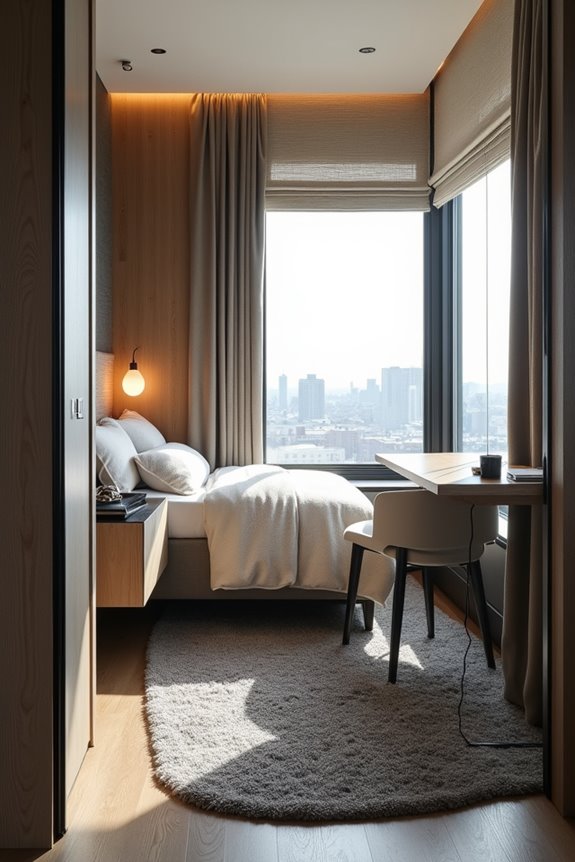
Once you’ve hidden your furniture and established your room’s purpose, soundproofing becomes your next priority. I’ve learned that a quiet flex bedroom transforms how you work, relax, and welcome guests. You’ll want to consider these practical upgrades:
- Mass-loaded vinyl and acoustic panels reduce noise traveling between rooms
- Thick rugs and cushioned underlayment absorb sound while adding comfort
- Door seals and sound-absorbing curtains block outside disturbances
These comfort upgrades work together to create a dedicated multi-purpose space where you can focus during work sessions and enjoy restful guest stays. Your flex bedroom deserves these details because they protect your space’s function from interruptions. When you invest in soundproofing and comfort, you’re investing in a room that actually works for you—and feels genuinely welcoming to everyone who uses it.
Adapt Your Flex Bedroom Across Seasons and Life Changes
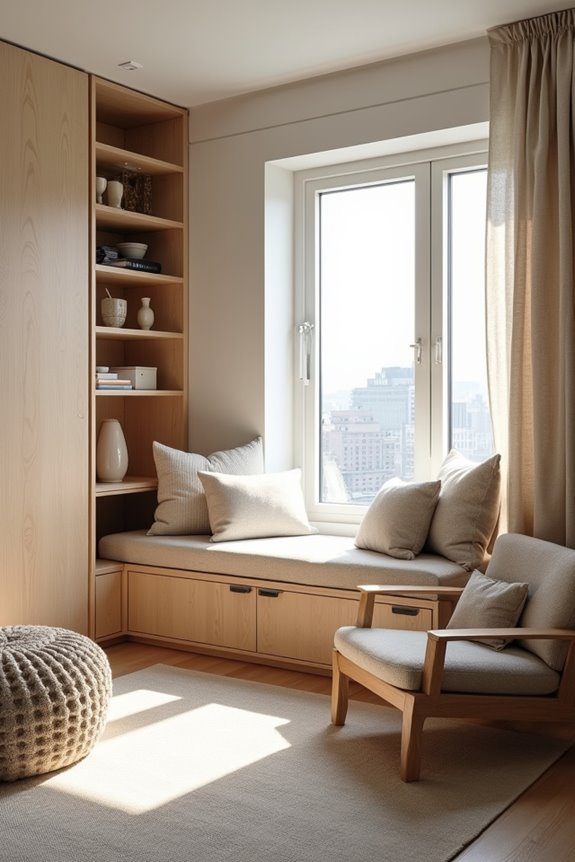
What makes your flex bedroom truly valuable is its ability to shift with you—whether you’re preparing for the holidays, starting a new school year, or entering a different phase of life altogether. I’ve found that planning ahead transforms your space into something that grows alongside you. During winter holidays, swap your work desk for a guest bed. Come September, reconfigure for study sessions. This seasonal adaptability keeps your room fresh without constant redesigns. Your multi-use furniture and smart storage solutions do the heavy lifting here. Store seasonal items in labeled bins, rotate decor seasonally, and assess monthly what your space actually needs. By staying flexible and responsive to life’s changes, you’re not just maintaining a room—you’re building a space that truly works for you.