
No, I’d steer clear of exterior paint in your bathroom. It’ll peel and blister because bathroom humidity traps moisture behind the coating. Plus, exterior paint off-gasses harmful fumes for weeks—causing headaches and respiratory issues—since it’s loaded with chemicals meant for outdoor conditions. Interior bathroom paint handles moisture way better and cures faster in damp air. If you’ve already used exterior paint, repaint with interior-grade mildew-resistant formula. There’s more to know about fixing this properly and choosing the right products.
Why Should You Avoid Exterior Paint in Bathrooms?
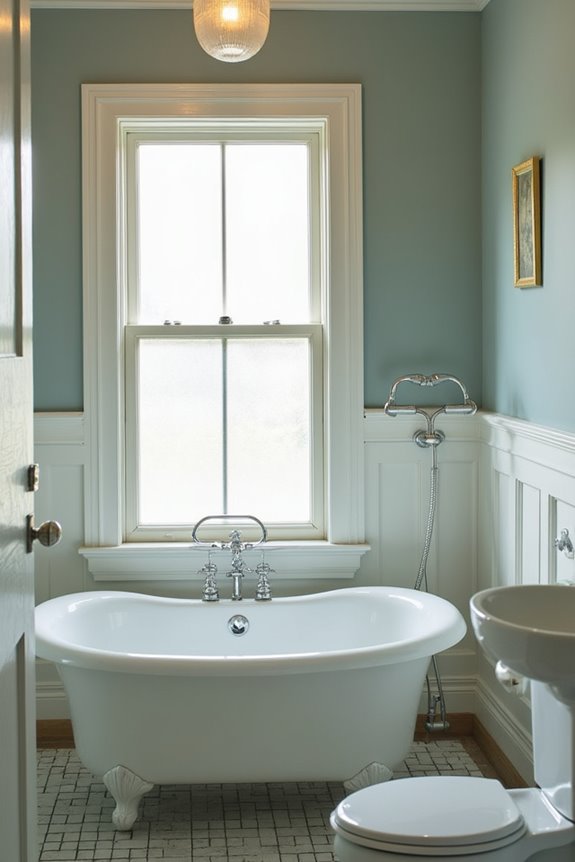
Why would you want to paint your bathroom with a product that’s literally designed for outdoor weather? Exterior paint contains higher VOCs and additives like mildewcides that aren’t meant for indoor spaces. These chemicals off-gas for weeks or months, compromising your indoor air quality even with bathroom ventilation running. Here’s the real problem: humidity accelerates off-gassing, so your moist bathroom becomes a chemistry experiment. The weather-resistant resin in exterior paint bonds to outdoor surfaces, not drywall or tile—you’ll face adhesion problems and poor finishes. Interior paint exists for a reason. It’s formulated for your home’s conditions. Using exterior paint exposes you to unnecessary fumes, potential finish failures, and lingering health concerns. Trust me, interior paint delivers better results and peace of mind.
How Does Bathroom Humidity Ruin Exterior Paint?
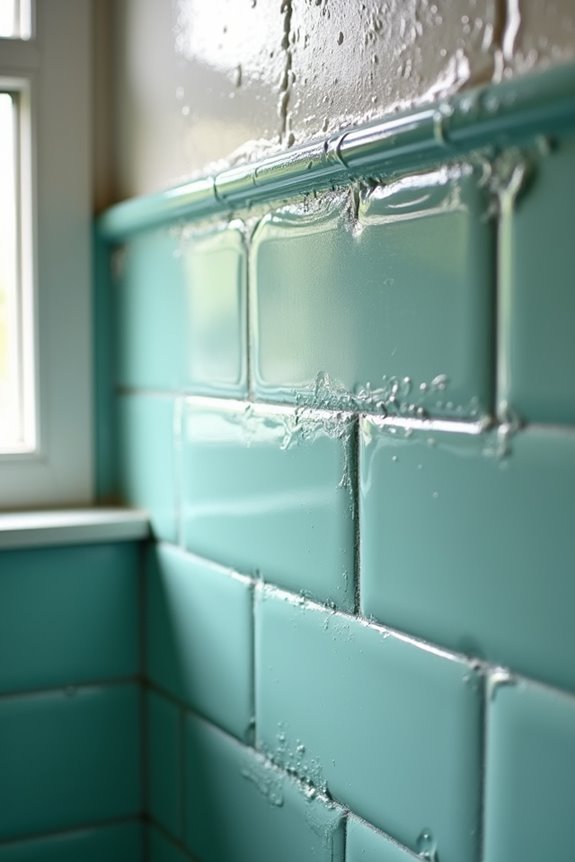
Bathroom humidity creates a perfect storm for exterior paint failure because the moisture seeps behind the paint layer, breaking down the protective barrier that’s supposed to keep water out. When that moisture barrier fails, water gets trapped between the paint and your wall, which gives mold and mildew the damp environment they need to thrive and spread. You’ll likely notice peeling paint, discoloration, or that telltale musty smell within weeks or months—signs that your exterior paint simply wasn’t built to handle constant indoor moisture like interior-grade paint is.
Moisture Barrier Failure
How’s this for a problem: you paint your bathroom with exterior paint, and within weeks the coating starts peeling and blistering.
Here’s what happens. Exterior paint indoors creates a moisture barrier failure because bathroom humidity penetrates the coating faster than it can cure. The volatile organic compounds in exterior formulas need longer cure times, trapping moisture underneath. When moisture intrusion occurs, it compromises your substrate—the wall surface beneath the paint.
This degradation accelerates mold growth, defeating mildew resistance entirely. Your adhesion failure happens because water separates the paint from the wall.
That’s why interior-grade mold-resistant paint works better. It’s designed for humidity and cures quickly in damp conditions. Skip exterior paint indoors. Choose products formulated for bathroom moisture instead.
Mold Growth and Degradation
Moisture doesn’t just sit on bathroom walls—it actively destroys exterior paint from the inside out. Here’s what happens: bathroom moisture creates the perfect environment for mold growth and mildew to thrive behind your paint film. Exterior paint isn’t formulated to handle constant indoor humidity, so adhesion loss follows quickly. Once mold takes hold, you’re facing serious remediation challenges.
Exterior paint contains additives designed for outdoor conditions, not wet bathrooms. When mildew develops underneath, you can’t simply paint over it. You’ll need to strip everything down and apply interior-grade paint with mildew-resistance built in.
Think of it this way: exterior paint in your bathroom isn’t a solution—it’s a temporary Band-Aid that creates bigger problems later. Save yourself time and frustration by choosing moisture-resistant interior paint from the start.
What Health Risks Do VOCs and Fumes Pose?
Why should you care about VOCs in paint? Because what you breathe matters, especially indoors where air gets trapped. Exterior paints contain high VOC levels that off-gas for weeks or months, harming your indoor air quality. I want you to understand the real exposure risks:
- Short-term effects like headaches, nausea, throat irritation, and respiratory irritation hit quickly
- Prolonged exposure damages kidneys, your central nervous system, and liver—particularly risky for kids and pets
- Solvent fumes linger even after paint dries, creating ongoing indoor painting hazards
Ventilation helps, but it’s not foolproof with exterior paint indoors. You’re introducing toxic chemicals into a confined bathroom space. Low-VOC interior paints exist for a reason—they protect your health while still delivering results.
If You’ve Already Painted: How to Fix It?
Don’t panic if you’ve already used exterior paint in your bathroom—you’ve got solid options to fix it. First, boost your bathroom ventilation immediately. Run exhaust fans continuously and open windows to help reduce off-gassing from those VOCs and mildewicides in exterior paint indoors.
Your best solution? Repaint with interior paint designed for bathrooms. This tackles humidity better while eliminating health risks from prolonged off-gassing.
If repainting feels overwhelming, apply a quality interior primer or sealant over the existing exterior paint. This encapsulates the finish, trapping VOCs inside and blocking them from your breathing space.
While ventilation helps, these steps work faster. Monitor yourself for symptoms like dizziness or throat irritation. If problems persist after two weeks, consider professional assessment. You’re taking the right steps toward a safer space.
Which Interior Paints Work Best for Bathrooms?
Now that you’ve fixed the exterior paint problem, let’s talk about picking the right interior paint so you won’t face this issue again. You’ll want to choose paints specifically designed for bathrooms because they handle moisture way better than exterior paint indoors.
Look for these three options:
Mildew-resistant primers, low-VOC formulas, and satin finishes are essential for bathroom paint durability.
- Mildew-resistant or mold-proof interior paints like Zinsser or Kilz Bathroom primers that fight bathroom humidity directly
- Low-VOC or zero-VOC interior paints that reduce harmful fumes and improve your air quality
- Eggshell or satin finishes that resist moisture and clean easily, unlike exterior formulas
Before painting, prep your cabinetry or wall surfaces properly. During painting, use ventilation to keep air fresh. These bathroom-specific products protect your space long-term without the toxins exterior paint brings indoors.
How Do You Ventilate Safely During Painting?
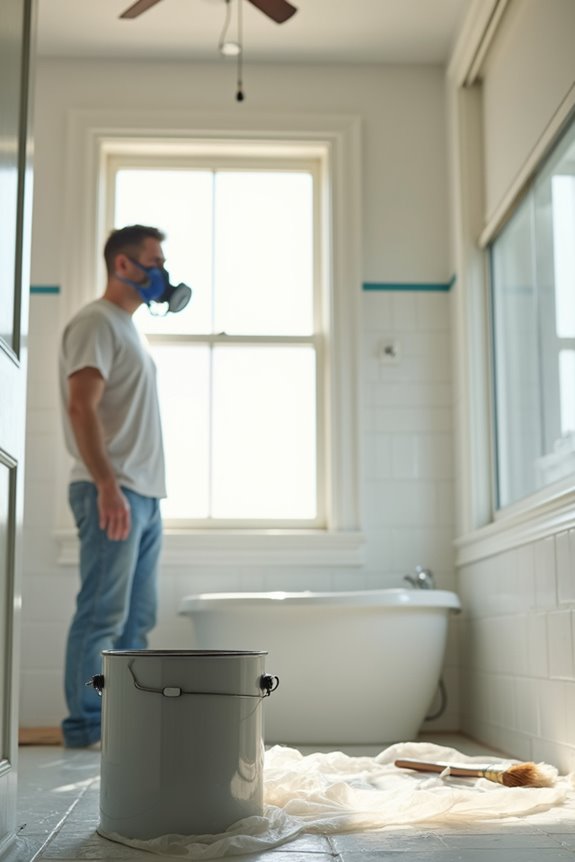
Getting fresh air moving through your bathroom while you paint is just as important as choosing the right product. I recommend opening windows and doors to create cross-ventilation, then running box or ceiling fans to push air outside. This matters because exterior paint indoors ventilation helps manage VOC off-gassing and paint fumes.
Here’s what I’d do: Keep fans running during painting and for hours afterward since the curing period can last days or weeks. Use a respirator protection mask and consider air purifiers with HEPA filters for extra safety.
Check humidity control too—avoid painting when humidity exceeds 70%, as moisture traps fumes longer. Keep kids and sensitive people out during this time. A well-ventilated space isn’t optional; it’s essential for indoor painting safety and your family’s health.