Start by shaking your rug outside to dislodge dirt and debris. Check the care label to confirm machine washing is safe. Pre-treat visible stains—dab makeup with rubbing alcohol, or tackle mildew with equal parts vinegar and water. Remove surface hair with a lint roller. Wash in cold water on a gentle cycle without bleach. Air dry rubber-backed rugs to protect the backing, while microfiber can handle low heat. Blot spills immediately to prevent stains from setting. Ensure complete dryness to stop mold growth. Each material has specific tricks worth exploring further.
Shake Out the Rug to Remove Loose Dirt
Why does shaking matter before you even start washing? Because I’ve learned that removing loose dirt first actually saves you time and effort later. When I shake my bathroom rug outside, I’m dislodging dust, hair, and debris that’d otherwise end up clogging my washer. It’s genuinely the easiest step, yet it makes everything that follows more effective.
Here’s what I do: I take my rug outside and give it a thorough shake, holding it firmly and moving it back and forth. Loose particles fall away instantly. This is especially important for rugs with backing underneath—dirt gets trapped in those fibers. After shaking, I can see the difference immediately. Less grime means less intensive pre-treating needed and better washing results. Trust me, this single step transforms your entire cleaning process.
Check Care Labels for Washing Instructions
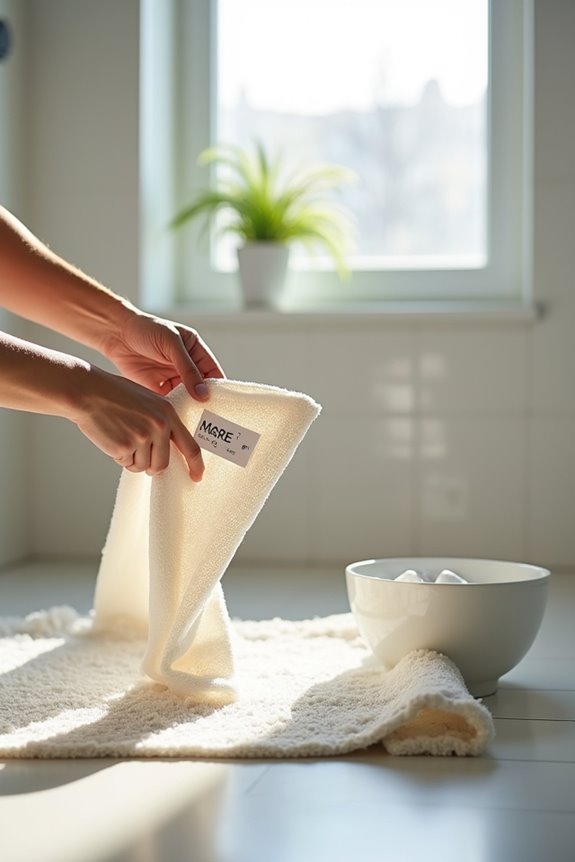
Before you toss that rug into the washing machine, you’ve got to check the care label—and I mean actually read it. I know it’s tempting to skip this step, but trust me, it saves your rug. The label tells you everything: whether it’s machine washable, what cycle to use, water temperature, and how to dry it properly.
| Label Says | What You Do |
|---|---|
| Machine Washable | Use gentle cycle, cold water |
| Hand Wash Only | Wash by hand in sink |
| Air Dry | Lay flat or hang to dry |
| Non-Washable | Skip washing entirely |
| Special Backing | Check for memory foam concerns |
Some rugs have rubber or memory foam backing that needs special care. Follow the drying instructions too—they prevent shrinking and fading. When you’re unsure, the label wins every time.
Pre-Treat Stains Before Washing
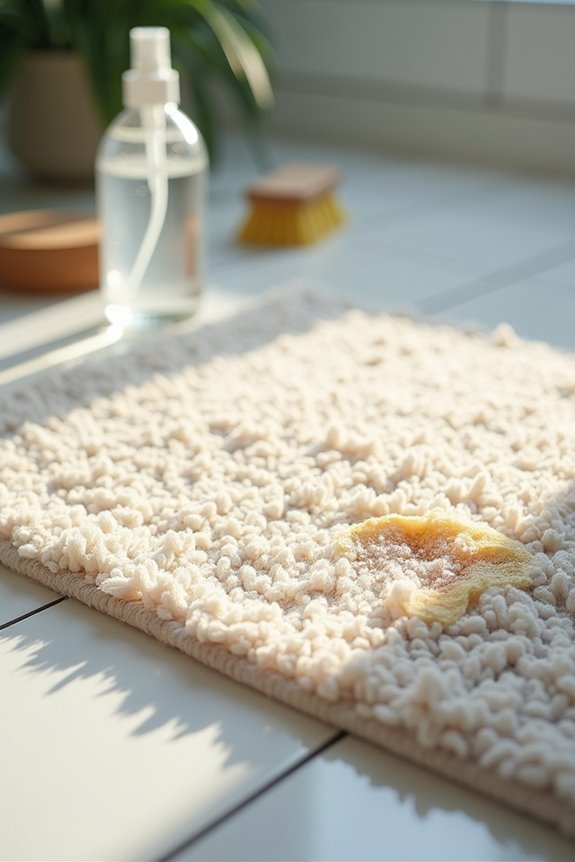
Once you’ve checked the care label, it’s time to tackle any visible stains on your bathroom rug—because washing over stains actually sets them in harder.
I’ve learned that stain pre-treatment makes a real difference. Here’s what works:
- Makeup stains: Dab rubbing alcohol on the spot, then scrub gently with mild detergent and water
- Toothpaste drips: Apply a small amount of mild detergent directly, scrub lightly, and rinse thoroughly
- Mildew spots: Mix equal parts white vinegar and water, let it sit for 10 minutes, then rinse
Before you pre-soak your rug, always blot rather than rub—this prevents fiber damage. After pre-treating, rinse completely to remove residue and avoid transferring stains back onto the rug. Stain removal works best when you act quickly, so don’t skip this step.
Remove Hair and Debris From Bathroom Rugs
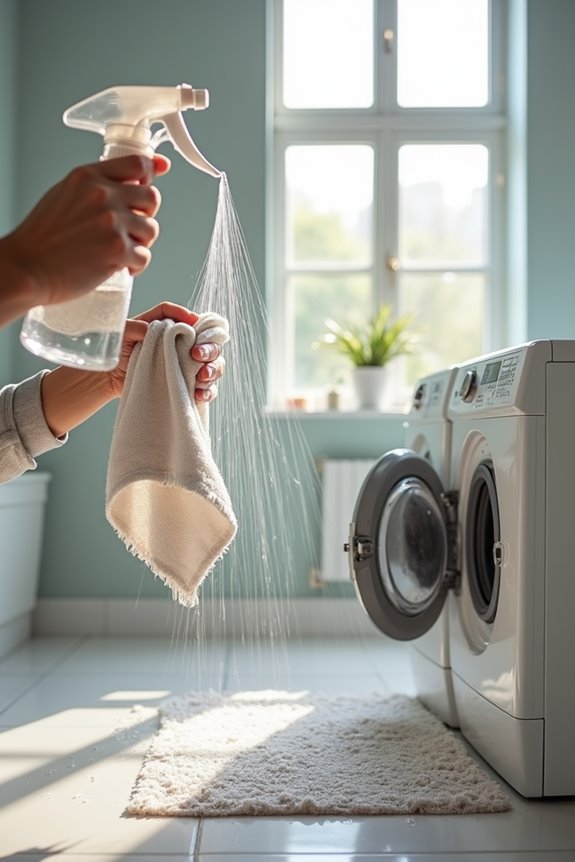
Now that you’ve tackled those stains, it’s time to get rid of all the hair and debris hiding in your rug’s fibers. I start by shaking the rug outside vigorously to dislodge loose particles. Next, I flip it over and wipe the underside backing with a dry brush to remove trapped bits that’d clog my washing machine. Then comes the pre-treat step: I use a lint roller or stiff brush to loosen hair clumps from the surface. This matters because excess hair causes real problems during washing. When I’m ready to load the washing machine, I avoid overcrowding—it’s tempting to do everything at once, but your rugs need space to move freely. An extra rinse cycle afterward ensures nothing’s left behind.
Wash in Cold Water on a Gentle Cycle
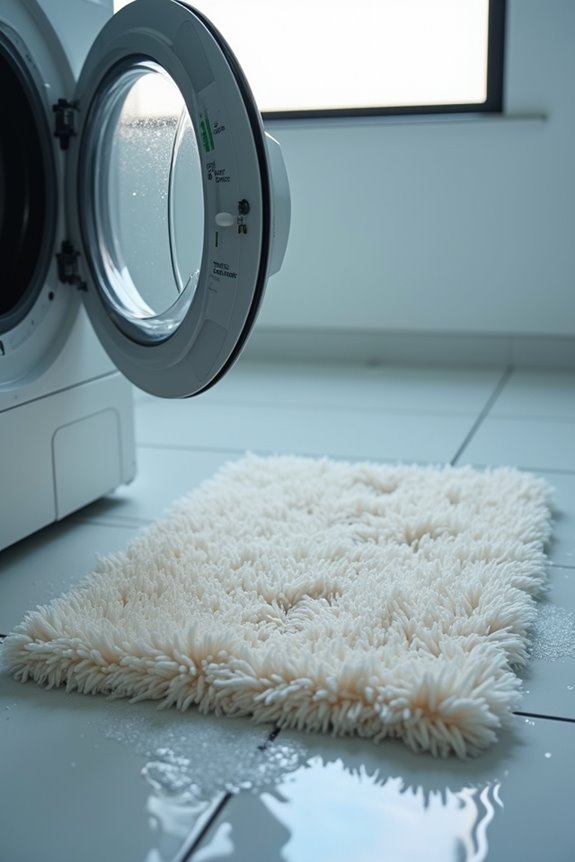
Why’s water temperature so important when washing bathroom rugs? Cold water protects your rugs from damage while still getting them clean. Here’s what I do:
- Fill your machine with cold water only—hot water shrinks fibers and stresses the fabric backing
- Select the gentle or delicate cycle to preserve rug integrity during washing
- Add mild liquid detergent and skip bleach or fabric softeners that reduce absorbency
I’ve found that not overcrowding my machine makes a real difference. I leave plenty of space so water circulates freely. Sometimes I toss in one or two old towels to balance the load and improve rinsing action. This approach keeps my bathroom rugs looking fresh and lasting longer, and honestly, it’s become my go-to routine.
Choose the Right Drying Method by Material

The way you dry your bathroom rugs matters just as much as how you wash them. I’ve found that your backing material and fabric type determine the best drying approach. For rubber-backed rugs, I always skip the machine dryer entirely—air drying protects that backing from damage. Memory foam mats need gentle treatment too; I lay mine flat to air dry rather than risk heat damage. Microfiber and chenille mats benefit from delicate cycles in the dryer on low heat, or I simply hang them up. Bamboo mats require special care—I never fully submerge them and always air dry to prevent warping. Check your care label first; it’s your best guide. When in doubt, air drying keeps your rugs looking fresh longer.
Air Dry Cotton and Microfiber Rugs
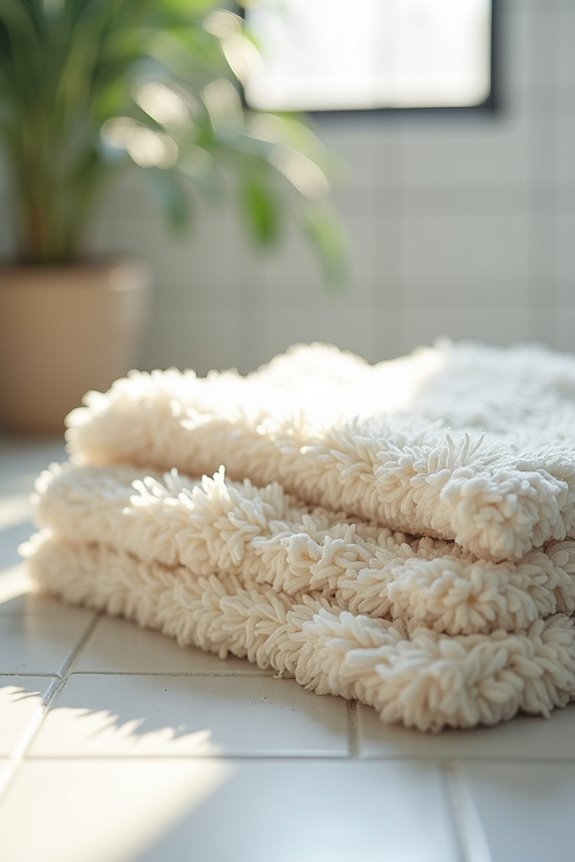
I’ll share my go-to method for air drying cotton and microfiber rugs, which protects them while keeping mold at bay. You’ll want to lay your rug flat or hang it in a well-ventilated space—think a bathroom with the window open or a laundry room with good airflow—and flip it occasionally so both sides dry evenly. While your rug’s drying, give those fibers a gentle shake every few hours to fluff them back up and prevent that annoying lint from settling in.
Choosing Your Drying Location
Where you dry your bathroom rugs matters just as much as how you wash them. I’ve learned that the right location prevents mildew and keeps your cotton rugs in great shape.
Consider these three drying spots:
- Drying rack or clothesline – This lets air flow underneath, preventing moisture from pooling on your floor
- Well-ventilated bathroom – Open a window or run your exhaust fan to reduce humidity
- Sunny outdoor space – Natural light helps eliminate odors and speeds up the air-dry process
I recommend avoiding dark, damp corners where moisture gets trapped. If you’re using low heat indoors, choose a room with good airflow. The goal is complete drying before your rug returns to the bathroom. Trust me, taking time to choose wisely prevents mildew prevention issues down the road.
Preventing Mold and Moisture
Why does air drying matter so much for your bathroom rugs? Because moisture is mold’s best friend, and we’re keeping that uninvited guest out of your home. When you air dry your cotton and microfiber rugs, you’re preventing mold and mildew from taking hold. Here’s what I do: I hang my rugs on a clothesline or shower rod immediately after washing, making sure the underside gets plenty of air circulation. Don’t skip this step—it’s essential washing guidance that protects your rug’s backing from damage. I give mine ample time to dry completely, never rushing the process. By air drying regularly between washes, you’ll minimize moisture that breeds mold. Your bathroom stays fresher, and your rugs last longer.
Protecting Rug Fibers Safely
Now that you’ve got your rugs clean and you’re thinking about drying them, let’s talk about protecting those fibers so they stay soft and last for years.
Your bathroom rugs deserve gentle care during drying. I recommend air drying instead of using heat, which can shrink or damage delicate fibers. Here’s what I do:
- Lay rugs flat or hang them on a clothesline where air circulates freely
- Use cold water if you’re washing delicate materials like microfiber to prevent damage
- Ensure both sides dry completely before placing rugs back down
Skip the machine dryer entirely—especially if your rug has rubber or plastic backing. Be patient while they air dry. This simple approach keeps your bathroom rugs looking fresh and prevents fiber breakdown that leads to fraying or matting.
Keep Rubber-Backed Mats Out of the Dryer
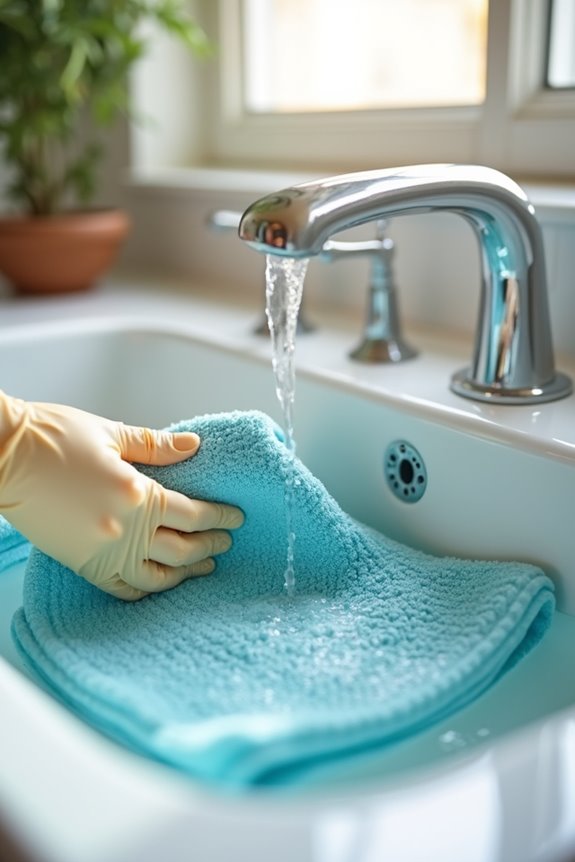
I know it’s tempting to toss your rubber-backed mat in the dryer for quick drying, but here’s the thing: high heat will damage or even melt that rubber backing, ruining your mat. Instead, I recommend laying it flat or hanging it up to air dry completely—this takes longer but keeps your mat in great shape. If you’re in a rush, check your care tag first; some mats allow low-heat tumble drying on the shortest cycle, which gives you a faster option without destroying the backing.
Why Heat Damages Backing
When you toss a rubber-backed bathroom rug into the dryer, you’re basically cooking the backing material—and that is a problem. Heat doesn’t just dry your rug; it breaks down the rubber or plastic layer underneath. I’ve seen this happen countless times, and it’s completely preventable.
Here’s what heat does to your rug’s backing:
- Causes cracking and peeling that spreads over time
- Melts the material, ruining the non-slip properties you rely on
- Degrades the backing permanently, shortening your rug’s lifespan
Even low heat settings can damage the backing gradually. That’s why checking your care tag matters—it’ll tell you exactly what your rug can handle. Air-drying protects your investment and keeps that backing intact, ensuring your rug stays safe and functional for years.
Air-Drying Best Practices
So the thing is: air-drying your rubber-backed bathroom rug is the only way to keep that backing safe and functional. I always use a drying rack indoors or hang mine over the shower rod—this lets air flow underneath and prevents moisture from getting trapped. You can also lay your mat flat on a clean surface or use a clothesline outside to speed things up. Press out excess water gently after washing, but skip the wringing to protect that rubber. Once it’s completely dry, you’re golden. Waiting for full dryness matters because damp conditions invite mold prevention issues in bathrooms. Trust me, taking these extra minutes saves you from replacing your rug down the road.
Low-Heat Dryer Alternatives
Air-drying works best, but I get it—sometimes you need your rug ready faster. If you’re using a dryer for your rubber-backed mat, here’s what I recommend:
- Choose low-heat or air-fluff settings – High heat damages rubber backing, causing cracking and peeling
- Wring out thoroughly first – Remove as much moisture as possible before the machine wash cycle finishes
- Check your care tag – Your mat’s drying instructions matter, so follow manufacturer guidelines
I know rushing to dry your bathroom mat feels necessary, but protect that rubber backing. Low-heat dryers are gentler than air-drying alternatives when you’re short on time. Still, whenever possible, air dry your mat flat or hanging. Your future self—and your mat—will thank you for taking these precautions seriously.
Blot Fresh Spills Before They Set
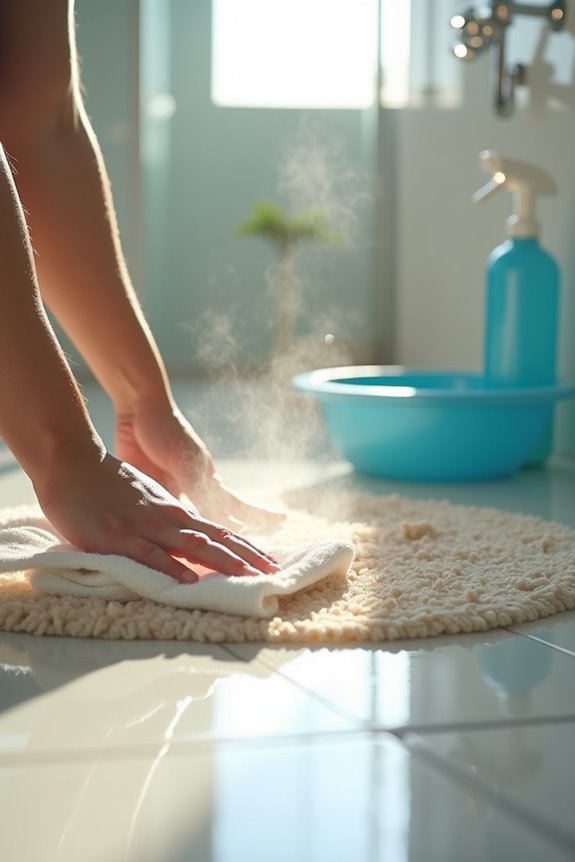
the faster you act, the easier they are to fix. When accidents happen—whether it’s water, soap, or something messier—blotting is your best friend for stain prevention and rug care.
Grab a clean, damp cloth or paper towel immediately. Start from the outside of the spill and work toward the center, blotting gently. This contains the mess instead of spreading it around. Avoid rubbing, which pushes liquids deeper into the fibers and creates set-in stains that’re harder to remove later.
For urine spills, blot thoroughly, then check your rug’s care tag. If machine washing’s allowed, go for it. Otherwise, let it air dry completely on a flat surface. You’re preventing odor and damage—that’s real rug care in action.
Prevent Mold by Allowing Airflow Between Uses
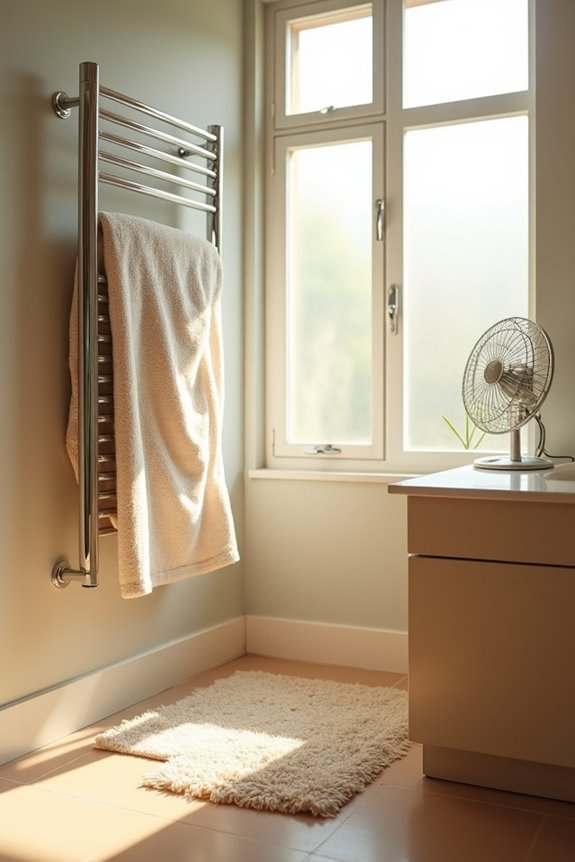
Once you’ve blotted up those spills, keeping your rug dry is what stops mold and mildew from moving in. Here’s the thing: moisture loves bathroom rugs, but you can outsmart it with smart drying habits.
Keeping your bathroom rug dry is the ultimate defense against mold and mildew—outsmart moisture with smart drying habits.
- Place your rug on a drying rack or clothesline between uses to let air circulate underneath
- Shake it outside regularly to release trapped moisture and debris that feeds mold
- Skip the tumble dryer and air-dry instead, using low heat if needed
If your bathroom gets heavy use or has weak ventilation, airflow becomes your best friend. Make drying your rug a priority after every wash. Completely dry rugs won’t develop that musty smell or ugly mold spots. You’re protecting your bathroom and keeping your rug fresh—that’s a win for everyone using that space.