
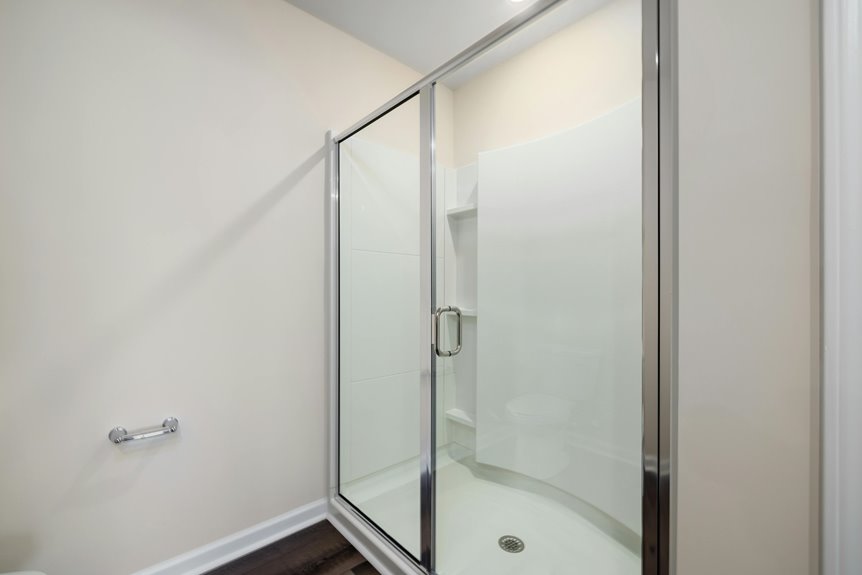
A wet room’s a bathroom where water goes everywhere—literally. The floor slopes gently toward a central drain, so you won’t need a shower enclosure. Every surface gets sealed with waterproof tile and special backing to stop leaks. Sinks and toilets stay positioned away from the spray zone, while continuous tiling keeps moisture contained. It’s essentially a leak-proof system that lets water drain safely. Stick around to discover how these rooms compare to traditional bathrooms and whether they’re worth the investment.
Wet Rooms: Core Design and Waterproofing Explained
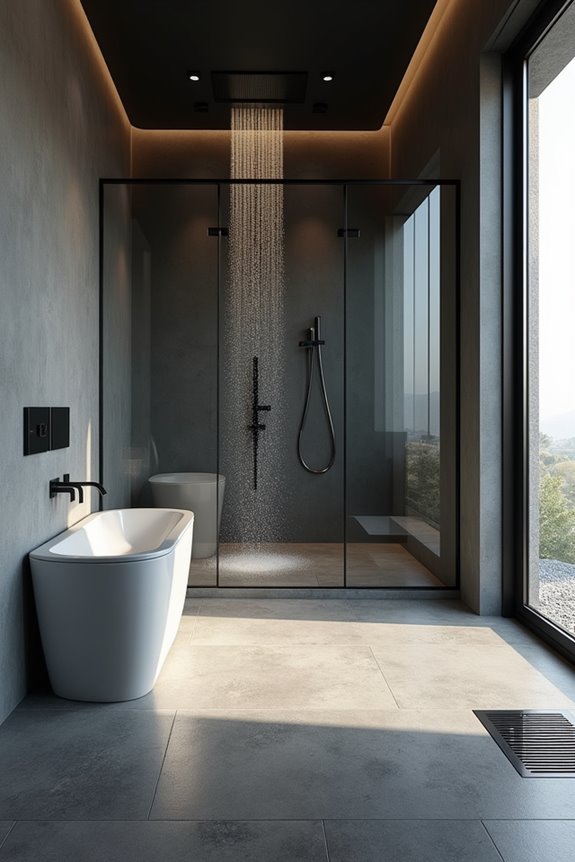
Have you ever stepped out of a shower and worried about water sneaking into the walls?
A wet room eliminates that concern. I’ll explain how this fully tiled bathroom design works. The space features a level floor that slopes gently toward a central drain, so water naturally flows where it needs to go. Waterproofing is continuous across walls, floors, and backer boards—creating one sealed system that stops leaks before they start.
The magic happens through continuous tiling, which covers every surface without gaps or seams. This protects your shower area from moisture damage. Proper ventilation completes the picture, preventing mold and mildew buildup. Together, these elements create a durable, modern bathroom you’ll trust for years.
Wet Rooms vs. Traditional Bathrooms: Key Differences
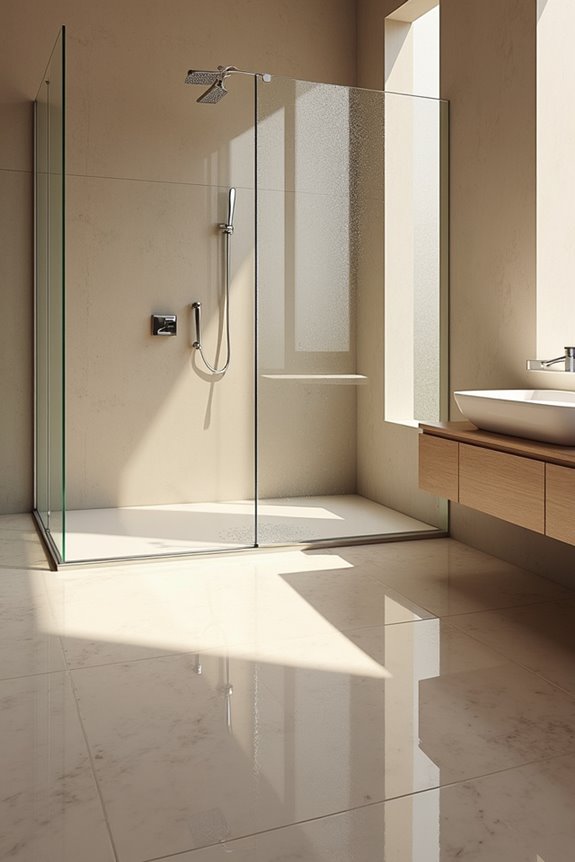
When you compare a wet room to a traditional bathroom, you’ll notice they’re built on completely different principles. Traditional bathrooms rely on shower enclosures and separate zones to contain water, while wet rooms embrace it everywhere. Your wet room features continuous waterproofing across all surfaces and a level floor that slopes toward a central drainage system—no barriers needed.
The key difference? Moisture resistance. Wet rooms use seamless tiling and specialized waterproofing that prevents leaks, whereas traditional bathrooms depend on contained spaces. You’ll also appreciate the barrier-free, open layout of a wet room, which creates accessibility and easier cleaning compared to traditional bathroom designs with multiple fixtures and enclosed areas.
The Appeal: Why Homeowners Choose Wet Rooms
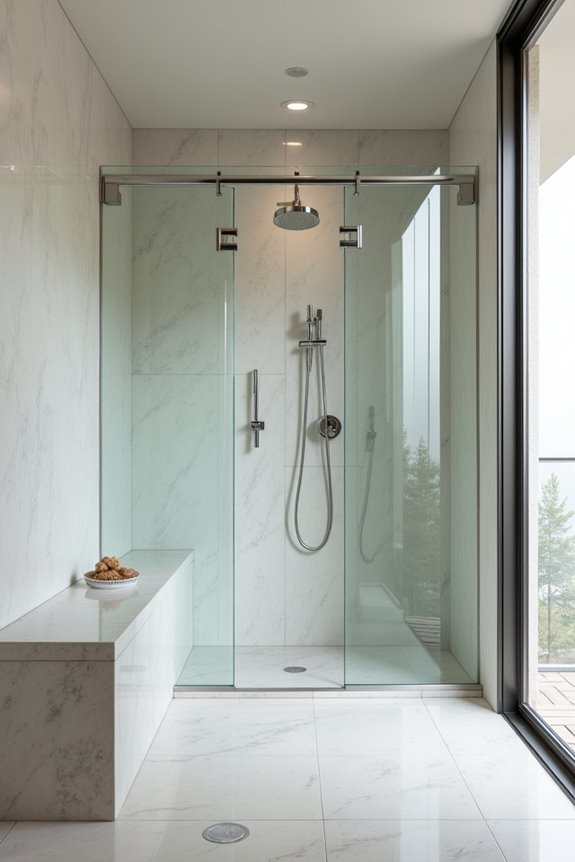
Why are wet rooms becoming a popular choice for homeowners everywhere? I’ll tell you—they’re transforming how we think about bathrooms.
You get a spacious, open-plan bathroom that feels larger and brighter than traditional setups. The level floor with a central drain eliminates tripping hazards, making your space safer as you age in place. No shower enclosure means less grime buildup, so cleaning takes minutes instead of hours.
The minimalism appeals to modern tastes while boosting your home’s resale value. But here’s what really matters: accessibility. Whether you’re aging, managing mobility challenges, or simply wanting easier daily routines, a wet room adapts to your needs. The waterproofing handles everything—spills, splashes, moisture—without worry.
You’re investing in a bathroom that grows with you, honestly.
Building Your Wet Room: Drains, Spacing, and Smart Placement
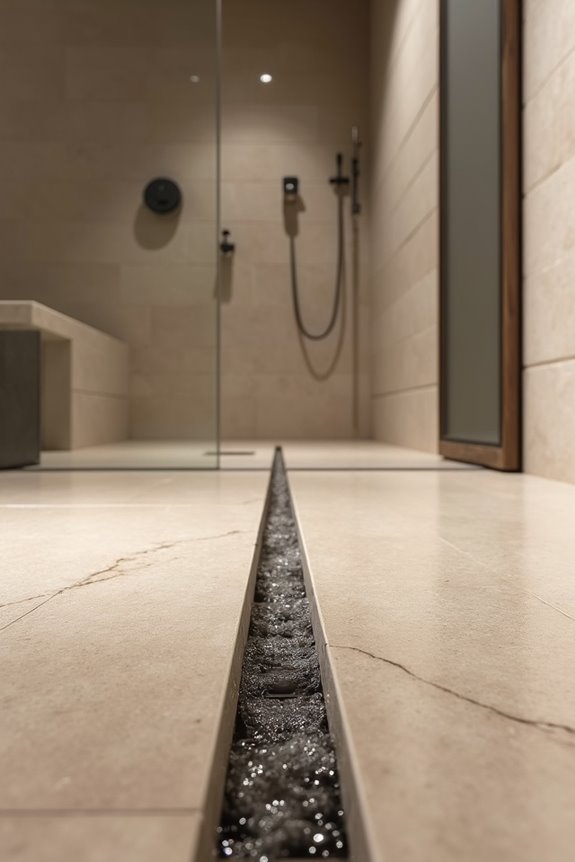
The magic of a wet room happens beneath the surface, where smart drain placement and thoughtful floor design work together to keep water moving where it belongs. I recommend positioning your central drain in the shower area itself, then sloping your floor gradient toward it—typically a quarter-inch drop per foot. This prevents pooling and keeps moisture controlled.
Next, think strategically about spacing. I’d suggest placing sinks and toilets away from direct spray zones to minimize water exposure and reduce mold risk. For durability, invest in quality backer boards and tile selection rated for wet environments. Finally, don’t skip ventilation—it’s your silent partner against humidity buildup. Proper waterproofing across walls, floors, and sometimes ceilings completes the system. These details transform your wet room from a concept into a functional, lasting space.
Wet Room Costs and Maintenance: What to Expect Long-Term
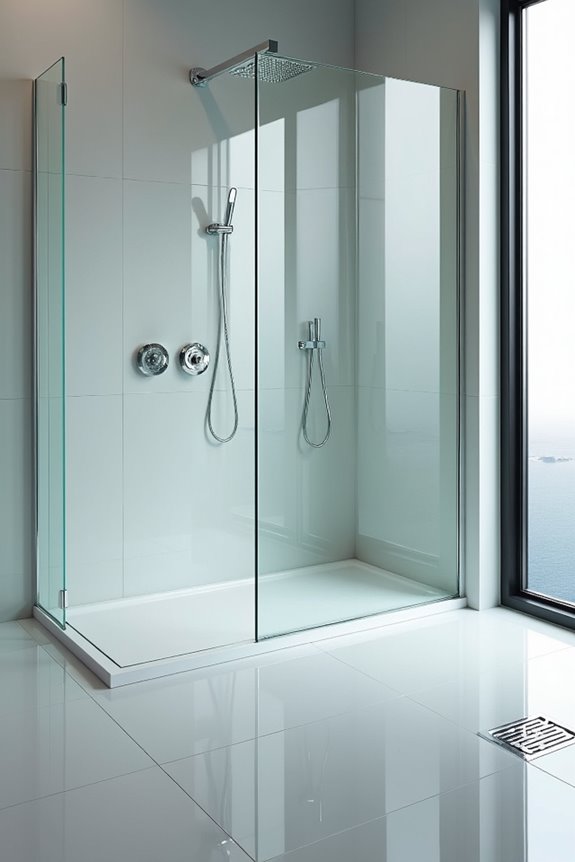
How much should you really budget for a wet room? You’re looking at 20 to 30% more than standard bathrooms. A typical renovation costs $125 per square foot, so a 144 sq ft wet room runs roughly $21,600. That premium covers critical waterproofing and proper drainage systems.
| Maintenance Task | Frequency | Why It Matters | Cost Impact |
|---|---|---|---|
| Waterproofing inspection | Annually | Prevents leaks and water damage | Saves thousands later |
| Ventilation checks | Monthly | Stops mold and mildew growth | Low-cost prevention |
| Tile sealing | Every 2-3 years | Protects shower floor integrity | Extends lifespan significantly |
| Central drain cleaning | Quarterly | Maintains proper water flow | Prevents backups |
Long-term, you’ll appreciate fewer fixtures and no shower doors to clean. Your tile sealing becomes your best friend—it’s what keeps everything protected. With quality waterproofing and solid ventilation, your investment stays beautiful for years. You’ve got this.