
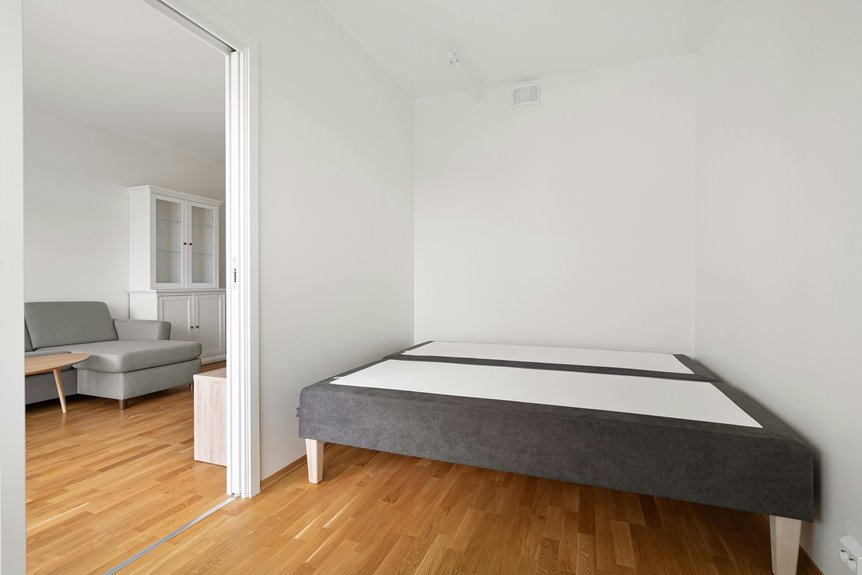
Yes, a room needs a window to be legally classified as a bedroom. That window must meet specific requirements: at least 5.7 square feet of clear opening (5.0 on ground level), minimum dimensions of 20 inches wide by 24 inches tall, and a sill height no higher than 44 inches. This isn’t just about natural light—it’s your emergency escape route. Without a compliant window or exterior door, inspectors won’t classify it as a bedroom, which hurts your home’s value. The specifics vary by location, so checking your local building codes first gives you the full picture.
Does a Bedroom Really Need a Window? Yes: Here’s Why
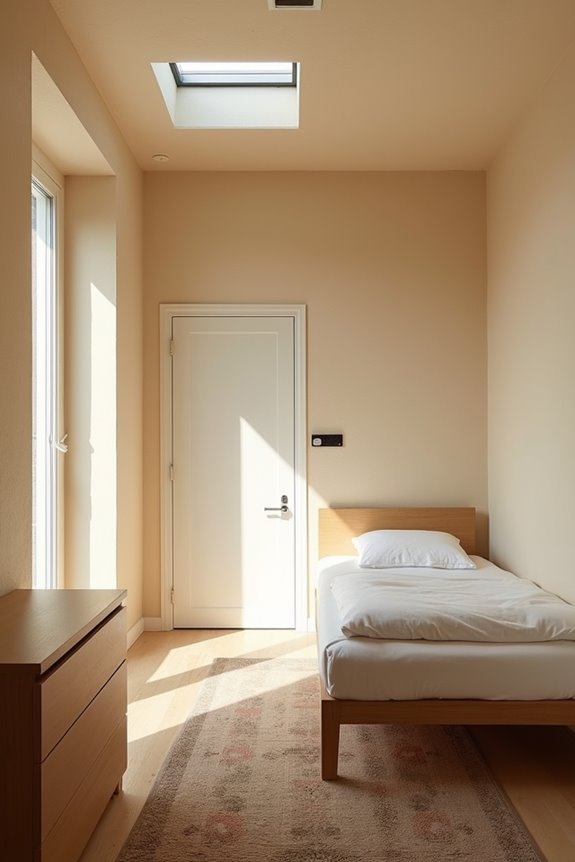
Why does a window matter so much for a bedroom? I’ll tell you—it’s about safety and legality. Building codes require windows because they provide natural light and, more importantly, an emergency exit route. That’s where egress windows come in. These special windows must open easily from inside and meet a minimum size requirement, typically around 0.35 m². This matters because if fire or another emergency happens, you need a quick way out. Your bedroom window also needs to let in enough natural light—at least 5% of your floor area in Ontario. Without a compliant window, many jurisdictions won’t recognize your room as a legal bedroom. It becomes a bonus room instead. That’s not just a label—it affects your home’s value and your family’s safety.
What the IRC Says About Legal Bedroom Windows
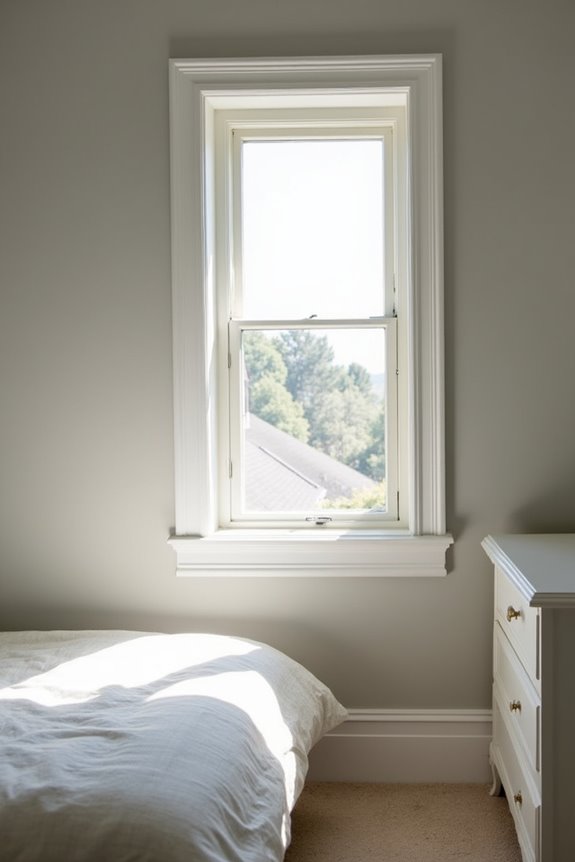
The International Residential Code—or IRC, as building pros call it—sets the standard that most of the U.S. follows for legal bedrooms, and it backs up everything I mentioned about windows. Here’s what you need to know: your bedroom’s egress window must provide a net clear opening of at least 5.7 square feet (5.0 sq ft for ground-level rooms). The width needs to be 20 inches minimum, height 24 inches minimum, with a sill height no higher than 44 inches. Your operable window must open fully from inside without keys or tools—that’s your emergency escape route. Without a compliant egress window or exterior door, your room simply doesn’t qualify as a legal bedroom under IRC standards.
Your State’s Specific Requirements: Where to Find Them
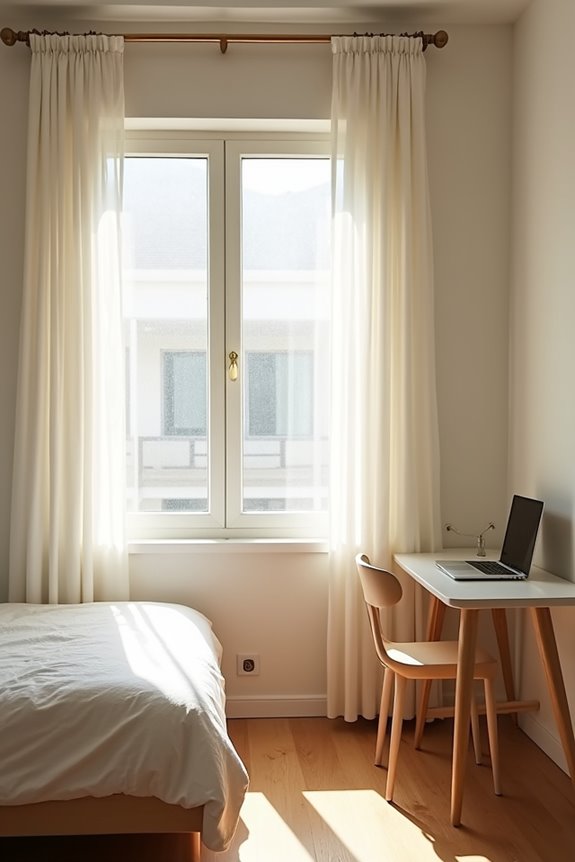
How do you know what rules apply to your bedroom? Your state and local building codes hold the answers. They’re the official guides that determine whether your room qualifies as a legal bedroom.
Finding your specific requirements takes a few steps:
- Contact your local building department or code enforcement office
- Visit your state’s building code website for amendments to the IRC
- Ask your real estate agent or appraiser about regional egress standards
States like Georgia, North Carolina, and Ontario modify window requirements differently. Some allow an exterior door as an alternative to an egress window. Others adjust sill heights or natural light provisions.
Your local building codes trump the IRC’s baseline standards. Don’t assume national rules apply—your jurisdiction might have stricter requirements. Making this call ensures your bedroom counts legally.
Minimum Egress Window Size and Dimensions Explained
Just when you think you’ve got the window requirement down, there’s more to it—your egress window needs to meet specific measurements. I want to walk you through the numbers so you can confidently check whether a window qualifies.
Your minimum net clear opening must be 5.7 square feet (or 5.0 sq ft for ground-floor rooms). The window dimensions matter too: you’ll need at least 20 inches wide and 24 inches tall. Here’s the practical part—measure your sill height from the floor. It can’t exceed 44 inches, ensuring safe emergency egress during an escape.
Think of it this way: these measurements exist so you can actually climb through quickly if needed. Your bedroom ventilation and safety depend on windows meeting every single requirement.
Why Sill Height Matters in a Fire
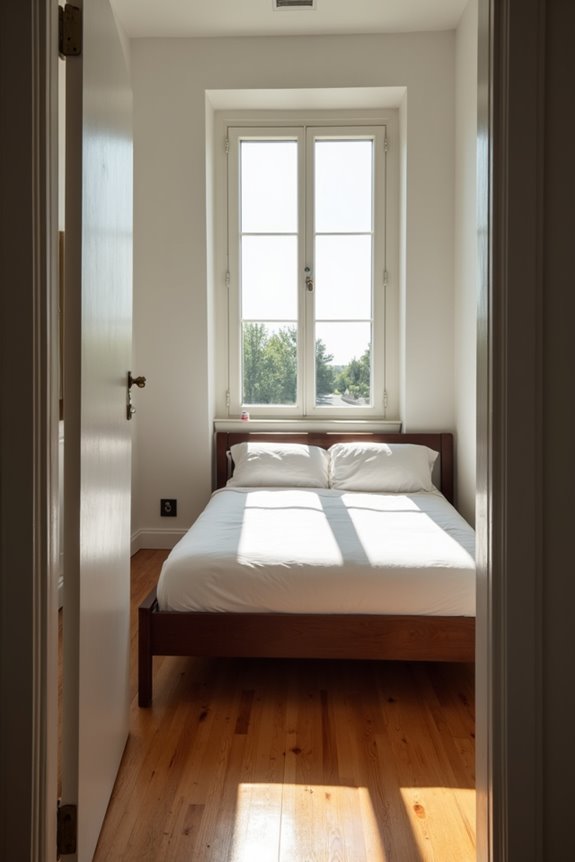
Why does a window’s distance from the floor matter when you’re trying to escape a fire? I’ll tell you—it’s about survival. Building codes limit sill height to 44 inches above the floor, and here’s why that matters for fire safety:
- Lower sills let you exit quickly without climbing or jumping
- High sills force you to sit on the ledge, wasting critical seconds
- Children and elderly people especially struggle with elevated windows
As someone who cares about your family’s safety, I want you to understand this simple rule protects legal bedroom requirements. When fire strikes, you need means of escape that work instantly. An egress window with proper sill height removes obstacles between you and safety. This measurement isn’t just regulation—it’s lifesaving design.
Operable Windows vs. Fixed Windows: What Works
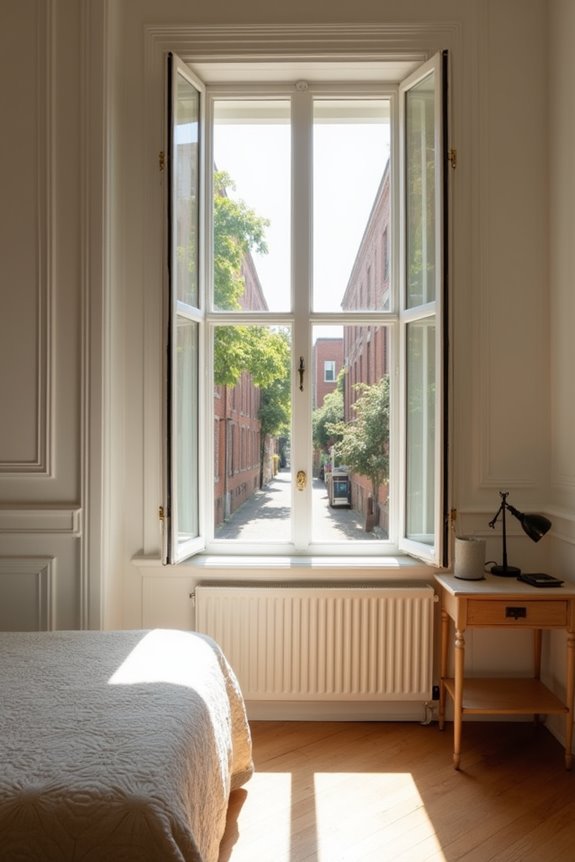
Picture windows look beautiful, but they won’t save your life in an emergency—and that’s the critical difference between fixed and operable windows when it comes to bedroom safety.
Here’s the thing: an operable window lets you escape. A fixed window doesn’t. Building codes require your egress window to open from inside without keys or tools. You need at least 5.7 square feet of unobstructed opening (5.0 on ground floors).
Think about minimum opening dimensions: 24 inches tall by 20 inches wide, with your sill no higher than 44 inches. That’s your means of escape route.
Fixed windows look great, but they’re legally worthless for egress. You can’t crawl through glass. Choose operable windows—they’re your genuine safety feature, your real means of escape when it matters most.
Basement Bedrooms: Adding Egress Windows and Wells
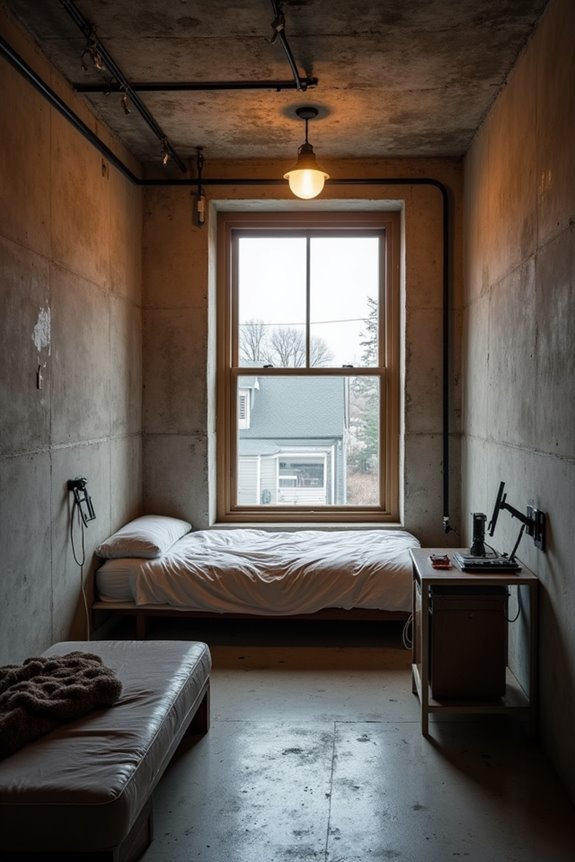
If you’re finishing your basement into a bedroom, you’ll need to install an egress window—it’s not optional, it’s a safety requirement. I’ll walk you through what that means: the window opening must measure at least 5.7 square feet with a 20-inch width and 24-inch height, and the sill can’t sit higher than 44 inches off the floor. Once you’ve got the window framed, the window well itself becomes critical because it needs proper clearance and safety features (like a ladder for deeper wells) so you can actually escape in an emergency.
Egress Window Installation Requirements
When you’re turning a basement into a bedroom, you’ll need to think seriously about how people get out in an emergency—and that’s where egress windows come in. I’ll walk you through what makes a compliant installation.
Your egress window must meet three key requirements:
- Opening area of at least 5.7 square feet with minimum dimensions of 20 by 24 inches
- Sill height no higher than 44 inches from the floor for easy escape
- Full operability from inside without keys or special tools
You’ll also need a properly designed window well with at least 550 mm of clearance and protective enclosure. If your well exceeds 44 inches deep, you’re adding ladders or steps. Check your local code—amendments vary by jurisdiction, so verify requirements before installation begins.
Window Wells and Safety Standards
Now that you’ve got your egress window opening sized correctly and positioned at the right height, the window well itself becomes your next focus—and honestly, it’s just as important as the window.
Your window well needs at least 21.7 inches of clearance around it for compliance. Think of this space as your safety buffer. If your well goes deeper than 44 inches, you’ll need to install a ladder or steps so someone can actually climb out during an emergency.
The well itself requires a protective enclosure to keep debris and water out, which protects your minimum opening area. This enclosure also supports ventilation around the egress window. These standards exist because a perfect window means nothing if someone can’t safely access it when they need to escape.
Charlotte Basement Code Compliance
the city requires a safe way out, and that typically means installing an egress window or door.
When you’re adding a bedroom egress window, Charlotte code specifies these critical measurements:
- Opening area must be at least 5.7 square feet
- Width and height must each exceed 20 and 24 inches respectively
- Window sill height cannot exceed 44 inches above the floor
Your window well needs proper clearance too—at least 21.7 inches for escape. If your well’s deeper than 44 inches, you’ll need a ladder or steps inside it.
Alternatively, a compliant exterior door on the basement level satisfies your egress requirement entirely. Either way, you’re creating a safe basement bedroom that meets Charlotte standards and gives you genuine peace of mind.
Attic Bedrooms: Why Egress Installation Is Challenging
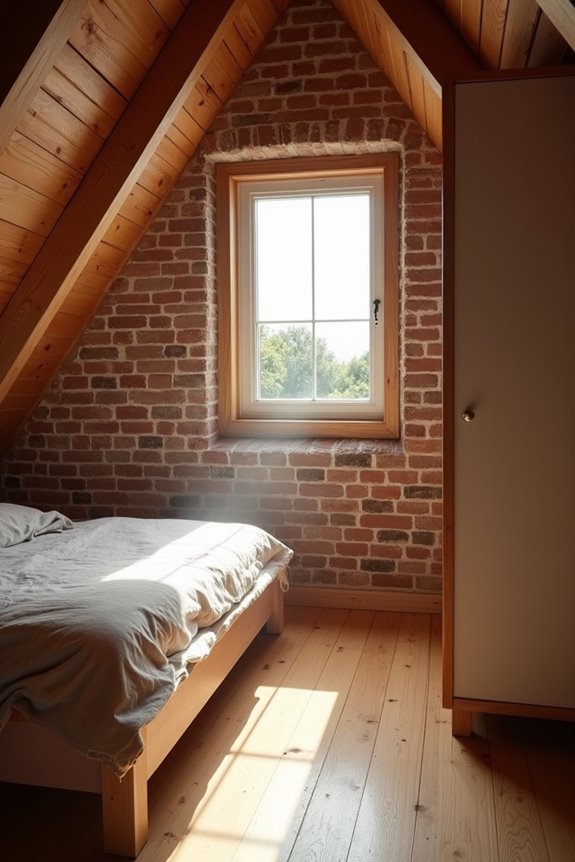
Why does adding a bedroom in your attic turn into such a complicated project? The answer lies in egress requirements. Your attic bedroom needs a legal escape route, and that’s where things get tricky.
A compliant window must meet strict standards: at least 5.7 square feet of opening space, 20 inches wide by 24 inches tall, with a sill no higher than 44 inches. If your existing window falls short, you’ll need a code compliance solution.
Here’s the real challenge: window wells often require professional installation. Deep wells demand ladders or steps, adding complexity and cost. Sometimes you’ll need an exterior door instead.
I’d recommend consulting a local professional who understands your jurisdiction’s codes. They’ll verify whether your attic space can legally become a bedroom without expensive surprises later.
How to Measure Your Window for Code Compliance
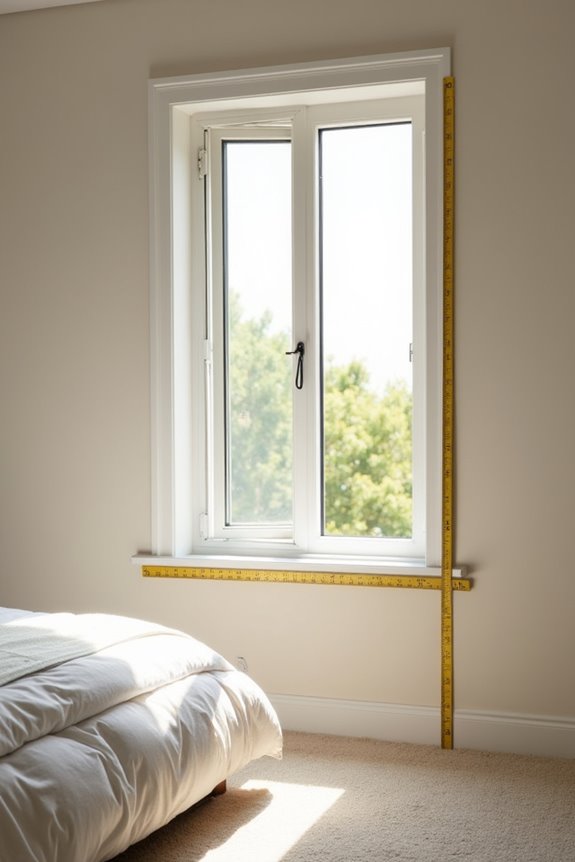
I’ll walk you through measuring your window so you can verify it actually meets code requirements, because a window that looks big enough might fall short when you measure it carefully. You’ll need to check two critical measurements: the net clear opening area (which must be at least 5.7 square feet for most bedrooms) and the sill height from the floor (which can’t exceed 44 inches). Getting these measurements right is what separates a bedroom that’ll pass inspection from one that’ll get flagged by your inspector.
Measuring Net Clear Opening
Ready to find out if your window actually meets code? Let’s measure your net clear opening—the actual space you can fit through. Here’s what you’re checking:
- Width must be at least 20 inches
- Height must be at least 24 inches
- Total area needs 5.7 square feet (5.0 if you’re on the ground floor)
Measure from the inside edges of the window frame, not the glass itself. Check your sill height too—it can’t sit higher than 44 inches above your floor. This matters because you’re planning an emergency exit, and these dimensions ensure you can actually escape quickly.
If your window falls short, don’t worry. A compliant exterior door on the same floor works just as well for egress requirements. You’ve got options.
Verifying Sill Height Requirements
Now that you’ve confirmed your window’s opening dimensions, there’s one more measurement that can make or break your egress setup: the sill height.
Your egress window sill must sit no higher than 44 inches from the floor. Why? Because you need to reach and operate it quickly during an emergency without climbing or using tools.
Here’s how to measure: Use a tape measure from your floor straight up to the sill’s bottom edge. If you’re checking basement egress, measure from the basement floor itself.
The goal is simple: ensure your minimum clear opening stays accessible. A window that’s too high defeats the purpose, even if it meets size requirements. Getting this right means you’ve truly verified your window qualifies as legal bedroom egress.
Non-Compliant Bedrooms Lower Your Home’s Appraisal Value
Why does calling a room a bedroom matter so much when you’re selling your home? Here’s the truth: noncompliant bedrooms seriously hurt your appraisal value. If a room lacks a proper egress window or exterior door, it’s not a legal bedroom—it’s a bonus room or office instead.
Noncompliant bedrooms without proper egress windows seriously hurt your home’s appraisal value and market appeal.
This distinction matters financially. Here’s what happens:
- Your official bedroom count drops, reducing market appeal
- Appraisers list noncompliant bedrooms separately, lowering overall property value
- Buyers hesitate, knowing they can’t legally call it a bedroom
Think of it this way: you’re essentially leaving money on the table. A room without proper ventilation and egress doesn’t meet building codes, so it won’t count toward your home’s value. That missing window or inadequate sill height transforms your three-bedroom into a two-bedroom home—and buyers notice that difference immediately.
Egress Window Installation: Costs and Timelines
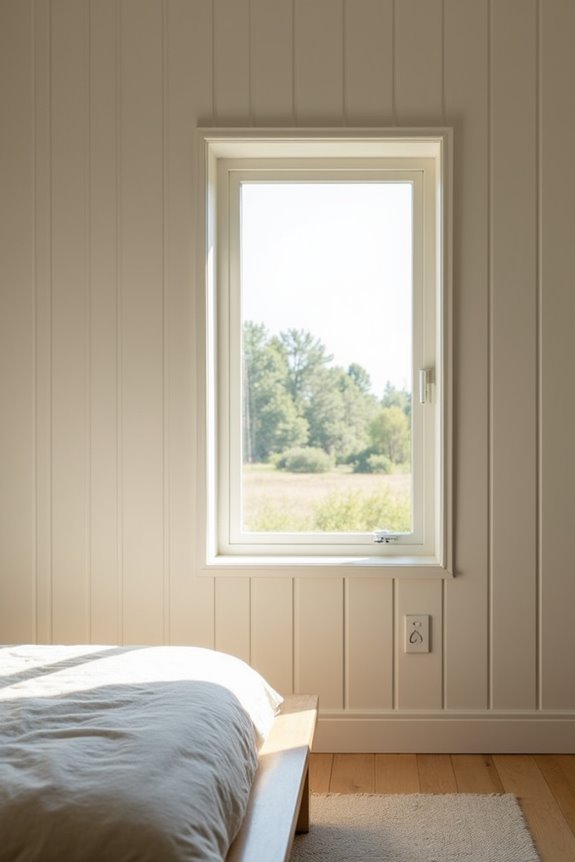
If you’re planning to add a legal bedroom to your home, I’ve got to be honest with you—installing an egress window isn’t cheap, typically running between $2,000 to $5,000 or more depending on how complicated your situation is. The timeline usually stretches across several weeks because contractors need to excavate a window well, install the window itself, and potentially add a ladder or steps if the well’s deeper than 44 inches. Understanding both what you’ll spend and how long it’ll take helps you plan your project realistically and budget accordingly.
Cost Factors And Budget
When you’re ready to make your bedroom legally compliant with an egress window, your wallet’s going to feel the impact—and understanding those costs upfront makes planning easier. I’ve found that most egress window projects run between $2,000 and $5,000, though your specific situation might differ.
Several factors shape your final bill:
- Basement window wells require excavation and protective enclosures, adding significant labor costs
- Drainage systems prevent water damage and increase the overall investment
- Professional installation ensures your window meets minimum size requirements and means of escape standards
Location matters too. If your home’s foundation sits on rocky soil, excavation takes longer. If you’re installing multiple egress windows for means of escape compliance, you’ll negotiate better pricing. I’d recommend getting three quotes before committing.
Installation Timeline Expectations
How long you’ll wait for your egress window depends on several moving parts working together. You’re looking at several weeks from start to finish, honestly.
Here’s what happens: First, you’ll need permits from your local building department—that’s typically one to two weeks. Next comes site preparation and excavation for your window well, which takes about a week. Then the actual window and well installation occurs, usually within days. Finally, inspections happen once everything’s complete.
The timeline stretches longer if your well needs special drainage solutions or if inspections reveal safety issues with your well enclosure or ladder placement. Weather delays site work too. Plan for four to six weeks minimum. Getting your permits early keeps things moving smoothly, so start that conversation with your local inspector today.
Selling a Home With Non-Compliant Bedrooms: What to Expect
Discovering that your home’s extra bedroom doesn’t meet legal standards can feel like a curveball right when you’re ready to sell—but you’re not alone in facing this situation, and there are concrete steps you can take.
Discovering your extra bedroom doesn’t meet legal standards can feel like a curveball, but you’re not alone and concrete steps exist.
When a basement bedroom or bonus room lacks proper egress window or independent exit, expect these challenges:
- Appraisers may reduce your home’s value substantially
- Inspectors will flag bedroom compliance issues in reports
- Buyers might request repairs or price reductions
You’ll need to relabel the space honestly—calling it a bonus room or office instead of a bedroom. Consider upgrading the egress window to meet local codes before listing; this investment often pays dividends. Otherwise, transparency about room classification protects you legally and builds trust with serious buyers.
Why a Windowless Bedroom Is a Fire Hazard
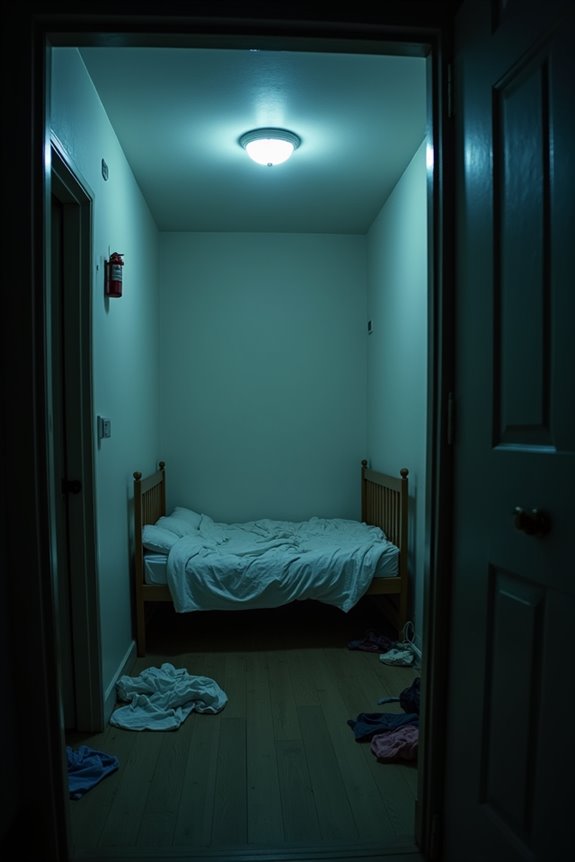
Think about what happens in a fire—you need a fast way out, and a windowless bedroom traps you. Without an egress window, you’re stuck if smoke blocks the hallway. That’s why building codes require a minimum opening area of at least 5.7 square feet for fire safety.
An egress window gives you a direct escape route to safety. It’s your second means of egress when the door isn’t an option. Firefighters can also use it for rescue if you’re trapped inside.
A windowless bedroom forces you into a single escape path. If that path fills with smoke or flames, you’re genuinely at risk. Installing a compliant egress window isn’t just about following rules—it’s about protecting yourself and your family when seconds matter most.
Converting a Room Into a Legal Bedroom: Step-by-Step
To convert your room into a legal bedroom, you’ll need to tackle three main areas: checking what your local building code requires, installing a proper egress window if your room doesn’t have one, and making sure you’ve got adequate heating and ventilation in place. I’ll walk you through each step so you know exactly what inspectors will be looking for when they evaluate your space. Let’s start by assessing where your room currently stands against these requirements.
Assessing Current Code Compliance
Before you break down walls or install windows, you’ll want to check what your current space actually has—and what it’s missing.
Start by measuring your room. You’ll need to verify these essentials for a legal bedroom standards:
- Minimum bedroom size of 70 square feet with no wall under 7 feet
- Ceiling height reaching at least 7 feet across half the room
- An egress window meeting bedroom window requirements (5.7 sq ft opening, 44-inch sill maximum)
Next, assess your natural light and ventilation situation. Check if you have a working window or ventilation method. You’ll also need a permanent heat source nearby.
Finally, confirm you’ve got two escape routes—typically a door plus that egress window. Document everything you find. This honest assessment shows you exactly what improvements matter most for converting your space into a legal bedroom.
Installing Egress Windows Properly
How do you know if your window will actually work for emergency escape? Installing an egress window properly means meeting specific measurements that I can’t stress enough. You’ll need a minimum opening of 5.7 square feet (5.0 if ground level), at least 20 inches wide and 24 inches tall, with the sill positioned no higher than 44 inches from the floor.
Your operable window must open fully from inside without tools or special knowledge. If you’re converting a basement, I recommend adding a window well to meet egress requirements and provide clear outdoor access. Test the window yourself—it should open smoothly and stay open. These steps ensure your new bedroom offers genuine emergency escape capability, giving you and your family real peace of mind.
Meeting Heating And Ventilation
Why does your new bedroom need heating and ventilation when you’ve already tackled the window requirement? Because comfort and safety go hand-in-hand with legality.
Your heating must come from a permanent source—think furnace, baseboard heaters, or radiant systems. Space heaters won’t cut it legally. For ventilation, you’ve got options:
- Natural ventilation through your egress window or exterior door
- Mechanical systems like exhaust fans or HVAC
- A combination approach using both methods
Adequate airflow prevents moisture buildup and keeps air fresh. Without proper heating and ventilation, your room stays just a room, not a legal bedroom. These requirements exist because people deserve healthy living spaces. You’re creating more than square footage—you’re building a genuine bedroom that meets codes and supports wellbeing.
Getting Your Room Inspected Before Making Changes
You’ll want to contact your local building department before you invest time and money into converting a space into a bedroom. They’ll tell you exactly what your area requires for code compliance. Every jurisdiction has slightly different rules, so what works next door might not work for you.
| Step | Action |
|---|---|
| 1 | Call your building department |
| 2 | Ask about egress window requirements |
| 3 | Request inspection guidelines |
| 4 | Get recommendations in writing |
Getting an inspection early saves you from costly mistakes. Ask whether an egress window meets your local standards and what sill height’s allowed. Your building department becomes your partner in creating a legal bedroom that’ll actually pass inspection. They want you to succeed, and they’re the experts who know your community’s specific codes.