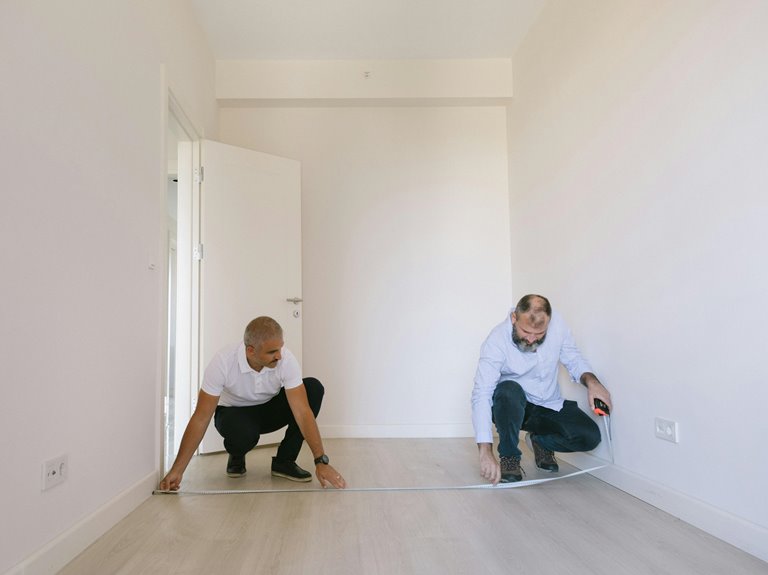
The standard master bedroom hits 14 by 16 feet—about 224 square feet—giving you room for a king bed with nightstands and a dresser. Your master should claim 11–13% of your total home size. A king needs roughly 30 inches of clearance on each side, so don’t skimp on space. Luxury homes often start at 400 square feet, while standard homes range 200–300. Walk-in closets and ensuites can eat up an extra 60–150 square feet. Smart placement against longer walls maximizes functionality and flow. The details on calculating your ideal size await.
The Average Master Bedroom Is 14 by 16 Feet (224 Square Feet)
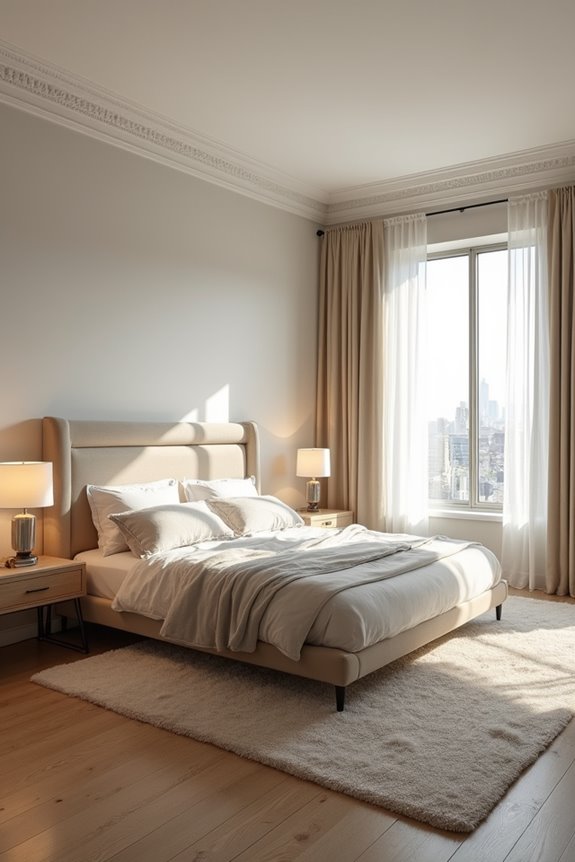
Ever wonder why 14 by 16 feet keeps showing up when you’re shopping for homes or planning a bedroom renovation? You’re seeing the standard master bedroom size that architects and builders favor. This 224 square feet layout genuinely works. Here’s why: a king bed fits comfortably with nightstands on both sides. You’ll have room for a dresser, and walking space remains functional around the furniture. Compare this to standard bedrooms at 10 by 12 feet (120 square feet), and you’ll notice the difference immediately. That extra space transforms your bedroom layout from cramped to livable. Designers use this 14 by 16 feet benchmark consistently because it balances comfort with practicality. It’s the sweet spot where your master bedroom becomes a true retreat without wasteful excess.
Master Bedroom Size Varies Significantly by Home Type
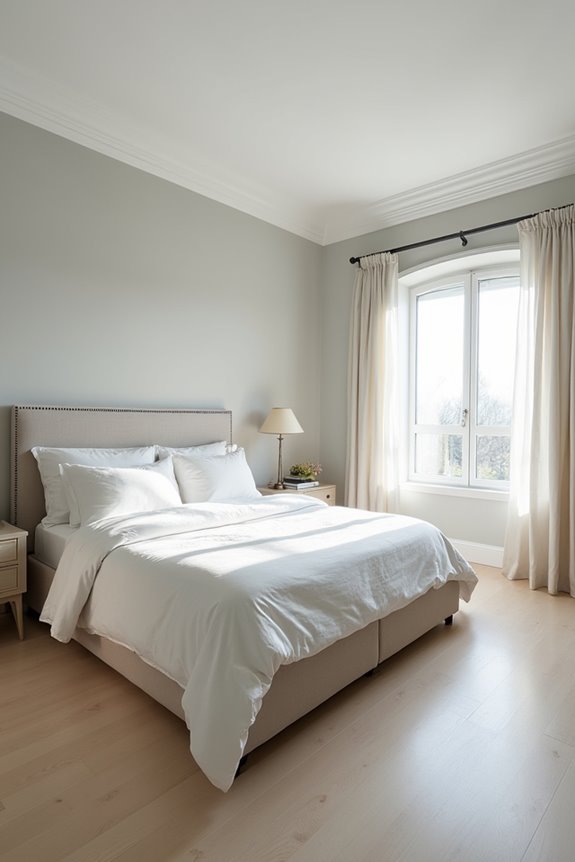
That 14 by 16 feet standard works great for many homes, but here’s the reality: your master bedroom size depends heavily on what kind of house you’re buying or building.
Small homes typically feature master bedrooms around 180–220 square feet. Standard bedrooms in mid-range homes jump to 224–300 square feet. Large homes often showcase master suites reaching 320–400 square feet. Luxury homes? They can exceed 600 square feet, creating truly spacious retreats.
Your master bedroom size should follow proportion guidelines of about 11–13% of your total home size. This approach ensures balance throughout your entire space. Understanding these ranges helps you make smarter decisions when shopping for your perfect home or planning renovations that match your lifestyle and budget.
A King Bed Requires at Least 14 Feet of Width
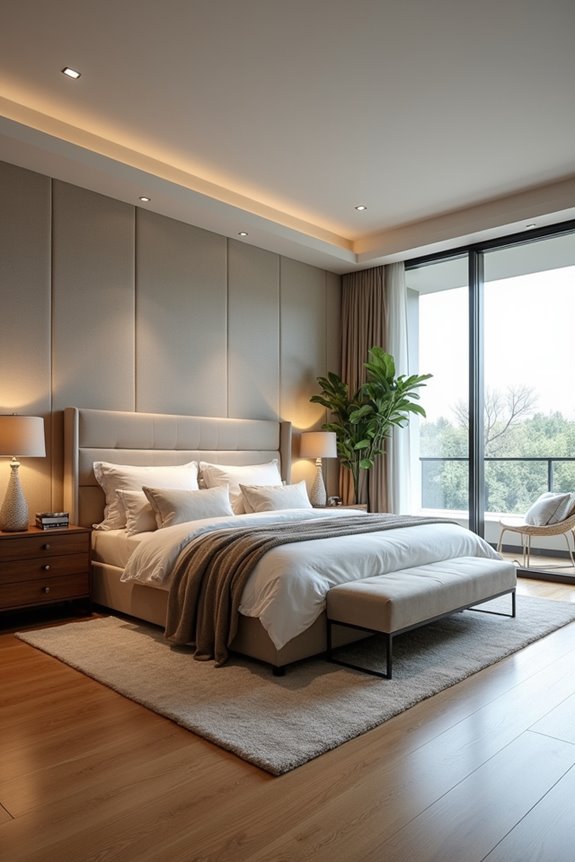
Want to fit a king bed comfortably in your master bedroom? You’ll need at least 14 feet of width. Here’s why: a king bed measures roughly 76 inches across, and you’ll want 30 inches of clearance on each side for circulation space. That’s about 7 feet for the bed itself, plus 5 feet on either side—totaling 17 feet ideally.
Position your king bed on the longer wall to maximize usable room layout. This placement gives you better movement throughout your master bedroom. Rooms measuring 14′ × 16′ work well for a king with nightstands and dressers. Anything smaller, like 12′ × 14′, feels cramped and restricts how freely you move.
Don’t overlook these king dimensions when planning your space. Proper clearance makes your bedroom feel welcoming and functional.
Plan for 30 Inches of Clearance Around Your Bed
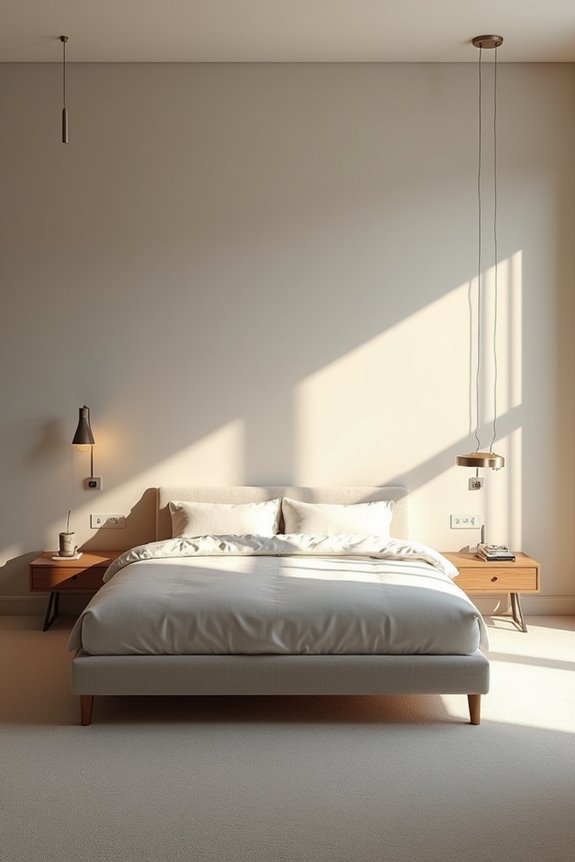
Why does spacing matter so much when you’re arranging your bedroom? I’ll tell you—it’s the difference between feeling cramped and feeling comfortable in your master bedroom.
Proper spacing in your bedroom is the difference between feeling cramped and feeling genuinely comfortable.
Here’s what I recommend: plan for 30 inches of clearance around your bed on three sides. This isn’t arbitrary; it’s a proven standard for bedroom sizes ranging from 12×14 to 14×16 feet.
This 30-inch buffer gives you real benefits. You’ll move freely without bumping furniture. You’ll easily access nightstands and bedside lamps. Door swings won’t feel blocked. Your dresser stays functional.
Treat this clearance as non-negotiable. When you maintain this space around your bed layout, room circulation improves dramatically. Your bedroom feels larger and more usable. You’re creating a layout that works for you, whether you’ve got a queen, king, or California king bed. That’s smart planning.
Bed Placement Against the Longer Wall Maximizes Space
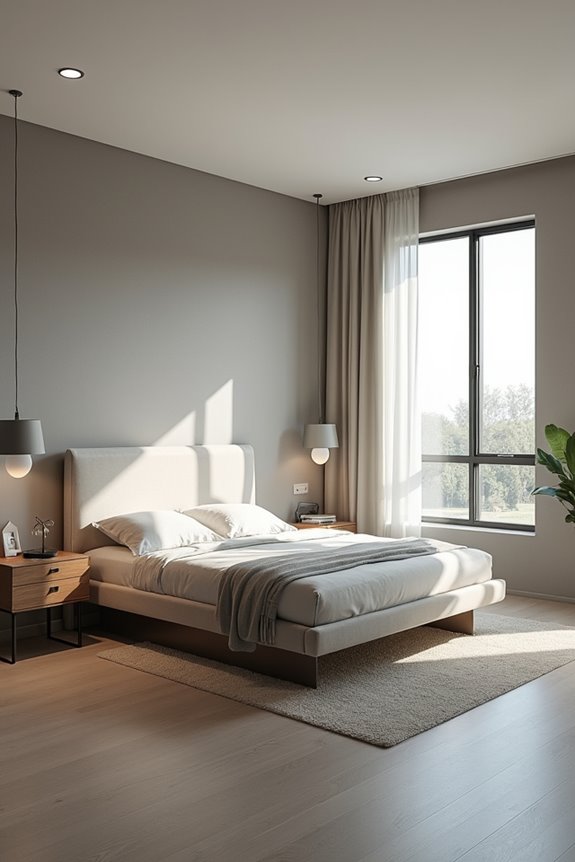
When you’re arranging a king or California king bed, I’d recommend placing it against your room’s longer wall—it’s a game-changer for how your space actually functions. This strategy gives you better clearance on multiple sides, lets you fit nightstands on both ends without cramping the room, and creates a natural flow that keeps the space from feeling cluttered. Plus, you’ll have room left over for a dresser, chair, or other pieces that make your bedroom feel complete rather than just bed-focused.
Orientation Strategy For Kings
placing your king bed against the longer wall is one of the smartest moves you can make.
When you position your king bed along the longest wall, you’re creating a master bedroom layout that actually works with your room dimensions. You’ll have better circulation around the space and establish a natural focal point that draws the eye.
| Benefit | Why It Matters |
|---|---|
| Clearance space | Allows 30+ inches on three sides |
| Furniture placement | Opens wall space for nightstands |
| Seating area | Creates room for a chair or bench |
This orientation lets you position a comfortable seating area opposite your bed without crowding. Your entry path stays clear and welcoming. Trust me—this simple choice transforms how your entire room feels and functions.
Wall Selection And Flow
The real magic in master bedroom design happens the moment you align your bed with the longer wall—and here’s why that choice matters so much. When you place your bed strategically, you’re not just making a furniture decision; you’re creating a room that actually works for you.
Consider these benefits:
- Maintains 30 inches of clearance on three sides for comfortable movement
- Keeps your door and window placement functional without obstruction
- Creates natural space flow around your master bedroom size
- Supports adequate circulation without cramped quarters
In a 14×16 foot space, positioning your bed against the longer wall lets you add nightstands and dressers without crowding everything together. You’ll notice immediately how this wall length choice opens up your square feet and makes the room feel genuinely livable rather than just functional.
Small Homes Should Keep Master Bedrooms Under 220 Square Feet
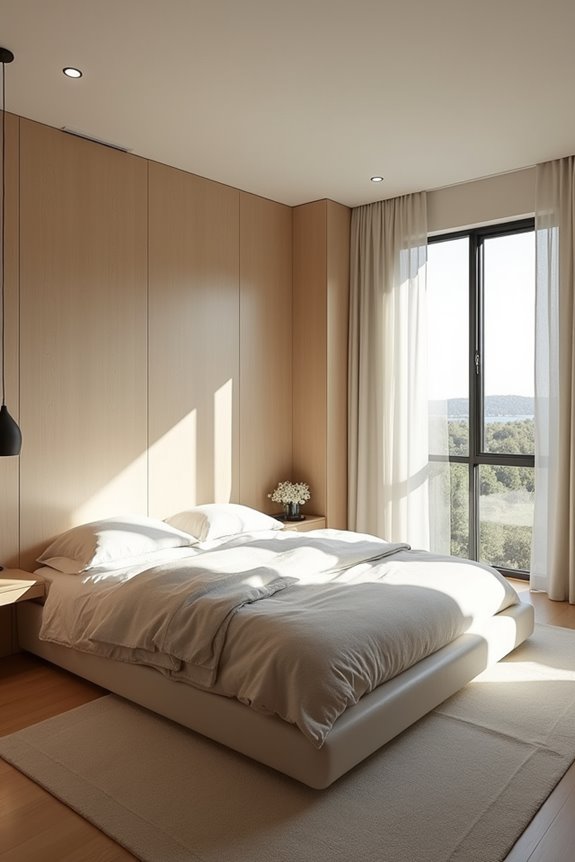
When you’re planning a master bedroom for a small home, staying under 220 square feet helps keep your room proportional to the rest of your space—think of it like balancing a budget where every square foot counts. A 12×14 foot bedroom (168 sq ft) works in ultra-compact homes, while 14×14 feet (196 sq ft) gives you enough room to move comfortably around a bed and still leaves space for other essentials, all while keeping construction costs down. This thoughtful sizing means you’re not sacrificing your other rooms—kitchen, living areas, bathrooms—just to have a sprawling bedroom that doesn’t fit your home’s overall footprint.
Proportionality To Overall Footprint
How much of your home’s footprint should your master bedroom actually claim? I’ve found that proportionality is your secret to a balanced home layout. Here’s what works:
- 11-13% rule: Your master bedroom should occupy roughly 11-13% of your total home size
- 180-220 sq ft sweet spot: This range keeps your master bedroom proportional in small homes
- Prevents domination: A 2,000 sq ft home benefits from a 180-220 sq ft master, leaving space for other zones
- Maintains circulation: Proper proportionality ensures hallways, living areas, and functional zones stay accessible
When you respect these proportions, you’re not just following guidelines—you’re protecting your layout planning. Your bedroom won’t overshadow the rest of your home. Instead, you’ll create breathing room for kitchen, living spaces, and bedrooms. This balanced approach means your master bedroom size supports, rather than competes with, your overall footprint.
Space Planning And Efficiency
In small homes, keeping your master bedroom under 220 square feet isn’t about sacrifice—it’s about smart design. I’ve found that thoughtful space planning makes all the difference in how your room actually feels.
Start by ensuring at least 30 inches of walking space around your bed—you’ll appreciate the freedom of movement. Built-in storage is your secret weapon here. Rather than cramming in furniture, maximize closets and shelving to keep clutter minimal. A cleaner room instantly feels larger and more peaceful.
Think of your master bedroom size as roughly 12′×14′, which gives you efficient square feet without overwhelming the space. Smart efficiency means choosing furniture that serves double duty and keeping surfaces clear. When you eliminate unnecessary items, your small master bedroom transforms into a personal sanctuary that actually works for your lifestyle.
Budget And Construction Costs
The real payoff of keeping your master bedroom under 220 square feet shows up in your construction budget. I’ve seen firsthand how this smart choice impacts your finances across the board.
When you limit your master bedroom size, you’re directly reducing:
- Material costs for flooring, drywall, and paint
- HVAC installation and energy expenses
- Labor hours needed for finishing work
- Overall finished floor space expenses
A cost-effective layout in small homes means stretching your budget further. You’re not sacrificing comfort; you’re being strategic. By keeping your master under 220 sq ft, you preserve funds for other essential rooms and quality finishes throughout your home. Space planning becomes your greatest tool, turning budget constraints into smart design decisions that benefit your entire house.
Standard Homes Typically Feature 200–300 Square Foot Masters
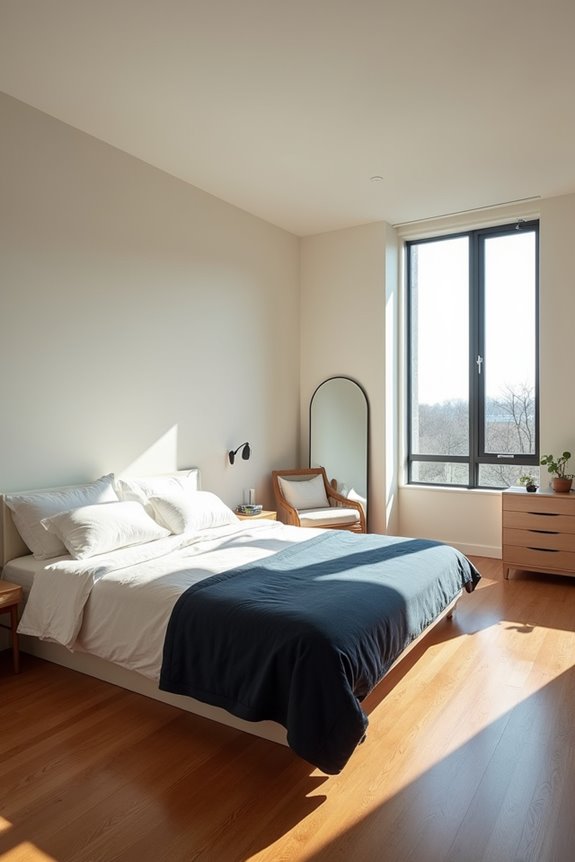
Ever wondered why so many homes seem to have master bedrooms around the same size? I’ve found that standard homes typically feature master bedrooms ranging from 200–300 square feet. A common reference point is 14 by 16 feet, which equals 224 sq ft—a solid baseline for most builders.
Your master bedroom size depends on several factors. Your home’s overall square footage matters. Your floor plan choices matter too. Do you want spacious closets? An en-suite bathroom? These features influence the final dimensions.
In smaller standard homes, you might find master bedrooms closer to 180–220 square feet. Larger homes often push toward that 300 sq ft upper range. Understanding these ranges helps you make informed decisions when building or buying your next home.
Luxury Homes Often Exceed 400 Square Feet
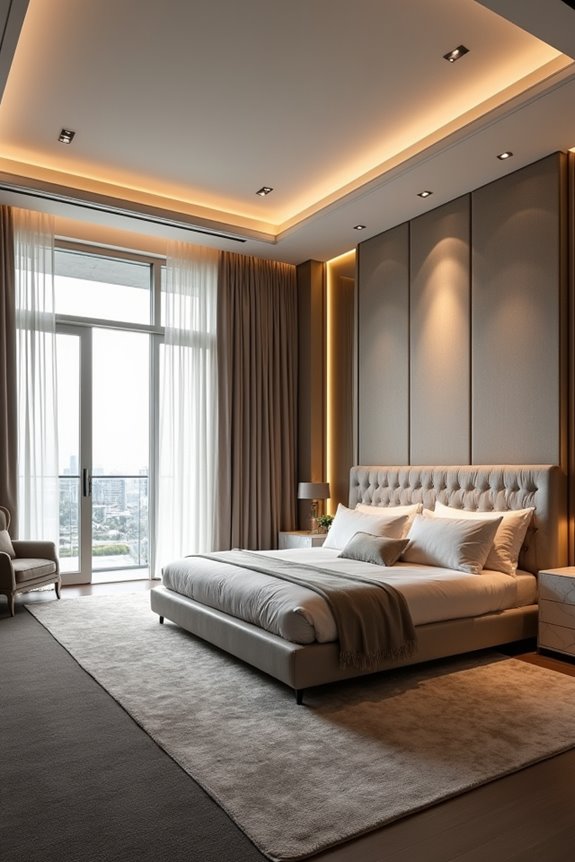
Once you step into the luxury home market, master bedroom sizes jump dramatically—and I mean really jump. You’re no longer looking at 200–300 square feet. Instead, you’ll find luxury master bedrooms starting at 400 square feet and often expanding to 600+ square feet or beyond.
What makes these spaces so spacious? Here’s what you’re typically getting:
- Dual walk-in closets for organizing your wardrobe
- Dedicated seating areas for relaxing or reading
- Fireplaces adding warmth and elegance
- Private access to balconies or patios
These features reshape your master suite’s footprint significantly. You’re investing in comfort and functionality, not just sleeping space. In larger custom homes, luxury master bedrooms can exceed 2,500 square feet. That’s intentional design—creating your personal retreat within your home.
Your Master Bedroom Should Take Up 11–13% of Total Home Size
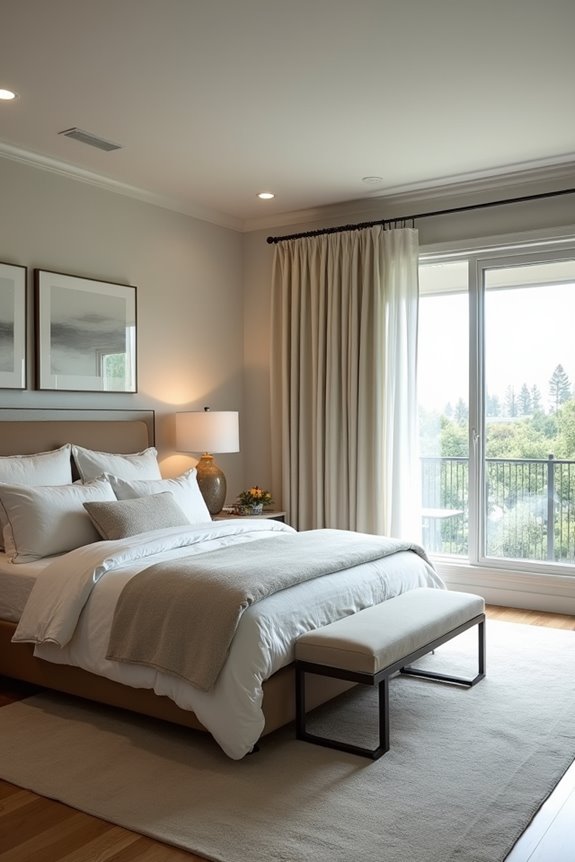
I’ll help you figure out if your master bedroom’s size makes sense for your home by using a simple percentage rule. You’ll want your master suite to claim about 11–13% of your total home size, which means a 2,000 sq ft house should have a master around 220–260 sq ft, while a 3,000 sq ft home needs roughly 330–390 sq ft. This balanced approach keeps your bedroom from feeling too cramped or eating up space that other rooms need.
Proportional Space Guidelines
How do you know if your master bedroom is sized just right? I’ve found that following proportional guidelines helps create the perfect balance. Your master bedroom size should take up about 11–13% of your total home size. This approach keeps your space feeling comfortable without overwhelming other rooms.
Here’s how this works in practice:
- 2,000 sq ft homes: aim for 220–260 square feet
- 3,000 sq ft homes: target 330–390 square feet
- Larger homes: typically 320–400+ square feet
- The benefit: maintains room feel and space balance
When you stick to these proportional guidelines, your master bedroom supports comfort while keeping square feet allocated fairly across your entire home. This creates harmony throughout your space, ensuring every room gets its deserved attention.
Calculating Bedroom Percentages
The 11–13% rule’s your best friend when figuring out what size your master bedroom should actually be. Here’s how it works: take your total home size and multiply it by 0.11 to 0.13. For a 2,000 sq ft home, you’re looking at 220–260 square feet. In a 3,000 sq ft home, that jumps to 330–390 square feet. This bedroom percentage keeps your master suite proportional to everything else. You won’t end up with a massive bedroom that crowds out your living spaces or a tiny one that feels cramped. The 11–13% guideline ensures your floor plan balance stays just right, letting you create a master bedroom that feels generous without overshadowing your home’s other important areas.
Home Size Impact Factors
Why does your master bedroom’s size matter so much? Because it should match your home’s overall footprint. I’m talking about creating proportional space that feels balanced throughout your floor plan.
Here’s what you need to know about master bedroom size relative to total home size:
- Small homes (under 1,500 sq ft): aim for 11–13% of total square footage
- Standard homes (1,500–2,500 sq ft): maintain 11–13% for comfortable proportions
- Larger homes (2,500+ sq ft): can reach 15–20% of total space
- Luxury homes: scale up accordingly while keeping design guidelines in mind
Walk-In Closets and Ensuites Add 60–150 Extra Square Feet
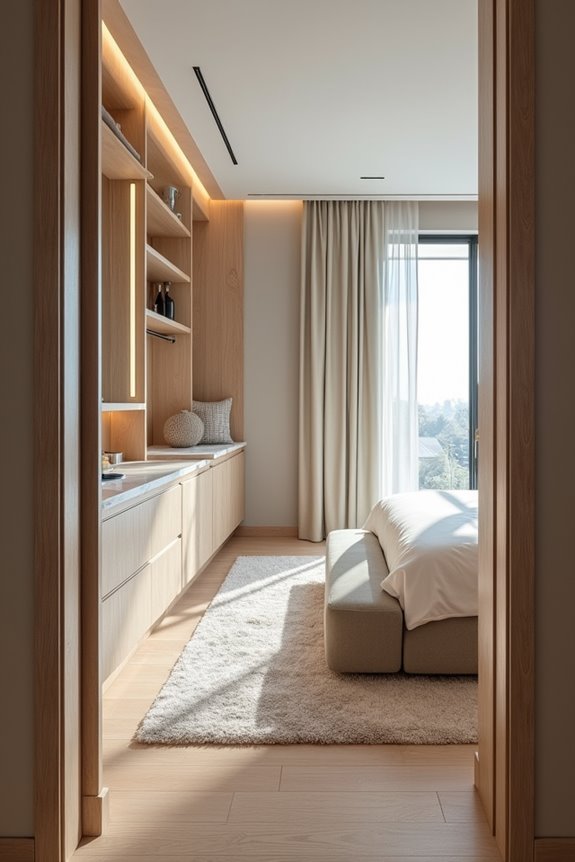
Ever wonder where all those square feet go in a master bedroom? I’ll tell you—a walk-in closet and ensuite eat up a significant chunk. These two features typically consume 60–150 square feet of your master suite’s footprint.
Here’s what happens: your walk-in closet alone takes 60–150 square feet, while an ensuite adds another 80–120 square feet. That’s a lot of floor space dedicated to storage and bathing areas. When you’re planning your master suite design, you’ve got to account for this reality.
The good news? Designers work around this. They strategically position these elements to preserve sleeping and lounging areas. Smart design tips include using vertical closet capacity and compact bathing layouts. This approach keeps your bedroom functional without sacrificing comfort or style.