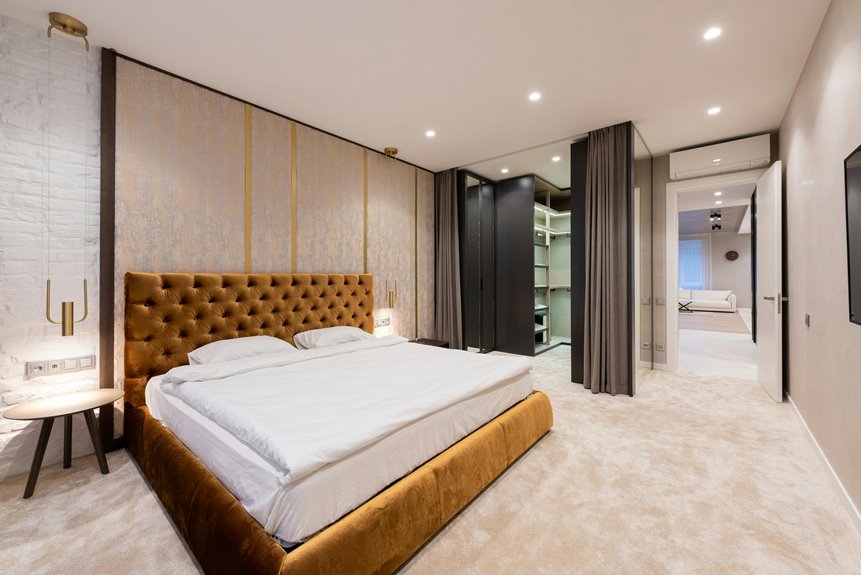
A master bedroom typically spans 12 by 15 feet to 14 by 16 feet—roughly 180 to 224 square feet. But here’s what matters: it’s not just about size. A true master includes a private en-suite bathroom, generous closet space, and a layout that actually works for your daily life. Luxury homes often go bigger, hitting 400–600 square feet with separate zones. The real magic happens when you understand what makes these dimensions feel genuinely livable.
What Defines a Master Bedroom?
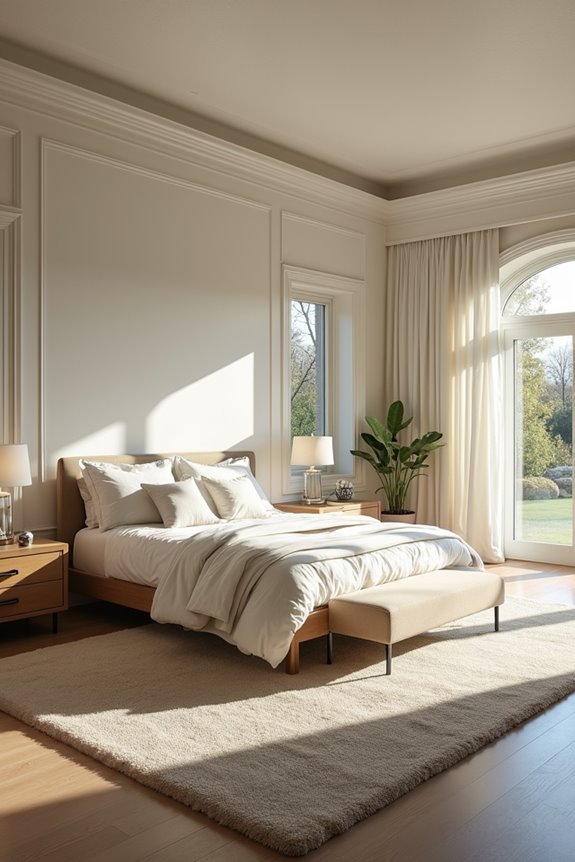
What exactly makes a bedroom a “master” bedroom? It’s not really about hitting a specific number on your measuring tape. Instead, a master bedroom is defined by what it offers you—privacy, convenience, and comfort. You’ll recognize a true master suite when it includes three key features: a private en-suite bathroom attached directly to your bedroom, generous closet space for storing your belongings, and a layout designed for relaxation. Think of it as your personal retreat. Room dimensions matter less than functionality. Whether your master bedroom spans 192 square feet or 400 square feet, what counts is having that dedicated bathroom and ample storage. These elements work together, creating a sanctuary that separates you from the rest of your home. That’s what transforms an ordinary bedroom into a master bedroom.
Standard Master Bedroom Dimensions and Square Footage

Now that you understand what makes a bedroom “master,” let’s talk about the actual measurements. Most master bedroom dimensions fall between 12 by 15 feet and 14 by 16 feet, giving you roughly 180 to 224 square feet. If you’re considering a larger home, you might find master bedrooms stretching to 18 by 20 feet or beyond, offering 360 square feet or more. The square footage you choose really depends on your home’s overall size and style. Standard sizes work perfectly for many families, while luxury homes often feature expanded bedrooms with room for seating areas or spa-like en-suites. Think about your lifestyle. Do you want extra space for a reading nook or home office corner? Your bedroom sizing choices should match both your home and your dreams.
How Master Bedroom Size Varies by Home Type

Master bedroom sizes shift dramatically depending on whether you’re buying a standard home, a luxury property, or a compact urban space. In typical homes, you’re looking at 200–350 square feet, but luxury properties often push toward 400+ square feet with premium amenities like spa bathrooms and walk-in closets. I’ll show you how builders adjust these dimensions based on home type and location, so you can figure out what works for your needs.
Standard Homes Master Bedrooms
How much space does your master bedroom actually need? In standard homes, I’ve found that master bedrooms typically range from 200 to 350 square feet. This size works well because it matches the overall home’s scale.
| Home Size | Master Bedroom Size | Floor Plan Dimensions |
|---|---|---|
| 1,414–1,820 sq ft | 200–280 sq ft | 14′ × 16′ to 16′ × 18′ |
| Average Standard | 224–280 sq ft | Mid-range proportional |
| Larger Standard | 300–350 sq ft | 18′ × 18′ to 18′ × 20′ |
The key is proportionality. Your master bedroom should feel spacious without overshadowing your home’s design. These square footage ranges ensure your bedroom complements your floor plan dimensions rather than dominating them. You’re aiming for comfort and balance—not excess.
Luxury Properties And Dimensions
What separates a standard master bedroom from a luxury one? It’s all about square footage and thoughtful design. Luxury properties typically feature master bedroom sizes ranging from 400 to 600+ square feet—substantially larger than standard homes.
I’ll break down what you’re getting. Premium floor plans like the Adams model offer 248 square feet, while high-end properties often reach 20×20 feet or beyond. These spacious dimensions accommodate multiple zones: a sleeping area, seating nook, workspace, even a fitness corner.
What makes luxury properties special is their en-suite bathrooms and expansive closets, sometimes featuring separate his-and-hers configurations. The overall home’s architectural style influences master bedroom scale significantly. Developers prioritize generous square footage to enhance privacy and flow—creating a personal sanctuary that feels distinctly yours.
Small Home Space Optimization
When you’re designing a master bedroom in a smaller home, you’re working with different priorities than luxury properties—and that’s actually freeing.
You don’t need massive square footage to feel comfortable. A master bedroom size of 180–200 sq ft—think 12′ by 15’—gives you everything: a king bed, dressers, and even a chair. Your small home floor plan benefits when you focus on smart choices instead of wasted space.
Here’s what works: prioritize your storage solutions. Built-in closets, vertical shelving, and under-bed drawers maximize what you’ve got. Multi-functional furniture—a bench that opens for storage, a dresser doubling as a nightstand—keeps your room breathable.
Direct access to an en-suite is possible too. Smart layout beats square footage every time. You’re creating a sanctuary that actually fits your life.
Master Bedroom vs. Standard Bedroom: Key Differences
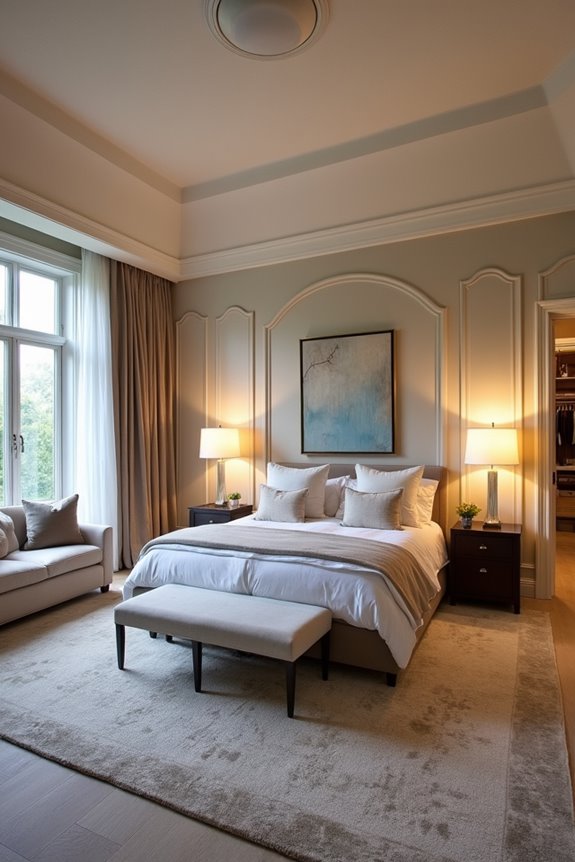
You’ll notice the difference the moment you step into a master bedroom—it’s noticeably larger and more thoughtfully designed than a standard bedroom. A master bedroom typically measures 14×16 feet or larger, while standard bedrooms run around 10×12 feet. That extra space matters. You get room to breathe, to move around your bed comfortably, and to actually live in the space. The real game-changer? A master bedroom often includes an en-suite bathroom and a spacious walk-in closet. These aren’t luxuries—they’re about convenience and privacy. Standard bedrooms usually lack these features, making them suitable for guests or kids. When comparing master bedroom vs. standard bedroom dimensions, you’re really comparing lifestyle. The master bedroom dimensions prioritize your comfort and how you’ll actually use the space daily.
What Really Determines Your Master Bedroom Size

Several factors work together to shape how spacious—or compact—your master bedroom actually is. Your home’s overall size matters most. A modest house naturally has a smaller master bedroom than a luxury home. Builders design master bedroom size to match the house proportionally, so everything feels balanced.
Standard dimensions like 14×16 feet (224 sq ft) work for many homes, while larger houses accommodate 20×20 feet or beyond. Your floor space needs depend on what you’ll put inside. Want a king bed, seating area, and dresser? You’ll need more square footage. The en-suite and closet impact your master bedroom size too—they’re separate spaces that don’t count toward your bedroom’s floor space, but they influence how much room the bedroom itself needs.
Arrange Your Master Bedroom Layout for Maximum Flow
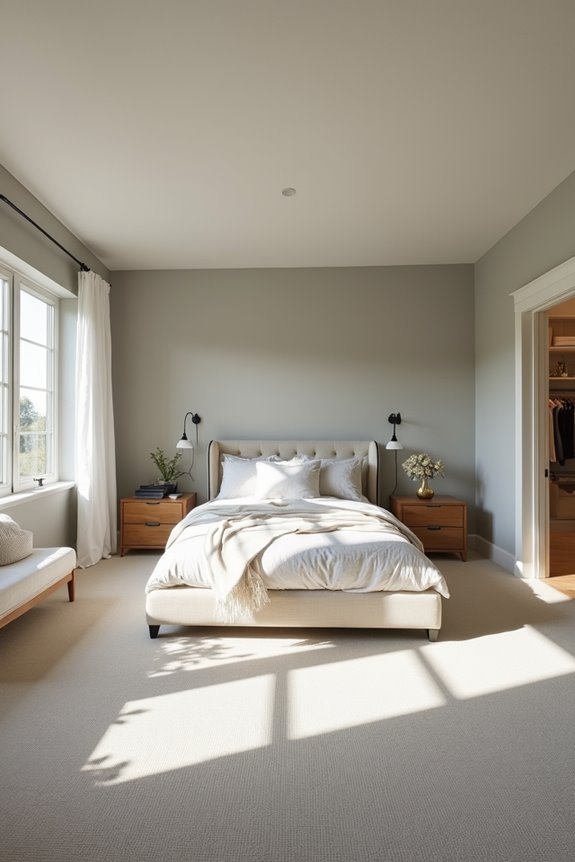
How you arrange your master bedroom makes all the difference between a cramped, awkward space and one that feels open and livable. I’ve found that zoning transforms even modest master bedroom sizes into functional retreats.
Start by positioning your bed against the longer wall—this immediately improves room flow and gives you precious floor space. Ensure at least 30 inches of clearance on three sides for comfortable movement. Next, create distinct zones: keep your sleeping area separate from activity spaces like seating or a small lounge.
Use tall wardrobes or built-ins to maximize storage without consuming floor space. This smart bedroom layout strategy preserves ceiling clearance and maintains visual openness. Finally, arrange furniture to create clear pathways through the room. These intentional choices transform your master bedroom size into a sanctuary that actually works for you.
Furniture Placement in Your Master Bedroom
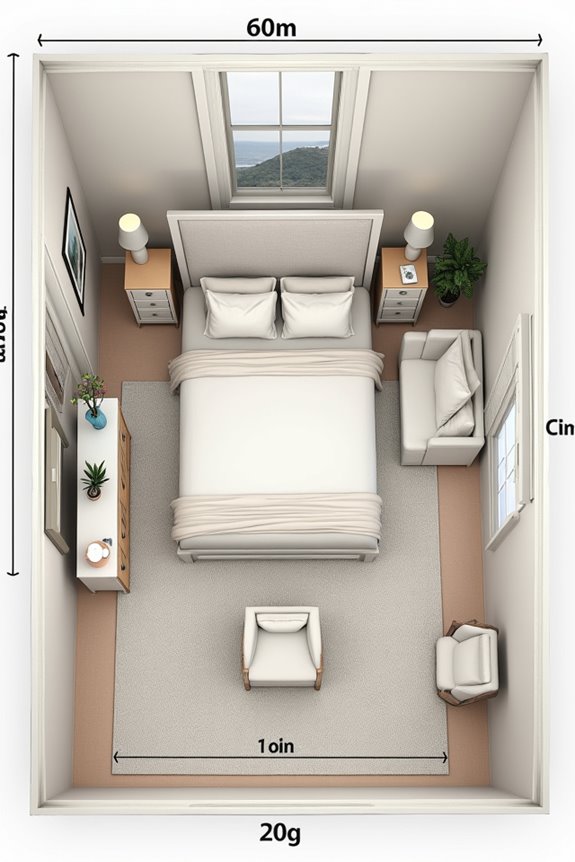
Once you’ve mapped out your zones and traffic patterns, furniture placement becomes your next tool for making the room work harder. I’ll share how strategic positioning transforms your space into something that truly functions for you.
Here’s what I recommend for master bedroom layouts:
- Position your bed against the longest wall to anchor the room and create visual balance
- Maintain at least 30 inches of clearance space on three sides for comfortable movement
- Place nightstands and dressers flanking your bed for practical, symmetrical design
- Keep walking paths clear through the center—this prevents the cramped feeling
These furniture placement choices respect your room dimensions while maximizing usable space. When you arrange thoughtfully, you’re not just filling square footage. You’re creating a bedroom that invites relaxation and makes daily routines easier.
Integrating Your Closet and Bathroom
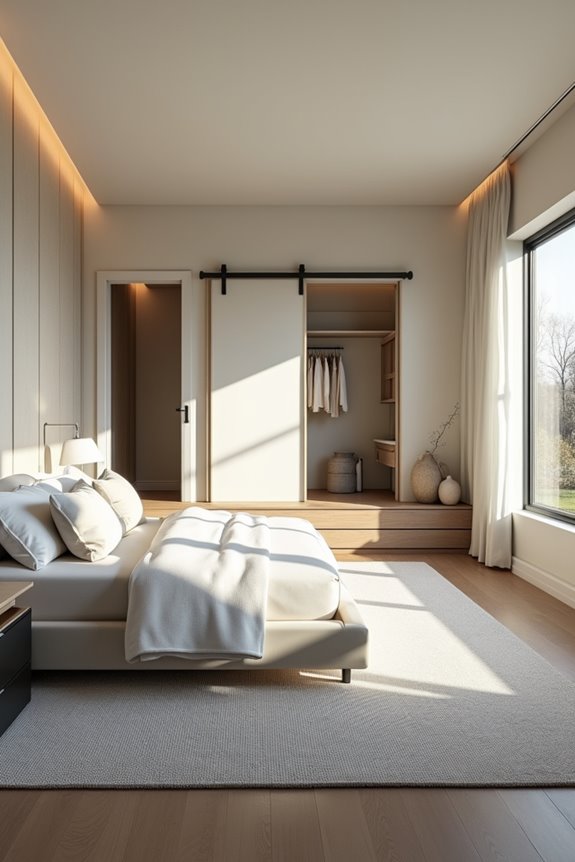
Your master bedroom truly comes together when your closet and bathroom work seamlessly with your sleeping and dressing spaces. I’ve found that smart closet integration transforms your entire master suite layout. Position your walk-in closet near your dressing area for easy access to clothes and accessories. Your private bathroom should connect directly to the bedroom—this creates a spa-like retreat you’ll love. When planning storage, consider these essentials: hanging space for shirts and dresses, shelving for folded items, and drawers for smaller pieces. A 210-square-foot bedroom with direct bathroom access and generous closet space feels luxurious and functional. This thoughtful arrangement means you’re never fumbling through your morning routine. You’ll appreciate how proximity transforms your daily experience, making your space truly yours.
How Ceiling Height Changes Your Master Bedroom Feel
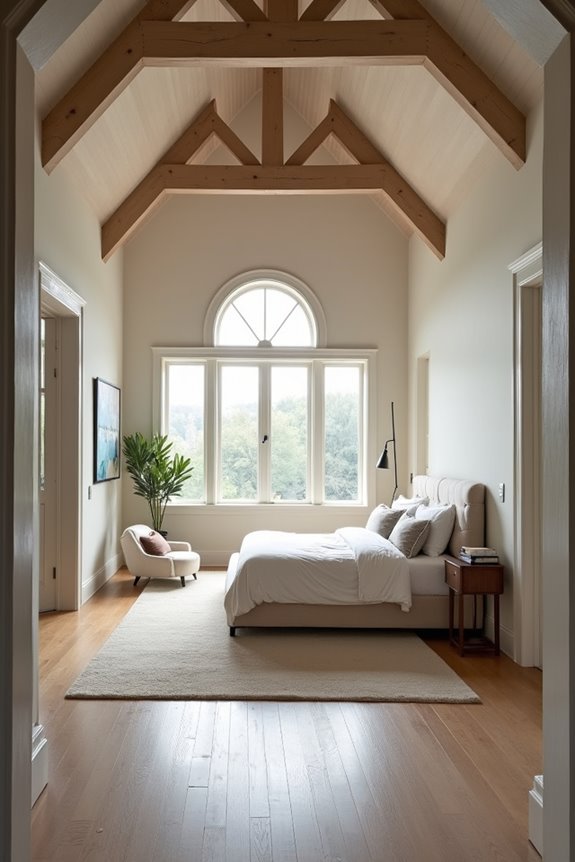
Ever notice how some bedrooms feel cramped while others feel open and airy? Ceiling height transforms your master bedroom dimensions in ways that floor space alone can’t match. I’ve learned that higher ceilings create perceived space that makes you feel less confined, even in modest footprints like 14×16 feet.
Here’s how ceiling height reshapes your room:
- A 13-foot ceiling amplifies openness compared to standard 8-foot heights
- Tall headboards and floor-to-ceiling wardrobes reinforce vertical design elements
- Better lighting reaches upper spaces without feeling harsh or shadowy
- Your brain registers the expanded volume, making the bedroom feel luxurious
You don’t need a massive floor plan to achieve that spacious feeling. Strategic ceiling height paired with thoughtful vertical design elements creates the grandeur you’re seeking without expensive renovations.
Fitting a King, Queen, or California King in Your Master Bedroom
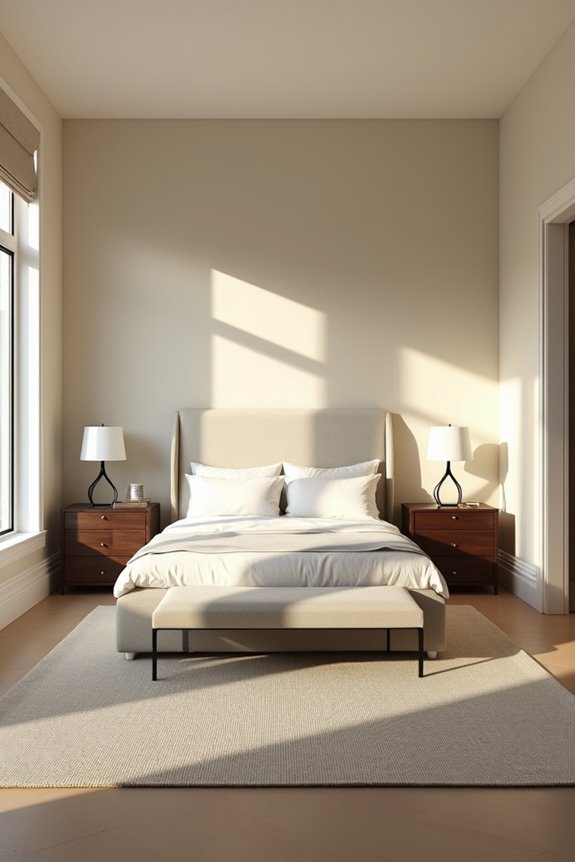
How do you know which bed size actually fits your master bedroom? I’ll help you figure this out. Your master bedroom size determines which bed works best for your space.
| Bed Type | Ideal Room Size | Key Benefit |
|---|---|---|
| Queen | 12×12 to 14×16 ft | Balanced fit with dresser space |
| King | 14×15 ft minimum | Comfortable 30″ clearance on three sides |
| California King | 14+ ft wide | Longer option for deeper rooms |
A queen bed fit works wonderfully in standard layouts. King bed fit demands more breathing room around all sides. California King layout needs deeper rooms to avoid feeling cramped.
Place your bed against the longer wall. Keep doors, closets, and bathroom access clear. This arrangement gives you that comfortable, welcoming feel we all want in our personal retreat.
5 Questions to Ask Before Committing to Your Master Bedroom Size
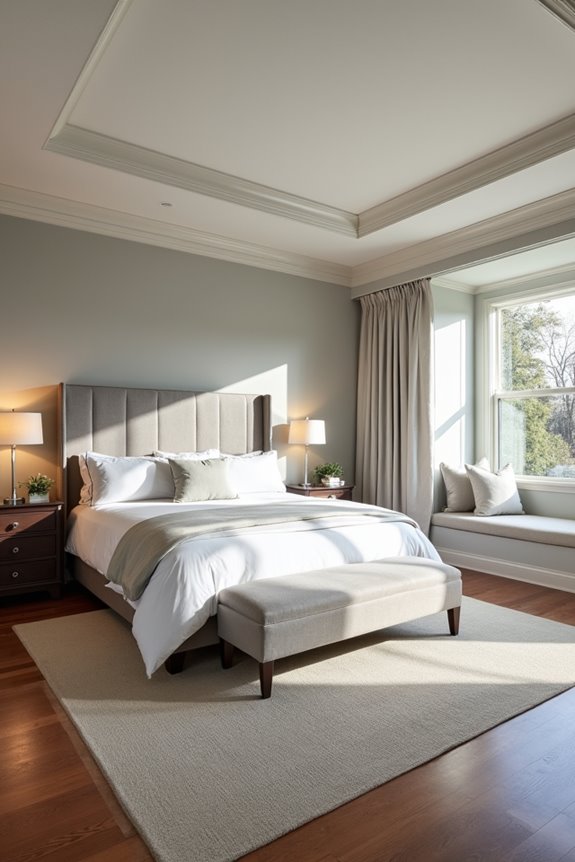
Before you settle on a master bedroom size, take time to think through what’ll actually work for your life.
Consider these important questions:
- How much furniture do you actually need in your space—just a bed and nightstands, or do you want a dresser and seating area too?
- Will an en-suite layout work for your floor plan, or does your bathroom need to stay separate?
- Does your standard dimensions vision match your home’s overall size and style?
- How much walking-around space makes you feel comfortable and relaxed?
Your master bedroom size should fit your daily routine, not just look impressive. Think about what brings you peace. A smaller room that feels intentional beats a sprawling space you’ll never use. You’re building your sanctuary.
Design Tricks for Any Master Bedroom Size
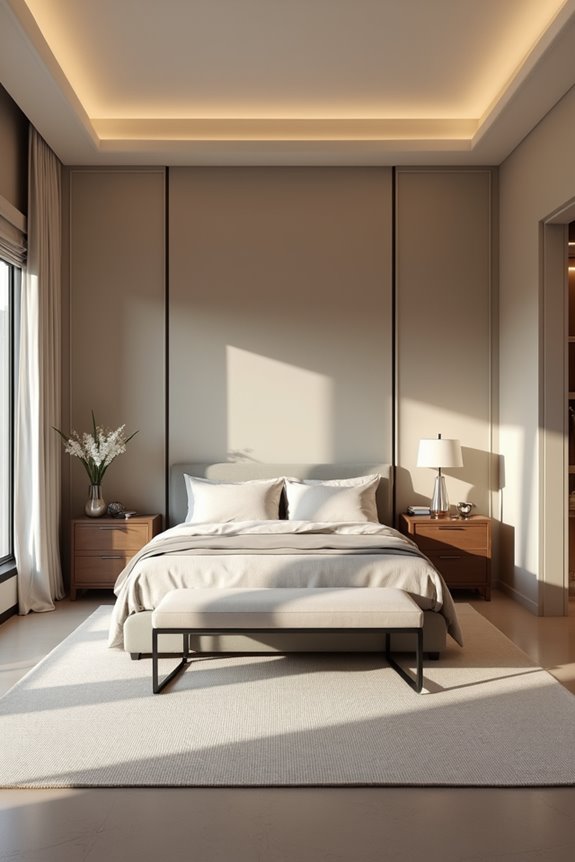
Whether your master bedroom stretches 210 square feet or pushes toward 400, smart design choices make all the difference in how the space actually feels and functions. I’ve found that orienting your bed on the longest wall instantly opens up the room. Aim for at least 30 inches of bed clearance on three sides—this gives you comfortable movement without cramped quarters.
Here’s what works: position your King bed strategically, then arrange other furniture around it. A large closet and en-suite bathroom naturally anchor your space planning. Keep pathways clear by pulling furniture slightly away from walls. These bedroom dimensions adjustments transform even modest master bedroom sizes into sanctuaries that feel spacious and welcoming, regardless of actual square footage.
Master Bedroom Layouts That Actually Work
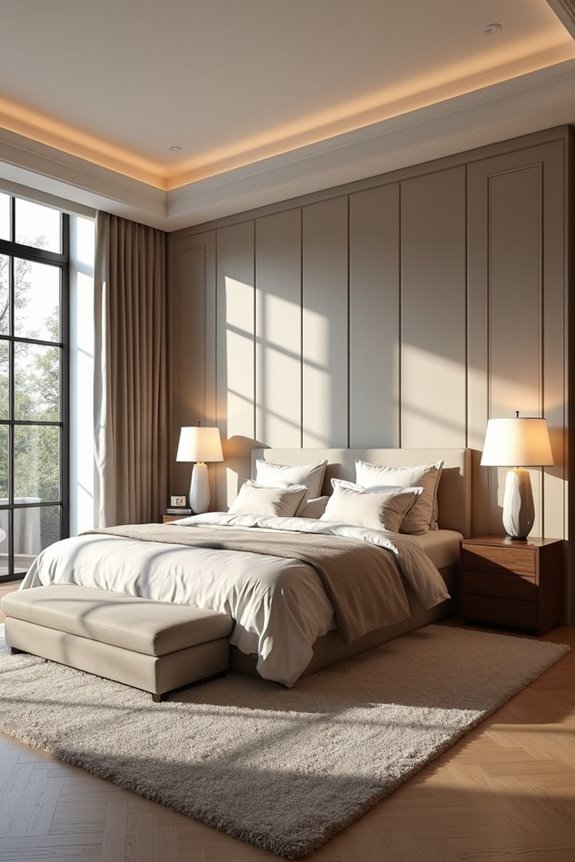
I’ve learned that creating a master bedroom that actually works comes down to three key strategies: smart furniture placement, thoughtful traffic flow, and dividing your space into zones. When you position your bed against the longer wall and keep pathways clear to your bathroom and closet, you’ll naturally create a room that feels both spacious and functional. By treating your bedroom as distinct areas—a sleeping zone, a dressing zone near your closet, and maybe a relaxation corner—you’re giving each activity its own breathing room without cramming everything together.
Furniture Placement Strategies
How you arrange your furniture can completely transform how your master bedroom feels and functions—and it’s easier than you might think. I’ve found that smart placement makes all the difference in bedroom dimensions and overall master suite sizing.
Here’s what works:
- Position your bed with 30 inches of clearance space on three sides for comfortable movement
- Place nightstands within arm’s reach of your bed for convenience
- Position your dresser or chest opposite the bed to anchor the room visually
- Keep seating away from doorways to maintain clear walkways through your furniture layout
These furniture placement strategies create zones in larger rooms. Your sleeping area stays separate from activity spaces. This approach maximizes functionality whether you’re working with a cozy 210-square-foot bedroom or a spacious 400-square-foot master suite.
Flow And Traffic Patterns
What makes a master bedroom feel spacious or cramped often comes down to how traffic flows through it. I’ve found that creating clear circulation paths transforms your entire experience in the room.
You’ll want at least 30 inches of clearance around your bed—this gives you comfortable movement on three sides. Position your bed so it doesn’t block the direct path from your door to your closet and bathroom. This access route becomes your room’s backbone.
Think of your master as having zones: sleeping, dressing, and bathing areas. Keep these separated with intentional flow between them. Avoid placing furniture in doorways or pathways. When you eliminate obstacles, your brain actually relaxes more. You’re not constantly navigating around things. That’s when a room truly feels like your sanctuary.
Zone Division For Function
The secret to a master bedroom that actually works? Smart zone division. You’ll want to create separate areas that serve different purposes without feeling cramped or chaotic.
- Position your bed on the longer wall, away from the bathroom entrance
- Dedicate the opposite side to a sitting area or dressing nook
- Maintain at least 3 feet of clearance space around the bed for comfortable movement
- Leave 4–6 feet between zones to prevent everything from feeling crowded
In larger master bedrooms with dimensions like 14×15 feet or bigger, this zone division becomes your best friend. It transforms one big room into a functional retreat where sleeping, dressing, and relaxing each get their own space. You’re not just fitting furniture—you’re creating a layout that flows naturally and feels genuinely livable.
How to Plan Your Ideal Master Bedroom Layout
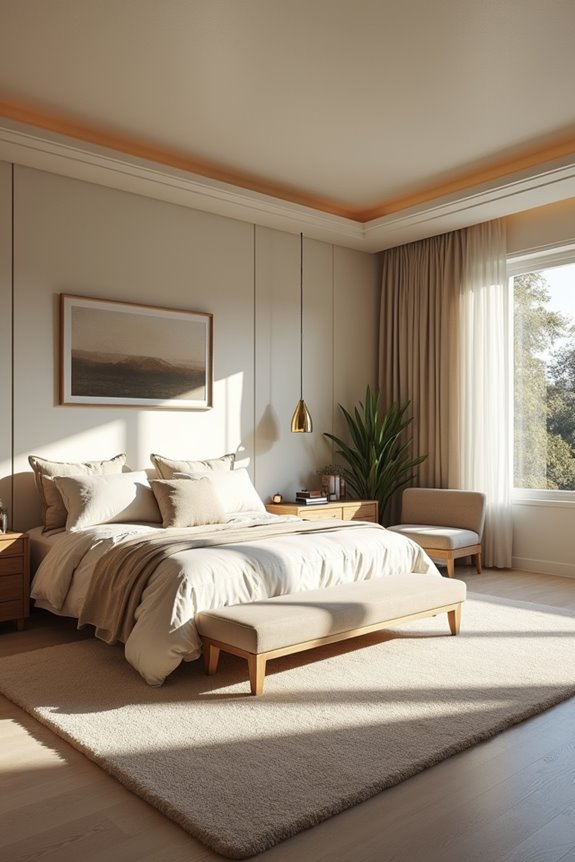
Smart planning makes all the difference when you’re arranging your master bedroom, and I’m here to walk you through it. Start by measuring your space and noting your en-suite bathroom location. Position your bed along the longer wall to maximize flow. You’ll want at least 30 inches of clearance on three sides, giving you comfortable movement around the bed. This dimension matters more than total square footage.
Next, sketch out zones. Your sleeping area anchors the room, but consider where a small seating nook or workspace fits. Keep major walkways open and traffic flowing naturally. Think about natural light and window placement too. A thoughtful master bedroom layout works with your space, not against it. You’re creating a personal retreat that actually functions for how you live.