
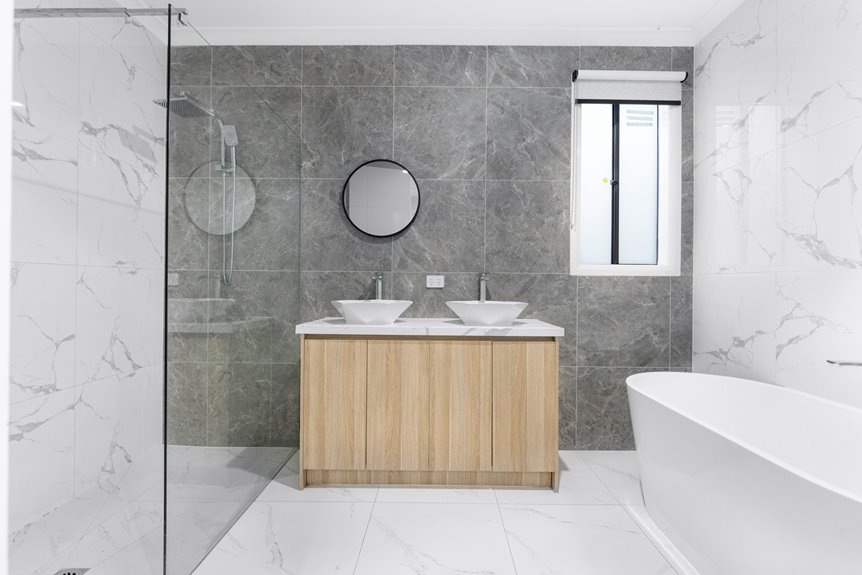
A three-quarter bath has a toilet, sink, and shower—but no tub. It’s perfect for guest rooms and basements since it saves space and money compared to full baths. To maximize yours, use wall-mounted sinks, glass shower doors, and large mirrors to open up the room. Light colors and vertical storage help too. You’ll get smart layouts like galley or corner designs, and you’ll likely boost your home’s resale value. There’s plenty more to discover about layouts and code requirements that’ll help you plan the perfect space.
3/4 vs. Full Bath: What’s the Difference?
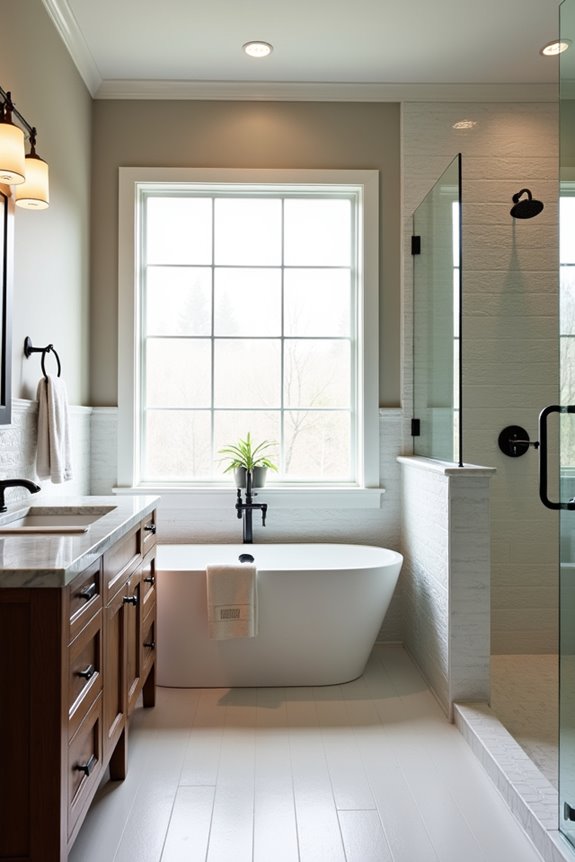
Ever wondered why some bathrooms are called “three-quarter” baths? I’ll explain the difference between these and a full bath, and why you might actually prefer one.
Ever wondered why some bathrooms are called three-quarter baths? Discover the differences and why you might prefer one.
A full bath has four fixtures: toilet, sink, shower, and bathtub. A three-quarter bathroom swaps the bathtub for just a shower, giving you three of those four fixtures. That missing bathtub is what makes it “three-quarter.”
Here’s why this matters to you: a three-quarter bathroom is space-saving and budget-friendly. You’ll need only 35 to 50 square feet instead of more. The layout is flexible too—linear, corner, or galley arrangements all work well.
This setup works perfectly for guest rooms, basements, or any area where you’re tight on square footage. You’re getting practical functionality without sacrificing what actually matters.
3/4 Bath Layouts That Work
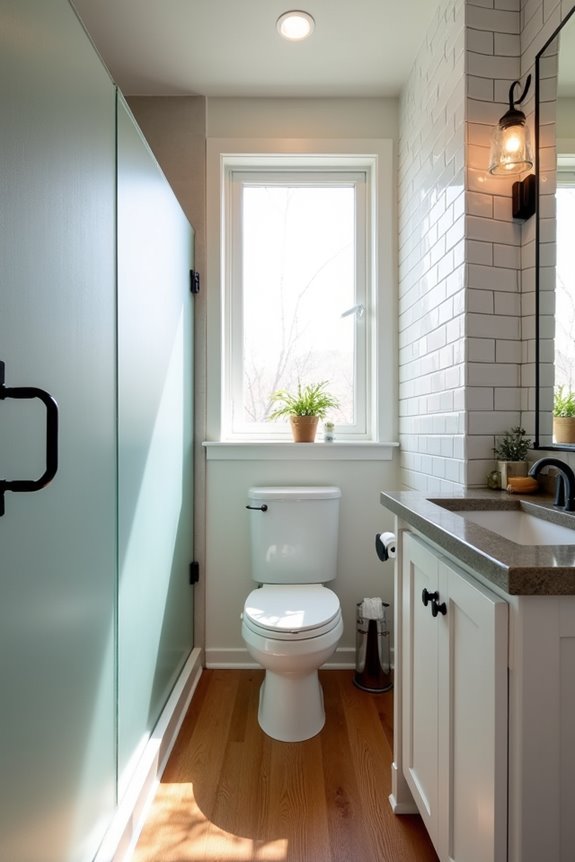
I’ve found that the best 3/4 bath layouts depend on your space and how you’ll use the room, so let me walk you through three proven options that’ll help you decide what works for you. You can arrange fixtures in a straight line along one wall, tuck a corner shower with the toilet and sink nearby, or split everything across opposite walls in a galley style—each approach solves different space challenges. The key is choosing a layout that keeps your shower at least 30 by 30 inches and puts wall-mounted fixtures where they won’t eat up floor space.
Linear Layout Options
When you’re working with a tight three-quarter bathroom, arranging everything along one wall might be your smartest move. This linear layout option maximizes space efficiency by placing your toilet, sink, and shower in a single-wall configuration. You’ll appreciate how this fixtures arrangement keeps your bathroom functional without feeling cramped.
Here’s what makes it work: position your shower at one end, then line up your sink and toilet along the remaining wall space. This setup requires minimal square footage—typically 35 to 50 square feet—while maintaining walking clearance you actually need.
Sure, a linear layout doesn’t offer as much movement as L- or U-shaped designs, but it’s honest about what small spaces demand. You get everything you need, organized simply and efficiently.
Corner Shower Configurations
Since corner showers tuck neatly into the unused space of your bathroom’s angles, you’ve got room to breathe everywhere else. A standard 30 x 30 inch corner shower fits beautifully within 35–50 square feet, leaving your three-quarter bath feeling open and functional. Here’s what makes this bathroom layout work: curved or sliding doors minimize clearance needs, so you’re not fighting for space when moving around. I’d recommend pairing your corner shower with a wall-mounted or pedestal sink—this choice maintains sightlines and genuinely makes your room feel larger. For accessibility and comfort, consider curbless entry with grab-bar-friendly surfaces. This space optimization strategy lets you position your toilet and sink on central walls without compromise. You’ll find this fixtures arrangement creates a practical, welcoming bathroom you’ll actually enjoy.
Space-Efficient Design Solutions
How do you fit everything you need into a three-quarter bath without feeling cramped? I’ve found that smart space-efficient design makes all the difference. You’ll want to use wall-mounted fixtures that keep your floor clear and open. Large mirrors reflect light and make the room feel bigger. Glass shower doors are game-changer(s) too—they don’t block sightlines like curtains do.
| Design Element | Benefit |
|---|---|
| Wall-mounted sink | Frees up floor space |
| Glass shower doors | Opens up the room visually |
| Large mirrors | Reflects light, feels spacious |
| Vertical storage | Uses walls, not floor |
| Light colors | Makes space feel airy |
Your three-quarter bath layout matters most. A linear arrangement works best in tight spaces. Position your shower, sink, and toilet along one or two walls. This configuration keeps your fixtures functional while maximizing movement.
Making a Tiny 3/4 Bath Feel Big
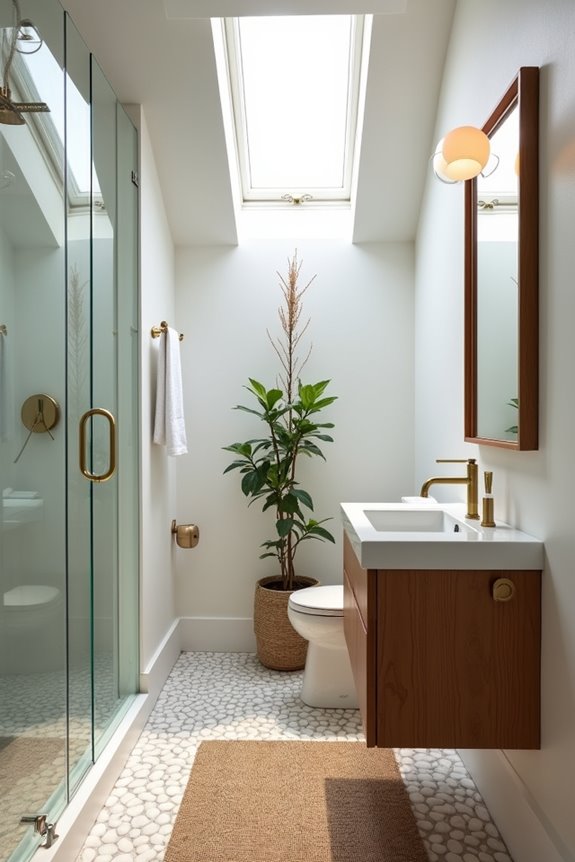
I’ve found that making a tiny 3/4 bath feel bigger comes down to three smart tricks you can actually pull off yourself. Light colors on your walls and ceiling reflect light and make the room breathe, while strategically placed mirrors—especially one across from your shower—create the illusion of extra depth without eating up floor space. Glass shower doors instead of heavy curtains keep your sightlines open, so your eye travels freely around the room rather than hitting a visual dead end.
Light Colors Expand Space
Paint your three-quarter bathroom in light colors, and you’ll instantly make that cramped 35–50 square foot space feel surprisingly open. White and pale neutrals reflect light beautifully, reducing how cramped your bathroom design actually feels. Here’s what transforms your space: pair light wall tones with large mirrors to double the effect of natural or artificial lighting. This combination tricks your eyes into perceiving more depth than actually exists. Don’t overlook finishes either. Glossy or satin surfaces minimize visual weight, contributing to that airy atmosphere you’re after. Add recessed fixtures and frameless glass shower doors to reduce bulk further. Light colors aren’t just aesthetically pleasing—they’re your concealed advantage for making your three-quarter bathroom feel like a spacious sanctuary.
Strategic Mirror Placement Tricks
Where you place a mirror matters just as much as the mirror itself. I’ve found that positioning mirrors opposite windows amplifies natural light, which shrinks your need for artificial lighting and makes your three-quarter bathroom feel airier. Try installing a large, vertically oriented mirror above your vanity—it draws your eye upward, making ceilings feel higher.
Full-height mirrored cabinet fronts work wonderfully along walls, multiplying reflections from your shower and sink areas. This strategic placement visually expands perceived width.
Here’s my recommendation: choose frameless or minimal-frame mirrors. They create cleaner sightlines without visual clutter, helping your space breathe. These reflections aren’t just about aesthetics—they fundamentally change how your three-quarter bathroom feels by doubling perceived space perception.
Glass Doors Visual Flow
How much does a shower enclosure really matter when you’re working with limited square footage? More than you’d think. Glass doors transform your 3/4 bathroom’s visual flow by eliminating heavy barriers. I’ve found that clear glass lets light travel freely from your entry straight through to fixtures, creating perceived depth that makes the space feel substantially larger.
Frameless or minimally framed panels work best. They introduce fewer visual interruptions, keeping your bathroom design looking sleek and airy. Pair glass doors with light colors and reflective surfaces to maximize brightness and openness.
Don’t overlook installation details either. Proper clearance and gasket sealing prevent fogging, maintaining that clean, inviting feel. When you get the glass doors right, your 3/4 bathroom becomes a sanctuary that genuinely feels spacious.
Converting a Half Bath to 3/4: What’s Involved?
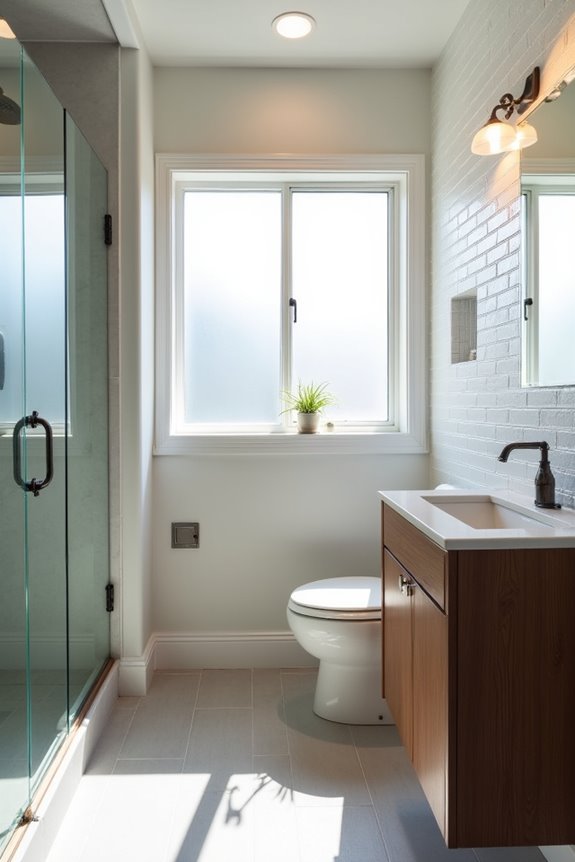
Turning your half bath into a three-quarter bath means adding a shower to your existing toilet and sink—and honestly, it’s a project worth understanding before you plunge in. You’ll need more square footage requirements than your current setup, ideally expanding beyond 35 square feet. A shower installation requires at least 30 by 30 inches of usable space, which might mean reconfiguring your layout. Plumbing relocation is essential work—you’re rerouting water lines and drainage to accommodate the new fixture. You’ll also need ventilation upgrades to handle moisture and waterproofing to protect your walls. Budget between $6,000 and $22,000 for this half bath conversion, depending on materials and complexity. It’s doable, and the payoff transforms your space significantly.
Best Uses for a 3/4 Bath
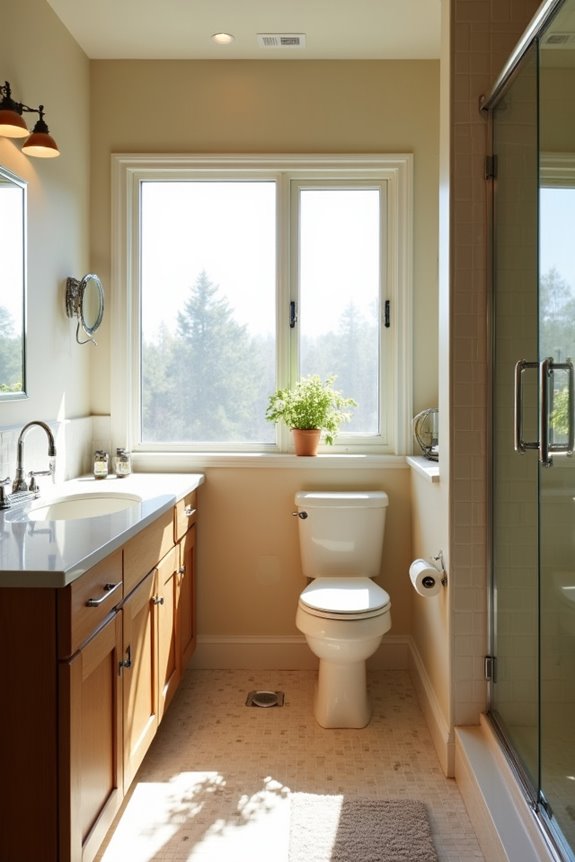
So what makes a three-quarter bath such a smart choice for certain spaces in your home? I’ll tell you—space efficiency and cost savings. You’ll find a three-quarter bath works beautifully in guest rooms where visitors need basic facilities without taking up precious square footage. Basements benefit tremendously too. That secondary bathroom becomes inviting without the expense of a full bath.
Young professionals and empty nesters particularly appreciate this layout. You’re getting resale value without overspending on construction. The layout options keep things flexible—whether you choose corner or galley styles, you’re maximizing what matters most.
However, families with small children should reconsider. Kids bathing requires a tub. But if that’s not your situation? A three-quarter bath delivers practical functionality while boosting your home’s appeal and value.
Does a 3/4 Bath Add Value?
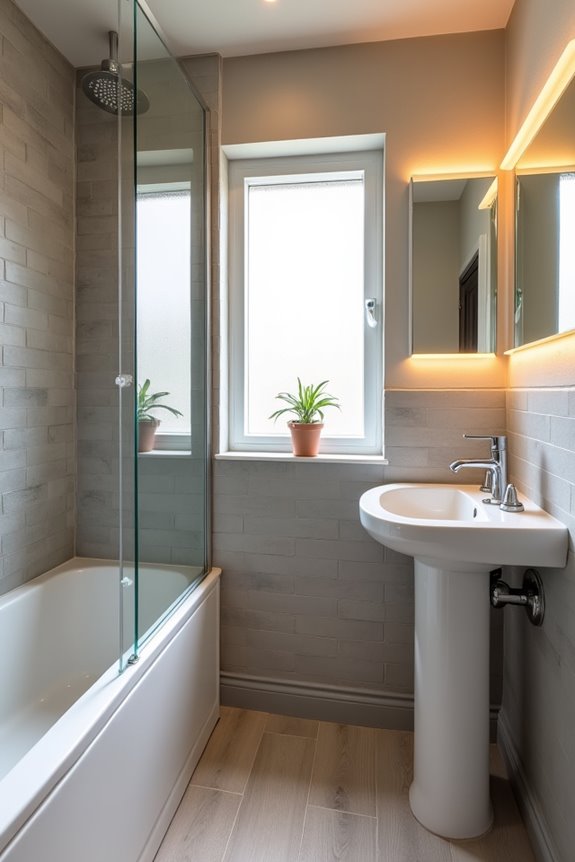
When you’re thinking about upgrading your home, you’re probably wondering: will a three-quarter bath actually pay off?
Here’s the good news: I’ve found that three-quarter baths rank highest among partial baths for resale value. They’re smart investments because they offer real functionality without eating up too much space. Your bathroom layout matters, though. Buyers love these fixtures in guest rooms, basements, and secondary spaces where a full bath feels like overkill.
Consider these benefits:
- Attracts buyers who want flexible guest spaces
- Saves money compared to full bathroom renovations
- Uses less square footage than traditional layouts
- Increases property appeal without massive expense
The three-quarter bath value shines when positioned strategically. You’re not just adding fixtures—you’re creating practical spaces that today’s homeowners actually want. That’s the kind of upgrade that genuinely pays dividends.
Code and Ventilation for 3/4 Baths
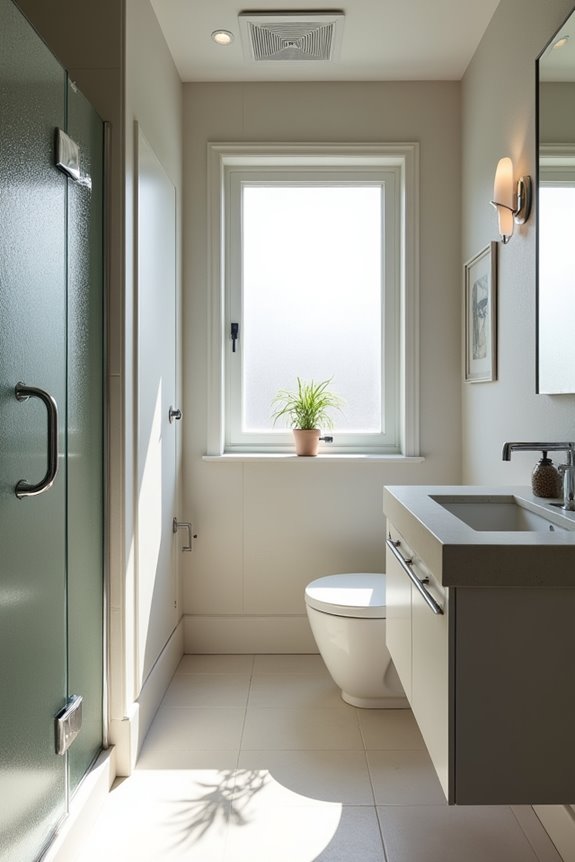
What makes a three-quarter bath legal and safe to use? Building codes require proper ventilation, plumbing, and electrical safety. I’ll walk you through what matters.
Ventilation’s essential—you’ll need a fan that removes moisture effectively, especially in basement bathrooms where dampness lingers. Install one rated for your room’s square footage.
Proper ventilation is essential for moisture control—install a fan rated for your bathroom’s square footage to prevent dampness and mold.
Your plumbing must meet code standards. All water lines need proper slope for drainage, and you’ll want accessible shut-off valves.
For electrical safety, outlets near water sources require GFCI protection. This prevents dangerous shocks.
Your shower layout affects everything. A compact 30 x 30-inch shower works well in tight spaces while maintaining code-compliant clearances.
Meeting these requirements protects your family and ensures your investment holds value. You’re building something you can trust.