Start with standard sizes like 8×10 or 9×12—they work for most living rooms. Next, measure your sofa width and add 8–12 inches on each side to find your ideal fit. Finally, get your furniture legs anchored on the rug; all legs create the most polished look, though front legs only still ground your space nicely. These three steps take the guesswork out of sizing, and there’s more to discover about positioning your rug perfectly.
Start With Standard Sizes: 8×10 and 9×12 for Most Living Rooms
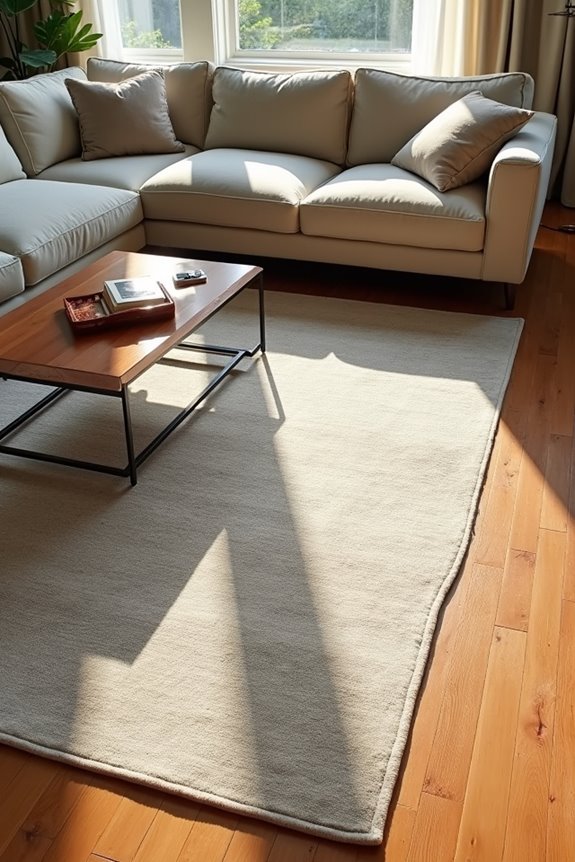
Why guess when you can start with what actually works? I’d recommend beginning with either an 8×10 or 9×12 rug for most living rooms. The 8×10 works beautifully in medium spaces, giving you flexibility with furniture placement. You’ll want your front sofa legs anchored on the rug while leaving comfortable floor space around the edges.
If your seating area feels cramped or you’ve got substantial furniture, step up to a 9×12. This larger rug size accommodates more pieces fully on the rug, creating that unified look we all want.
For open-concept or long rooms, consider a 10×14 to maintain proper proportion. But here’s my advice: start with these standard sizes. They’re proven, they’re practical, and they’ll anchor your space just right.
Measure Your Seating Area to Find Your Exact Fit
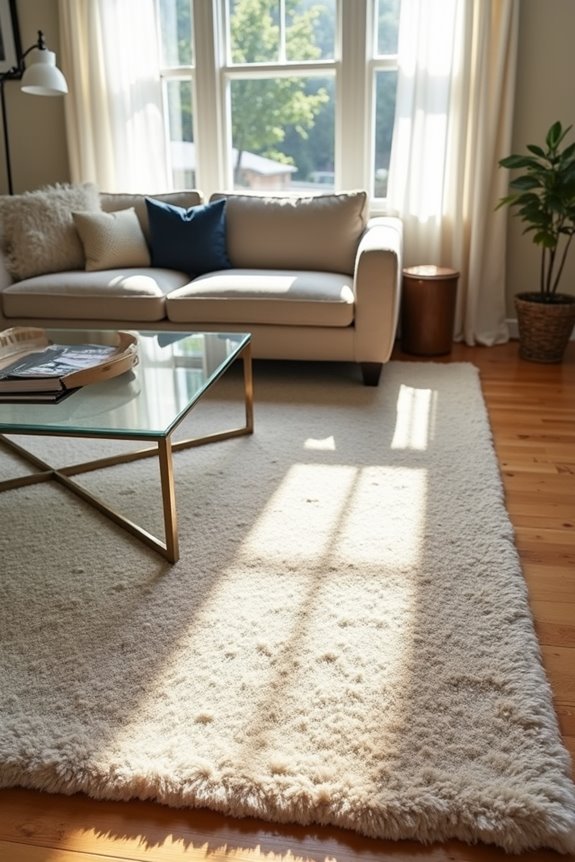
How do you know what size rug will actually work in your space? I’d start by measuring your seating area—it’s the foundation for everything else. Grab a tape measure and check your sofa’s width, then note how far your furniture extends into the room.
Here’s what I’ve found works best:
| Measurement | What It Means |
|---|---|
| Sofa width + 6 inches on each side | Minimum rug size |
| Sofa width + 8-12 inches on each side | Ideal for room scale |
| All furniture legs on the rug | Best anchor for living room layout |
Once you’ve got those numbers, you’ll see which standard rug size fits your layout. If you’re working with limited space, anchoring just your front legs still creates visual balance. These rug measurements guide your walkway clearance too, ensuring your living room feels intentional and connected.
Get Furniture Legs on the Rug: All On or Front Legs Only
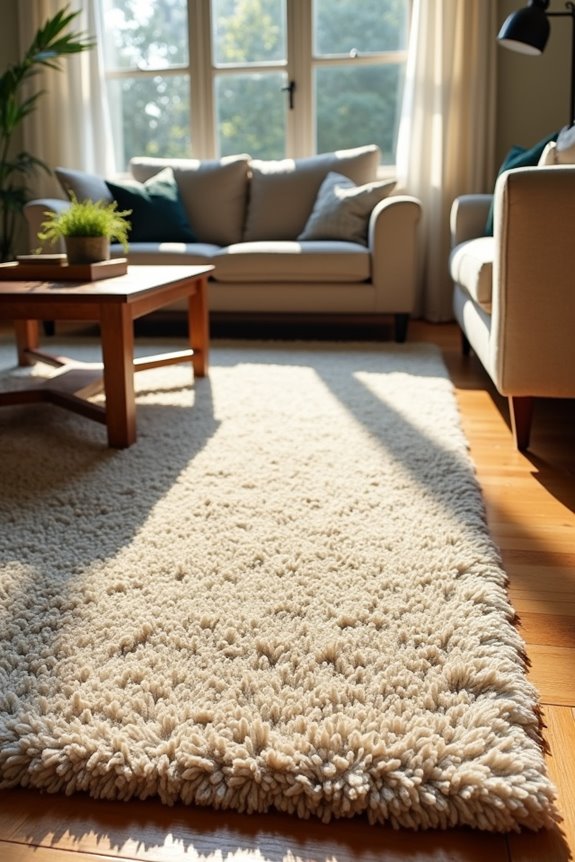
One detail makes all the difference between a rug that grounds your room and one that just floats there: where your furniture actually sits on it.
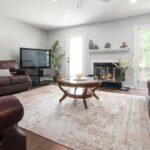
I recommend getting all furniture legs on your rug when you can—it creates the most cohesive, anchored seating area. In larger spaces, this approach unifies everything beautifully. However, if your room’s smaller or your rug size is limited, placing just the front legs on the rug works well too. This still anchors your furniture without overwhelming the space.
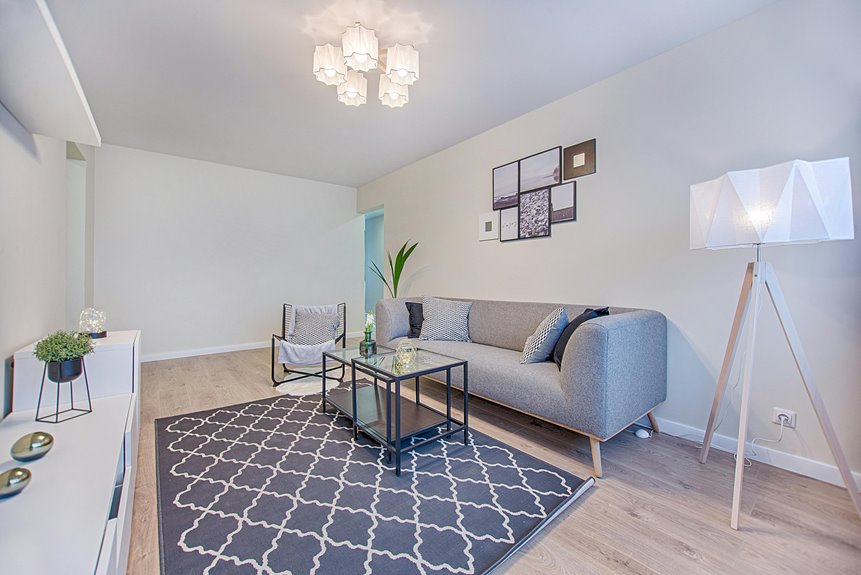
Here’s my rule: your rug extends beyond your sofa width by about 8–12 inches on each side. This visual extension reinforces rug grounding and makes your seating feel intentional and connected. Measure your seating area first, then size up. Whether all legs or front legs only, prioritize that anchored feel—it’s what transforms a floating setup into a purposeful living room rug placement.