I’ll strategically place floor lamps where you need them most. Start by measuring your room to calculate square footage, then aim for 20–30 lumens per square foot for ambient light. Position one lamp beside your reading chair for task lighting, another behind your sofa for soft glow, and a third in dark corners to eliminate shadows. Next to your TV, angle light away from the screen. By the fireplace, use warm 2700K bulbs. Balance multiple lamps symmetrically for cohesive style. Stick around to discover specific placement techniques that’ll transform your space.
Assess Your Room Size and Lighting Needs First
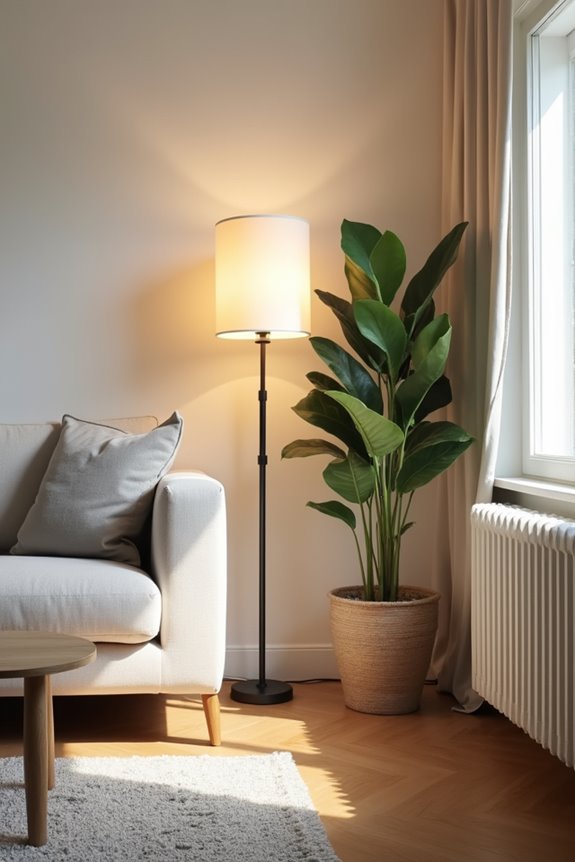
How much light does your living room actually need? Let’s figure it out together. Start by measuring your room’s length and width, then multiply those numbers to get your square footage. This measurement is key to smart floor lamp placement.
Next, consider your lighting layers. Ambient lighting—your room’s general glow—needs about 20–30 lumens per square foot. Task lighting for reading or working requires 50–75 lumens per square foot. Your room size determines how many floor lamps you’ll need and where they’ll work best.
Don’t forget natural light. Observe how sunlight moves through your space during the day, then plan artificial lighting to fill gaps. This approach ensures your living room feels comfortable morning, noon, and night.
Next to a Reading Chair: The Classic Task Lighting Spot
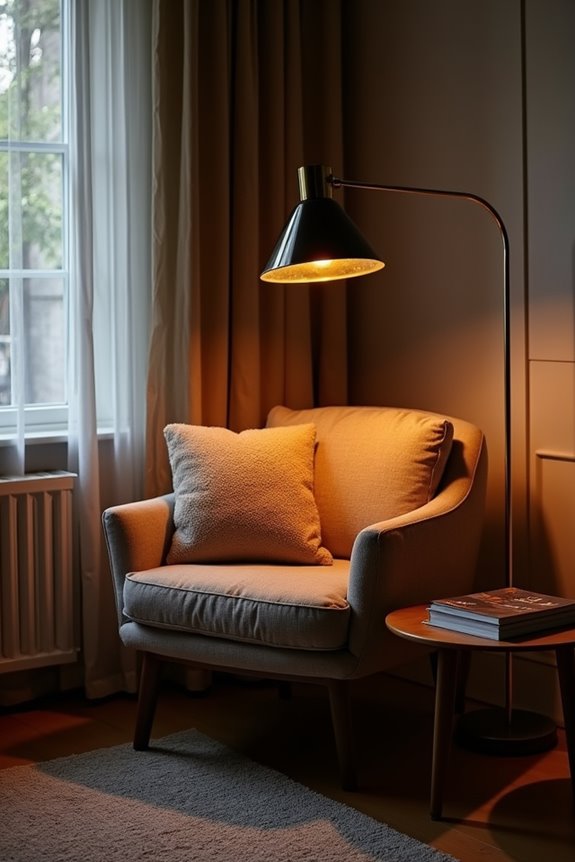
When you’re settling into your favorite reading chair, you’ll want a floor lamp positioned slightly behind or to the side of you so light travels over your shoulder and eliminates glare on your pages. I’d recommend choosing an adjustable lamp—one with a swing arm or height-changing feature—so you can angle it perfectly for whatever position feels most comfortable as you read. You’ll also want to aim for 400–800 lumens in a warm 2700K–3000K color temperature, which gives you plenty of brightness without straining your eyes while creating that cozy feeling that makes you actually want to curl up with a book.
Positioning for Optimal Reading
Why does reading by a dim lamp leave you squinting and frustrated? The right reading light transforms your experience. I’ve found that positioning your floor lamp strategically near your reading chair makes all the difference.
Here’s what matters most:
- Place the lamp slightly behind or beside your chair
- Choose an adjustable lamp to direct light precisely onto pages
- Aim for 400–800 lumens of brightness
- Select warm 2700K–3000K color temperature
- Keep the lamp within arm’s reach
This setup eliminates shadows and glare while creating your perfect reading nook. Your adjustable lamp lets you customize the angle depending on where you’re sitting. Pair it with a small side table for your book and beverage, and you’ve got everything you need. You’ll notice how much longer you can read comfortably when your reading light works with you, not against you.
Lamp Type and Adjustability
The right lamp makes all the difference between comfortable reading and constant frustration. I’ve learned that choosing an adjustable floor lamp transforms your reading experience. Look for swing-arm or height-adjustable models that let you direct light exactly where you need it.
| Feature | Benefit |
|---|---|
| Swing-arm design | Directs light onto pages |
| Adjustable height | Positions light at shoulder level |
| Dimmable function | Reduces eye strain |
| 400–800 lumens | Ideal reading brightness |
| 2700K–3000K color | Warm, comfortable light |
Position your reading light so it falls over your shoulder, never into your eyes. This setup keeps glare away while illuminating your book or screen perfectly. A nearby floor lamp within arm’s reach means you’ll actually adjust it when needed, making reading genuinely comfortable rather than a strain on your eyes.
Lumens and Color Temperature
Most people don’t realize that brightness and color matter just as much as lamp placement when you’re settling in with a book. I’ve learned that the right reading light transforms your entire experience.
Here’s what you’ll want to focus on:
- 400–800 lumens provides ideal task lighting for comfortable reading
- 2700K–3000K color temperature delivers warm lighting that reduces eye strain
- Warm lighting creates that cozy atmosphere we all crave
- Brightness prevents squinting and headaches during long reading sessions
- Color temperature affects how relaxed you feel
Think of lumens as your brightness level and color temperature as your comfort setting. I recommend choosing a lamp with these specs—your eyes will thank you. Warm reading light isn’t just practical; it’s an invitation to settle in and truly relax.
Behind Your Sofa: Create Ambient Glow Without Clutter
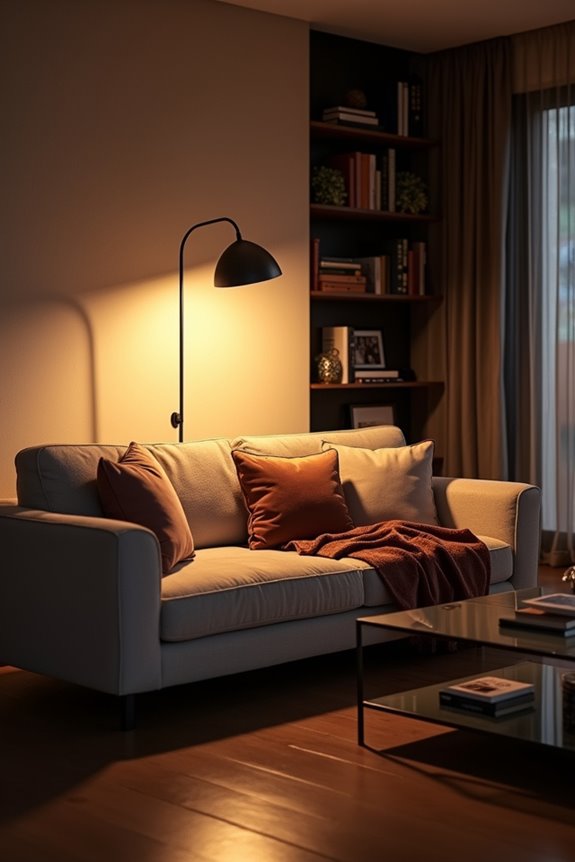
Ever noticed how a well-placed lamp can transform your living room’s entire feel? I’ve found that positioning a floor lamp 12–18 inches behind your sofa creates the perfect ambient glow without the clutter. This placement bounces light off your ceiling and walls, giving you soft lighting that feels natural and welcoming.
Here’s what makes this work: the lamp stays hidden behind the sofa, so it won’t interfere with your TV or block anyone walking through. I recommend choosing a slim uplight style—it maximizes brightness in larger rooms without taking up much floor space.
Pair it with dimmers and warm bulbs around 2700K–3000K. This combo lets you adjust your soft lighting to match your mood, whether you’re relaxing alone or hosting friends. You’ll create a cozy atmosphere that just feels right.
In a Dark Corner: Transform Unused Space Into Light
I’ve found that transforming a dark corner starts with tackling the shadows head-on—and the right lamp choice makes all the difference. You’ll want to consider both the lamp’s style and how tall it stands, since a tripod design with a large drum shade bounces light onto your walls and ceiling instead of keeping it trapped in that gloomy spot. The trick is picking something slim enough that it won’t block your path, yet tall enough to really push that light outward and brighten up the whole room.
Corner Shadow Solutions
Why do so many living rooms have that one dark corner that never seems to come alive? I’ve found that a tall Akari-style floor lamp is your shadow solution. Here’s what makes this corner approach work:
- Position the lamp to bounce light off walls and ceiling
- Angle it toward the room, not directly at seating
- Choose a wide shade or multiple bulbs for better light spread
- Avoid glare on nearby furniture by tilting slightly
- Pair with a plant or small chair for visual balance
This ambient lighting transforms that neglected corner into a welcoming nook. The floor lamp disperses light evenly throughout your space, eliminating harsh shadows. You’ll create a cozy gathering spot that feels intentional and inviting. Your living room suddenly feels complete and warm.
Lamp Style And Height
Now that you’ve chosen your corner, the lamp itself makes all the difference. I’d recommend an Akari-style lantern or tall column lamp that creates an even, soft ambient glow without harsh shadows. The right lamp height matters too—you want your floor lamp positioned so light spreads across walls and ceiling rather than concentrating in one spot.
Angle the lamp toward your room’s center instead of facing the wall. This distributes light more effectively. Choose designs with wide shades or multiple bulbs to eliminate hotspots. Arc or thin silhouettes work best here—they won’t block movement or sight lines while delivering ample corner lighting.
Pair your floor lamp with a plant or chair nearby. This anchors the space, making your dark corner feel intentional and inviting.
Next to a Bookshelf: Light Your Display
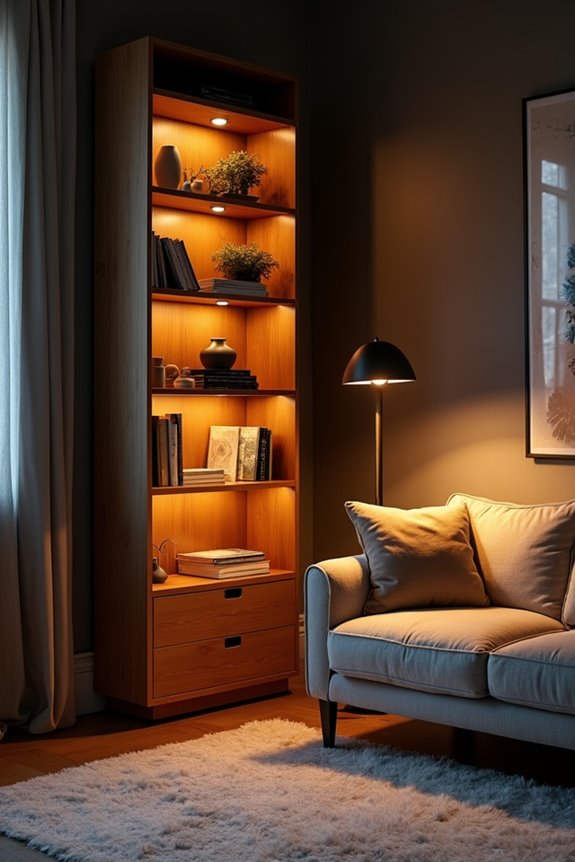
How can you make your favorite books and collectibles actually stand out instead of sitting in shadow? I’ve found that positioning a floor lamp next to your bookshelf transforms it from forgotten furniture into a display worth admiring.
Here’s what works best:
- Choose a dimmable LED bulb (2700K–3000K) for warm glow without harsh glare
- Select a narrow-based lamp that doesn’t block book access
- Position it to eliminate shadows from adjacent objects
- Angle the shade downward to illuminate shelf contents evenly
- Consider a slender Akari-style lamp for minimal footprint
The right lighting brings out book spine colors and highlights treasured collectibles beautifully. Your bookshelf becomes an inviting focal point that showcases what you love most. This simple adjustment makes a real difference in how your living room feels.
Near a Window: Balance Natural Light With Supplemental Glow
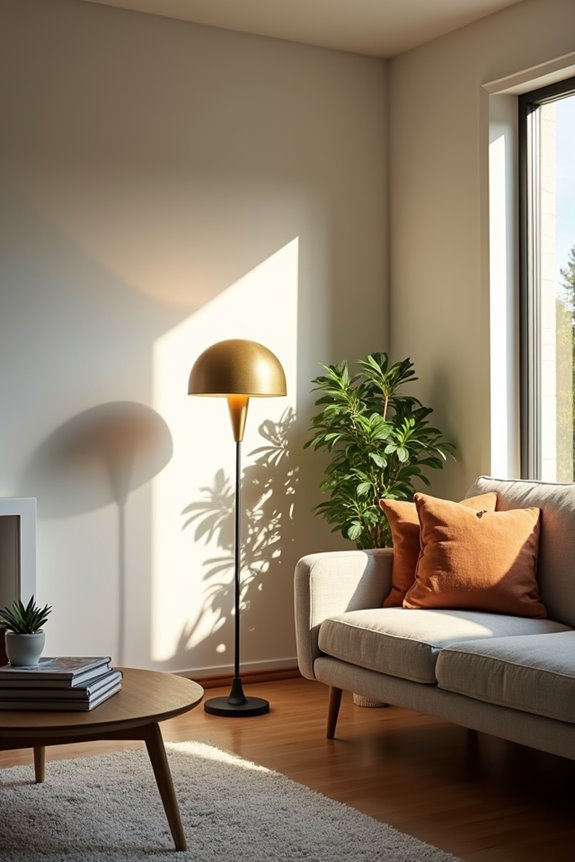
While a well-lit bookshelf brings your collection to life, pairing a floor lamp near a window creates something equally rewarding: a bright, balanced living room that feels open and welcoming throughout the day.
I’ve found that positioning your floor lamp to bounce light off walls or ceilings—rather than directly toward the window—prevents annoying glare on screens. Use translucent shades that diffuse light gently while preserving your view outside.
Here’s what I recommend: angle your lamp to complement the window’s strongest daylight during morning or afternoon hours. Add dimmable lighting so you can adjust brightness as natural light shifts. This creates that perfect ambient glow without fighting nature’s light.
The result? Your room stays consistently bright and inviting, no matter the hour.
By the Fireplace: Position for Ambient Backup to Flames
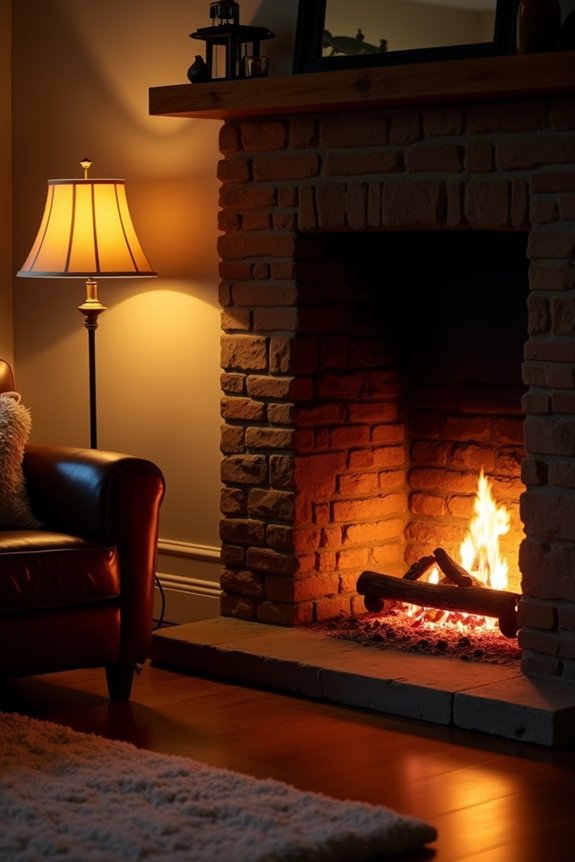
When you’re positioning a floor lamp by your fireplace, you’ll want to think about three key things: creating that cozy, layered glow, keeping everything safe, and getting your light settings just right. First, I’d make sure your lamp sits 12–18 inches from your seating area with a warm 2700K–3000K bulb dimmed to around 1500–3000 lumens so it backs up the firelight without stealing the show. Second, keep the lamp at least a safe distance from any combustible materials and use a sturdy base so it won’t tip, and third, install a dimmer switch so you can adjust the brightness and color warmth to match your fireplace’s mood throughout the evening.
Ambient Warmth and Layering
Here’s how I approach ambient warmth and layering lighting:
- Place your lamp 12–18 inches from seating to avoid glare
- Choose 2700K–3000K bulbs matching firelight tones
- Select dimmable designs for brightness control
- Use tall, slim styles that don’t block views
- Combine with wall sconces for depth
This floor lamp placement creates living room illumination that feels intentional. Your fireplace remains the star, while soft background light enhances the entire room. You’re building layers that make evenings cozier and more inviting for everyone gathered around that warmth.
Fireplace Safety Considerations
Safety’s your top priority when you’re placing a floor lamp near your fireplace, and I’ll walk you through exactly how to do it right.
First, maintain proper clearance distances. Keep your lamp at least 12–18 inches from the sofa back, positioning it behind or to the side. This spacing prevents heat exposure and fire hazards.
Next, choose the right design. Slim, upward-bouncing torchieres work beautifully because they direct light toward ceilings and walls rather than toward flames. This angle keeps your ambient lighting effective while protecting against heat buildup.
Finally, clear your pathways. Remove flammable materials like blankets and cushions from the fireplace area. Your floor lamp placement becomes safer when nothing combustible sits nearby.
These fireplace safety considerations ensure your ambient lighting enhances your space without compromising protection for your family.
Dimmer Switch and Color Temperature
Want your floor lamp to complement your fireplace instead of competing with it? I’ll help you create the perfect cozy setup using a dimmer switch and the right color temperature.
Your floor lamp placement matters. Position it 12–18 inches from your sofa back to reflect warmth off walls without creating glare. Here’s what makes the magic happen:
- Use warmer color temperatures (2700K–3000K) to match firelight
- Install a dimmer switch for flexible brightness control
- Aim for 1500–3000 total ambient lumens
- Choose upward-facing or indirect shades for wall bounce
- Reduce blue light to avoid clashing with flames
This approach gives you ambient lighting that enhances rather than overpowers your fireplace. You’ll create that welcoming glow everyone loves gathering around. Trust me—these small adjustments transform your living room into a genuinely inviting space.
Beside Your TV: Reduce Eye Strain During Evening Viewing
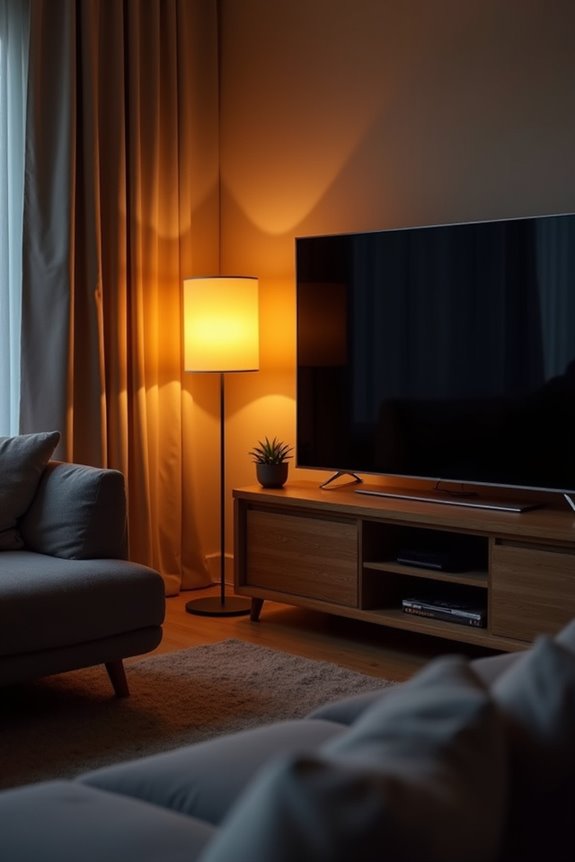
Ever notice how your eyes feel tired after watching TV in a dark room? You’re experiencing what happens when brightness contrasts strain your vision. I’ve found that placing a dimmable lamp beside your TV makes a real difference.
Position your floor lamp 12–18 inches from your seating area, angled to bounce light off walls rather than directly at the screen. This ambient lighting balances the TV’s glow and reduces eye strain considerably. Choose a lamp with warm color temperature around 2700K–3000K—it mimics natural evening light your eyes prefer.
A shaded head or diffuser prevents glare on your screen while spreading light evenly. Aim for 1500–3000 lumens if this is your main light source. I recommend slim designs that won’t block your view or clutter your entertainment space. Your evening viewing becomes noticeably more comfortable.
How Many Floor Lamps Should You Buy?
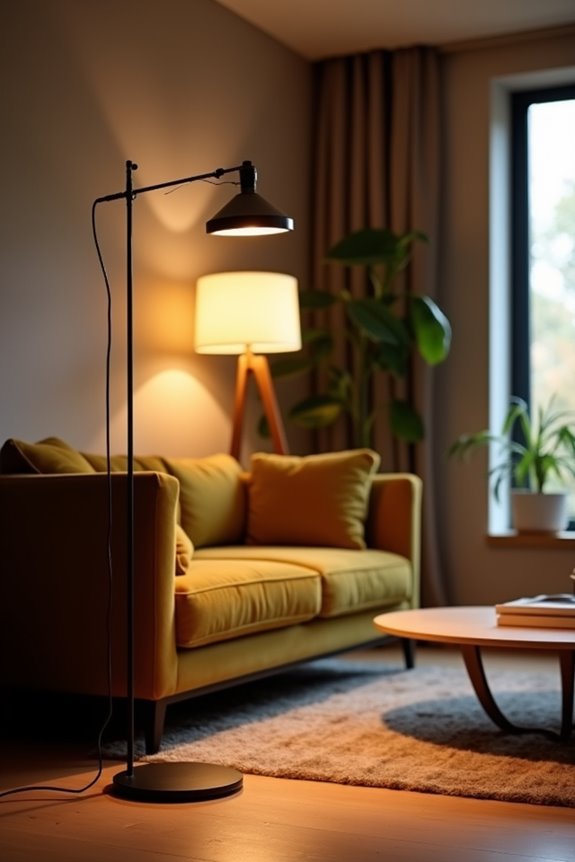
Now that you’ve tackled the glow around your TV, it’s time to think bigger about your whole room. I’d recommend starting with one to two floor lamps in a small or medium living room, then adding more as you discover dark spots.
Here’s what I’ve found works best:
- Fill shadowy corners that need brightening
- Flank your seating areas for balanced light
- Illuminate reading nooks and work zones
- Create layering lighting with ambient, task, and accent sources
- Use adjustable dimmable lamps for flexibility
Rather than buying one super-bright lamp, I suggest using multiple lamps to layer your lighting. This approach lets you control brightness for different activities and times of day. You’ll avoid harsh shadows and that overwhelming feeling of over-lighting. Think of each lamp as another tool in your comfort arsenal.
Balance Multiple Lamps Symmetrically in Open Spaces
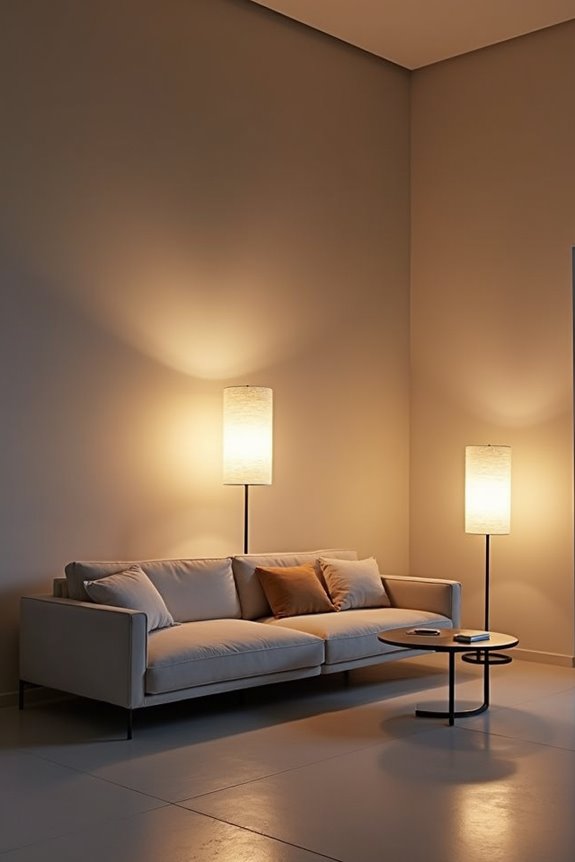
The key to a well-lit open living room is placing your floor lamps in matching pairs across from each other. This symmetry creates balance and makes your space feel intentional and welcoming.
Start by positioning two identical floor lamps on opposite sides of your seating area. They should have the same height and finish to look cohesive. This approach works great flanking your sofa or framing an entryway.
Position two identical floor lamps on opposite sides of your seating area for a cohesive, balanced look that frames your space beautifully.
Next, consider layering lighting by adding task-oriented lamps at reading nooks. Combining ambient uplight with focused task lighting ensures even coverage without harsh shadows.
The beauty of symmetrical floor lamp placement? It eliminates visual clutter while guiding your eye naturally through the room. Your open spaces feel organized, inviting, and perfectly illuminated for any gathering.