
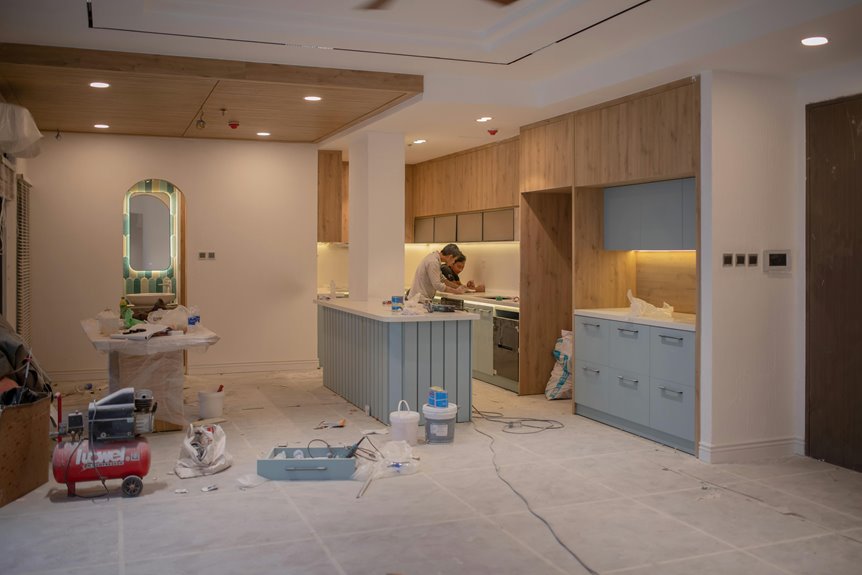
Before you paint or replace your kitchen cabinets, here’s what matters: painting costs $400–$1,000 and takes 3–5 days, while replacement runs higher and takes weeks. Check if your frames are sturdy or warped—that decision alone changes everything. Neutral colors boost resale value; bold ones hurt it. You’ll need quality paint, proper prep, and patience for drying between coats. Water damage or cracking means replace, not paint. Your final choice depends on your budget, timeline, and whether you’re ready for a real transformation versus a quick refresh—and there’s much more to consider before committing.
Should You Paint or Replace Your Kitchen Cabinets?
The big question isn’t whether your cabinets deserve a makeover—it’s whether you should refresh them with paint or go all-in with replacements. If your cabinet frames are sturdy but look tired, cabinet painting is your faster, cheaper answer. You’ll skip the renovation chaos and get a brand-new look in days, not weeks.
However, replacement becomes necessary when frames are warped, cracked, or water-damaged. These issues won’t improve with paint alone.
Consider your bigger plans too. Planning new countertops or a layout change? Replacement might make sense. But if you’re mainly tired of the current color, prep work and quality paint deliver impressive results. The choice depends on your cabinet’s condition and your kitchen’s future.
Paint vs. Replacement: Cost Comparison and True Investment
How much are you actually willing to spend to transform your kitchen?
Cabinet painting costs between $400 and over $1,000, while replacement runs significantly higher. You’re looking at 3–5 days for painting versus weeks for replacement. Here’s the honest truth: painting offers real value if your cabinets are structurally sound. You’ll invest less money upfront and get faster results.
However, replacement makes sense if your cabinets are warped, cracked, or you’re redesigning your layout entirely. Consider this a true investment in your home’s future.
Color matters too. Muted green can increase perceived value, while daisy yellow might work against you. Think strategically about your choice. Ultimately, painting wins for budget-conscious updates, but replacement wins if you need fundamental changes. Choose based on your cabinet’s condition and your goals.
Timeline Reality: How Long Each Option Actually Takes
When you’re deciding between painting and replacing your cabinets, the timeline difference is pretty dramatic—and it’ll shape your whole project plan. A painting job typically wraps up in 3–5 days of actual work, though you’ll need to factor in drying time between coats and before you can use your kitchen again. Cabinet replacement, on the other hand, can take weeks or even months when you account for ordering, delivery, installation, and any layout adjustments you want to make.
Painting Project Duration Breakdown
Painting cabinets doesn’t happen overnight, but here’s the good news: you’re looking at just 3–5 days total if you plan it right. Your cabinet painting duration breaks down like this: Day 1 covers assessment and prep work—removing doors and cleaning with TSP. Day 2 involves sanding lightly and applying primer. Days 3–4 are your paint project timeline, where you’ll apply multiple coats, painting backs before fronts. Day 5 lets everything cure properly before reassembly. This cabinet renovation workflow keeps your kitchen functional since you’re staging work in sections rather than emptying everything at once. You don’t need professional speed to get professional results—just patience between coats and drying times.
Replacement Construction Timeline Comparison
While painting gets you a refreshed kitchen in days, replacement cabinets play by a different timeline altogether. Here’s what you’re really looking at: cabinet fabrication takes weeks, delivery adds more time, and installation demands careful coordination. If you’re changing your layout, adding new countertops, or adjusting plumbing and electrical work, you’re extending that renovation duration substantially.
Your painting timeline might span one long weekend or a few weekends total. Replacement construction? Plan for several weeks to a couple of months, depending on customizations. The cabinet replacement timeline hinges on whether you’re ordering stock cabinets or custom designs. Stock options move faster, while custom work demands patience. Understanding this difference helps you choose what fits your life right now.
When Painting Won’t Work: Signs You Need Replacement
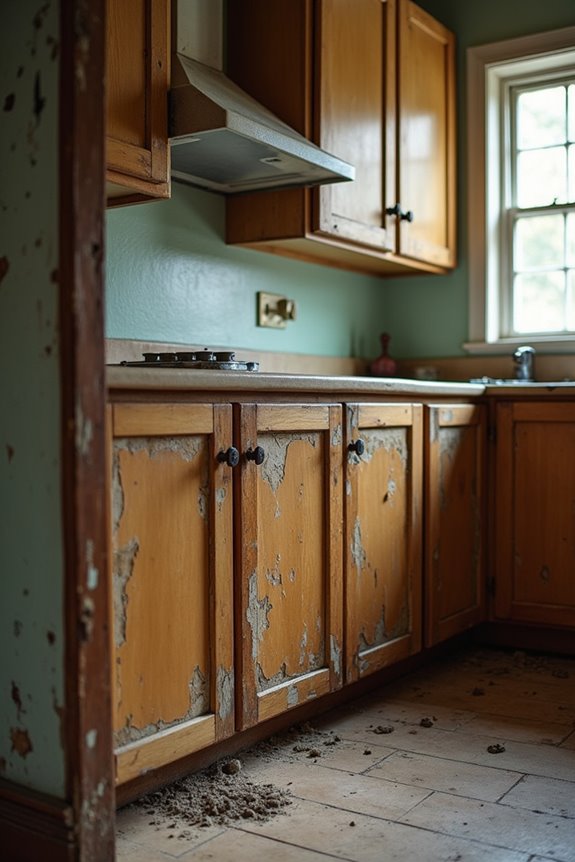
Sometimes your cabinets are telling you they’re beyond a fresh coat of paint, and it’s important you listen to what they’re saying. Cabinet deterioration shows itself in ways painting simply can’t fix. Warping, cracking, and water damage signal structural issues that demand replacement. When peeling spans large areas or adhesion fails across multiple surfaces, paint won’t deliver lasting results you deserve.
| Warning Sign | What It Means | Best Solution |
|---|---|---|
| Warped or cracked frames | Structural damage | Replace |
| Water damage present | Foundation compromise | Replace |
| Widespread peeling | Poor adhesion | Replace |
You’ll also want replacement if you’re changing door styles, maximizing storage, or upgrading countertops significantly. These modifications work better with new cabinetry. Trust your instincts. Your kitchen deserves solutions that actually last.
Assessing Cabinet Condition: The First Decision Point
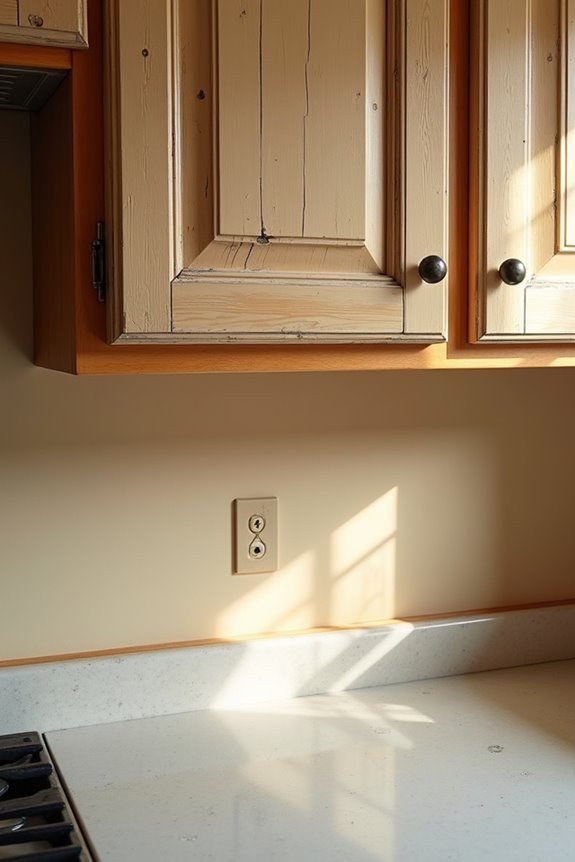
How well do your cabinets actually hold up under close inspection? Start by emptying them completely. This gives you the real picture of what you’re working with.
Empty your cabinets completely to see their true condition and determine if painting or replacement is the right choice.
Look closely at the surfaces. Are they smooth or peeling? Check the frames for warping, cracks, or water damage. These problems often mean cabinet replacement makes more sense than painting.
Test for lead-based paint if your home was built before 1978. Document your current layout and hardware locations—this information guides your next steps.
Your cabinet condition assessment determines everything. Paint can refresh tired surfaces, but damaged frames won’t improve with a fresh coat. Be honest about what you see. That clarity helps you make the right choice between painting and replacement.
What’s the Right Paint Type for Kitchen Cabinets?
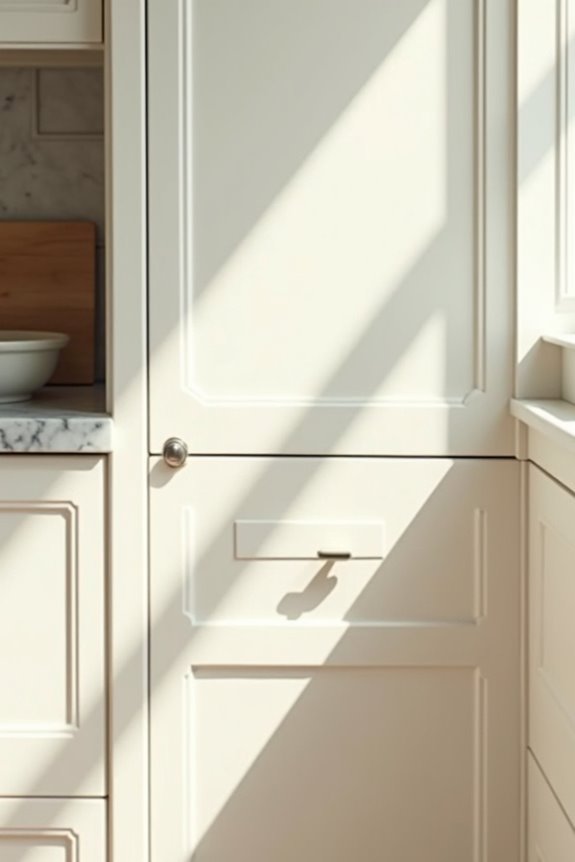
Once you’ve confirmed your cabinets are worth painting, picking the right paint matters more than you’d think. I recommend semi-gloss enamel or hybrid alkyd paints because they’re durable and wipe clean easily—perfect for kitchens. Choose acrylic latex over vinyl-based options; it lasts longer and sticks better to surfaces.
Here’s what I’ve learned: if your cabinets have laminate surfaces, you’ll need a bonding primer first. Skip this step, and your paint won’t adhere properly. Apply your semi-gloss enamel over that primer for best results.
You don’t need a topcoat, but if you want extra protection, use polycrylic instead of polyurethane—it won’t yellow over time. This combination gives you cabinets that look fresh and perform well for years.
Prep Your Kitchen Cabinets for Painting
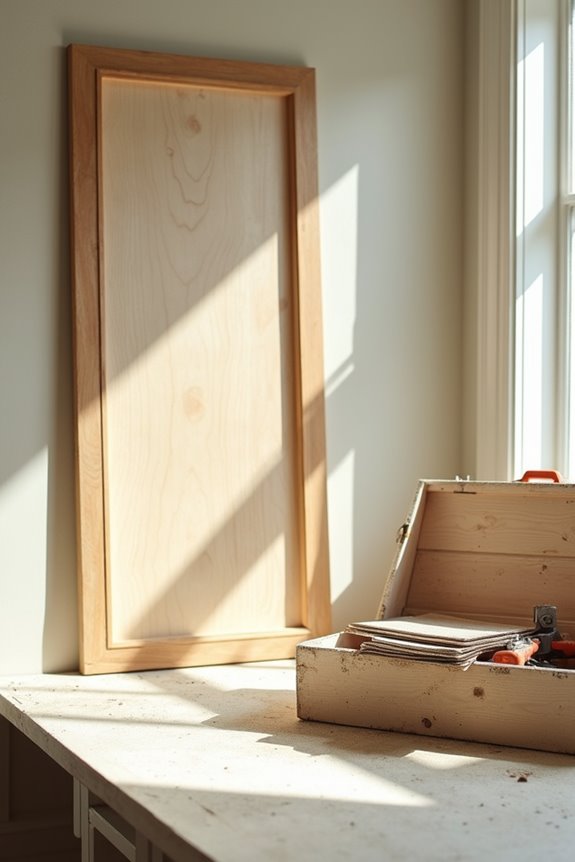
The prep work is what separates a mediocre paint job from one that’ll last you years—I can’t stress this enough. Proper cabinet preparation determines your success, so let’s do this right together.
Start by emptying everything. Remove doors, drawers, and hardware, then label each piece so reassembly isn’t a nightmare. Next, clean all surfaces with TSP cleaner to eliminate grease and grime. This step matters more than you’d think.
| Step | What to Do |
|---|---|
| Clean | Use TSP cleaner on all surfaces |
| Sand | Light sanding improves paint adhesion |
| Prime | Apply bonding primer on laminate |
If your home was built before 1978, test for lead paint first. Sanding creates the perfect surface for paint adhesion. Use a bonding primer on laminate—it’s your ace in the hole. Plan three to five days for complete drying between coats.
Drying and Cure Times: Why Rushing Ruins Results
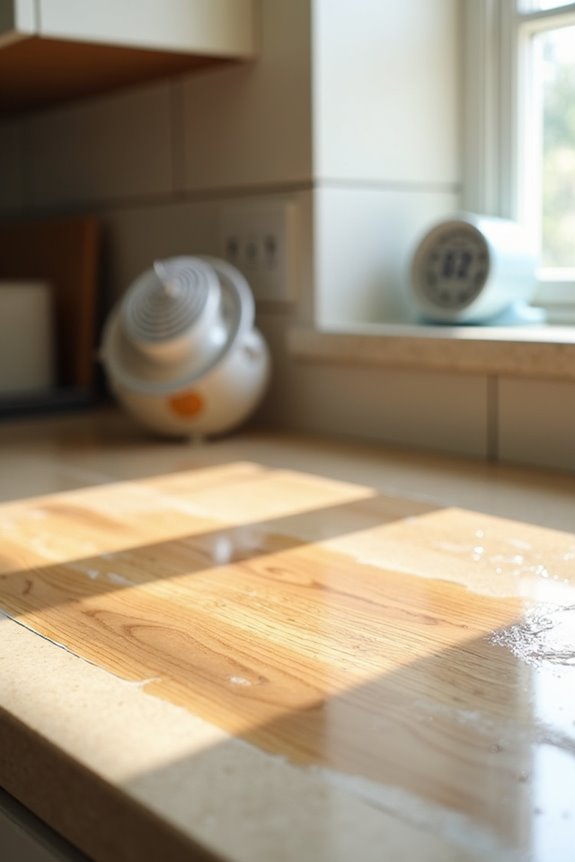
I know you’re eager to see your cabinets transformed, but here’s the thing—paint drying and paint curing aren’t the same, and that difference matters. Drying means the surface feels dry to the touch (usually a few hours), while curing is when the finish actually hardens and reaches full strength, which can take 3–5 days depending on your product. Skipping ahead too fast invites peeling, smudging, and trapped solvents that’ll ruin all your hard work, so check your manufacturer’s directions and plan for a realistic timeline that prioritizes durability over speed.
Paint Drying vs. Curing
Most homeowners confuse drying with curing, and that’s where cabinet projects go wrong. When your paint feels dry to the touch, you’re only halfway there. That’s drying. Curing is the real deal—it’s when the paint fully hardens into a protective film that can take days or weeks.
Here’s why this matters: between coats, you’ll wait about 24 hours while the paint dries. But after your final coats, you need patience during the curing phase before reassembling cabinets or using them heavily. Skip this step, and you’ll end up with soft finishes that scratch and dent easily.
Temperature, humidity, and ventilation all affect how fast this process moves. Check your paint’s label for exact cure times. Your future self will thank you.
Timeline Planning Prevents Mistakes
How many times have you wanted to speed up a project just to use it faster? I get it—but painting cabinets demands patience. Planning 3–5 days prevents costly mistakes. Between coats, you’ll need specific drying times that manufacturers recommend. Skipping these intervals causes peeling and incomplete curing, which ruins your finish fast. Here’s what I do: I check the paint label for exact drying requirements before starting. I set up proper ventilation to manage fumes during those longer sessions. I mark my calendar with realistic timelines, including full curing before reassembly. Rushing means marring surfaces or premature wear. Give yourself grace here. When you respect the process, your cabinets look professionally done and last years longer. That’s worth the wait.
How Cabinet Color Affects Your Home’s Resale Appeal
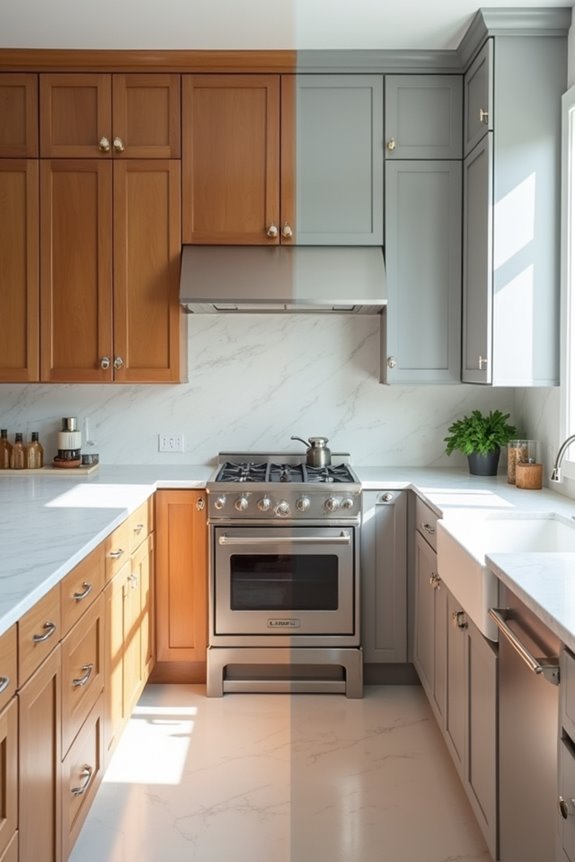
When you’re ready to sell, your kitchen cabinets matter more than you might think—they’re often the first thing buyers notice, and the color you choose can actually shift your home’s perceived value by thousands of dollars.
Here’s what I’ve learned: neutral tones like muted green can boost your home’s value by roughly $1,597. Meanwhile, daisy yellow? That can cost you nearly $4,000 in perceived value. Bold color impact matters.
Cabinet color resale value depends heavily on timeless choices. White cabinets look fresh but show every fingerprint and ding, which hurts buyer confidence. Professional repaints in neutral shades deliver durability and market appeal without breaking your budget.
Your choice isn’t just about today—it’s about tomorrow’s sale price.
Making Your Final Decision: Paint, Replace, or Redesign?
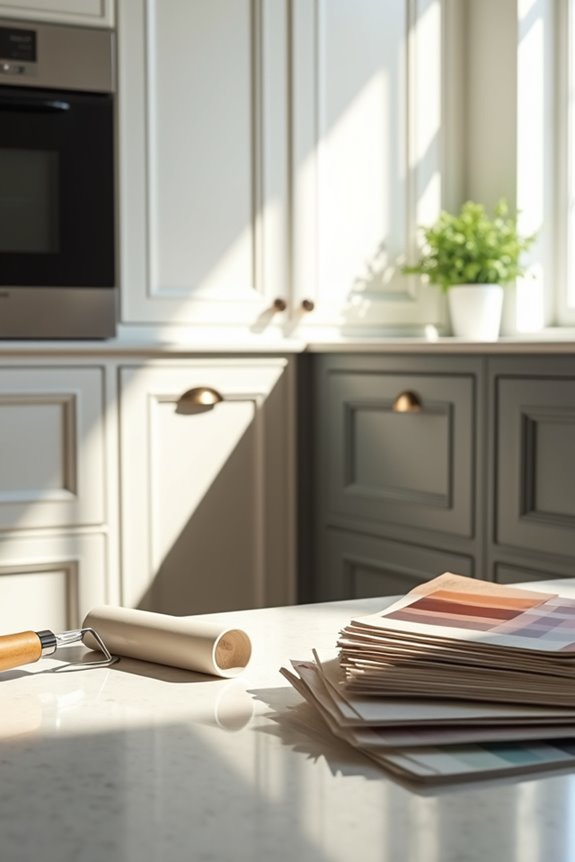
Before you commit to painting or replacing your cabinets, take a honest look at their current condition—warped frames, deep cracks, or water damage usually mean replacement is worth the investment, while surface-level wear suggests painting could save you hundreds of dollars. Next, think about your timeline and budget: painting typically costs $400 to $1,000 and moves fast, whereas replacement takes longer and costs significantly more but gives you a fresh start if your layout needs rethinking. Once you’ve assessed the damage and counted your dollars, you’ll know whether a quick paint job, a full replacement, or a creative redesign makes the most sense for your kitchen and your wallet.
Assessing Your Cabinet Condition
The real decision—paint, replace, or redesign—hinges entirely on what you’re working with right now. Start your cabinet condition assessment by examining the frames closely. Are they solid? Check the doors for warping or cracks. Look at the underlying structure—does it feel sturdy? If you find peeling or chipping paint, you can remove damaged areas and repair surfaces before repainting. However, water-damaged or heavily worn cabinets usually deserve replacement rather than a fresh coat. The durability difference matters. Before you decide, label everything: doors, drawers, and hardware. This step prevents reassembly headaches later. Consider whether layout changes or new materials might make replacement more cost-effective long-term. Your cabinet condition determines your best path forward.
Weighing Cost Versus Timeline
How do you choose between painting and replacing when both seem like reasonable options? Let’s talk timeline and cabinet costs.
Painting takes 3–5 days, including prep and drying time between coats. You’re looking at $400 to over $1,000 depending on your cabinet size and paint quality. Replacement? That’s weeks of work and significantly higher expenses.
Here’s the deciding factor: your long-term plans. If you want quick results on a budget, painting works beautifully. You’ll see transformation fast without breaking the bank.
But consider this. Painted cabinets need touch-ups over time, especially light colors that show wear. If your frames are warped or water-damaged, painting masks problems rather than solving them.
Choose painting for speed and savings. Choose replacement when you need lasting structural fixes.