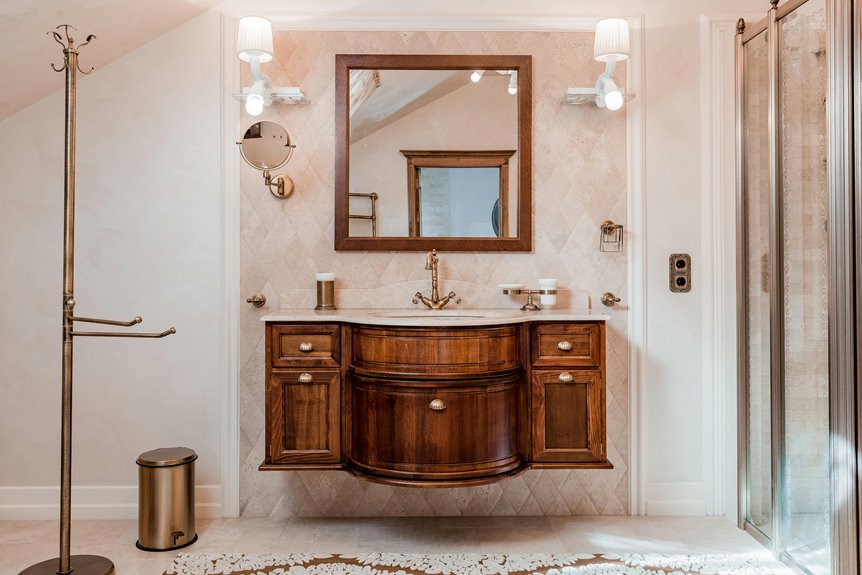
Start by measuring your bathroom’s width, depth, and door swing—you’ll need at least 30 inches of clear floor space. Next, think about who uses it: kids need lower heights, while adults prefer 34–36 inches. Choose a vanity width that fits your layout (24–36 inches for single sinks, 48–60 for double). Finally, pick durable countertops like quartz and an undermount sink to minimize maintenance. Get these basics right, and you’ll discover how the right vanity transforms your bathroom’s function and feel.
Measure Your Space: Width, Depth, and Plumbing
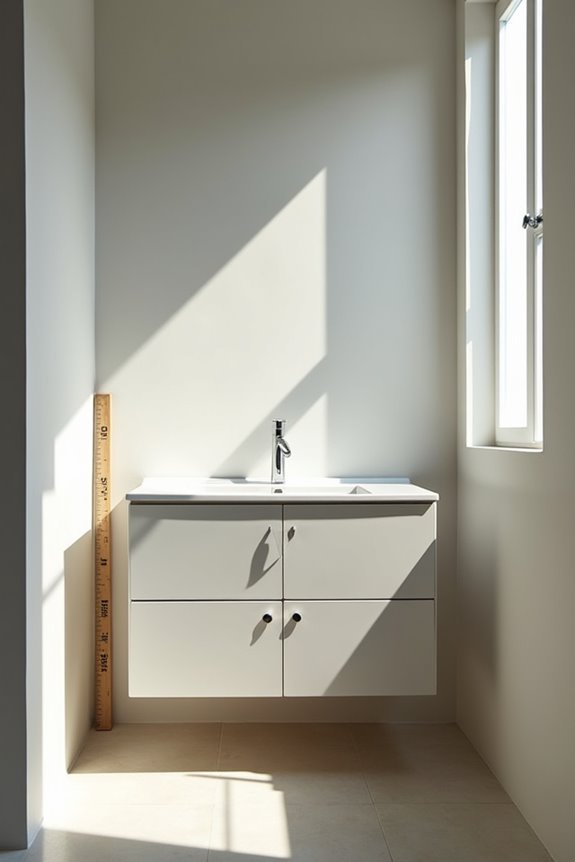
How do you know if that vanity you’re eyeing will actually fit in your bathroom? Start by measuring your width, depth, and height precisely. I always grab a tape measure and note every dimension, including door swing clearance and the space around existing plumbing rough-ins.
Next, I map where supply lines and obstructions live. This matters because your plumbing location determines vanity placement. I ensure at least 30 inches of clear floor space in front for comfortable movement—it’s a game-changer for daily use.
Then I consider vanity width (24–60 inches), vanity depth (18–24 inches), and vanity height (30–36 inches). Space planning becomes easier when you know these measurements. I sketch my bathroom layout, marking door swings and fixtures. This simple step prevents expensive mistakes and ensures your chosen vanity feels right.
Know Your Users: Who Uses This Bathroom?
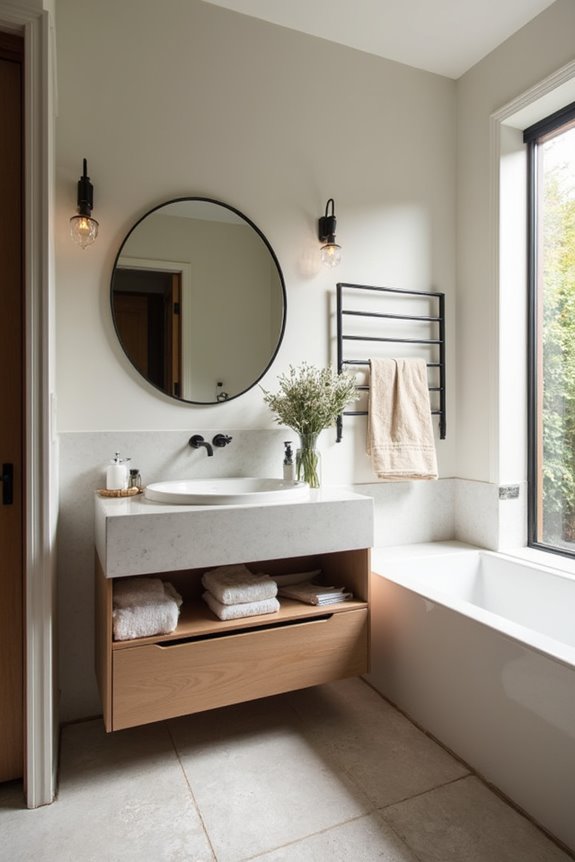
Before you pick out your vanity, think about who’ll actually be using it—because a master bathroom for two people needs something totally different than a guest powder room or a kids’ bathroom. I want you to contemplate how many people share the space, what they’re doing in there (like, is someone applying makeup daily or just washing hands?), and whether anyone needs accessibility features like extra knee space or a lower counter height. Once you nail down these details, you’ll know exactly whether you need a double sink, extra storage, or special accommodations that’ll make the bathroom work perfectly for your household.
Primary Bath Users and Needs
The best vanity for your bathroom starts with understanding who’ll actually use it every single day. Ask yourself: Is this a master bath for two people, a single guest bath, or a family space with kids?
Your answer shapes everything. A couple needs different counter space and storage needs than a solo user. Parents with children might prioritize accessibility and knee clearance for safety. Think about daily activities—does someone need a dedicated makeup station? Will multiple people style hair simultaneously?
Consider vanity height and electrical outlets for hair dryers and grooming tools. For wheelchair accessibility, you’ll need at least 32 inches of opening space.
Map out your space planning by listing who uses the bathroom and when. A single vs double vanity decision flows naturally from these user needs.
Multi-User Household Considerations
Once you’ve mapped out your daily users, you can start picturing what your bathroom actually needs to handle. A double vanity with two sinks transforms morning chaos into a manageable routine. You’ll want ample storage—think drawers and pull-out shelves—so everyone has a designated spot for their toiletries. Consider comfort-height vanities around 34–36 inches for adults, but if children or guests use the space, plan for lower sections too. Knee space beneath the vanity matters more than you’d think; it accommodates wheelchairs and varied mobility needs. Create zones: makeup counter here, medication storage there, towels elsewhere. This organization prevents frustration and makes shared bathrooms feel less cramped. Space planning isn’t complicated—it’s just intentional.
Accessibility Requirements by User
Who’ll actually be standing at your vanity every day? That answer shapes everything. Kids need lower vanity height and step stools. Adults require standard reach-access around 30-36 inches. Wheelchair users need at least 32 inches of clear width with knee space underneath.
| User Type | Key Need | Solution |
|---|---|---|
| Children | Lower height | Adjustable or tiered vanities |
| Adults | Standard reach | 30-36 inch counter height |
| Wheelchair users | Accessible design | 32″ width, toe clearance |
Consider toe clearance and knee space when planning. Storage options matter too—keeping counter space organized helps everyone. Single vs double vanity depends on how many people share the bathroom. A makeup station works great for primary baths where grooming happens regularly.
Pick a Vanity Width: Single, Double, or Trough Sink
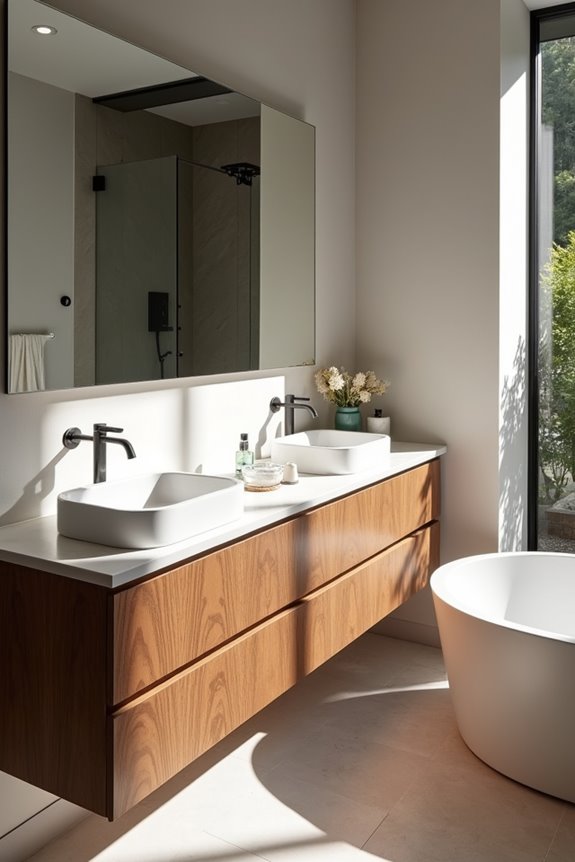
Now that you’ve thought about who’ll use your bathroom, it’s time to figure out the right vanity width for your space. You’ll basically choose between three options: a single sink (great for tight bathrooms), a double sink (perfect if two people need to get ready at once), or a trough sink with two faucets (a smart middle ground that saves space). Let me walk you through each one so you can pick what works best for your home.
Single Sink Space Constraints
How much room do you actually have to work with?
When space constraints squeeze your bathroom, a single-sink vanity becomes your smart solution. I recommend measuring your floor space carefully—you’ll want a vanity width between 24″ and 36″ that leaves breathing room for movement and door clearance.
Consider these practical options:
- Wall-mounted vanities that free up floor space and maintain that crucial 30″ clearance in front
- Corner compact vanities that tuck into unused angles and maximize your layout
- Narrow 24″ units paired with vertical storage or open shelving for extra capacity
For counter depth, aim for 18″–24″ to give you usable surface without cramping the room. This balance keeps your single-sink setup functional while respecting your space constraints. You’ll feel the difference immediately.
Double Sink Functionality Benefits
When your bathroom serves two people—whether you’re sharing a master ensuite or juggling a busy household—a single sink starts feeling like a bottleneck pretty fast. Double sinks transform your morning routine. Two sinks eliminate the frustrating dance of taking turns, reducing morning congestion significantly.
A standard double vanity typically spans 48–60 inches wide, providing adequate counter space for both users’ toiletries and personal items. This vanity width accommodates two separate basins comfortably while maintaining functional storage space beneath.
If you’re tight on square footage, don’t worry. A compact double vanity at 48 inches still works beautifully in smaller bathrooms. Consider wall-mounted designs to maximize floor area.
Prefer efficiency without extra width? A trough sink offers continuous basin functionality with two faucets, delivering shared-bathroom convenience while potentially saving precious counter space. Choose what fits your vanity layout and lifestyle.
Trough Sink Practical Alternatives
What if you could get the convenience of two faucets without committing to a full double vanity?
A trough sink offers that flexibility. I’d consider these practical alternatives:
- Single sink with extended counter space—gives you two-faucet functionality while keeping your vanity width manageable
- Trough-style drain paired with a wider single vanity—maintains comfortable knee space for both users without the crowding
- Compact double vanity with storage underneath—maximizes your counter space for toiletries and grooming tools
When you choose a trough sink, plan carefully. You’ll want adequate vanity width to prevent feeling cramped. Think about faucet compatibility and how your storage configuration works around the extended counter. Even in tight spaces, a single sink with an extended counter can mimic that shared aesthetic while preserving usable width. The key’s balancing two-faucet convenience with your actual space needs.
Choose the Right Height: 30–36 Inches by Room Type

Why does vanity height matter so much? I’ll tell you—it’s the difference between loving your bathroom and dreading it daily.
Standard height vanities sit at 30–32 inches, while comfort-height options reach 34–36 inches for taller users. Your room type guides this choice perfectly. Master bathrooms typically use 36-inch vanities, matching kitchen cabinet comfort. Guest bathrooms work well at 32–34 inches, balancing accessibility for visitors. Kids’ bathrooms hover around 30 inches, though pull-out stools help children reach comfortably.
Consider your specific user needs. Are you designing primarily for adults, children, or mixed use? Accessibility matters tremendously. When you match vanity height to who actually uses your space, you’re creating a bathroom that feels right. That’s smart bathroom design.
Map Your Storage: Drawers, Cabinets, or Open Shelves
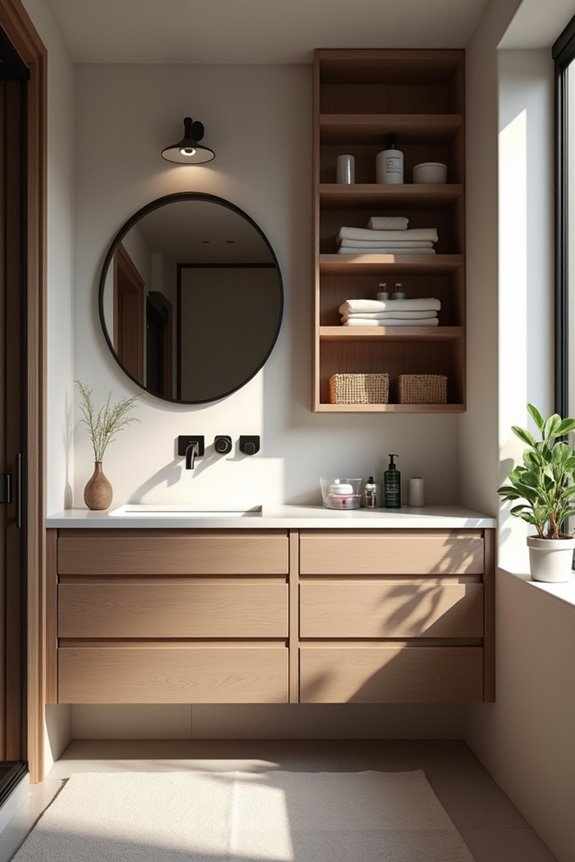
Storage is where your bathroom vanity truly earns its keep. I’ve learned that choosing the right storage options transforms how you organize your daily routine. Let me walk you through what works best for different needs.
- Drawers keep makeup and grooming products accessible and hidden, perfect for items you use daily
- Cabinets hold towels and cleaning supplies, clearing your vanity surface completely
- Open shelving creates that spa-like feel, though it demands regular tidying
Here’s my honest take: a multi-functional approach combines all three. I pair drawers for small essentials, cabinets for bulk items, and maybe pull-out shelves to maximize space planning. Don’t forget wall-mounted storage above the toilet—it’s a game-changer for bathroom organization without sacrificing vanity real estate. This tidy appearance makes your entire space feel intentional and welcoming.
Pick Countertops and Sinks You Can Actually Maintain
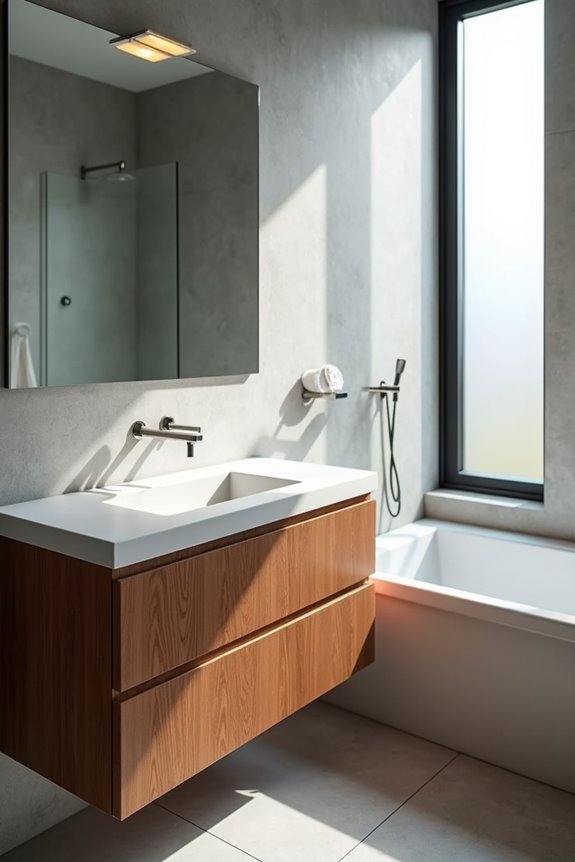
Once you’ve nailed down your storage, it’s time to think about countertops and sinks—because these surfaces take a real beating in a bathroom.
I’d recommend choosing a quartz countertop or solid surface for your vanity countertop. These non-porous materials resist stains and moisture without demanding constant attention. They’re truly maintenance-free compared to marble, which needs regular sealing.
For your sink type, consider an undermount sink. It frees up counter space and reduces cleaning hassle. Vessel sinks look stunning but eat into your workspace.
Match your faucet finish—chrome, brushed nickel, or oil-rubbed bronze—to your countertop for a cohesive look. This coordination ties everything together seamlessly.
Skip laminate if you can; it scratches easily. Your bathroom deserves surfaces that handle daily life without complaint.