
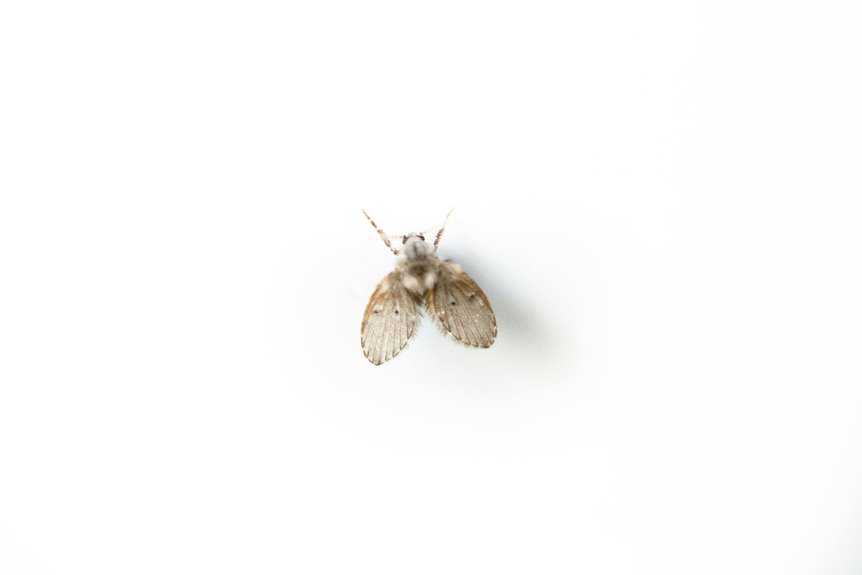
Those tiny black bugs hovering around your bathroom drain are drain flies—also called moth flies or sewer gnats. They’re about 1/8 inch long with fuzzy, moth-like wings, and they breed in the biofilm buildup inside your pipes (think hair, soap scum, and grease). The good news? They’re harmless and fixable. Start by running your exhaust fan, fixing any leaks, and flushing drains weekly with boiling water. Keep reading to discover the exact seven-day plan that’ll eliminate them for good.
What Are These Tiny Black Bugs in Your Bathroom?
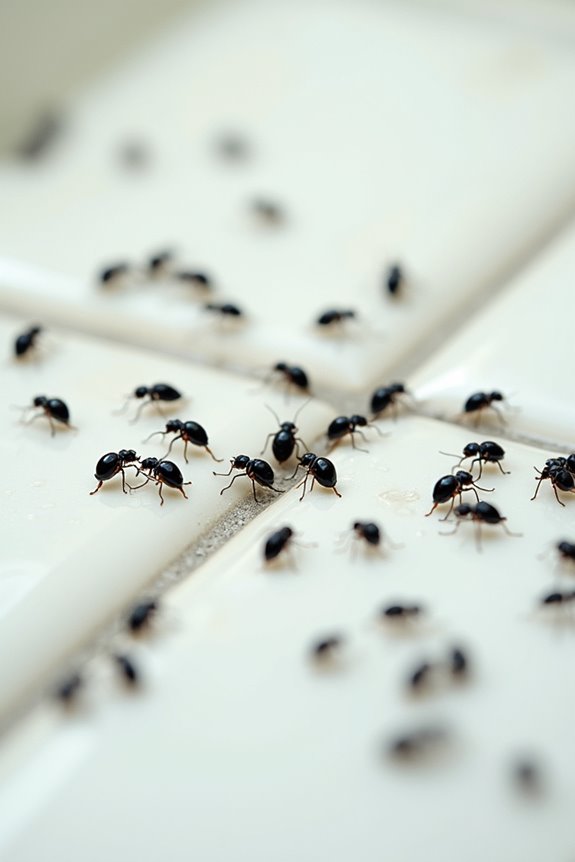
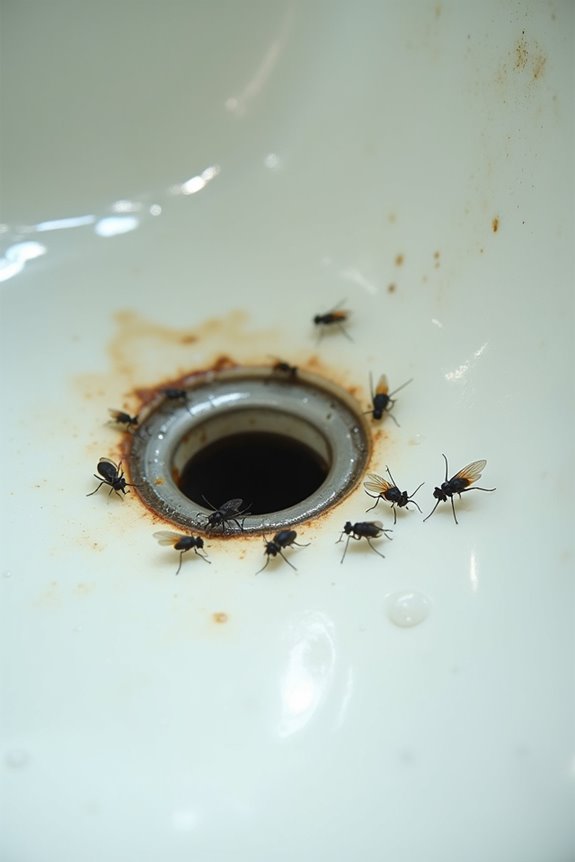
Ever noticed tiny black bugs hovering near your sink or shower drain? You’re likely dealing with drain flies, also called moth flies or sewer gnats. These bathroom pests are incredibly small—about 1/8 inch long—with fuzzy, moth-like wings and a distinctive hovering behavior right above your drains.
You’ll spot them resting on walls near sinks, showers, or bathtubs, taking short, erratic hops around the drain basin. What makes them frustrating is how quickly they multiply. Female drain flies lay up to 300 eggs directly in drain biofilm, the slimy buildup inside your pipes. Larvae hatch within 48 hours and feed on that sludge for 1–2 weeks before becoming adults.
The good news? You’re not alone in this battle, and solutions exist.
Drain Flies: The Most Common Culprit
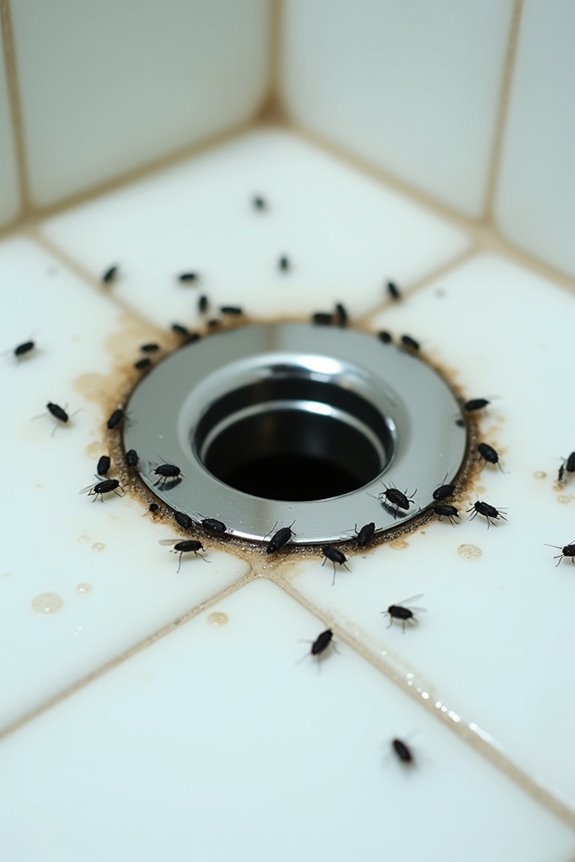
Drain flies are those tiny black bugs you’re spotting, about 1/8 inch long with fuzzy, moth-like wings that make them look hairy, and they tend to hover around your drains and sinks. They’re breeding right in your pipes—females lay up to 300 eggs directly in drain sludge and biofilm, where the larvae munch on decaying matter for 1–2 weeks before turning into adults. Once they emerge, these weak fliers rest on your bathroom walls and make short, jerky hops, which is exactly how you’ll spot them if you’ve got an infestation.
Identification and Appearance
Tiny black bugs hovering near your bathroom sink? You’ve likely spotted drain flies, the most common bathroom pests you’ll encounter. These little insects measure about 1/8 inch long and have fuzzy, moth-like wings that give them a distinctly hairy appearance. You’ll notice them resting on bathroom walls near sinks, showers, or bathtubs, taking short, erratic hops rather than strong flights. They’re drawn to drains because females lay up to 300 eggs directly into biofilm inside your pipes. The eggs hatch within 48 hours, and adults emerge after 9–15 days. To confirm you’re dealing with drain flies, place clear tape over suspected drains overnight. Trapped adults caught on the tape confirm your diagnosis and help you tackle the problem confidently.
Breeding Grounds and Life Cycle
Where do these tiny flies actually come from? They’re breeding right in your drains. Drain flies lay up to 300 eggs directly in biofilm—that slimy buildup of hair, soap scum, grease, and decaying matter coating your pipes. Larvae hatch within 48 hours and feast on this sludge for 1–2 weeks before becoming adults. The entire life cycle takes just 9–15 days, meaning populations explode quickly.
Here’s what makes your drain the perfect nursery: biofilm provides constant food and shelter. Dry P-traps from unused drains are especially problematic. When water seals evaporate, flies enter from sewer lines unchecked.
Breaking this cycle isn’t complicated. Weekly 60-second water flushes keep traps wet. Enzyme-based cleaners disrupt biofilm, eliminating their food source. Regular maintenance stops reinfestation before it starts.
How to Identify Drain Flies vs. Other Bathroom Pests
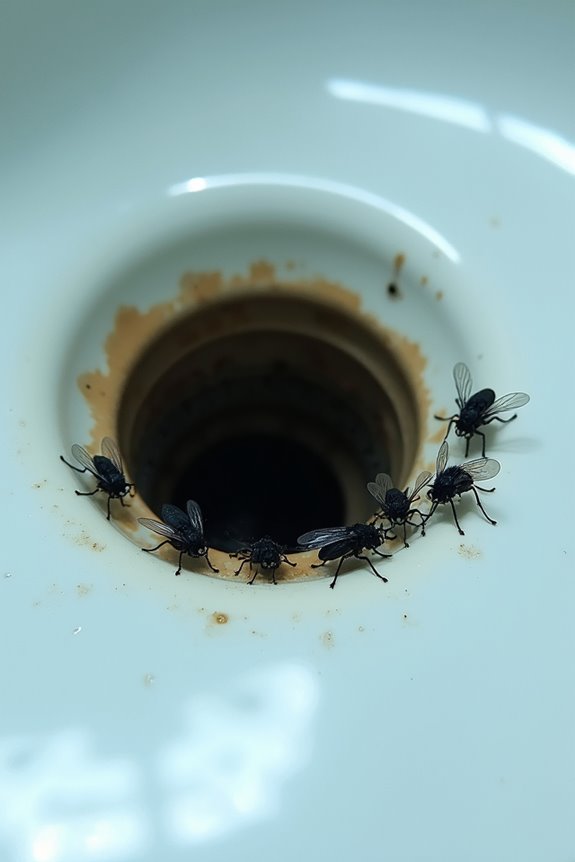
How can you tell what’s actually buzzing around your bathroom?
I’ll help you identify drain flies versus other bathroom pests by looking at specific features. Drain flies are your main suspect if you see small, fuzzy-winged insects hovering near your sink or shower. They emerge from biofilm buildup in pipes and take short, erratic hops.
Here’s what distinguishes drain flies from other bathroom pests:
- Fuzzy, moth-like wings that appear hairy and rest flat
- Size of 1/8 inch – genuinely tiny
- Movement pattern of short hops rather than smooth flight
- Habitat preference directly around drains, sinks, and tubs
- Behavior of hovering briefly before disappearing back into pipes
Fungus gnats, by contrast, resemble miniature mosquitoes with noticeably long legs. Booklice move quickly across damp surfaces. Recognizing these distinctions helps you target the right solution.
Quick Fixes: Kill Drain Flies in 3 Days
Thankfully, the good news is
Drain fly infestations can be eliminated in just three days with the right approach and swift action.
Once you’ve pinpointed drain flies as your bathroom culprit, you’ll want to act fast—and the good news is that you can eliminate them in just three days with the right approach.
Start by flushing boiling water down suspected drains once or twice daily for a week. This disrupts their life cycle and kills larvae developing in the biofilm coating your pipes. On day one, pour baking soda down the drain, followed by vinegar, then flush with boiling water. This combination breaks down the biofilm where drain flies breed and lay eggs.
Finally, restore your P-trap seal with a 60-second weekly water flush. This simple step reduces breeding sites and prevents future infestations. You’ve got this—three days to reclaim your bathroom.
Springtails vs. Drain Flies: How to Tell Them Apart
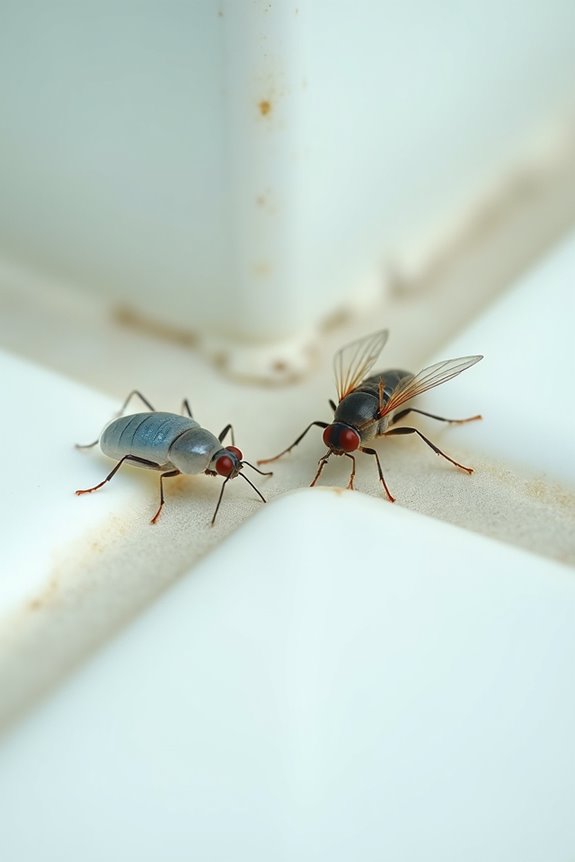
If you’ve spotted tiny black bugs in your bathroom, I’ll help you figure out whether you’re dealing with springtails or drain flies—they’re actually pretty different once you know what to look for. Let me break down their physical appearance, where they hang out, and how they move so you can identify your bathroom invaders with confidence. You’ll be surprised how easy it gets once you spot these telltale differences.
Physical Appearance Differences
The two tiniest bathroom invaders—springtails and drain flies—might look similar at first glance, but they’re actually quite different once you know what to look for.
Here’s what distinguishes them:
- Size: Springtails measure 1/25 to 1/12 inch long, while drain flies are slightly larger at 1/16 to 3/16 inch
- Body shape: Springtails have rounded bodies; drain flies sport fuzzy, moth-like wings covered in scales
- Movement: Springtails jump several inches when disturbed; drain flies hover slowly near drains
- Moisture signs: Springtails indicate general dampness, while drain flies signal organic buildup in plumbing
- Location: You’ll find springtails in high-humidity areas after rainfall; drain flies rest on walls near bathroom drains
Once you spot these differences, identifying which pest you’re dealing with becomes straightforward, helping you tackle the underlying problem effectively.
Habitat and Moisture Preferences
Where you find these bugs tells you a lot about what’s actually going on in your bathroom.
Springtails love damp areas and show up after heavy rains or in newly built homes where wet materials linger. You’ll spot them jumping around moist corners and baseboards. They’re basically nature’s moisture alarm.
Drain flies, meanwhile, camp out right where the problem originates—near drains, showers, and under sinks. They thrive in the biofilm that builds up inside your pipes. These fuzzy-winged insects need that specific sludgy environment to lay eggs and survive.
The key difference? Springtails indicate general moisture issues throughout your space. Drain flies point directly to sanitation and drain problems. Finding drain flies near your sink means you’ve got biofilm accumulation that needs attention. Knowing their preferred habitats helps you target the real issue faster.
Behavior and Movement Patterns
How these tiny bugs move around is honestly your best clue for telling them apart.
When you spot movement in damp areas, pay attention to how the bug travels. Springtails jump several inches when disturbed—they’re active escapists. Drain flies, however, hover and fly slowly near drains with a fluttering wingbeat that’s almost lazy.
Here’s what to watch for:
- Springtails crawl and hop rapidly across wet surfaces
- Drain flies hover in place with minimal wing movement
- Springtails scatter when you approach them
- Drain flies seem unbothered, moving in slow circles
- Springtails show up in sinks and showers; drain flies stay near drain openings
Notice the difference? Springtails are jumpers. Drain flies are floaters. This behavior pattern tells you exactly what you’re dealing with, making identification straightforward and helping you choose the right solution.
Fungus Gnats: Hovering Pests Near Plants and Windows
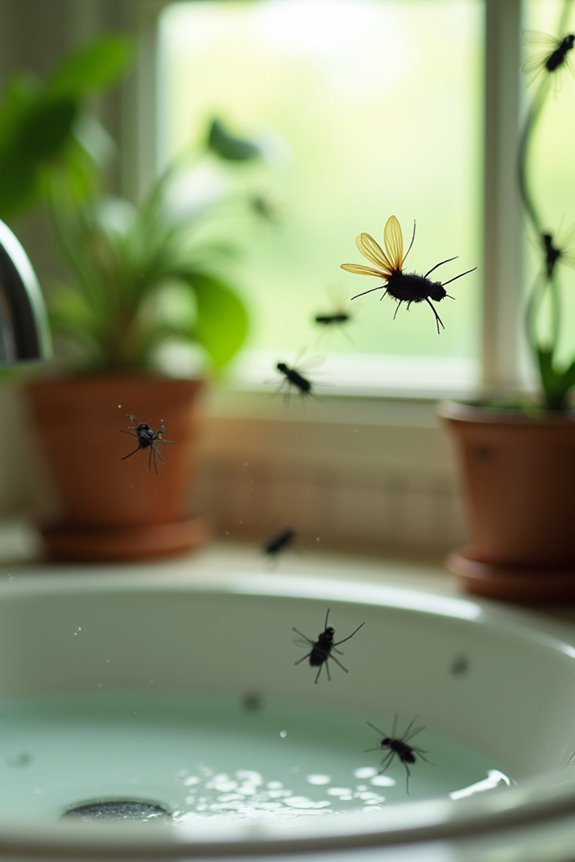
Ever noticed tiny flying bugs swarming around your bathroom plants or hovering near the window? You’re likely dealing with fungus gnats. These pesky insects are about 1/12 to 1/8 inch long and resemble miniature mosquitoes with gangly legs.
Here’s the problem: fungus gnats love damp soil. Their larvae burrow into the top half inch of moist earth, munching on organic matter and plant roots. This damages your indoor plants over time. Adults lay 100–200 eggs in wet soil, creating new generations quickly if conditions stay soggy.
The good news? You can control them. Let the top 1–2 inches of soil dry out between waterings. Try bottom-watering instead of pouring water from above. For stubborn infestations, yellow sticky cards or BTi soil drenches work effectively.
Booklice and Small Beetles: Less Common But Worth Knowing
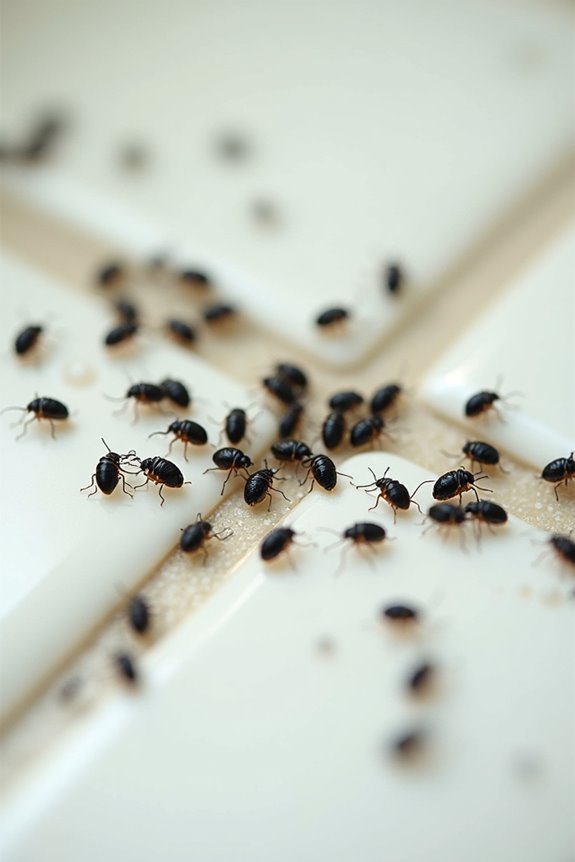
While fungus gnats steal the spotlight in bathrooms, you might also spot booklice or small beetles—and I’ll show you how to tell them apart and what they’re really telling you about your space. Booklice are soft, pale, and nearly see-through (under 3/16 inch), while small beetles have hard shells and move slower, though both bugs signal one thing: moisture. Understanding which pest you’re dealing with helps you tackle the real problem—the dampness underneath—so you can stop these visitors for good.
Identifying Booklice And Beetles
When you spot tiny bugs in your bathroom that don’t quite match the usual suspects, you might be looking at booklice or small beetles—two pests that show up less often but deserve your attention.
Booklice are pale, see-through, and smaller than a grain of rice. They move quickly across damp surfaces where mold grows. Small beetles have hard shells and appear darker, ranging from 1/12 to 3/16 inch as adults.
Here’s what distinguishes them:
- Booklice thrive in bathroom humidity above 58%
- Small beetles have visible hard exteriors unlike soft-bodied booklice
- Booklice feed on mold; beetles seek stored fibers
- Both indicate moisture problems needing attention
- Reducing bathroom humidity tackles both pests effectively
Both signal your bathroom’s moisture levels need adjustment.
Moisture Problems They Signal
Why do these tiny bugs keep showing up in your bathroom? They’re actually messengers. When you spot booklice, your bathroom’s telling you something important: you’ve got a moisture problem. These bugs thrive in humidity above 58%, so their presence signals excess water hanging around.
Here’s what’s happening. Booklice feed on mold growth, which means wherever you find them, mold’s likely flourishing too. That damp wallpaper behind your toilet? Prime real estate. Water pooling under your sink? They’ll colonize it.
The good news: eliminating these bugs means fixing the real issue. Reduce humidity by running your exhaust fan during showers. Fix leaky pipes. Improve ventilation. Address any mold growth you discover.
You’re not just controlling bugs—you’re protecting your home’s health.
When Control Becomes Necessary
At what point should you actually worry about these tiny bathroom visitors?
You don’t need to panic about occasional booklice or beetles. However, when you notice them regularly, it’s time to act. These pests signal underlying moisture control issues that deserve your attention.
Control becomes necessary when you observe:
- Multiple bugs appearing daily despite cleaning efforts
- Drain flies multiplying near sink or shower areas
- Booklice clustering in corners where humidity stays high
- Beetles returning consistently to the same bathroom spots
- Signs of mold growth alongside pest activity
The real issue isn’t the bugs themselves—it’s what they’re telling you. Start by reducing humidity below 45% using ventilation fans. Fix leaky pipes promptly. Address moisture sources first, and the pests inherently disappear. You’ve got this.
Why Your Damp Bathroom Is a Bug Magnet
Ever notice how bugs seem to gather in your bathroom more than anywhere else in your home? Here’s why: your bathroom’s constant moisture creates the perfect bug paradise. Drain flies love emerging from the biofilm buildup in your pipes. Springtails thrive in damp corners. Booklice multiply when humidity exceeds 58%.
Your bathroom provides everything these pests need: steady moisture, mold, and mildew. These conditions aren’t just uncomfortable for you—they’re like an all-you-can-eat buffet for tiny bugs. The organic material from soap scum and dead skin cells feeds them. Standing water near your sink or shower becomes a breeding ground.
Think of it this way: a damp bathroom isn’t just uncomfortable. It’s actively inviting unwanted guests inside. The good news? Controlling moisture directly tackles the root problem.
5 Ways to Lower Bathroom Humidity and Stop Bugs
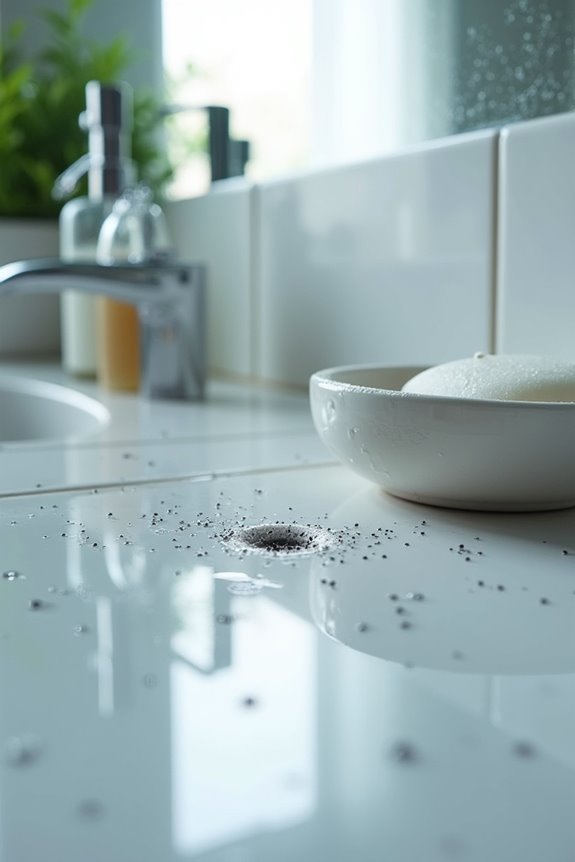
How much of a difference can controlling moisture really make? Honestly, it’s transformative. When you reduce bathroom humidity, you’re eliminating the wet environment that attracts bugs like drain flies.
Reduce bathroom humidity and you eliminate the wet environment that attracts drain flies—it’s truly transformative.
Here’s what I’d recommend:
- Run your exhaust fan during and after showers to push moisture out
- Fix leaks immediately—standing water under sinks creates breeding grounds
- Use a dehumidifier to keep humidity below 50%
- Clean drains weekly and install catches to prevent biofilm buildup where drain flies thrive
- Open doors or improve venting to create airflow
These steps work together. Lower moisture means fewer pests. You’ll notice fewer bugs within weeks. It feels great taking control of your space, and you’re not alone in this battle.
Fix Leaks and Clean Drains: Your First Line of Defense
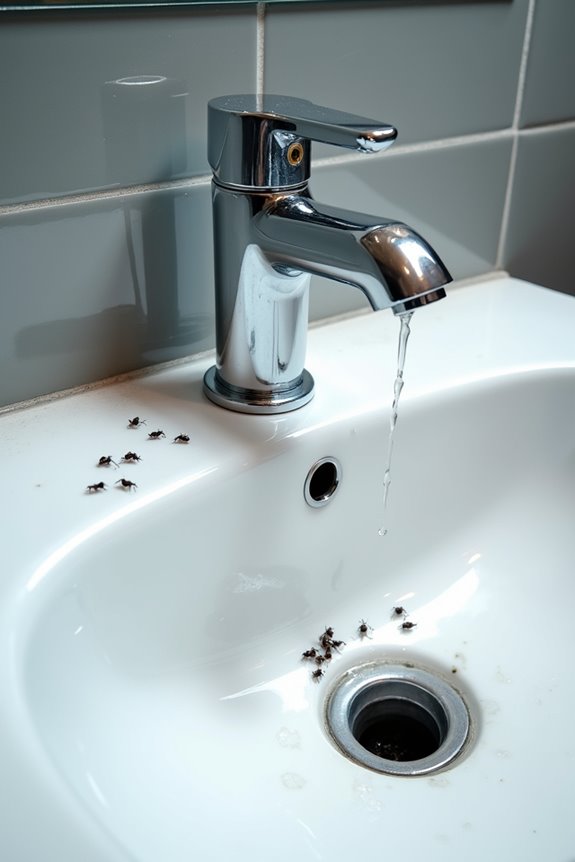
When you fix leaks and clean your drains, you’re removing the exact conditions tiny bugs need to survive and multiply. I’ve found that addressing these two issues tackles the root problem directly.
Start by fixing any leaks under sinks or around pipes. Standing water is where drain flies breed and thrive. Next, clean your drains thoroughly. Drain flies lay eggs in biofilm—that slimy buildup inside pipes—and their larvae feed on it.
Here’s what works: flush with boiling water, scrub with baking soda and vinegar, then use enzyme cleaners. Run water regularly in unused sinks to keep p-traps from drying out, which lets drain flies enter.
These simple steps eliminate breeding grounds where most bathroom bugs live. You’re not just treating symptoms; you’re solving the problem.
When Bathroom Bugs Signal a Hidden Water Leak
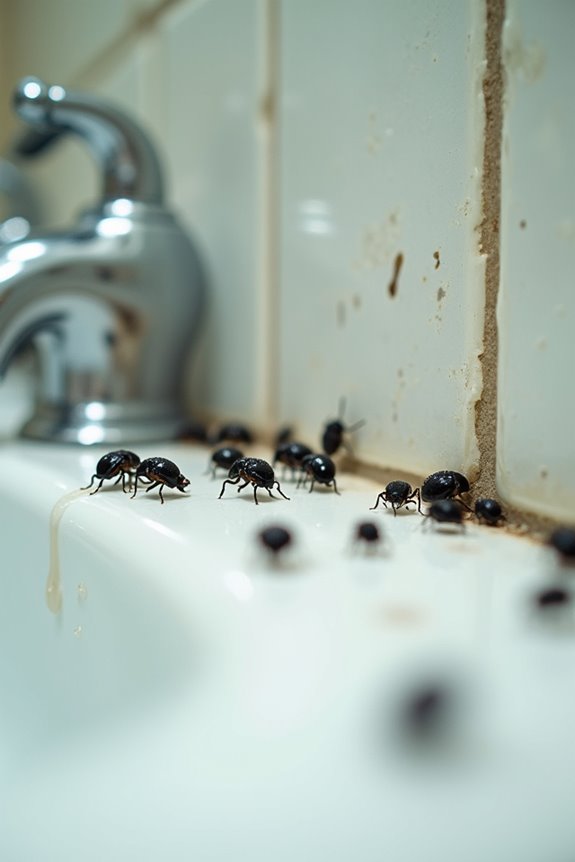
If you’re still seeing tiny black bugs even after cleaning your drains, a hidden water leak might be the real culprit. Here’s what you need to know:
- Drain flies thrive where moisture persists behind walls or under sinks
- Musty odors and mold often appear before you spot insects
- Increased dampness around fixtures signals ongoing leaks
- Biofilm in pipes creates perfect breeding grounds for larvae
- Moisture control matters more than cleaning alone
Hidden leaks create the exact conditions these pests love. Water seeping behind tile or under cabinets stays damp for weeks, giving drain flies ideal nurseries. You’ll notice the bugs first, then trace the real problem back to moisture.
Check under sinks for soft wood, discolored walls, or that telltale musty smell. These signs mean water’s hiding somewhere, and stopping the leak stops the bugs.
Should You Call a Professional Pest Control Expert?
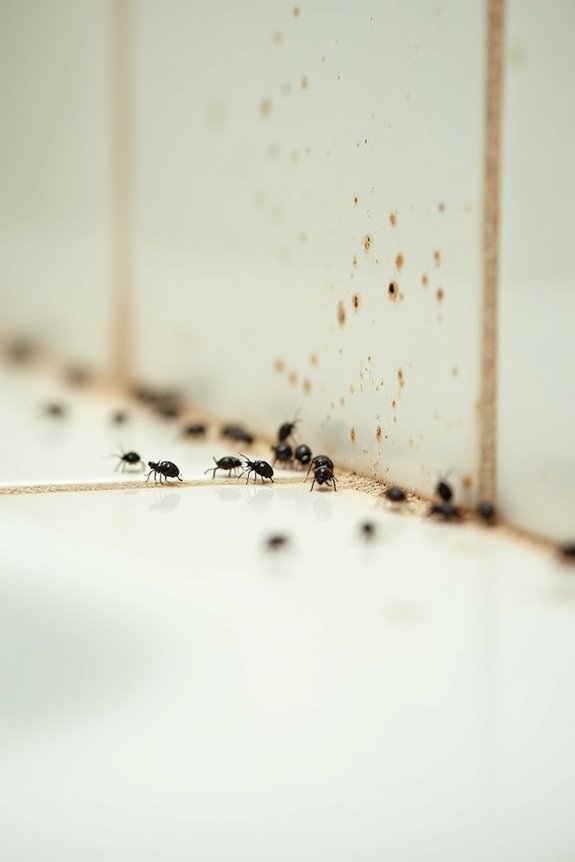
You’ve cleaned your drains, fixed the leaks, and still those tiny black bugs keep showing up—that’s when you know it’s time to call in reinforcements. A professional pest control expert can identify whether you’re actually dealing with drain flies or something else entirely. They’ll assess your moisture reduction efforts and pinpoint areas you might’ve missed. These specialists have access to targeted treatments and enzyme cleaners that work faster than DIY approaches. They’ll also check for hidden water issues that could be fueling the infestation. Think of it as getting a second opinion from someone who solves this problem daily. You’re not giving up; you’re being smart about getting your bathroom back to normal.
Your 7-Day Bathroom Bug Prevention Checklist
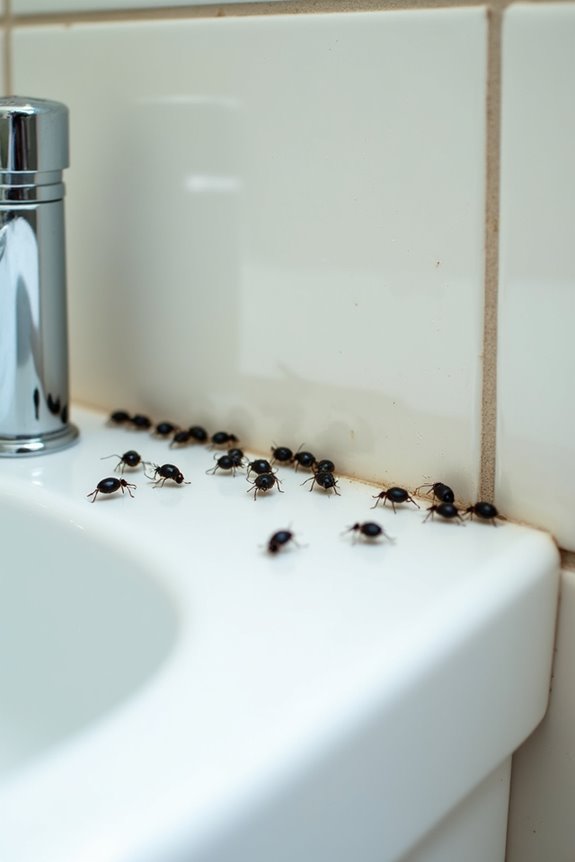
Ready to take back your bathroom? I’ve created a straightforward 7-day plan that tackles those pesky drain flies and moisture problems once and for all.
Here’s your action plan:
- Day 1-2: Fix leaky pipes and run exhaust fans to reduce moisture below 45-58%
- Day 3-4: Pour boiling water down suspect drains to eliminate organic buildup
- Day 5-6: Use enzyme cleaners as a safer alternative to harsh chemicals
- Day 7: Wipe all surfaces dry and monitor for new activity
Each day builds on the last, creating momentum toward a bug-free space. You’ll document your progress and notice real changes. If persistent pests remain after seven days, that’s your signal to call a professional. You’ve got this—consistency matters most.